Working on an archeological site often conjures images of uncovering ruins from the ancient world in places like Greece, Rome or Egypt.
While those experiences are valuable and memorable, there are other places where aspiring archaeologists can unearth historical artifacts.
One of these places is the campus of Michigan State University.
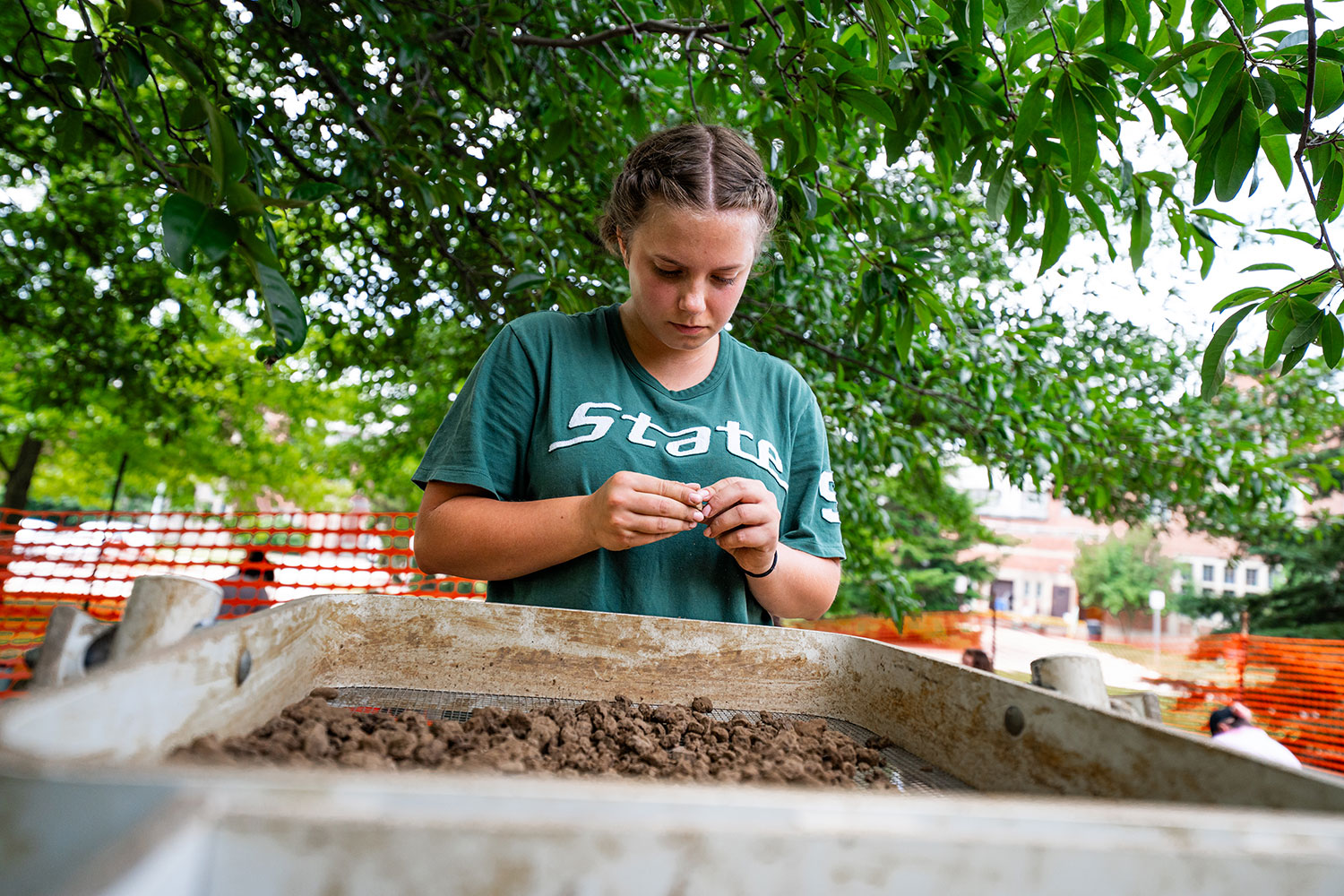
Established in 2005, the MSU Campus Archaeology Program, or CAP, is one of the first programs in the United States to offer an opportunity for students to excavate their own campus. Every other year, CAP runs a five-week-long summer field school, an archaeological experience for students to investigate the stories and material culture of historic families who owned property that would later become MSU. The field school is offered as a class during which students participate in an archaeological dig and conduct archival research.
“An archaeological field school is an opportunity for undergraduate students to get an experience in doing archaeology safely and to learn about the history of the site they’re working on,” said Stacey Camp, director of CAP. “In order to become a professional archaeologist, you absolutely have to have an archaeological field school on your transcript.”
Archaeological field schools are typically expensive, as many of them take place overseas. During MSU’s summer field school, participating students gain a valuable experience that’s often inaccessible due to high costs and travel commitments, opening doors for a more diverse group of students to participate.
“Most field schools run outside the country and a lot of our students simply can’t afford to go outside of the country during the summer,” Camp said. “This gives them an opportunity to do archaeology without spending a lot of money.”
A day in the life
Fourteen Spartans participated in this year’s summer field school, which ran from May 28 to June 30. These students worked to uncover more of the foundation of MSU’s first observatory, as well as artifacts associated with the building. The observatory foundation was discovered last year after Infrastructure Planning and Facilities encountered an impenetrable surface while installing hammock posts.
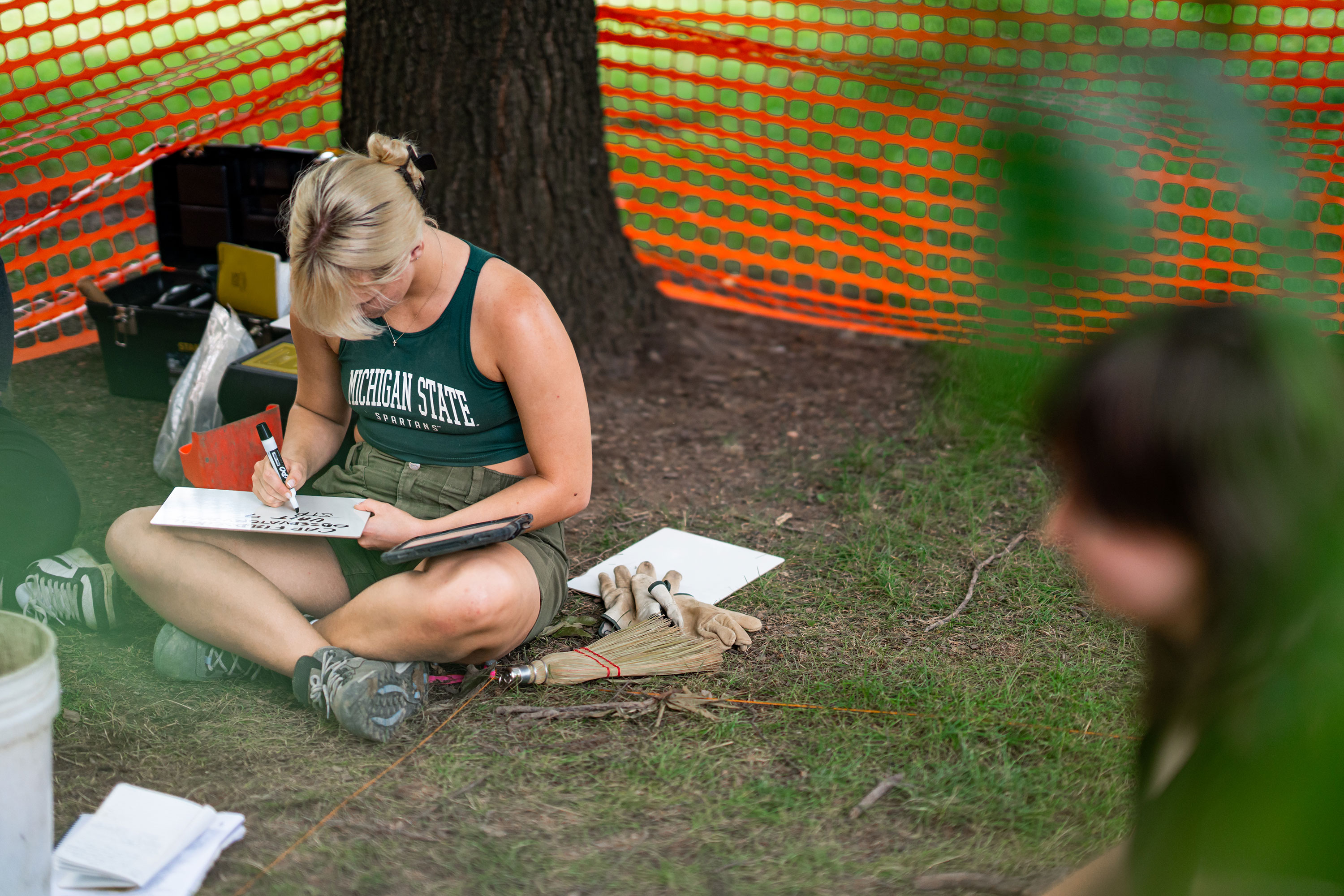
“Most of my work until now has been on prehistoric sites. The observatory foundation is such a cool find,” said Gabrielle Moran-O’Dell, an anthropology doctoral student and teaching assistant for the 2024 summer field school. “Being able to mentor students on what, for many, is their first time on an archaeological site and see their excitement about it is really awesome to be part of.”
A typical day for students in the summer field school involved working at the excavation site on West Circle Drive near Mayo Hall in the morning and conducting archival research or analyzing artifacts in the afternoon.
“The observatory discovery gives students the opportunity to learn about MSU’s history by actively excavating it and doing archival research on the students that came before them. One of the fun things that we’ve done was spending time at MSU archives learning about the students that came before them through their scrapbooks and other sorts of items they left behind,” Camp said. “We also learned about Rolla Carpenter, the professor who helped build the observatory.”
Erin Willcock, a fourth-year anthropology major, said researching in the archives was her favorite part of the field school.
“It was really exciting to look through books and scrapbooks and be able to relate that to what we’re seeing as we excavate the site,” she said.
Contextualizing history
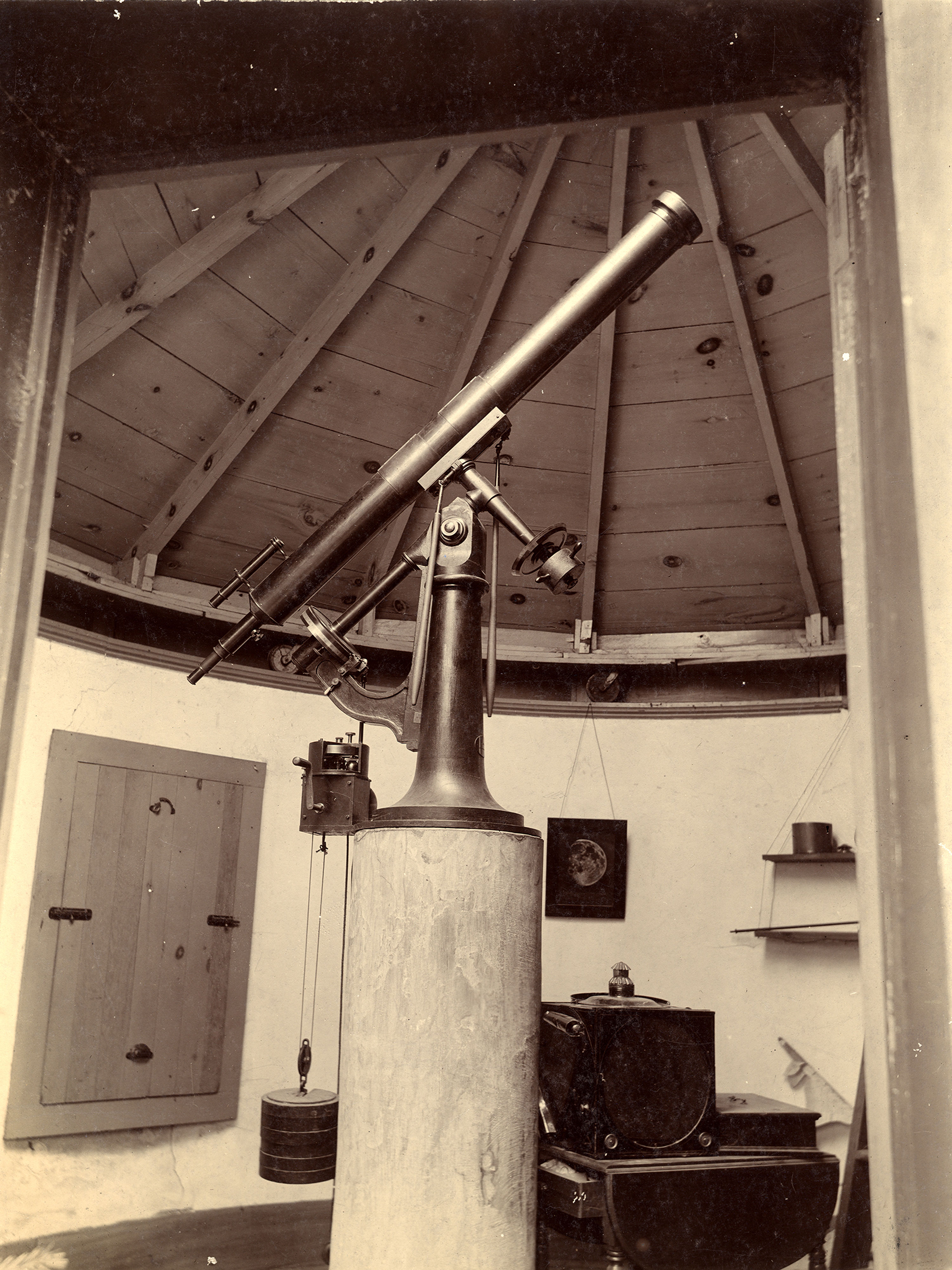
Camp and her team also worked with volunteers interested in helping at the dig site, as well as Shannon Schmoll, director of Abrams Planetarium. Camp will often let Schmoll know when CAP students have uncovered a new interesting artifact. One artifact of note discovered this summer is a button that could have potentially been part of the original observatory telescope, which is now housed in the planetarium.
“We have talked to Stacey Camp a lot around how observatories work, how they’re constructed, and have connected her with other folks who study and work on antique telescopes, so that we can try to figure out what’s there and what might have been back in the past,” Schmoll said. “It’s important for us to have those conversations across disciplines because theres always something that we can learn and there’s always a different perspective that helps you see something differently or come up with new ideas or theories. Stacey and I can draw on each other’s experience to help contextualize the artifacts her team finds.”
Camp and Schmoll have also collaborated on public outreach and educational opportunities, which have included Camp bringing her students to the planetarium and a talk from, Horace Smith, professor emeritus in the MSU Department of Physics and Astronomy and author of “Stars Over the Red Cedar,” a book about the history of astronomical observation on MSU’s campus.
“The telescope and the observatory are one of those things that get us excited and also help us think about our history: where we were, where we are now, and how we can continue to advance scientific observation,” Schmoll said. It’s really helpful for CAP and the planetarium to work together and get those different perspectives and get people interested and excited through all of these different avenues.”
“Archaeology can happen anywhere”
Camp said the skills the students learn at summer field school are applicable beyond archaeology — and can help them to collaborate in a way similar to her and Schmoll in their future careers.
“It’s not just about archaeology. It’s about learning to work as a team, which is a skill that is transferable to any sort of profession you go into,” she said. “I want to make sure that they leave our field school not only knowing how to do archaeology, but communicating, sharing their findings with the public and doing archival research.”
Willcock said participating in the field school made her feel excited about what’s next — and grateful to be a Spartan.
I think it really helps show that archaeology can happen anywhere,” she said. “I feel very lucky to be able to be at a big school that has programs like CAP. It’s one of the reasons I chose MSU: I knew that there would be opportunities for me to do some academic soul-searching and try different things. And that’s exactly what I’ve gotten out of my experience here.”

