Jump to HeaderJump to Main ContentJump to Footer
Michigan State University
MSUToday
  • For Media
  • Experts
  • Releases and Statements
  • Sign Up
  • Update Information
MSUTODAY
  • Browse Stories By

    Topics

    Explore stories by subject area

    • Arts and Culture
    • Business and Economy
    • Climate and Environment
    • Education and Learning
    • Engineering, Science and Technology
    • Government and Society
    • Health and Medicine
    • Media and Communications
    • MSU Leadership and Impact
    • Sports and Recreation
    • Student and Campus Experience
    View All Stories

    Collections

    Curated story series

    • Alumni stories
    • Turfgrass
    • Ask the Expert
    • Big Ideas
    • Climate solutions
    • Water at MSU
    • Mobility
    • Spartan Perspectives
    • Student views
    • Graduate voices
    • Faculty voices
    View All Collections

    Featured

    Editor's picks

    • MSU earns top 100 ranking by Times Higher Education

      Oct. 12, 2026

      MSU earns top 100 ranking by Times Higher Education

    • New spaces, new opportunities at MSU 

      Oct. 14, 2026

      New spaces, new opportunities at MSU 

MSUTODAY
  • Browse Stories By

< Browse Stories By

Topics

Explore stories by subject area

  • Arts and Culture
  • Business and Economy
  • Climate and Environment
  • Education and Learning
  • Engineering, Science and Technology
  • Government and Society
  • Health and Medicine
  • Media and Communications
  • MSU Leadership and Impact
  • Sports and Recreation
  • Student and Campus Experience
  • View All Stories

Collections

Curated story series

  • Alumni stories
  • Turfgrass
  • Ask the Expert
  • Big Ideas
  • Climate solutions
  • Water at MSU
  • Mobility
  • Spartan Perspectives
  • Student views
  • Graduate voices
  • Faculty voices
  • View All Collections

Featured

Editor's picks

  • MSU earns top 100 ranking by Times Higher Education

    Oct. 12, 2026

    MSU earns top 100 ranking by Times Higher Education

  • New spaces, new opportunities at MSU 

    Oct. 14, 2026

    New spaces, new opportunities at MSU 

  • For Media
  • Experts
  • Releases and Statements
  • Sign Up
  • Update Information

Health and Medicine

Oct. 9, 2023

SHARE

Ask the expert: What can we learn from links between cancer and heart disease?

Researchers like Bryan Smith at MSU are exploiting commonalities between the two diseases to develop drugs and diagnostics that can target both

“Ask the expert” articles provide information and insights from MSU scientists, researchers and scholars about national and global issues, complex research and general-interest subjects based on their areas of academic expertise and study. They may feature historical information, background, research findings or offer tips.

The world’s leading killers are cancer and cardiovascular disease, which includes heart disease and other issues affecting the heart, blood and blood vessels. In the United States, cancer and cardiovascular disease combined account for nearly 50% of deaths during the first two decades of the 21st century.
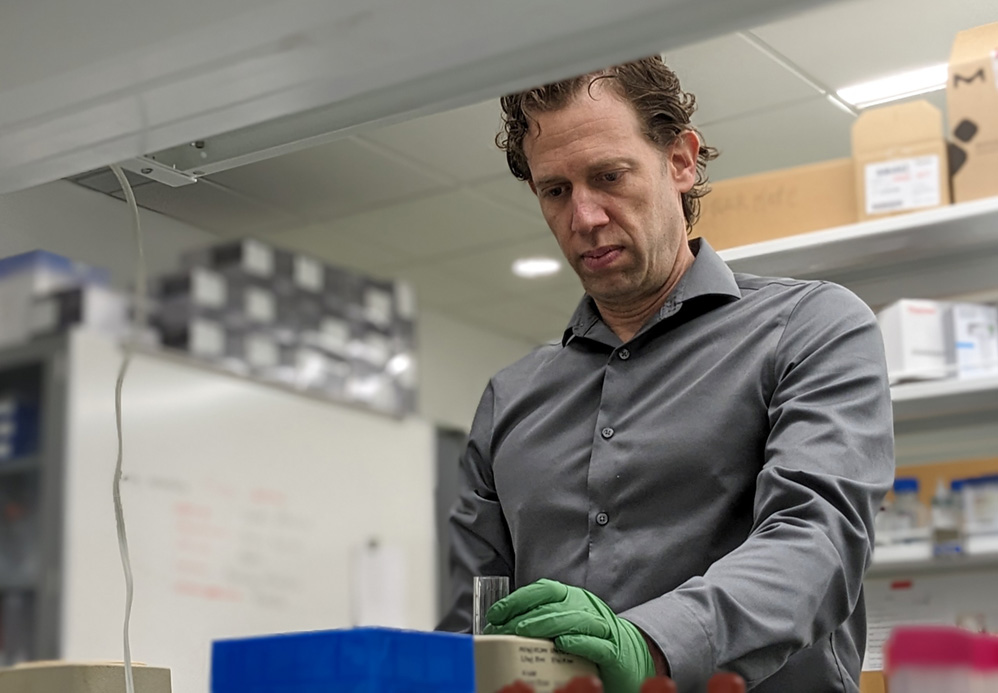
Bryan Smith working at a lab bench
Bryan Smith and his team at Michigan State University are using the connections between cancer and cardiovascular disease to help develop therapies and diagnostics for both. Credit: Matt Davenport/MSU

Though these diseases may seem quite different on the surface, researchers, including Bryan Smith of Michigan State University, have recently discovered parallels between their origins and development.

That means that drugs developed to treat one disease could also help fight the other, said Smith, an associate professor in the Department of Biomedical Engineering.

Smith, who also works in the Institute for Quantitative Health Science and Engineering, or IQ, explained how his work and the connections between cancer and cardiovascular disease are creating new opportunities to save lives.

The following Q&A is adapted from an article originally published in The Conversation.

What do cancer and cardiovascular disease have in common?

Although cardiovascular disease and cancer appear to have different origins and causes, they share many risk factors. For example, obesity, smoking, chronic stress, and certain lifestyle choices like poor diet are linked to both diseases.

A microscope image shows cancer cells, blood vessels and immune cells.
Red blood vessels and green cancer cells are clearly visible in this microscope image taken by the lab led by Bryan Smith at Michigan State University. But a closer inspection reveals gray specks, which are immune cells carrying nanomedicine cargo that can help them attack tumor sites. Credit: Courtesy of Bryan Smith

Many of the similarities between cardiovascular disease and cancer can be traced to inflammation. Chronic inflammation is a primary cause of atherosclerosis, the deadliest form of cardiovascular disease. The inflammation damages the cells lining the blood vessels and progressively worsens plaques.

Likewise, chronic inflammation can initiate cancer by increasing mutations. Such inflammation can also support cancer cell survival and spread by suppressing the body’s immune response and increasing the growth of the blood vessels that carry nutrients.


How can researchers use those shared features to their advantage?

Research hints that therapies designed for cancer can also help treat atherosclerosis.

For example, there are drugs that target immune cells called macrophages in tumors and cause them to eat cancer cells. It turns out a similar drug can cause macrophages to clear dead and dying cells in atherosclerosis, which shrinks plaques.

Additionally, antiglycolytic therapies that prevent the breakdown of glucose — or sugar, the body’s main source of energy — can make diseased tumor blood vessels and atherosclerotic blood vessels look more “normal,” essentially reversing the disease process in those vessels. They can also reduce inflammation in atherosclerosis.

Sodium glucose cotransporter-2 inhibitors, which are traditionally used to treat diabetes, are another intriguing class of treatments. Researchers have shown that these drugs provide significant protection from cardiovascular disease and can treat cancer.

What are the other practical benefits of investigating therapies and diagnostics that can be used against two diseases?

The costs involved in getting drugs into the clinic are enormous. The possibility of applying the same drug to two different patient populations offers big financial and risk-reduction incentives. It also offers the potential for simultaneous treatment for patients with both diseases.


How is your team contributing to this research field?

A recent discovery showed that nanotubes — very small particles made of carbon that are over 10,000 times thinner than human hair — can go into specific immune cells, travel through the bloodstream and enter tumors as a Trojan horse.
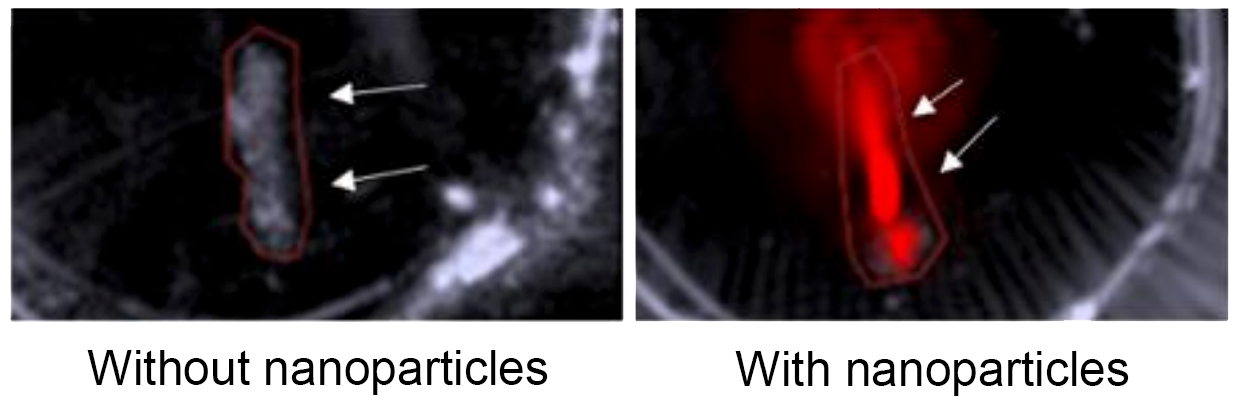
A black-and-white ultrasound image on the left shows a gray rod, which is a mouse’s artery. Two white arrows and a red outline have been added to the image to highlight the blood vessel. In the image on the right, a different artery is shown and it’s glowing red in the otherwise grayscale ultrasound image. This red signal comes from the new photoacoustic imaging, aided by nanoparticles
Working with mouse models, Bryan Smith and his team at Michigan State University have developed nanoparticles that respond to light, generating ultrasound waves to reveal vulnerable plaques that can lead to strokes and heart attacks. Credit: Advanced Functional Materials

These nanotubes can carry anything that researchers put on them, including drugs and imaging contrast agents. The immune cells carrying the nanotubes naturally home in on tumors through the inflammatory response.

Because cancer and atherosclerosis are both inflammatory diseases, my research team and I have been studying whether nanotube-loaded immune cells may also serve as delivery vehicles to plaques.

Nanotubes can be loaded with a therapy that stimulates immune cells, or macrophages, to “eat” plaque debris and thus reduce plaque size.

Moreover, restricting drug delivery specifically to those immune cells reduces the risk of off-target side effects. These nanotubes can also be used to improve diagnosis of cardiovascular disease by highlighting plaques using new imaging approaches.

What is your outlook for the role of nanomedicines in addressing cancer and cardiovascular disease?

Nanoparticle-based cancer drugs first entered the clinic in 1995, and researchers have developed many others since. But there is currently only one cardiovascular nanodrug approved by the Food and Drug Administration.

This suggests opportunity for new nanotherapy approaches to improve cardiovascular drug efficacy and reduce side effects.

Because of the parallels between cancer and cardiovascular disease, cancer nanodrugs may be strong drug candidates to treat cardiovascular disease and vice versa. As basic science discovers other molecular parallels between these diseases, patients will be the beneficiaries of better therapies that can treat both.

MEDIA CONTACTS

Bryan Smith
Health and MedicineDiseases, Conditions and TreatmentsDiseases, Conditions and Treatments

MSUToday Weekly Update

The MSUToday Weekly Update email showcases how Spartans are making a difference through academic excellence, research impact and community outreach. Get inspired by these stories of innovation, collaboration and determination. Plus, enjoy photos and videos of campus and more MSU content to help keep you connected to the Spartan community.

Sign UpUpdate My Information

Connect With Us

Visit our Facebook pageVisit our page on XVisit our Instagram pageVisit our LinkedIn pageVisit our YouTube pageVisit our TikTok page

Resources

  • A to Z Index
  • Find People
  • Maps
  • Email
  • Student Information System (SIS)
  • D2L
  • Libraries
  • Tech Support
  • MSU Misconduct Hotline
  • Social Media Directory
  • Events Calendar
  • For Media

Health and Safety

  • MSU Police and Public Safety
  • Olin Health Center
  • Counseling & Psychiatric Services (CAPS)
  • University Health and Wellbeing
  • MSU Health Care
  • Civil Rights and Title IX
  • Our Commitment
  • Center for Survivors
  • Security & Fire Safety Report
  • University Policy on Relationship Violence and Sexual Misconduct
  • Notice of Non-Discrimination, Anti-Harassment and Non-Retaliation
  • Health Care Non-Discrimination Notice

Support Services

  • Disability Resources
  • Supportive Services
  • Learning Resources

Working at MSU

  • Human Resources
  • EBS Login
  • Job Postings
  • Employee Assistance Program

Reports

  • CARES Act Funding
  • Student Achievement and Outcomes

Contact us

517-355-1855

Address

Michigan State University 426 Auditorium Road East Lansing, MI 48824

Follow Us

  • Visit our Facebook page
  • Visit our page on X
  • Visit our Instagram page
  • Visit our TikTok page
  • Visit our LinkedIn page
  • Visit our YouTube page

If you're having accessibility issues, please let us know.

Know More: Campus Safety Information and ResourcesTransparency Reporting: Budget & Salary/Compensation
  • Contact Information|
  • Site Map|
  • Privacy Statement|
  • Site Accessibility|
  • Call MSU: (517) 355-1855|
  • Visit: msu.edu|
  • Notice of Nondiscrimination|

SPARTANS WILL|© Michigan State University|

Latest News