Jump to HeaderJump to Main ContentJump to Footer
Michigan State University
  • Browse Stories By

    Topics

    Explore stories by subject area

    • Arts and Culture
    • Business and Economy
    • Climate and Environment
    • Education and Learning
    • Engineering, Science and Technology
    • Government and Society
    • Health and Medicine
    • Media and Communications
    • MSU Leadership and Impact
    • Sports and Recreation
    • Student and Campus Experience
    View All Stories

    Collections

    Curated story series

    • Turfgrass
    • Ask the Expert
    • Big Ideas
    • Climate solutions
    • Water at MSU
    • Mobility
    • Spartan Perspectives
    • Student views
    • Graduate voices
    • Faculty voices
    View All Collections

    Featured

    Editor's picks

    • The Spartans behind your favorite Michigan golf courses

      July 22, 2026

      The Spartans behind your favorite Michigan golf courses

    • MSU in the 1990s: 10 Spartan milestones

      July 14, 2026

      MSU in the 1990s: 10 Spartan milestones

MSUTODAY
  • Browse Stories By

< Browse Stories By

Topics

Explore stories by subject area

  • Arts and Culture
  • Business and Economy
  • Climate and Environment
  • Education and Learning
  • Engineering, Science and Technology
  • Government and Society
  • Health and Medicine
  • Media and Communications
  • MSU Leadership and Impact
  • Sports and Recreation
  • Student and Campus Experience
  • View All Stories

Collections

Curated story series

  • Turfgrass
  • Ask the Expert
  • Big Ideas
  • Climate solutions
  • Water at MSU
  • Mobility
  • Spartan Perspectives
  • Student views
  • Graduate voices
  • Faculty voices
  • View All Collections

Featured

Editor's picks

  • The Spartans behind your favorite Michigan golf courses

    July 22, 2026

    The Spartans behind your favorite Michigan golf courses

  • MSU in the 1990s: 10 Spartan milestones

    July 14, 2026

    MSU in the 1990s: 10 Spartan milestones

  • For Media
  • Experts
  • Releases and Statements
  • Sign Up
  • Update Information

Resources

  • A to Z Index
  • Find People
  • Maps
  • Email
  • Student Information System (SIS)
  • D2L
  • Libraries
  • Tech Support
  • MSU Misconduct Hotline
  • Social Media Directory
  • Events Calendar
  • For Media
Michigan State University
MSUToday
  • For Media
  • Experts
  • Releases and Statements
  • Sign Up
  • Update Information
MSUTODAY
Climate and Climate Solutions

Sept. 7, 2023

Table salt could be the secret ingredient for better recycling

MSU research shows sodium chloride offers a safe, inexpensive and reusable pathway to recovering useful products from plastic waste

By: Matt Davenport

Muhammad Rabnawaz, an associate professor in Michigan State University’s top-ranked School of Packaging and recent inductee into the National Academy of Inventors, has always believed that the most brilliant solution is also the simplest.
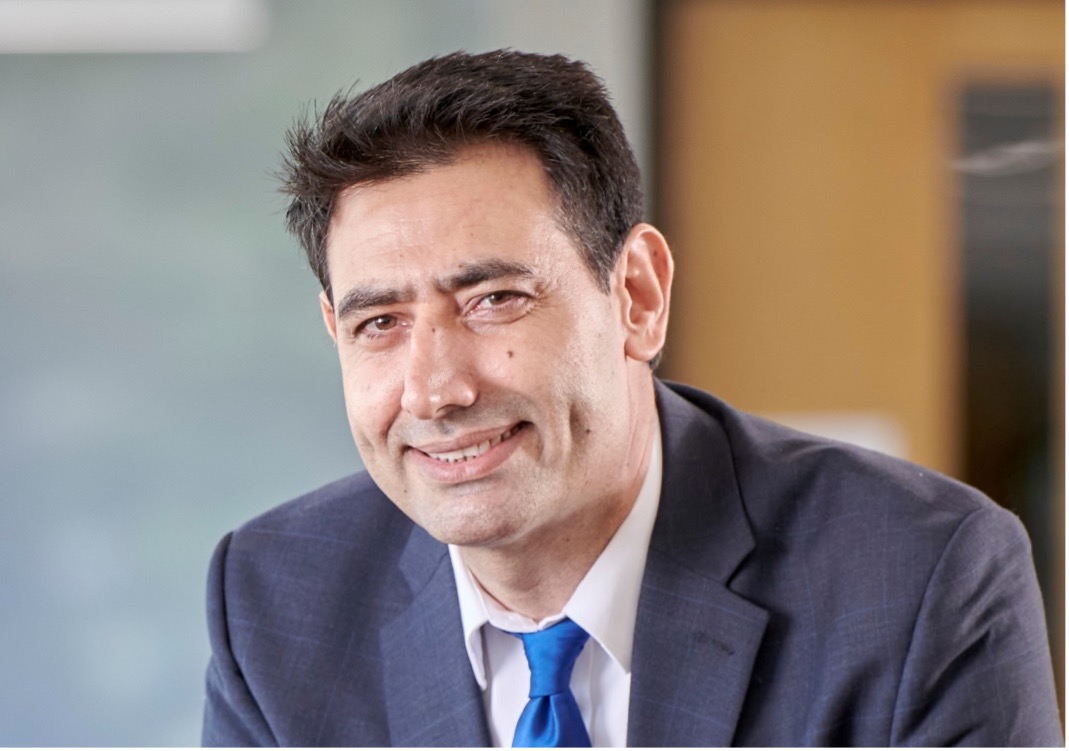
 

Michigan State University Associate Professor Muhammad Rabnawaz
Michigan State University Associate Professor Muhammad Rabnawaz. Credit: Tom Gennara

That belief is reflected in his team’s new publication in the journal Advanced Sustainable Systems.


Rabnawaz and his colleagues showed that sodium chloride — table salt — can outperform much more expensive materials being explored to help recycle plastics.


“This is really exciting,” Rabnawaz said. “We need simple, low-cost solutions to take on a big problem like plastics recycling.”


Although plastics have historically been marketed as recyclable, the reality is that nearly 90% of plastic waste in the United States ends up in landfills, in incinerators or as pollution in the environment.


One of the reasons plastics have become so disposable is that the materials recovered from recycling aren’t valuable enough to spend the money and resources required to get them.
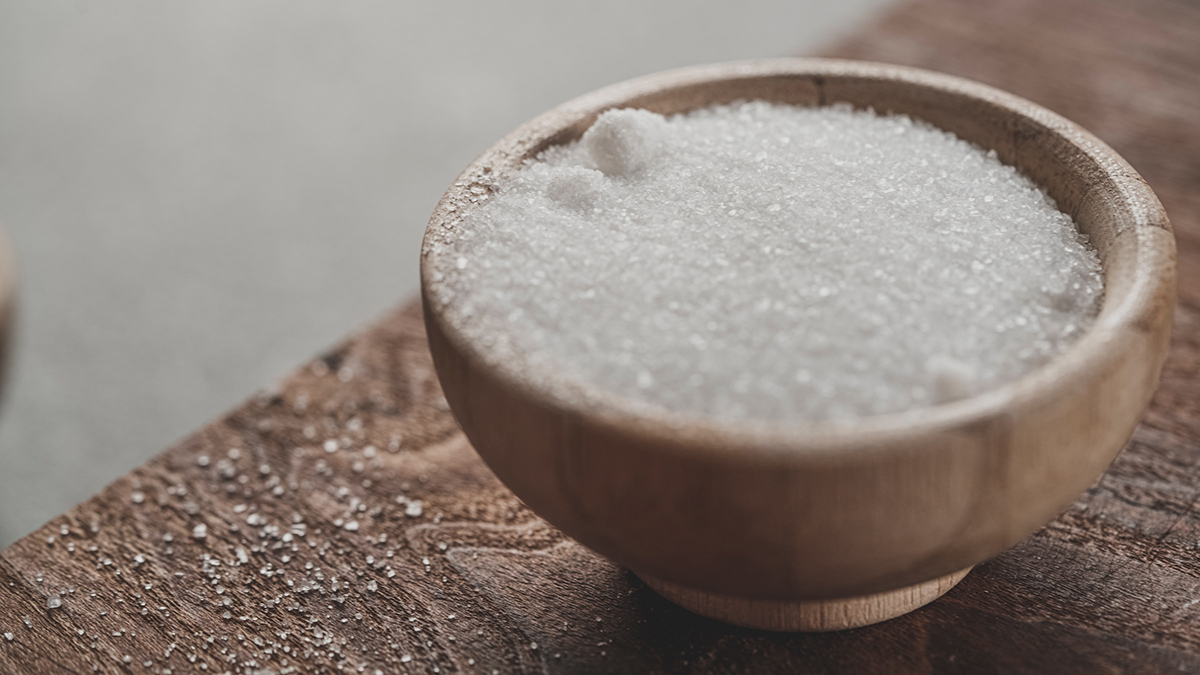
 

A small wooden bowl is filled with salt.
Michigan State University researchers have shown that table salt can improve the economic outlook for recycling plastics. Credit: Faran Raufi/Unsplash

According to the team’s projections, table salt could flip the economics and drastically reduce costs when it comes to a recycling process known as pyrolysis, which works through a combination of heat and chemistry.


Although Rabnawaz expected salt to have an impact because of how well it conducts heat, he was still surprised by how well it worked. It outperformed expensive catalysts — chemicals designed to spur reactions along — and he believes his team has just started tapping into its potential.


Furthermore, the work is already getting attention from big names in industry, he said.


In fact, the research was partially supported by Conagra Brands, a consumer packaged goods company.


A catalyst worth its salt


Pyrolysis is a process that breaks down the plastics into a mixture of simpler, carbon-based compounds, which come out in three forms: gas, liquid oil and solid wax.


That wax component is often undesirable, Rabnawaz said, yet it can account for more than half of products, by weight, of current pyrolysis methods. That’s even when using catalysts, which are helpful, but they often can be toxic or prohibitively expensive to be applied in managing waste plastics.


Platinum, for example, has very attractive catalytic properties, which is why it’s used in catalytic converters to reduce harmful emissions from cars. But it’s also very pricey, which is why thieves steal catalytic converters.


Although bandits are unlikely to rob platinum-based materials from a sweltering pyrolysis reactor, attempting to recycle plastics with those catalysts would still require a hefty investment — millions, if not hundreds of millions, of dollars, Rabnawaz said. And current catalysts aren’t efficient enough to justify that cost.


“No company in the world has that kind of cash to burn,” Rabnawaz said.

A table shows the results of experiments using different catalysts in the pyrolysis of polyolefin polymers. When table salt is the catalyst, pyrolysis produces a dark liquid oil, shown in a vial. That accounts for 86% of the products by weight. The remaining 14% is gas, meaning there are no solids. Using platinum on carbon as the catalyst, the oil vial is only slightly filled. Just 18% of the pyrolysis products are liquid by weight. Meanwhile, 28% are gas and more than half ? 54% ? are in the form of black-and-white speckled wax, shown in a vial next to the oil. When platinum on alumina is the catalyst, even less liquid is produced ? 14% ? along with more solid wax ? 62%. The remaining 24% is gas.In tests performed at Michigan State University, pyrolysis of polyolefins using table salt as a catalyst avoided an undesirable solid byproduct, which is produced by much more expensive platinum-based catalysts. Credit: Shaker, M. et al., Advanced Sustainable Materials, 2023.

In earlier work, Rabnawaz and his team showed that copper oxide and table salt worked as catalysts to break down a plastic known as polystyrene. Now, they’ve shown table salt alone can eliminate the wax byproduct in the pyrolysis of polyolefins — polymers that account for 60% of plastic waste.

“That first paper was important, but I didn’t get excited until we worked with polyolefins,” Rabnawaz said. “Polyolefins are huge, and we just outperformed expensive catalysts.”


Joining Rabnawaz on this project were Christopher Saffron, an associate professor in the College of Agriculture and Natural Resources, visiting scholar Mohamed Shaker and MSU doctoral student Vikash Kumar. 


When using table salt as a catalyst to pyrolyze polyolefins, the team produced mostly liquid oil containing hydrocarbon molecules similar to what’s found in diesel fuel, Rabnawaz said. Another perk of the salt catalyst, the researchers showed, is it can be reused.


“You can recover salt by simply washing the obtained oil with water,” Rabnawaz said.


The researchers also showed that table salt aided in the pyrolysis of metallized plastic films, which are commonly used in food packaging, like potato chip bags, which isn’t currently recycled.


Although pure table salt didn’t outperform a platinum-alumina catalyst the team also tested with metallized films, the results were similar, and the salt is a fraction of the cost.


Rabnawaz, however, stressed that metallized films, while useful, are inherently problematic. He envisions a world where such films are no longer needed, which is why his team is also working to replace them with more sustainable materials.


The team will also continue working to further its pyrolysis project.


For instance, the team has yet to fully characterize the gas products of pyrolysis with table salt. And Rabnawaz believes the team can improve this approach so that the liquid products contain chemicals with more valuable applications than being burned as fuel.


Still, the early returns of the team’s new table salt tactics are encouraging. Based on a preliminary economic analysis supported by the U.S. Department of Agriculture and MSU AgBioResearch, the team estimated a commercial pyrolysis reactor could triple its profits just by adding salt.


MEDIA CONTACTS

Muhammad Rabnawaz, Emilie Lorditch
Climate and Climate SolutionsClimate and EnvironmentNatural Resources and ConservationBusiness and Economy

Latest News

MSUToday Weekly Update

The MSUToday Weekly Update email showcases how Spartans are making a difference through academic excellence, research impact and community outreach. Get inspired by these stories of innovation, collaboration and determination. Plus, enjoy photos and videos of campus and more MSU content to help keep you connected to the Spartan community.

Sign UpUpdate My Information

Connect With Us

Visit our Facebook pageVisit our page on XVisit our Instagram pageVisit our LinkedIn pageVisit our YouTube pageVisit our TikTok page

Health and Safety

  • MSU Police and Public Safety
  • Olin Health Center
  • Counseling & Psychiatric Services (CAPS)
  • University Health and Wellbeing
  • MSU Health Care
  • Civil Rights and Title IX
  • Our Commitment
  • Center for Survivors
  • Security & Fire Safety Report
  • University Policy on Relationship Violence and Sexual Misconduct
  • Notice of Non-Discrimination, Anti-Harassment and Non-Retaliation
  • Health Care Non-Discrimination Notice

Support Services

  • Disability Resources
  • Supportive Services
  • Learning Resources

Working at MSU

  • Human Resources
  • EBS Login
  • Job Postings
  • Employee Assistance Program

Reports

  • CARES Act Funding
  • Student Achievement and Outcomes

Contact us

517-355-1855

Address

Michigan State University 426 Auditorium Road East Lansing, MI 48824

Follow Us

  • Visit our Facebook page
  • Visit our page on X
  • Visit our Instagram page
  • Visit our TikTok page
  • Visit our LinkedIn page
  • Visit our YouTube page

If you're having accessibility issues, please let us know.

Know More: Campus Safety Information and ResourcesTransparency Reporting: Budget & Salary/Compensation
  • Contact Information|
  • Site Map|
  • Privacy Statement|
  • Site Accessibility|
  • Call MSU: (517) 355-1855|
  • Visit: msu.edu|
  • Notice of Nondiscrimination|

SPARTANS WILL|© Michigan State University|

