Tropical forests are massive biodiversity storehouses. While these rich swaths of land constitute less than one-tenth of Earth’s surface, they harbor more than 60% of known species. Among them is a higher concentration of endangered species than anywhere else on Earth.
However, these regions are also under immense pressure, as tropical land is rapidly being transformed for industrial and agricultural purposes.
Worldwide, regional governments and international groups are establishing new protected areas to slow further loss of threatened species. However, new research appearing in the journal PLOS Biology demonstrates that this strategy may not be enough on its own to reverse, or even stop, these regions’ declining biodiversity.
Michigan State University Assistant Professor Lydia Beaudrot, an ecologist in the Department of Integrative Biology, was a key contributor to the study. Beaudrot leads a research group whose focus is on quantifying data-driven insights into the ecology and conservation of tropical mammals.
This paper brought together an international cohort of tropical wildlife researchers. Together, they assessed how tropical mammalian communities are affected by the activity of nearby humans — from the impact of simple coexistence to widespread environmental change.
“We found that tropical forests near more people have fewer mammal species. It suggests that some species do not survive even when forests are protected, such as in national parks,” Beaudrot explained.
Activities such as clear-cutting or other transformations of land present some of the most destructive threats to habitats. But even persistent human activity, including hunting and simply living adjacent to protected areas, can decrease some animals’ ability to thrive in protected zones, the authors argued.
Near the not-so-quiet village
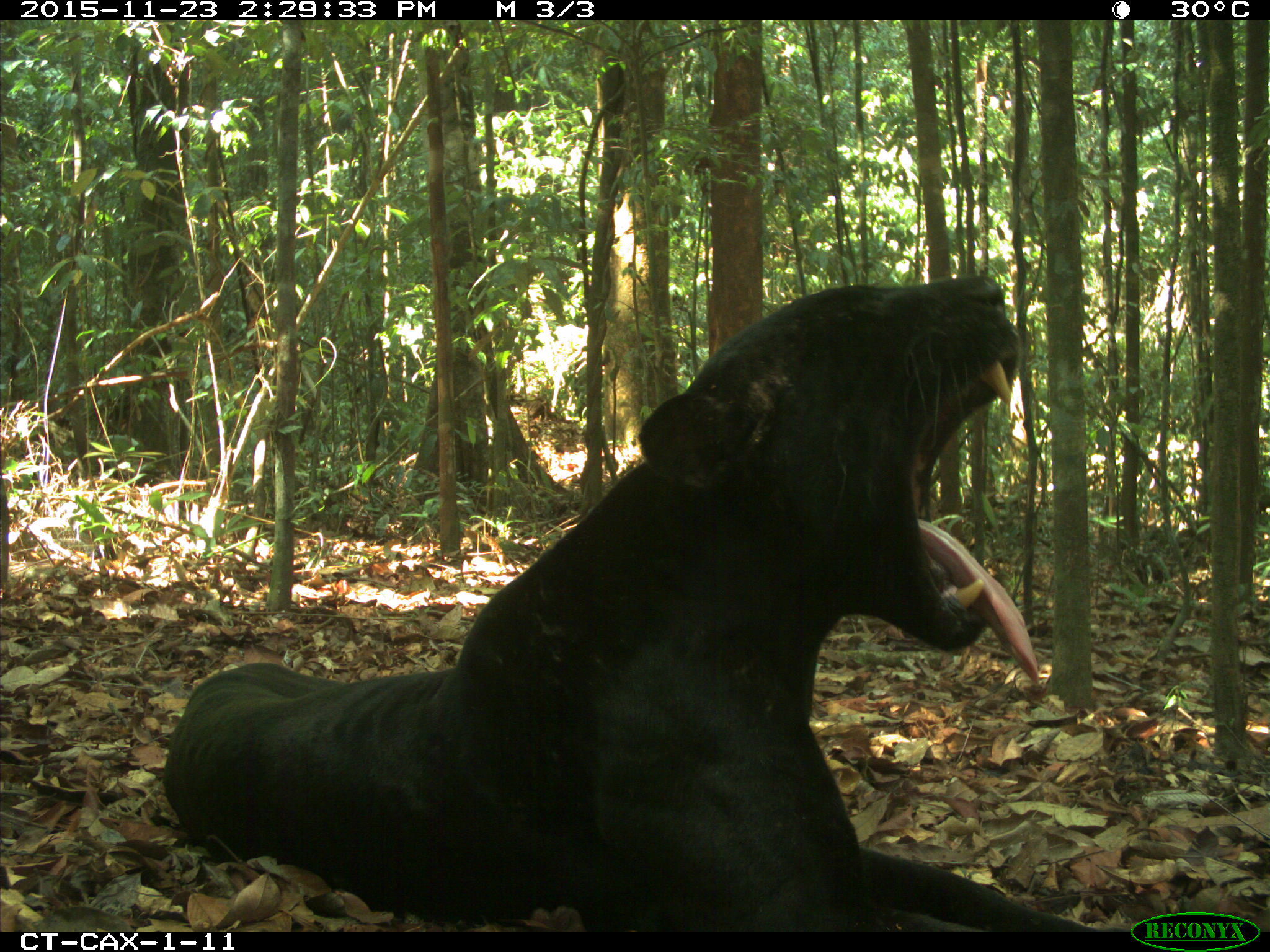
This effect, termed “anthropogenic extinction filtering,” demonstrates that human activity outside of protected areas is dramatically reshaping the forest communities within them.
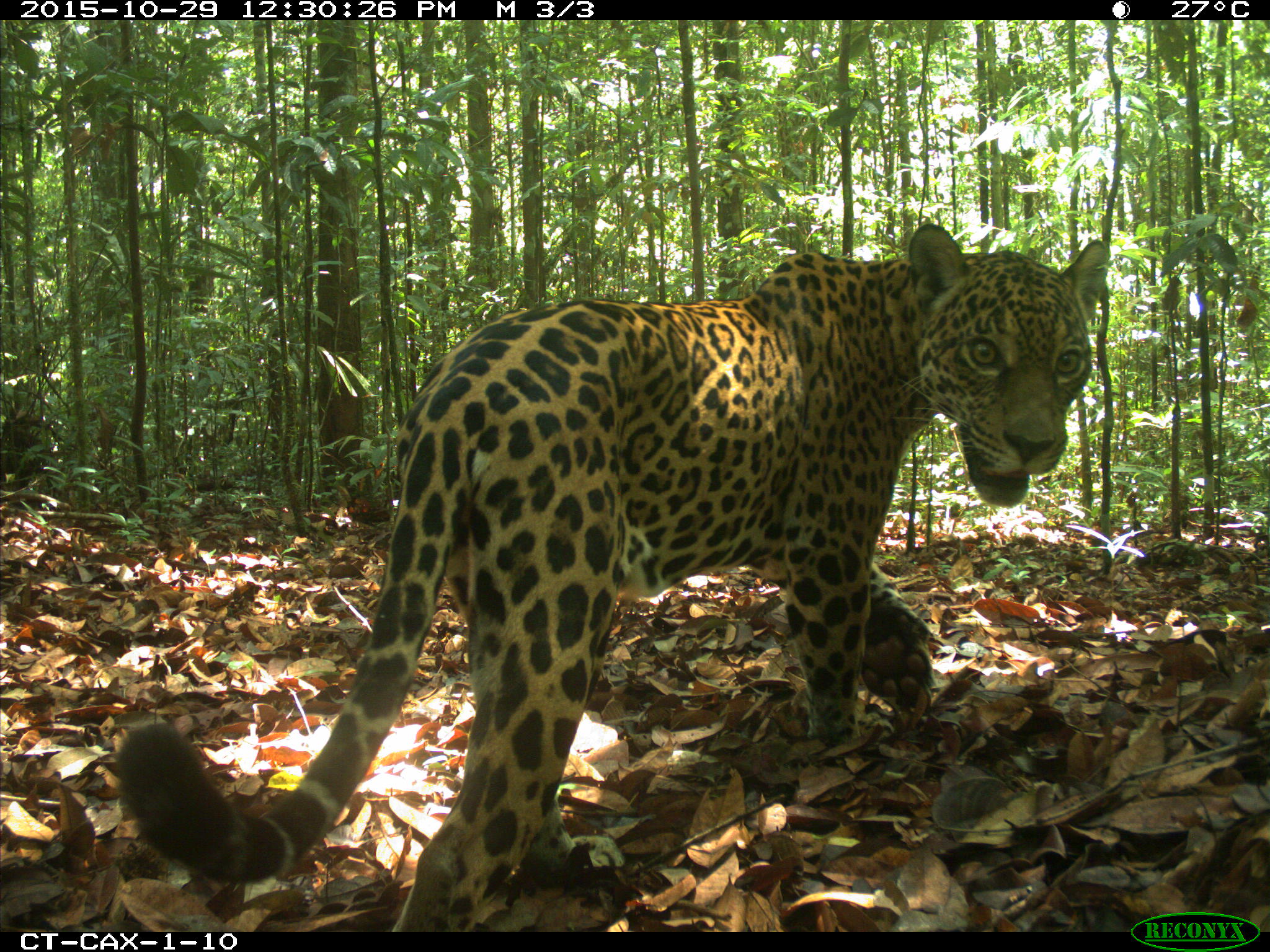
Across tropical forests spanning three continents — South America, Africa and Asia — the researchers measured how varied and dense the populations of mammals were within these regions using an unprecedented dataset comprised of over 2,000 cameras across tropical forests worldwide.
The images gathered came in part from a network of 17 sites across the tropics established as the Tropical Ecology Assessment and Monitoring Network which is composed of a diverse group of conservationists and research collaborators.
Ilaria Greco, a doctoral candidate at the University of Florence and lead author on the study, forged connections with an even broader international cohort of wildlife researchers to facilitate the exchange of data not included in the Wildlife Insights database. This collaboration paved the way for the largest-ever study of its kind, encompassing 37 total locations — more than double the sites available through Wildlife Insights.
This endeavor yielded long-term data on 239 species of mammals, enabling researchers to examine how these numbers changed where human population density and habitat disturbance in nearby areas differed. Sites in the study ranged from large, continuous forested regions to highly fragmented forest ecosystems.
In addition to the critical importance of protected areas, Beaudrot noted that additional conservation measures, such as forest restoration, are essential to protect tropical mammals.
The researchers developed a model that integrated remote-sensing data — information gathered from aerial imagery — with images from trail cameras to better understand how human presence impacted mammal communities in protected areas.
“Through a massive collaboration among many researchers, we used the largest dataset to date to test how habitat loss and human density affect tropical forest wildlife,” Beaudrot said.
The model predicted that for every 16 humans within a square kilometer of a protected area, mammal species could decrease by as much as 1%.
Where the buffer zone for these protected areas is negligible, the activity along their edges can reshape forest communities.
Land change in tropical forests means that nearly 70% of tropical forest habitats are within one kilometer of a forest’s edge — where interactions with humans or infrastructure becomes likely.
Mammal communities were also negatively impacted by forest loss and fragmentation within 50 kilometers, or about 31 miles, of their forested habitats.
“It is not just the protected area that matters for biodiversity conservation but also what is outside the protected area,” Beaudrot said.
Unprecedented understanding
Current initiatives, including the United Nations’ Decade on Ecosystem Restoration and Kunming-Montreal Global Biodiversity Framework, which are meant to stop or reverse human-caused extinction and ecosystem destruction, may fall short of these goals, the authors warned.
Therefore, to create more effective protected areas, the authors suggested that reducing the effects of humans outside protected area borders is critical. They note that restoring habitat outside the protected areas widens the zone between humans and tropical mammals, helping bolster biodiversity.
Rather than protecting isolated patches of land, the authors noted that tropical mammals may stand a better chance if protected areas become more widespread and connected, creating broader uninterrupted regions for animals to persist in.
Greco, who led the project and is a former visiting scholar in Beaudrot’s lab, now works as a postdoctoral researcher in the lab of Francesco Rovero, an associate professor of ecology at the University of Florence and a long-time collaborator of Beaudrot’s.
According to Greco, the team’s results suggest the existence of “anthropogenic extinction filtering acting on mammals in tropical forests, whereby human overpopulation has driven the most sensitive species to local extinction while remaining ones are able to persist, or even thrive, in highly populated landscapes and mainly depend on habitat cover.”
“The study warns that conservation of many mammals in tropical forests depends on mitigating the complex detrimental effects of anthropogenic pressures well beyond protected area borders,” said Rovero.
This study was first published on Feb. 13 in PLOS Biology. Parts of this story have been adapted from a release prepared by the journal.

