Jump to HeaderJump to Main ContentJump to Footer
Michigan State University
  • Browse Stories By

    Topics

    Explore stories by subject area

    • Arts and Culture
    • Business and Economy
    • Climate and Environment
    • Education and Learning
    • Engineering, Science and Technology
    • Government and Society
    • Health and Medicine
    • Media and Communications
    • MSU Leadership and Impact
    • Sports and Recreation
    • Student and Campus Experience
    View All Stories

    Collections

    Curated story series

    • Turfgrass
    • Ask the Expert
    • Big Ideas
    • Climate solutions
    • Water at MSU
    • Mobility
    • Spartan Perspectives
    • Student views
    • Graduate voices
    • Faculty voices
    View All Collections

    Featured

    Editor's picks

    • The Spartans behind your favorite Michigan golf courses

      July 22, 2026

      The Spartans behind your favorite Michigan golf courses

    • MSU in the 1990s: 10 Spartan milestones

      July 14, 2026

      MSU in the 1990s: 10 Spartan milestones

MSUTODAY
  • Browse Stories By

< Browse Stories By

Topics

Explore stories by subject area

  • Arts and Culture
  • Business and Economy
  • Climate and Environment
  • Education and Learning
  • Engineering, Science and Technology
  • Government and Society
  • Health and Medicine
  • Media and Communications
  • MSU Leadership and Impact
  • Sports and Recreation
  • Student and Campus Experience
  • View All Stories

Collections

Curated story series

  • Turfgrass
  • Ask the Expert
  • Big Ideas
  • Climate solutions
  • Water at MSU
  • Mobility
  • Spartan Perspectives
  • Student views
  • Graduate voices
  • Faculty voices
  • View All Collections

Featured

Editor's picks

  • The Spartans behind your favorite Michigan golf courses

    July 22, 2026

    The Spartans behind your favorite Michigan golf courses

  • MSU in the 1990s: 10 Spartan milestones

    July 14, 2026

    MSU in the 1990s: 10 Spartan milestones

  • For Media
  • Experts
  • Releases and Statements
  • Sign Up
  • Update Information

Resources

  • A to Z Index
  • Find People
  • Maps
  • Email
  • Student Information System (SIS)
  • D2L
  • Libraries
  • Tech Support
  • MSU Misconduct Hotline
  • Social Media Directory
  • Events Calendar
  • For Media
Michigan State University
MSUToday
  • For Media
  • Experts
  • Releases and Statements
  • Sign Up
  • Update Information
MSUTODAY
Diseases, Conditions and Treatments

May 13, 2025

Inside the castle: Studying social motivation in young children with autism

By: Emily Linnert
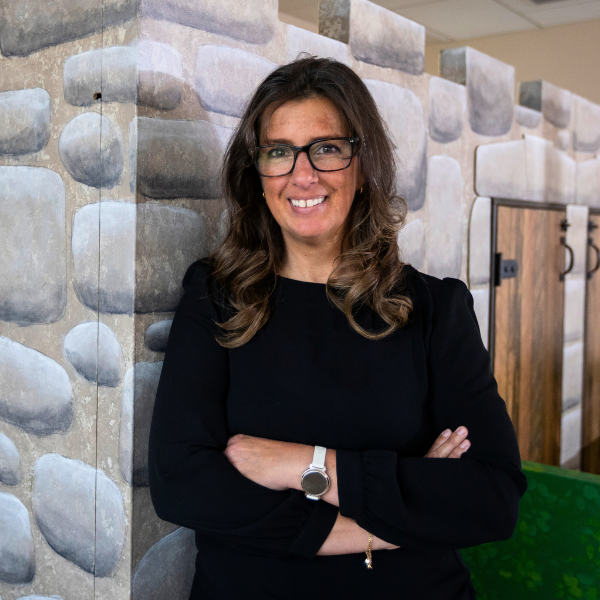
Portrait of Barbara Thompson
 

Barbara Thompson has been conducting research on neurodevelopment since her postdoctoral fellowship. As an undergraduate and then graduate student, she had a strong desire to take well-established translational neuroscience tools and apply them into clinical populations.

"The beauty of science is the more questions you ask, the more answers you get, the more questions that actually opens up the door to," Thompson said.

As a result, Thompson and her team were the first to demonstrate social conditioned place preference in humans. She’s using that technique to examine social motivation differences in kids with autism. The children, ages 2 1/2 to 5 1/2 years old, get to do what kids do best – play. Becca Ribbens brought her 3-year-old son, Leo, to the Social and Emotional Neurodevelopment Lab inside the Secchia Center in Grand Rapids, where he plays inside a castle that’s just his size.

"I'm a nurse and I have history in the neonatal unit. To see different outcomes of children and their development, I think it's really important that research is done from a non-biased perspective with someone like Barbara who is able to take out some of the variables,” said Ribbens, a mother of three as she watched Leo play in the castle.

"This was very easy. It was fun. He enjoyed himself… I think if we can volunteer to help support research that can help other children in the future, why wouldn’t we do that?"

Ribbens learned about Thompson’s work at the Teddy Bear Health Fair, an MSU College of Human Medicine sponsored free community event aimed at promoting health awareness. Ribbens has a twin sister and took part in MSU’s Twin Registry growing up. She understands the value of research and says she’s happy to give her time and her son’s time to the cause.

"As a nurse and as a young mom I see other children who have (autism). I thought it was something that my son and I could do," said Ribbens.
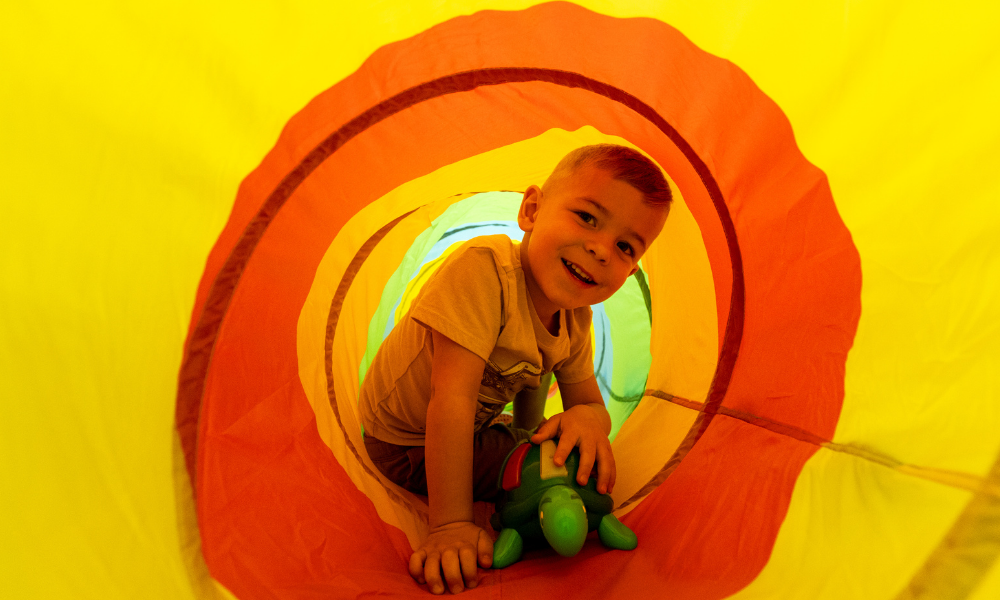
Child playing in a tunnel
 

Leo doesn’t have autism but his participation in the study is important. Thompson and her team observe children who are neurotypical and those who have a diagnosis of autism spectrum disorder.

“When a kid is given a diagnosis of autism, that diagnosis means there are differences in social communication, but it doesn’t detail what those differences are, or how they come about,” said Thompson. “This task is designed to specifically tease out the individual differences in social motivation.”

The castle features two identical rooms with the same toys in each space. A social experimenter, often a College of Human Medicine student, interacts with the child in one of the rooms. When the social experimenter leaves, Thompson and her team measure the amount of time the child chooses to spend in each room.
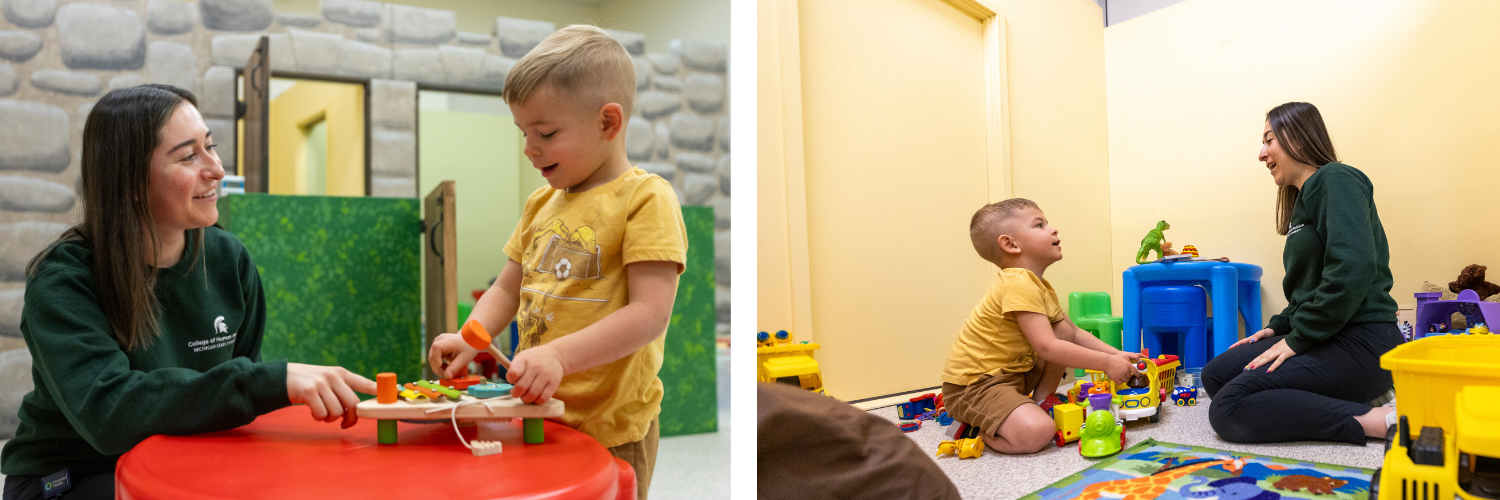
A woman interacting with students
 

"If they go back to that room where the social experimenter was, we can interpret that as a rewarding experience. It made the child feel good, they want to continue spending their time in that side of the castle,” said Thompson.

If disruptions in social interactions are driven by differences in reward and motivation, that’s mediated by different neuroanatomical circuits than those involved due to fear and anxiety.

“This research allows us to get an idea of what sort of neuroanatomical circuits might be involved for each young child experiencing differences in social motivation."
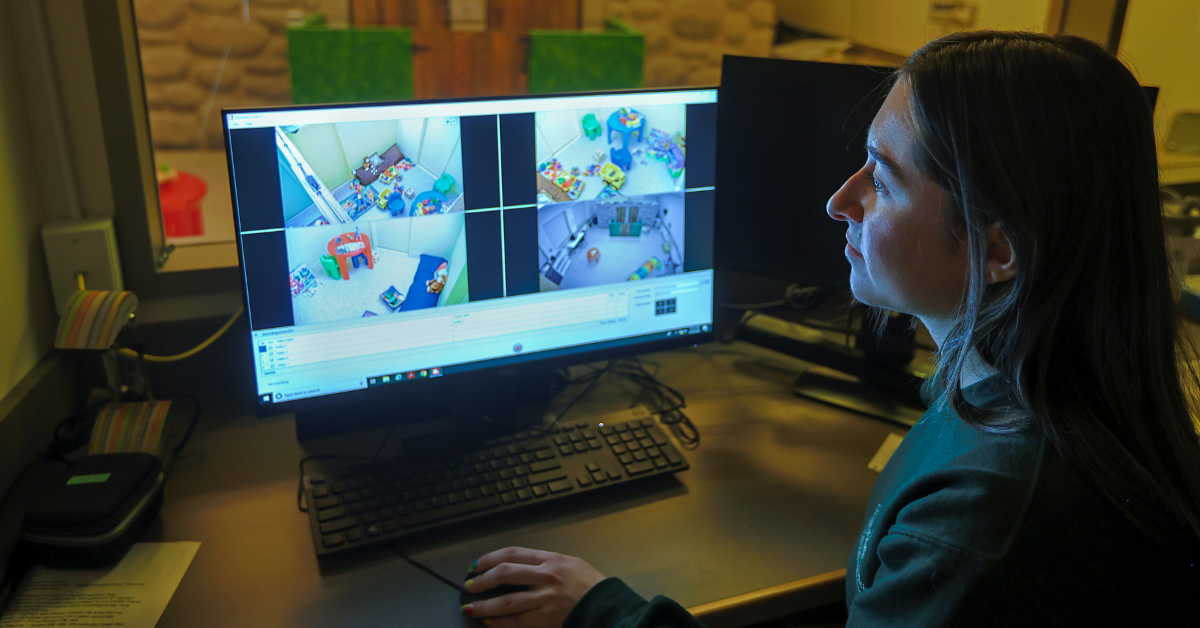
A woman looking at computer monitors.
 

The research sessions end with the children watching a video on a laptop equipped with an infrared eye tracker.

"We’re trying to determine whether or not their attention to visual stimuli that are social or non-social in nature, matches the behavior of their performance in the castle,” said Thompson.

Thompson hopes her research, funded by the Corewell Health-MSU Alliance, MSU C-RAIND and the Mall Family Foundation, will provide insight into types of intervention strategies that will be helpful for children with autism and hopes to publish findings related to social motivation in the next year or two.

“It could provide insight into how the child interprets those attempts at connection and help the people around them better understand how the child feels about that social interaction,” said Thompson. “That could lead the family, friends and community to consider their own behaviors while interacting with the child. Really, the benefit to the parent/child is advancing science forward.”

This story originally appeared on the College of Human Sciences website.

Diseases, Conditions and TreatmentsHealth and MedicinePreschool EducationEducation and LearningMSU ResearchMSU Leadership and Impact

Latest News

MSUToday Weekly Update

The MSUToday Weekly Update email showcases how Spartans are making a difference through academic excellence, research impact and community outreach. Get inspired by these stories of innovation, collaboration and determination. Plus, enjoy photos and videos of campus and more MSU content to help keep you connected to the Spartan community.

Sign UpUpdate My Information

Connect With Us

Visit our Facebook pageVisit our page on XVisit our Instagram pageVisit our LinkedIn pageVisit our YouTube pageVisit our TikTok page

Health and Safety

  • MSU Police and Public Safety
  • Olin Health Center
  • Counseling & Psychiatric Services (CAPS)
  • University Health and Wellbeing
  • MSU Health Care
  • Civil Rights and Title IX
  • Our Commitment
  • Center for Survivors
  • Security & Fire Safety Report
  • University Policy on Relationship Violence and Sexual Misconduct
  • Notice of Non-Discrimination, Anti-Harassment and Non-Retaliation
  • Health Care Non-Discrimination Notice

Support Services

  • Disability Resources
  • Supportive Services
  • Learning Resources

Working at MSU

  • Human Resources
  • EBS Login
  • Job Postings
  • Employee Assistance Program

Reports

  • CARES Act Funding
  • Student Achievement and Outcomes

Contact us

517-355-1855

Address

Michigan State University 426 Auditorium Road East Lansing, MI 48824

Follow Us

  • Visit our Facebook page
  • Visit our page on X
  • Visit our Instagram page
  • Visit our TikTok page
  • Visit our LinkedIn page
  • Visit our YouTube page

If you're having accessibility issues, please let us know.

Know More: Campus Safety Information and ResourcesTransparency Reporting: Budget & Salary/Compensation
  • Contact Information|
  • Site Map|
  • Privacy Statement|
  • Site Accessibility|
  • Call MSU: (517) 355-1855|
  • Visit: msu.edu|
  • Notice of Nondiscrimination|

SPARTANS WILL|© Michigan State University|
