The Trump administration recently issued an executive order directing the Corporation for Public Broadcasting to end all federal funding for PBS and NPR stations across the United States.
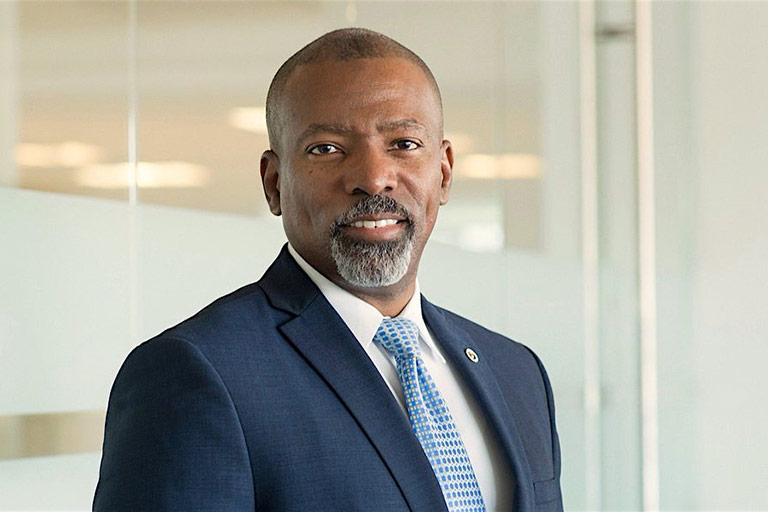
Shawn Turner is the general manager of WKAR, a public media station licensed to Michigan State University that serves East Lansing and its surrounding area. He also serves on the board of directors for NPR.
Here, Turner discusses the value of public media and what communities like mid-Michigan stand to lose if cuts occur.
What consequences would result from federal funding cuts to public media?
Public media provides an essential universal service. Together, public media broadcasters reach up to 99% of American populations, regardless of ZIP code or income level, including in communities where commercial television can’t succeed.
When you think about that, a lot of places across this country, including right here in Michigan, have communities that only have access to one or two news sources. Taking away federal funding for public media doesn’t just have an impact on people’s ability to be informed but, in some cases, it locks them out of the news and information they need to make decisions about their community.
When we think about what would happen if federal funding for public media went away, the truth is that there would still be NPR and PBS programming for a period of time. But here’s the difference: Right now, we have the ability to localize all of our NPR programming. You may hear a story at the national level, and what we do at WKAR is we stop and we ask ourselves, how does that impact our community on the local level? And we go on and we report on those things. Without federal funding, our ability to do that is diminished quite significantly.
Federal funding for public media costs $1.60 per United States taxpayer per year. What do those funds support?
Public media is the only free national media resource that operates with a public service mission, not commercial interest. At the local level, at stations like WKAR, the $1.60 per year that each taxpayer contributes to federal funding for public media goes so much further than PBS and NPR. Local public media stations — independently owned, independently operated public media stations — is almost a misnomer because we’re not just media stations. We are community partners.
The $1.60 per year that funds stations like ours does help bring NPR and PBS programming to communities, which is important. But it also allows us to support our local community at a level that really deals with the things that matter to people: information, events and opportunities. All those things are important to Michiganders.
What are some of the community services WKAR provides?
At WKAR, our educational outreach includes fostering literacy by handing out more than 30,000 free books at events throughout this past year and providing more than 11,000 WKAR Family Reading Kits with books and activities to families across 30 Michigan counties. We have a radio reading service where we support the visually impaired by reading local news over the radio to them so that they can be informed. WKAR was an early voting center during the 2024 election, and more than 3,000 people came to our studios to vote.
In addition, local public television stations partner with federal agencies to provide the Wireless Emergency Alert system. The public television infrastructure provides for the delivery of geo-targeted wireless emergency alerts to cell phones — reaching them wherever they are in times of crisis. WKAR Public Media participates in the Emergency Alert System, or EAS, providing critical and timely information to the public, including Amber Alerts on WKAR Radio. WKAR Radio plays a crucial role as the state primary for EAS, initiating state-level alerts to broadcasters across Michigan.
What educational resources does public media provide?
Teachers and parents need the complimentary support that stations like WKAR provide. The reading and literacy kits we supply to K-12 learners are an important educational tool and provide a way to easily access age-appropriate books. We step in, we help and we don’t ask for anything. We simply do it because it’s part of our mission to educate, inform and inspire.
WKAR’s primary channel airs over 60 hours of PBS KIDS shows per week. The WKAR PBS KIDS 24/7 channel offers free children’s programming around the clock. And the Michigan Learning Channel airs instructional content 24/7. This is all free via over-the-air broadcasting — with no commercials. No ads for toys, breakfast cereals, clothing, or sugary snacks and drinks.
The impact of these programs and outreach efforts simply cannot be overstated. We really need this funding to continue to have the type of influence and impact in our community that we’ve had for so long.
How does federal funding allow public media stations to tailor programming to better meet their communities’ needs?
One of the first things I do when I travel is get inside my hotel room and turn on the local public media station. Oftentimes, I see programming in other places that is not the kind of programming that we would put on WKAR, and that’s okay.
Public media stations are locally operated and locally controlled, providing unique, local and essential services. They make their own programming decisions based on the needs and interests of those living within their broadcast area.
For WKAR, that local control means we have the ability to serve audiences across a region that includes a state capital, a Big Ten university, manufacturing facilities and family-owned farms. Our programming serves the needs and broad range of viewpoints across this varied community, including Michigan hunting and fishing, DIY and travel shows, classical music, performing arts, drama, politics and government. Federal funding gives us the ability to make sure our content reflects our community.
How has public media inspired you — and how can it change the lives of others?
I grew up in Cincinnati in a very small bubble. I didn’t get on an airplane until I was 18 years old, and I hardly ever left my hometown. My window to the outside world was through public media. It was turning on PBS, and it was seeing all those other places that I could only dream about. And something started to grow deep inside of me where I said, ‘I want to see those places. I want to experience those sorts of things. And that’s what public media brings to kids who grew up like me or are growing up like me right here in mid-Michigan.
At WKAR, we’re a community station. That means we belong to each and every member of this community, and I hope that they will stand with us and have their voices heard to protect WKAR and all public media stations in Michigan and the United States.