Jump to HeaderJump to Main ContentJump to Footer
Michigan State University
  • Browse Stories By

    Topics

    Explore stories by subject area

    • Arts and Culture
    • Business and Economy
    • Climate and Environment
    • Education and Learning
    • Engineering, Science and Technology
    • Government and Society
    • Health and Medicine
    • Media and Communications
    • MSU Leadership and Impact
    • Sports and Recreation
    • Student and Campus Experience
    View All Stories

    Collections

    Curated story series

    • Turfgrass
    • Ask the Expert
    • Big Ideas
    • Climate solutions
    • Water at MSU
    • Mobility
    • Spartan Perspectives
    • Student views
    • Graduate voices
    • Faculty voices
    View All Collections

    Featured

    Editor's picks

    • The Spartans behind your favorite Michigan golf courses

      July 22, 2026

      The Spartans behind your favorite Michigan golf courses

    • MSU in the 1990s: 10 Spartan milestones

      July 14, 2026

      MSU in the 1990s: 10 Spartan milestones

MSUTODAY
  • Browse Stories By

< Browse Stories By

Topics

Explore stories by subject area

  • Arts and Culture
  • Business and Economy
  • Climate and Environment
  • Education and Learning
  • Engineering, Science and Technology
  • Government and Society
  • Health and Medicine
  • Media and Communications
  • MSU Leadership and Impact
  • Sports and Recreation
  • Student and Campus Experience
  • View All Stories

Collections

Curated story series

  • Turfgrass
  • Ask the Expert
  • Big Ideas
  • Climate solutions
  • Water at MSU
  • Mobility
  • Spartan Perspectives
  • Student views
  • Graduate voices
  • Faculty voices
  • View All Collections

Featured

Editor's picks

  • The Spartans behind your favorite Michigan golf courses

    July 22, 2026

    The Spartans behind your favorite Michigan golf courses

  • MSU in the 1990s: 10 Spartan milestones

    July 14, 2026

    MSU in the 1990s: 10 Spartan milestones

  • For Media
  • Experts
  • Releases and Statements
  • Sign Up
  • Update Information

Resources

  • A to Z Index
  • Find People
  • Maps
  • Email
  • Student Information System (SIS)
  • D2L
  • Libraries
  • Tech Support
  • MSU Misconduct Hotline
  • Social Media Directory
  • Events Calendar
  • For Media
Michigan State University
MSUToday
  • For Media
  • Experts
  • Releases and Statements
  • Sign Up
  • Update Information
MSUTODAY
Health Professions

Jan. 29, 2025

Ask the expert: What’s new in the treatment of sickle cell disease?

By: Dalin Clark

Shawn Jobe, a pediatrician specializing in hematology and oncology, is the director of the MSU Health Care Center for Bleeding and Clotting Disorders and the Sickle Cell Disease Lifespan Clinic. He is also an associate professor in the Department of Pediatrics and Human Development in the Michigan State University College of Human Medicine as well as in the Cell and Molecular Biology program in the College of Natural Science. His research focuses on platelet disorders and bleeding disorders of unknown cause. In his clinical practice, Jobe is committed to supporting people with sickle cell disease, or SCD, especially as they transition from pediatric to adult patient care. Here, Jobe discusses the latest developments in treatments for SCD patients.

 

Shawn Jobe, associate professor

What are common misperceptions about SCD?

With SCD, red blood cells and other blood components end up being “stickier,” so they accumulate in the small vessels of almost every organ. This includes the lungs, liver, brain, bone marrow, kidney and spleen. Curiously, SCD doesn’t affect the heart.

When the blood cells accumulate, they create a blockage that can cause a mini stroke, resulting in organ damage and acute pain. The pain can last several hours or even days. The person experiencing this painful crisis often ends up in the emergency department.

SCD is an inherited blood disorder. In the U.S., it mostly affects Black people and some who are of Middle Eastern descent. There is no cure, which is why it’s so important to diagnose and treat this condition.

Have there been any recent breakthroughs in SCD treatments?

In late 2023, the U.S. Food and Drug Administration approved two milestone gene therapies for SCD, Casgevy and Lyfgenia. Both are for patients 12 years and older. Right now, we can’t say we have a cure, but we know these therapies are effective long-term — as in decades. The hurdle to getting these breakthrough therapies to patients is economic. It costs about $1.2 million to deliver gene therapy to one patient.

Until gene therapy becomes accessible to more patients, we still have the standard tools for treating SCD. Hydroxyurea is the most powerful one and it has been used for over 15 years in pediatric patients. Another drug new in the last five years is Oxbryta, which can be used for patients as young as 4 years old.

What health care challenges do people with SCD currently face?

A primary challenge for SCD patients is having their pain taken seriously. The primary way to manage SCD pain crises is with opioids for the days the pain lasts. However, SCD doesn’t show up on images or in lab tests, so medical professionals are often hesitant to prescribe opioids when nothing seems to be amiss. When caregivers question an SCD patient’s need for pain control medication, the patient can feel judged and stigmatized. This could make them hesitant to seek medical care in the future.

The Centers for Disease Control and Prevention specifically says that the general guidelines for prescribing opioids for pain is NOT applicable to management of pain related to SCD. Caregivers should become more aware of this. When people with SCD seek medical intervention, they are in incredible pain. We need to help them manage that.

Another significant hurdle for people with SCD is the medical infrastructure. It can become difficult to navigate as they transition from pediatric patients to adult patients. In a pediatric health care setting, typically the patient’s mother navigates the medical system and makes decisions. When a patient turns 18, they suddenly must find their way through a complex medical world and make their own decisions. It’s daunting. We need ways to help empower people to navigate the health care system they’ll encounter as an adult.
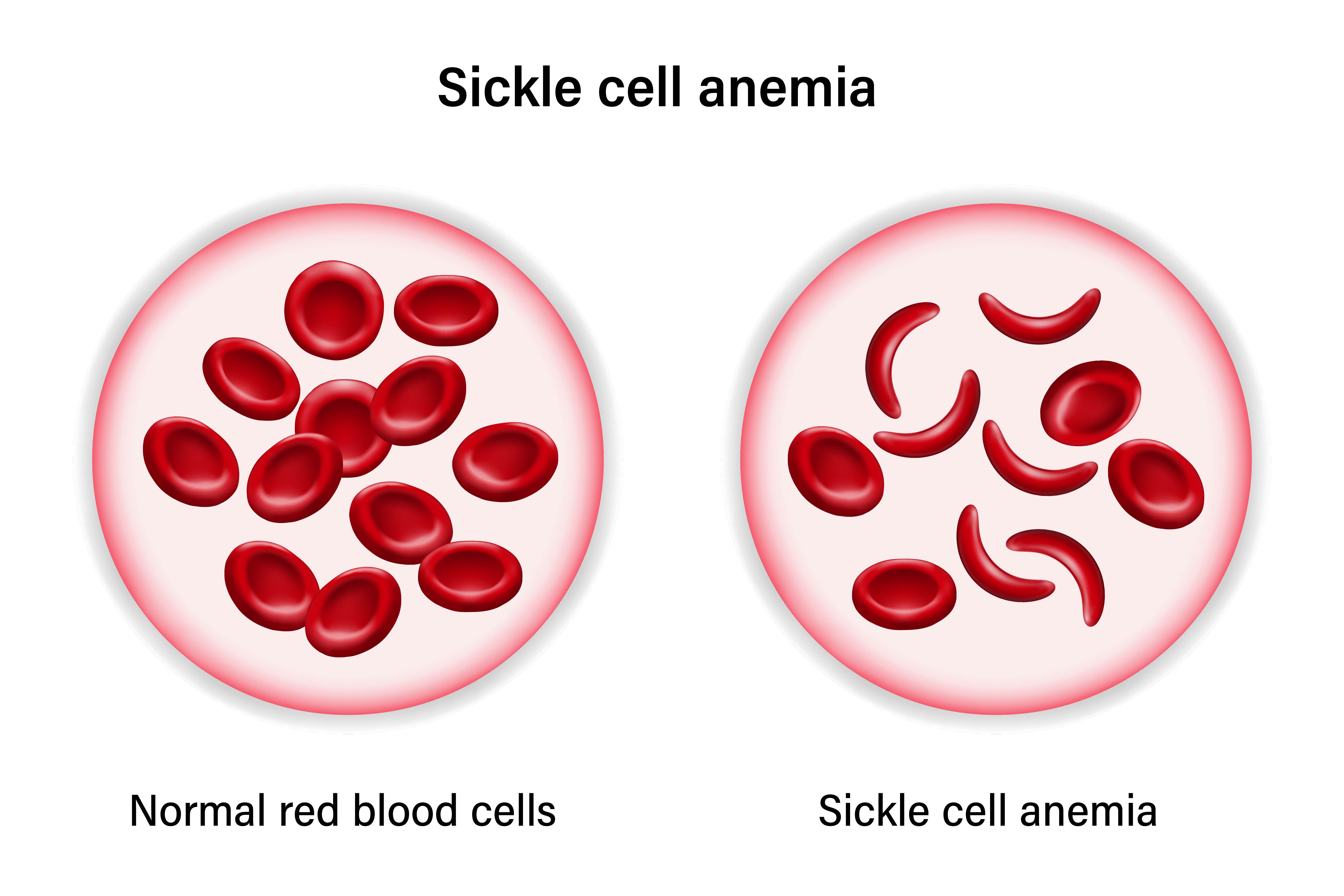
Illustration showcasing normal red blood cells in comparison to sickle cell anemia. Photo credit: istock.com/Rujirat Boonyong.
Photo credit: istock.com/Rujirat Boonyong.

How can we empower SCD patients as they transition to taking charge of their own health care?

One thing we’ve done at MSU Health Care is to establish the Sickle Cell Disease Lifespan Clinic. The clinic is set up to bridge care for people with SCD as they transition from pediatric to adult care. When patients come in, a whole team is in place to care for them and advocate for them. In addition to working with a physician and nurse to manage their blood disorder, patients have access to social workers, dieticians and genetic counselors — all who are experts in managing SCD.

This kind of comprehensive care is especially helpful for those who have recently turned 18 and need guidance to navigate lifelong disease management on their own.

Also, I like to let my patients know that we all have about 30,000 genes. SCD is a result of just one gene. Don’t let that one gene define who you are and what you become. You are defined by the other 29,999 genes and everything else that impacts you.


MEDIA CONTACTS

Dalin Clark
Health ProfessionsHealth and MedicineNatural SciencesEngineering, Science and Technology

Collection

more content from this collection

Ask the Expert

Latest News

MSUToday Weekly Update

The MSUToday Weekly Update email showcases how Spartans are making a difference through academic excellence, research impact and community outreach. Get inspired by these stories of innovation, collaboration and determination. Plus, enjoy photos and videos of campus and more MSU content to help keep you connected to the Spartan community.

Sign UpUpdate My Information

Connect With Us

Visit our Facebook pageVisit our page on XVisit our Instagram pageVisit our LinkedIn pageVisit our YouTube pageVisit our TikTok page

Health and Safety

  • MSU Police and Public Safety
  • Olin Health Center
  • Counseling & Psychiatric Services (CAPS)
  • University Health and Wellbeing
  • MSU Health Care
  • Civil Rights and Title IX
  • Our Commitment
  • Center for Survivors
  • Security & Fire Safety Report
  • University Policy on Relationship Violence and Sexual Misconduct
  • Notice of Non-Discrimination, Anti-Harassment and Non-Retaliation
  • Health Care Non-Discrimination Notice

Support Services

  • Disability Resources
  • Supportive Services
  • Learning Resources

Working at MSU

  • Human Resources
  • EBS Login
  • Job Postings
  • Employee Assistance Program

Reports

  • CARES Act Funding
  • Student Achievement and Outcomes

Contact us

517-355-1855

Address

Michigan State University 426 Auditorium Road East Lansing, MI 48824

Follow Us

  • Visit our Facebook page
  • Visit our page on X
  • Visit our Instagram page
  • Visit our TikTok page
  • Visit our LinkedIn page
  • Visit our YouTube page

If you're having accessibility issues, please let us know.

Know More: Campus Safety Information and ResourcesTransparency Reporting: Budget & Salary/Compensation
  • Contact Information|
  • Site Map|
  • Privacy Statement|
  • Site Accessibility|
  • Call MSU: (517) 355-1855|
  • Visit: msu.edu|
  • Notice of Nondiscrimination|

SPARTANS WILL|© Michigan State University|