Jump to HeaderJump to Main ContentJump to Footer
Michigan State University
MSUTODAY
  • Browse Stories By

    Topics

    Explore stories by subject area

    • Arts and Culture
    • Business and Economy
    • Climate and Environment
    • Education and Learning
    • Engineering, Science and Technology
    • Government and Society
    • Health and Medicine
    • Media and Communications
    • MSU Leadership and Impact
    • Sports and Recreation
    • Student and Campus Experience
    View All Stories

    Collections

    Curated story series

    • Alumni stories
    • Turfgrass
    • Ask the Expert
    • Big Ideas
    • Climate solutions
    • Water at MSU
    • Mobility
    • Spartan Perspectives
    • Student views
    • Graduate voices
    • Faculty voices
    View All Collections

    Featured

    Editor's picks

    • 9 reasons to love being a Spartan

      Aug. 28, 2026

      9 reasons to love being a Spartan

    • NIH awards multi-university team over $4M to improve women’s health

      Sept. 15, 2026

      NIH awards multi-university team over $4M to improve women’s health

MSUTODAY
  • Browse Stories By

< Browse Stories By

Topics

Explore stories by subject area

  • Arts and Culture
  • Business and Economy
  • Climate and Environment
  • Education and Learning
  • Engineering, Science and Technology
  • Government and Society
  • Health and Medicine
  • Media and Communications
  • MSU Leadership and Impact
  • Sports and Recreation
  • Student and Campus Experience
  • View All Stories

Collections

Curated story series

  • Alumni stories
  • Turfgrass
  • Ask the Expert
  • Big Ideas
  • Climate solutions
  • Water at MSU
  • Mobility
  • Spartan Perspectives
  • Student views
  • Graduate voices
  • Faculty voices
  • View All Collections

Featured

Editor's picks

  • 9 reasons to love being a Spartan

    Aug. 28, 2026

    9 reasons to love being a Spartan

  • NIH awards multi-university team over $4M to improve women’s health

    Sept. 15, 2026

    NIH awards multi-university team over $4M to improve women’s health

  • For Media
  • Experts
  • Releases and Statements
  • Sign Up
  • Update Information

Resources

  • A to Z Index
  • Find People
  • Maps
  • Email
  • Student Information System (SIS)
  • D2L
  • Libraries
  • Tech Support
  • MSU Misconduct Hotline
  • Social Media Directory
  • Events Calendar
  • For Media
Michigan State University
MSUToday
  • For Media
  • Experts
  • Releases and Statements
  • Sign Up
  • Update Information
Biodiversity and Wildlife

July 1, 2025

Some studies might not paint full picture of how plants respond to climate change

By: Caleb Hess

Scientists may be underestimating how plants will respond to rising global temperatures when they study hot summers but not warming winters, Michigan State University ecologists found. 
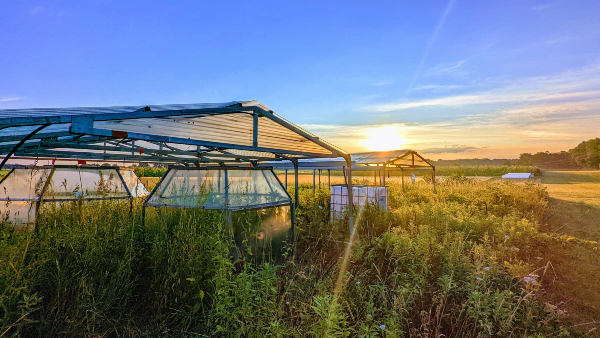
Open top chambers beneath rainout shelters at Kellogg Biological Station LTER.  Photo: Kara Dobson
Open-top chambers beneath rainout shelters at the Kellogg Biological Station LTER. Photo by Kara Dobson.

An MSU team synthesized data from 126 simulated warming experiments from across the globe to provide insights into how plants respond to a hotter climate. In their findings, now published in Global Change Biology, they learned that experiments with warming only during summer months showed less-pronounced results than year-round experiments. This could mean that summer-only experiments don’t account for the important effects of winter warming and may provide conflicting results.

The study also unveiled a lack of research on the effects of warming on non-native species, potentially hindering scientists’ ability to understand how these species respond to climate change. The authors identified knowledge gaps in current studies, suggesting that future warming experiments should last longer to allow for multiple seasons and years of warming. 

“This important global synthesis of warming effects on plants across many ecosystems can be used to inform models of future impacts,” said Phoebe Zarnetske, an author and professor in MSU’s Integrative Biology department and Ecology, Evolution and Behavior, or EEB, Program. “We hope to inspire more experiments to fill knowledge gaps of climate change impacts on plants and their communities.”  

Zarnetske is also principal investigator of the Spatial and Community Ecology Lab (SpaCE Lab), whose long-term and year-round warming experiment at Kellogg Biological Station’s Long-Term Ecological Research, or LTER, Site was one of the 126 sites in the meta-analysis. Its first seven years were summarized in a recent publication.

Understanding global changes 

Around the world, researchers are working together through coordinated efforts, such as the LTER network, to better understand how plants respond to global changes across different environments.  

In their latest paper, the MSU team analyzed studies that used open-top chambers to investigate how temperature increases caused changes in plant traits and plant community properties. They also explored how the severity of changes varied based on location, experimental methods and plant identity.  

“Experiments that simulate warming are critical for helping scientists uncover the processes driving these changes,” said Kara Dobson, author and integrative biology researcher and former EEB Ph.D. student.  

The scope of the analysis allowed researchers to identify global trends in plant responses and predict what may happen in the future as temperatures continue to climb.

The results were striking. MSU’s team found that plants in temperate regions with hot summers and cold winters show more pronounced responses to warming than those grown in more tropical regions with less extreme variations in temperature.

Previous studies have suggested that non-native plants could benefit from future climate conditions, potentially increasing the likelihood that they spread or become invasive. Meanwhile, non-vascular plants have often shown negative responses to warming, raising concerns that they could decline globally as climate conditions continue to change. However, this study highlights the lack of research on the effects of passive warming on non-native and non-vascular species, especially compared to their native and vascular counterparts.
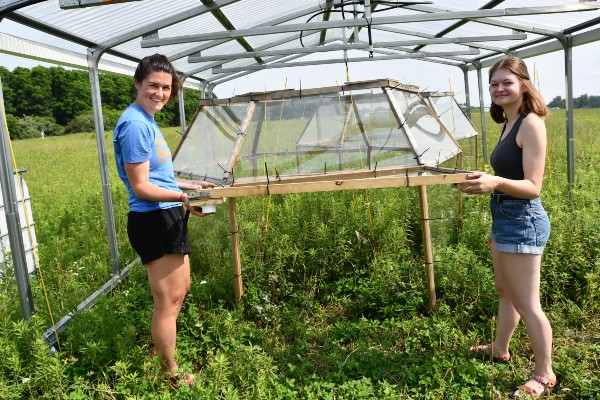
Open top chambers beneath rainout shelters at Kellogg Biological Station LTER with members of the MSU SpaCE Lab, Kara Dobson (right) and Moriah Young (left). Photo: Phoebe Zarnetske.
Open-top chambers beneath rainout shelters at the Kellogg Biological Station LTER, with MSU SpaCE Lab members Kara Dobson, right, and Moriah Young, left. Photo by Phoebe Zarnetske.

Including a broader variety of plant types in climate research, as well as coordinating these experiments across different environment and over long periods of time, will help us understand which species are likely to thrive — or struggle — in a warmer future.

“This study is unique in terms of the size of the dataset we collected,” said Dobson. “It brings together data from experiments across the globe and from all continents, including Antarctica.”

Funding for this research comes from the National Science Foundation Research Traineeship Program, the Kellogg Biological Station-LTER and the MSU College of Natural Science. 

This story originally featured on the College of Natural Science website. 


    MEDIA CONTACTS

    Emilie Lorditch
    Biodiversity and WildlifeClimate and EnvironmentClimate and Climate SolutionsAgricultural Sciences and Farming

    Collection

    more content from this collection

    Climate Solutions

    Latest News

    MSUToday Weekly Update

    The MSUToday Weekly Update email showcases how Spartans are making a difference through academic excellence, research impact and community outreach. Get inspired by these stories of innovation, collaboration and determination. Plus, enjoy photos and videos of campus and more MSU content to help keep you connected to the Spartan community.

    Sign UpUpdate My Information

    Connect With Us

    Visit our Facebook pageVisit our page on XVisit our Instagram pageVisit our LinkedIn pageVisit our YouTube pageVisit our TikTok page

    Health and Safety

    • MSU Police and Public Safety
    • Olin Health Center
    • Counseling & Psychiatric Services (CAPS)
    • University Health and Wellbeing
    • MSU Health Care
    • Civil Rights and Title IX
    • Our Commitment
    • Center for Survivors
    • Security & Fire Safety Report
    • University Policy on Relationship Violence and Sexual Misconduct
    • Notice of Non-Discrimination, Anti-Harassment and Non-Retaliation
    • Health Care Non-Discrimination Notice

    Support Services

    • Disability Resources
    • Supportive Services
    • Learning Resources

    Working at MSU

    • Human Resources
    • EBS Login
    • Job Postings
    • Employee Assistance Program

    Reports

    • CARES Act Funding
    • Student Achievement and Outcomes

    Contact us

    517-355-1855

    Address

    Michigan State University 426 Auditorium Road East Lansing, MI 48824

    Follow Us

    • Visit our Facebook page
    • Visit our page on X
    • Visit our Instagram page
    • Visit our TikTok page
    • Visit our LinkedIn page
    • Visit our YouTube page

    If you're having accessibility issues, please let us know.

    Know More: Campus Safety Information and ResourcesTransparency Reporting: Budget & Salary/Compensation
    • Contact Information|
    • Site Map|
    • Privacy Statement|
    • Site Accessibility|
    • Call MSU: (517) 355-1855|
    • Visit: msu.edu|
    • Notice of Nondiscrimination|

    SPARTANS WILL|© Michigan State University|