Jump to HeaderJump to Main ContentJump to Footer
Michigan State University
MSUTODAY
  • Browse Stories By

    Topics

    Explore stories by subject area

    • Arts and Culture
    • Business and Economy
    • Climate and Environment
    • Education and Learning
    • Engineering, Science and Technology
    • Government and Society
    • Health and Medicine
    • Media and Communications
    • MSU Leadership and Impact
    • Sports and Recreation
    • Student and Campus Experience
    View All Stories

    Collections

    Curated story series

    • Turfgrass
    • Ask the Expert
    • Big Ideas
    • Climate solutions
    • Water at MSU
    • Mobility
    • Spartan Perspectives
    • Student views
    • Graduate voices
    • Faculty voices
    View All Collections

    Featured

    Editor's picks

    • The Spartans behind your favorite Michigan golf courses

      July 22, 2026

      The Spartans behind your favorite Michigan golf courses

    • MSU in the 1990s: 10 Spartan milestones

      July 14, 2026

      MSU in the 1990s: 10 Spartan milestones

MSUTODAY
  • Browse Stories By

< Browse Stories By

Topics

Explore stories by subject area

  • Arts and Culture
  • Business and Economy
  • Climate and Environment
  • Education and Learning
  • Engineering, Science and Technology
  • Government and Society
  • Health and Medicine
  • Media and Communications
  • MSU Leadership and Impact
  • Sports and Recreation
  • Student and Campus Experience
  • View All Stories

Collections

Curated story series

  • Turfgrass
  • Ask the Expert
  • Big Ideas
  • Climate solutions
  • Water at MSU
  • Mobility
  • Spartan Perspectives
  • Student views
  • Graduate voices
  • Faculty voices
  • View All Collections

Featured

Editor's picks

  • The Spartans behind your favorite Michigan golf courses

    July 22, 2026

    The Spartans behind your favorite Michigan golf courses

  • MSU in the 1990s: 10 Spartan milestones

    July 14, 2026

    MSU in the 1990s: 10 Spartan milestones

  • For Media
  • Experts
  • Releases and Statements
  • Sign Up
  • Update Information
Michigan State University

Resources

  • A to Z Index
  • Find People
  • Maps
  • Email
  • Student Information System (SIS)
  • D2L
  • Libraries
  • Tech Support
  • MSU Misconduct Hotline
  • Social Media Directory
  • Events Calendar
  • For Media
Michigan State University
MSUToday
  • For Media
  • Experts
  • Releases and Statements
  • Sign Up
  • Update Information
MSU Research

July 21, 2025 | Read time 3 min

New $3M NIH grant supports Henry Ford + MSU researchers studying HPV-positive head and neck cancers

Summary

  • People who are diagnosed with head and neck cancers currently have few treatment options. This cancer significantly affects their quality of life, and its side effects can cause challenges with speech, swallowing and even breathing.
  • A growing number of head and neck cancers are found in people who also carry the human papillomavirus, or HPV.
  • This research offers great potential to develop new solutions, including immunotherapy, to help activate the body’s immune system so it can eliminate this cancer.

Researchers from Henry Ford Health + Michigan State University Health Sciences have been awarded a $3 million grant from the National Institute of Dental and Craniofacial Research to study new treatments for patients who have head and neck cancer caused by the human papillomavirus, or HPV.

“HPVs cause most cervical cancers and approximately 25% of head and neck cancers, and that number is rising sharply,” said Dohun Pyeon, professor of microbiology, genetics and immunology in the MSU College of Human Medicine and College of Natural Science and principal investigator on this research. “However, scientists don’t know much about how the virus helps these cancers evade the body’s immune defenses. Our research has identified the MARCHF8 protein as a possible culprit, inhibiting the immune system to kill these infected tumor cells. We want to understand how that happens and how to stop it.”
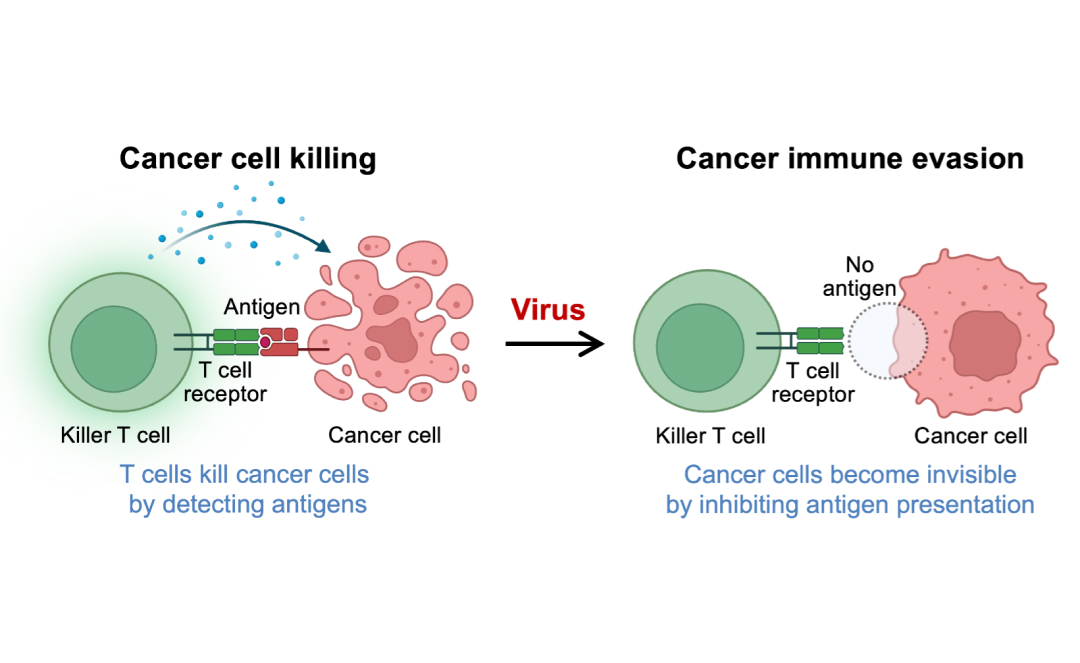
Illustration comparing cancer cell killing versus immune evasion. On the left, a killer T cell detects and kills a cancer cell using antigens. On the right, a virus-infected cancer cell evades detection by not presenting antigens, preventing T cell response.
A healthy immune system activates T cells when antigens, caused by infection or disease, are detected on the cell surface. Cancer cells frequently inhibit antigen presentation and grow undetected. A cancer-causing virus, such as HPV, inhibits presenting antigen and makes cancer cells invisible so the body’s immune system, which activates T cells, doesn’t take action. Image courtesy of the Pyeon lab at Michigan State University.

Pyeon says that HPV-positive cancers often bypass the immune system and other natural mechanisms in the body that typically clear early-stage cancer cells very efficiently. And given that an estimated 600 to 700 million people in the world are already infected with HPV, the number of patients who will need treatment for head and neck cancer is expected to rise substantially.

Pyeon and a team of researchers from Henry Ford and MSU discovered preliminary answers about how to improve the body’s detection of these cancer cells with grants from the Henry Ford + MSU Cancer Seed Funding Program and the Strategic Partnership Grant from the MSU Research Foundation.

“When cells become infected by a virus, they may develop cancer more rapidly,” said Qing-Sheng Mi, vice chair for research in the MSU Department of Dermatology, director of the Center for Cutaneous Biology and Immunology, and director of the immunology program of the Henry Ford Cancer Institute at Henry Ford Health. Mi is also professor of medicine at the MSU College of Human Medicine and serves as the co-principal investigator on this project. “These virus-infected cells often downregulate the key molecule enabling the tumor antigen to stimulate the immune system, essentially cloaking themselves from T cell surveillance. Our single-cell analysis of the tumor microenvironment indicates that knockdown MARCHF8 can significantly boost antitumor immunity, making it a potential new therapeutic target.”
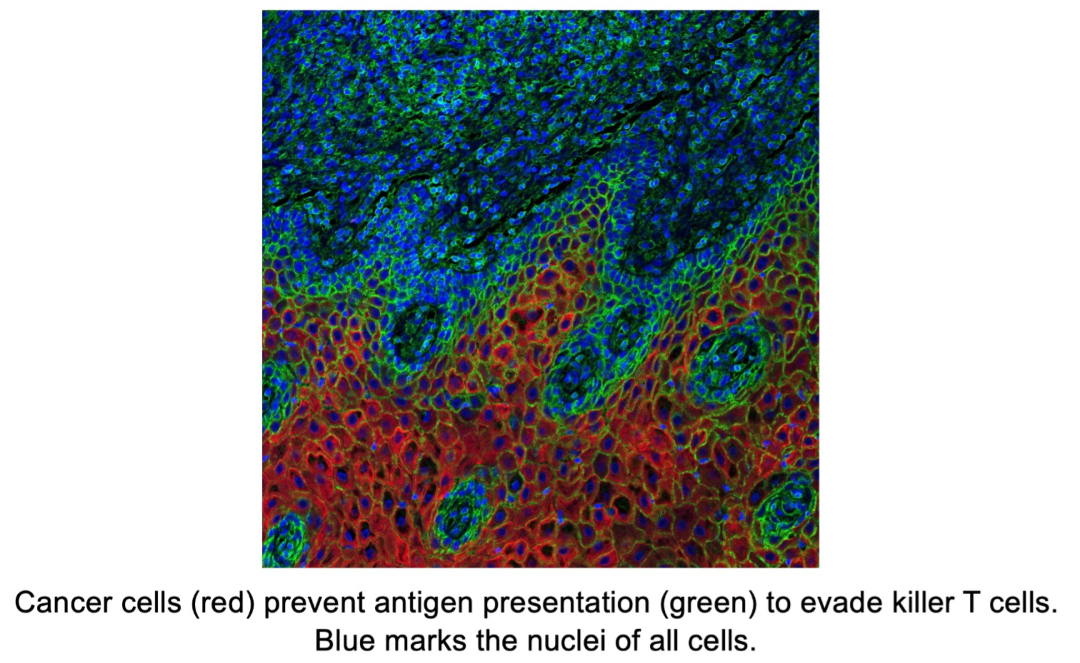
Microscopic image showing cancer cells in red avoiding immune detection by preventing green-colored antigen presentation. Blue highlights the nuclei of all cells, indicating dense tumor tissue structure.
Cancer cells, shown in red, prevent the presentation of antigens, shown in green, and evade T cells, which kill cancer cells as a part of the body’s immune system. Image courtesy of Lexi Vu in the Pyeon lab at Michigan State University.

“Findings from this research are intended to reduce the intensity of treatment of HPV-positive head and neck cancers and create a better treatment with fewer side effects,” said Steven Chang, chair of the Department of Otolaryngology/Head and Neck Surgery at Henry Ford Health, interim chair of the Department of Otolaryngology/Head and Neck Surgery at the MSU College of Human Medicine, and a contributor to the research. “We highly recommend the HPV vaccine for those who can get it. Because HPV is a virus, in some patients it can integrate into a patient’s DNA and disrupt the normal cell functions for many years without being eliminated by the immune system. This can lead to cancer, and we want to change that.”


MEDIA CONTACTS

Dalin Clark
MSU ResearchMSU Leadership and ImpactDiseases, Conditions and TreatmentsHealth and Medicine

Collection

more content from this collection

Fighting Cancer

Latest News

MSUToday Weekly Update

The MSUToday Weekly Update email showcases how Spartans are making a difference through academic excellence, research impact and community outreach. Get inspired by these stories of innovation, collaboration and determination. Plus, enjoy photos and videos of campus and more MSU content to help keep you connected to the Spartan community.

Sign UpUpdate My Information

Connect With Us

Visit our Facebook pageVisit our page on XVisit our Instagram pageVisit our LinkedIn pageVisit our YouTube pageVisit our TikTok page

Health and Safety

  • MSU Police and Public Safety
  • Olin Health Center
  • Counseling & Psychiatric Services (CAPS)
  • University Health and Wellbeing
  • MSU Health Care
  • Civil Rights and Title IX
  • Our Commitment
  • Center for Survivors
  • Security & Fire Safety Report
  • University Policy on Relationship Violence and Sexual Misconduct
  • Notice of Non-Discrimination, Anti-Harassment and Non-Retaliation
  • Health Care Non-Discrimination Notice

Support Services

  • Disability Resources
  • Supportive Services
  • Learning Resources

Working at MSU

  • Human Resources
  • EBS Login
  • Job Postings
  • Employee Assistance Program

Reports

  • CARES Act Funding
  • Student Achievement and Outcomes

Contact us

517-355-1855

Address

Michigan State University 426 Auditorium Road East Lansing, MI 48824

Follow Us

  • Visit our Facebook page
  • Visit our page on X
  • Visit our Instagram page
  • Visit our TikTok page
  • Visit our LinkedIn page
  • Visit our YouTube page

If you're having accessibility issues, please let us know.

Know More: Campus Safety Information and ResourcesTransparency Reporting: Budget & Salary/Compensation
Michigan State University
  • Contact Information|
  • Site Map|
  • Privacy Statement|
  • Site Accessibility|
  • Call MSU: (517) 355-1855|
  • Visit: msu.edu|
  • Notice of Nondiscrimination|

SPARTANS WILL|© Michigan State University|