Jared Homola, an assistant professor in the MSU Department of Fisheries and Wildlife, is using advanced genetic modeling to help conserve Lake Michigan’s declining lake whitefish population and improve fishery management strategies.
Earlier this year, Jason Smith, a fisheries biologist with the Bay Mills Indian Community in Michigan’s Upper Peninsula, spoke with Interlochen Public Radio about an ominous trend threatening one of the Great Lakes’ most foundational and key fish species: lake whitefish.
“Even if we bring (commercial fishing) harvest to zero, the lakes are still headed toward extirpation,” Smith told IPR in January about the species.
Lake whitefish make up 89% of fish caught in the Great Lakes among Michigan-licensed anglers and 95% of sales for all Great Lakes fish, according to Michigan Sea Grant’s 2020 Status of Michigan Commercial Fisheries. They’re also culturally important and valuable for many fishers licensed by tribal nations around the Great Lakes.
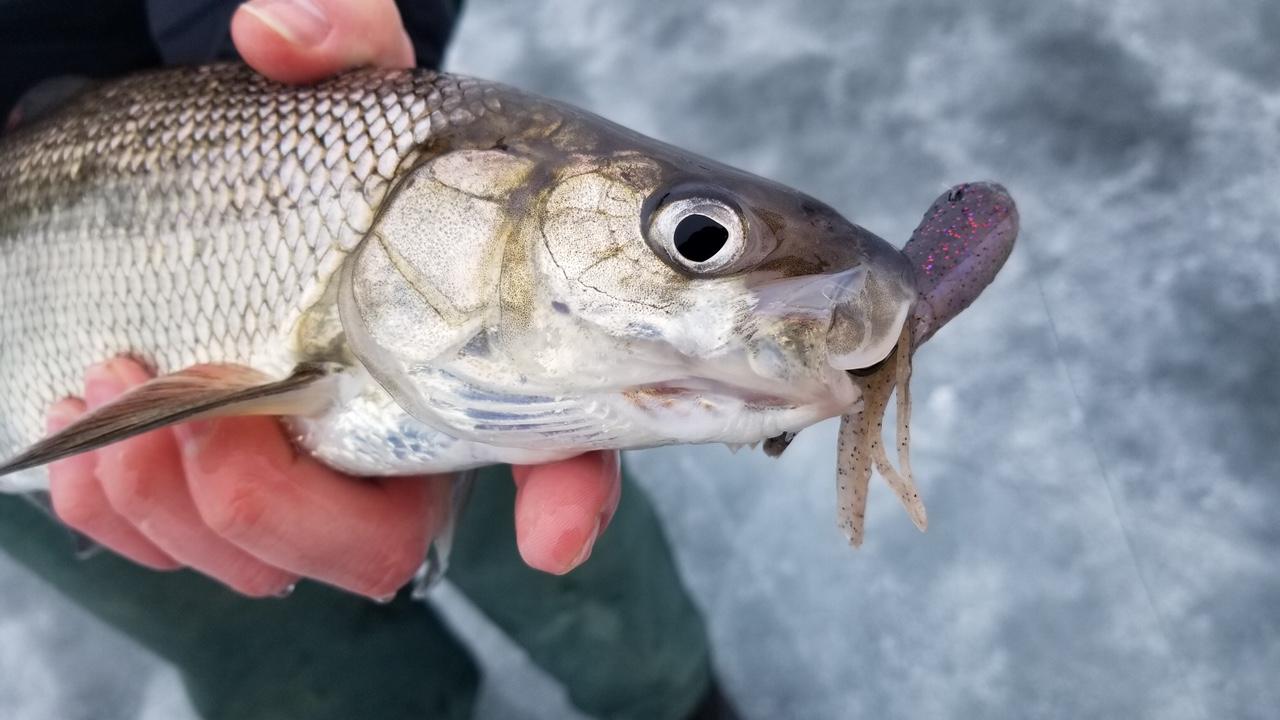
Harvesting of the fish, however, has gradually declined since 1985 despite its significance and abundance compared to other species in the Great Lakes, according to the Great Lakes Fishery Commission, or GLFC. In 1985, roughly 7.8 million pounds of lake whitefish were harvested in Lake Michigan. In 2005, about 4.2 million pounds were harvested.
And in 2024, just over 2.3 million pounds were harvested.
The downswing can be attributed, in part, to invasive species such as quagga and zebra mussels which take up (and take away) nutrients that are essential to the development of young whitefish.
To further understand this trend and find potential strategies for conserving and managing the fish, Smith and other partners have teamed up with Michigan State University AgBioResearch scientist Jared Homola to model lake whitefish in a way that hasn’t been done before for the species.

Homola, an assistant professor in the MSU Department of Fisheries and Wildlife, is using funding from the Great Lakes Fishery Trust to implement a technique called close-kin mark-recapture, or CKMR, for lake whitefish in Lake Michigan. He said he wants this new means to illustrate a complementary picture of how many fish there are and where they’re located.
By genotyping lake whitefish — gathering and mapping out their genetic information — Homola and his team will use CKMR to track families of fish rather than individual fish. Doing so, he said, could create more accurate data representing lake whitefish in parts of Lake Michigan.
“The grand vision is to be able to estimate the number of lake whitefish that are out there, with the primary motivator being to help inform management so that fishers aren’t unknowingly overharvesting,” Homola said. “If current models, for instance, are overestimating the population or have a wide range of uncertainty, the fishery may be at risk.
“So, if we can say more confidently how many lake whitefish are present in various regions of the Great Lakes, then that's the main motivator, which will help prevent overharvesting.”
Conducting this research, nevertheless, will be no small feat. Homola said Emily Tryc, a graduate student in the MSU Department of Fisheries and Wildlife collaborating on the project, is not only helping develop the genetic tool to make calculations but will also genotype up to 10,000 lake whitefish using that tool to establish comprehensive models.
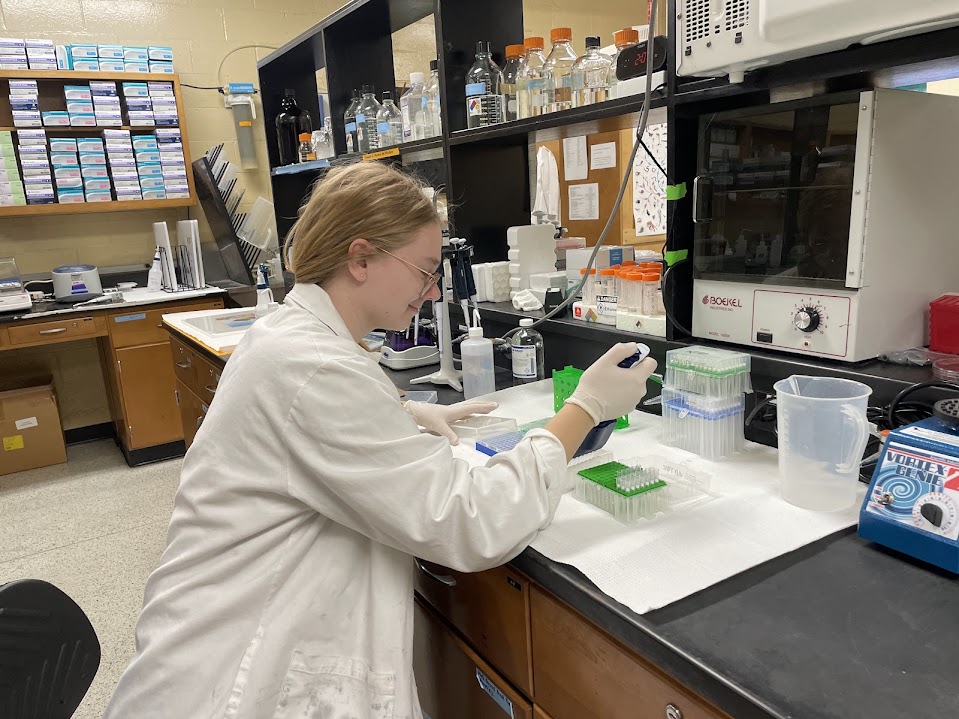
“It’s been a great experience so far working through that genetic pipeline and getting everything started so we can get some good estimates,” Tryc said.
CKMR has been successful in modeling other fish species, according to Tryc, such as southern bluefin tuna in the Atlantic Ocean, but the system has not been used for many species in the Great Lakes.
This work builds on a previous study Homola conducted, where results supported the value of incorporating genetic markers to model lake whitefish. In this research, Homola examined the different stocks (or lineages) of lake whitefish in Lake Michigan and found a genetic break (or limited gene flow) of lake whitefish between the eastern and northwestern parts of the lake, as well as a greater level of genetic variation in fish from the eastern side compared to the northwestern side.
These stocks are units of measurement for managers of the fishery, Homola said, so understanding how they move and interact with each other in the lake can provide insight into how, when and where lake whitefish need to be managed.
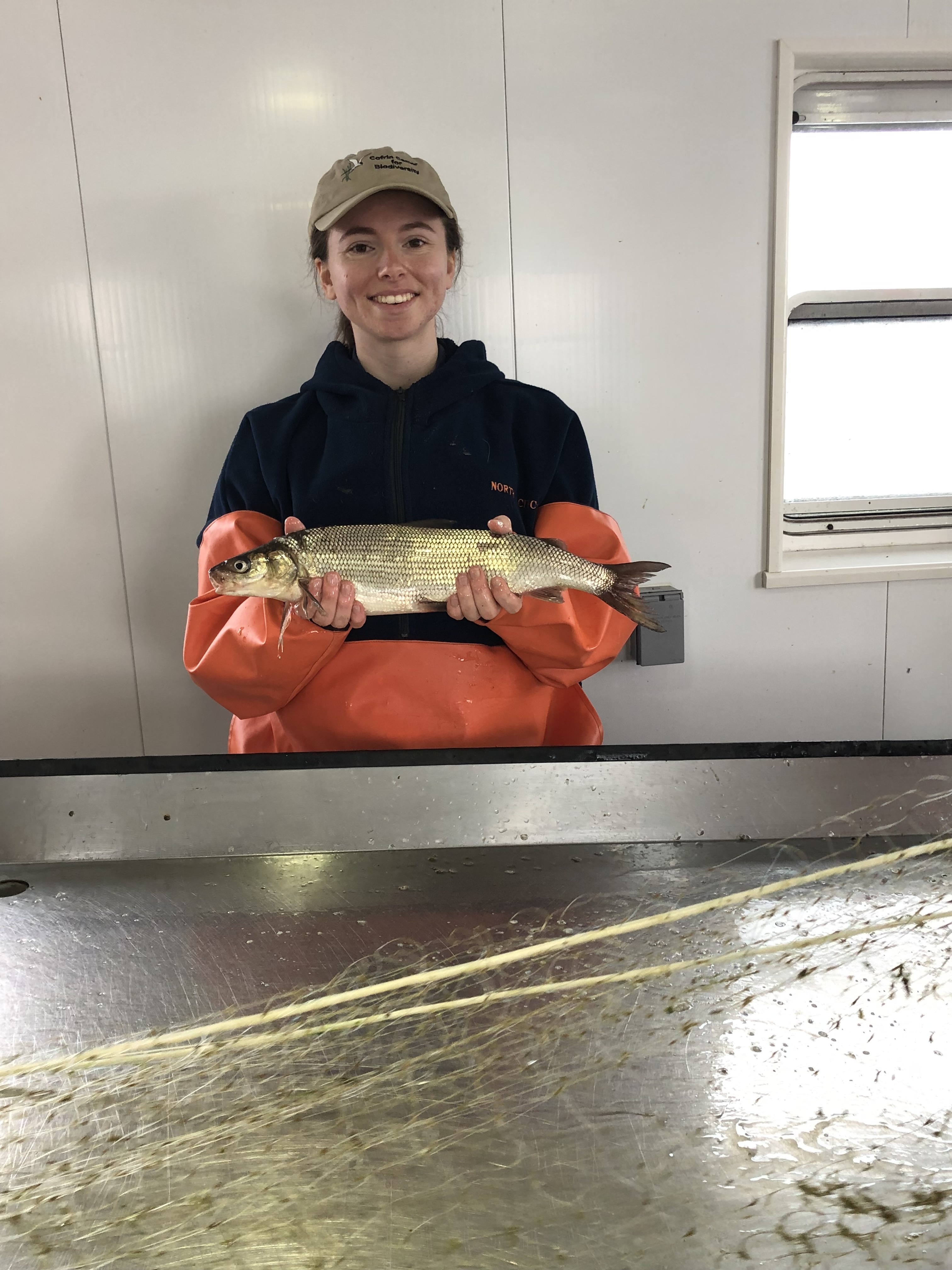
“We can't really estimate the total number of lake whitefish across the entire lake, but what we're looking for is the abundance of individual stocks, which is also the unit for management,” Homola said. “So, when fishers are getting told how many fish they can harvest, that's in certain management units. We’re looking at a unit-by-unit approach, and this gives a genetic or biological basis for those units.”
Lake Michigan is divided into different management zones for lake whitefish. Initial stages of the project will occur in a zone close to the Leelanau Peninsula, with hopes from the team that it can expand throughout Lake Michigan and the Great Lakes in the future.
Homola is conducting this work in partnership with several collaborators, including colleagues from the U.S. Geological Survey and GLFC’s Hammond Bay Biological Station, the Michigan Department of Natural Resources, or DNR, and multiple tribal communities.
Steve Lenart, the tribal coordination unit manager with the Michigan DNR’s Fisheries Division, said that when a population is declining like lake whitefish are, applying new tools such as CKMR can be advantageous to confirm data and back management strategies.
“Many of the tools currently utilized rely on fishing and sampling, and when those numbers start to decline, you tend to worry that you’re starting to lose resolution on just what the absolute scale of the population is,” Lenart said. “What we hope to do is use the information Dr. Homola and his team are gathering to gauge if our current management tools line up with the overall size of the stock.”
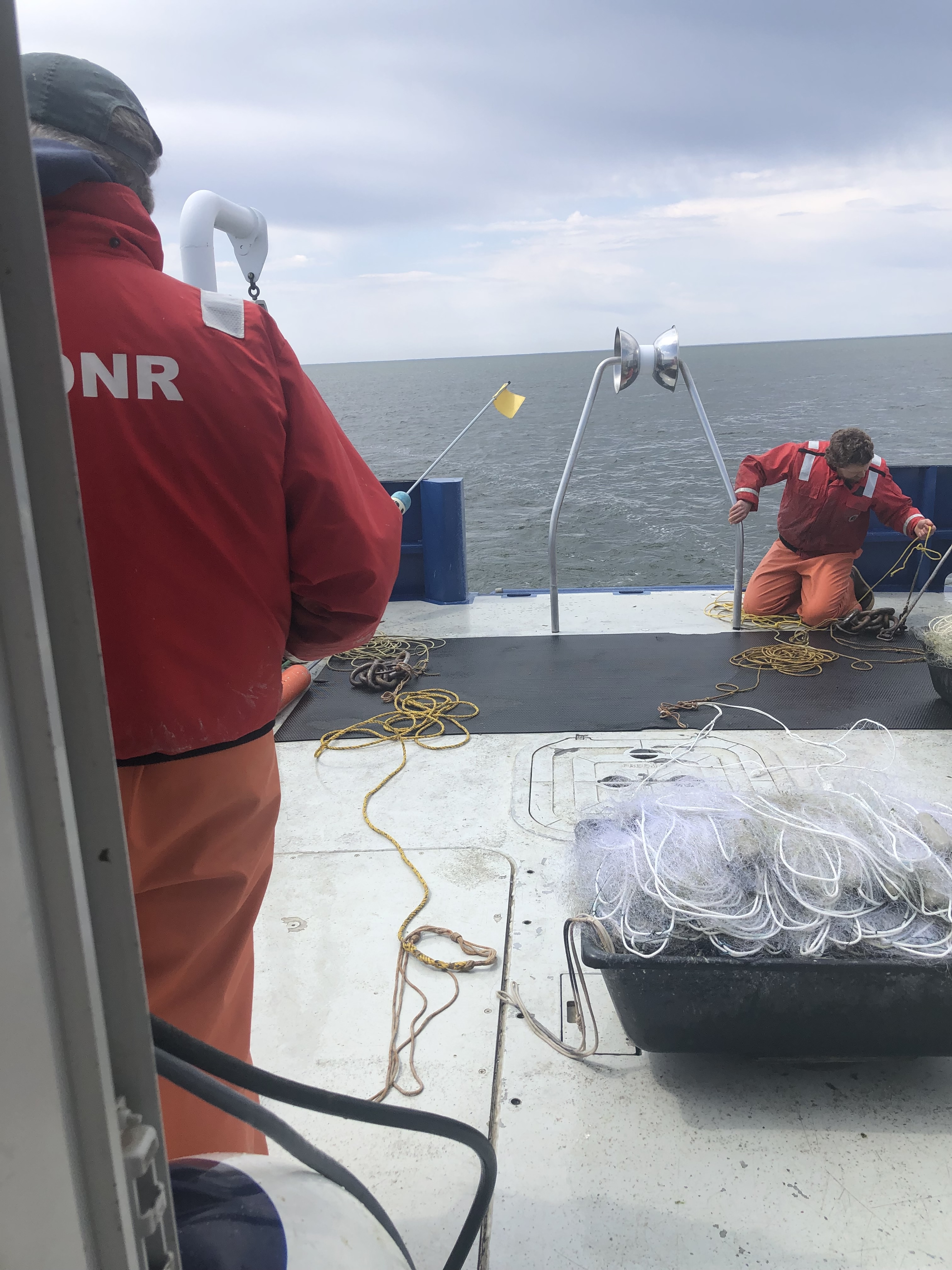
Managing lake whitefish in Michigan zones is a joint effort with input and representation from the U.S., Michigan DNR and tribal nations. Gary Michaud, the Great Lakes fishery program manager with the Little Traverse Bay Bands of Odawa Indians, said each party ultimately has the same goal when it comes to management of the fish: preserving them for future generations.
“Looking at the genetic structure and seeing where fish reside, reproduce and are caught using CKMR will let us set more relevant management units, and therefore, allow us to more properly steward lake whitefish,” Michaud said. “Understanding where fish are being taken from and where they’re being supported will help us set relevant harvest limits that reflect where they’re coming from.”
Homola said current management strategies at the state level are focused on harvesting, but he noted that some tribes are evaluating potential solutions that consider the efficacy of stocking.
Smith, in a conversation with MSU AgBioResearch, said he thinks this project could be used to restore lake whitefish similarly to how lake trout were restored in Lake Superior, which was announced in 2024 by the GLFC after decades of population decline due to overharvesting and damage caused by invasive sea lamprey.
“I think we’re at a time with the Adikameg — lake whitefish — where we’re going to have to do the same sort of restoration we did with lake trout, but I don’t want us to take Lake Superior fish and stock them in Lake Huron and Lake Michigan,” Smith said. “I want us to have sources that are direct descendants from the fish that are in these places in small numbers now.
“And this builds directly on Dr. Homola’s work. He identified these genetic groups of fish that are left in the lake. I want to make sure we keep each one alive until we’re able to solve the problem with quagga and zebra mussels.”
This story was originally featured on the AgBioResearch website.

