Why this matters:
- Counterfeit pharmaceutical drugs pose a serious threat to public health. RFID secures the manufacturer’s supply chain, preventing drug diversion and counterfeiting, especially for controlled substances; while enhancing patient safety by ensuring the integrity of every medication dispensed.
- RFID significantly reduces the time necessary to locate and recall any units through precise, real-time tracking; minimizing the chances a patient could experience a serious health problem or an adverse health reaction.
- The pilot aligns with track-and-trace regulatory requirements in the U.S. Food and Drug Administration’s Drug Supply Chain Security Act, or DSCSA, that went into effect in November 2024. The study validates RFID as a scalable, interoperable solution that adheres to GS1 global standards for a common digital language, complements existing barcode systems and integrates with ERP platforms.
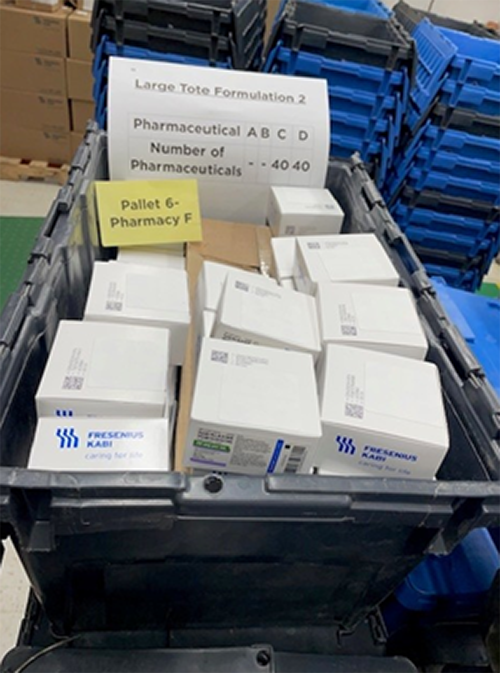
The pharmaceutical industry has long faced challenges of counterfeit, adulterated, or expired drugs entering the supply chain. Fake versions of popular drugs like Ozempic®, oxytocin and others routinely make their way to consumers outside of the manufacturer’s authorized supply chain. These threats not only undermine consumer trust, but can pose significant safety risks to patients.
The Axia Institute at Michigan State University recently completed its Pharma End-to-End RFID Pilot, testing the feasibility of RAIN Radio-Frequency Identification, or RFID, technology for traceability of pharmaceutical products through the supply chain.
Ozempic® is a registered trademark of Novo Nordisk A/S.
Phase 2 achieved 100% traceability across a simulated real-world supply chain, demonstrating the robustness and interoperability of RFID across the pharmaceutical supply chain. Phase 1, completed in October 2023, demonstrated the technical feasibility of applying RFID to various drug formulations and pharmaceutical packaging types in a lab setting, with the lowest readability rate of 96.50%.

“This work represents a significant step toward building a more secure, error-proof, and digitally integrated pharmaceutical supply chain — one that can track and record product information at every stage, from production through distribution to the point of sale,” said Bahar Aliakbarian, MSU research associate professor and senior director of Research and Development at the Axia Institute and Axia Lab.
For more than a decade, the pharmaceutical industry has been preparing for the traceability requirement found in the U.S. Food and Drug Administration’s Drug Supply Chain Security Act, or DSCSA. After several extensions all manufacturers, repackagers, wholesale distributors and dispensers were expected to have systems in place by Nov. 27, 2024, to share and verify product identifier data electronically at the package level.
The most used and recognized digital tracking device is a barcode. However, barcode systems have limitations — chiefly, the need for line-of-sight scanning and are susceptible to degradation. These constraints can lead to missed scans, inventory inaccuracies, and compliance gaps. The Axia Institute’s Phase 2 pilot demonstrates that RAIN RFID technology can overcome these challenges by enabling automated, bulk scanning of products — even when enclosed in packaging — thus ensuring a secure and transparent supply chain.
“RFID certainly shows promise, especially given some of the challenges with line-of-sight technology and barcode degradation that we're already seeing today. This would enable us to be much more cost-efficient in how we process orders, as well as ensuring said Matt Sample, senior vice president of Manufacturer, Quality, and Replenishment Operations at Cencora.
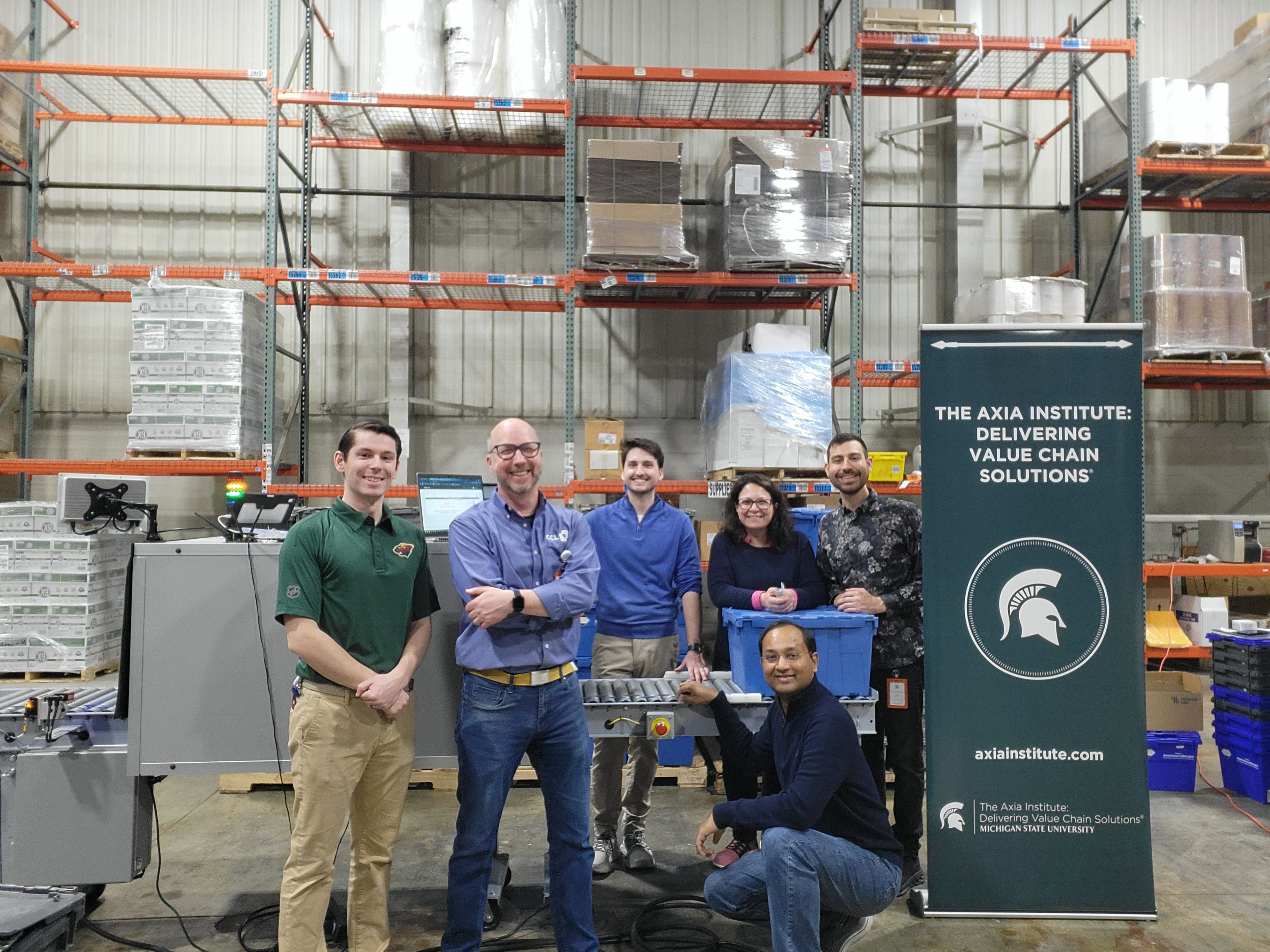
Phase 2 is the first comprehensive initiative to use GS1’s global interoperability standards to evaluate the scalability and real-world applicability of RFID technology in achieving end-to-end traceability within the pharmaceutical supply chain. Both Phase 1 and 2 were conducted in collaboration with member partners from Axia’s Health Consortium — including leading drug manufacturers, distributors and technology providers. Industry partners participating in Phase 2 included: Antares Vision Group, Barcoding Inc., Cencora, CCL eAgile, Fresenius Kabi, GS1 US and IntelliGuard.
Real-world testing, real-time results
The pilot tracked 6,920 near-expiry pharmaceutical units on four pallets, supplied by Fresenius Kabi, simulating real-world pharmaceutical inventory. For the pilot, Axia Lab simulated Fresenius Kabi.
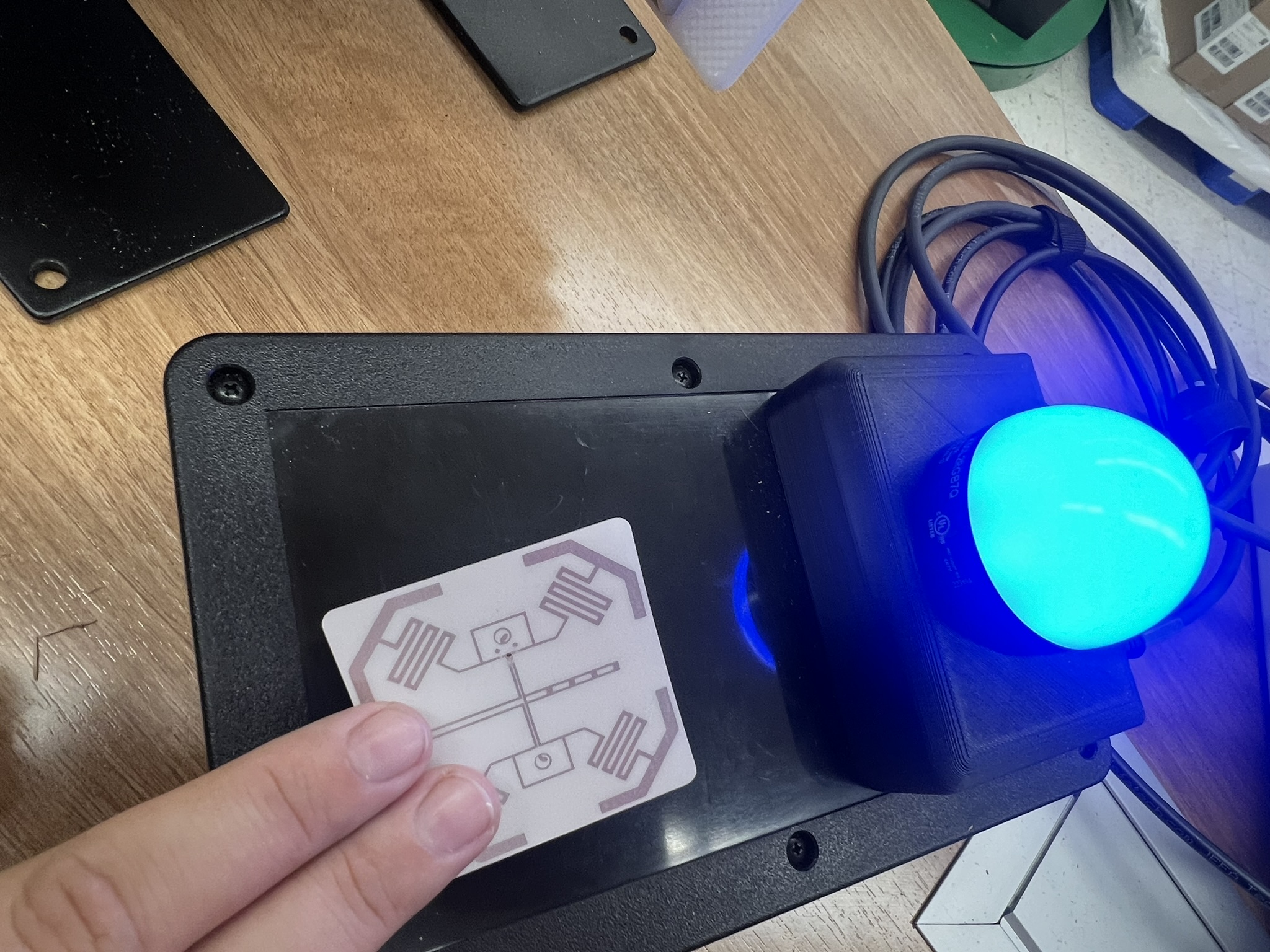
RFID tags encoded with GTIN, serial number, lot number and expiration date were applied to each unit. These tags were scanned at every handoff point using RFID-enabled tunnels, and the data was validated against EPCIS files in real-time. CCL eAgile supplied RFID tags and scanning equipment, and developed the software used to simulate ERP systems.
Cencora (the wholesaler) hosted the pilot at its Williamston, Michigan, distribution center, offering a live warehouse environment. Lastly, Axia Lab acted as pharmacy endpoints.
Other outcomes included:
- Real-time error detection and correction, with 20 exceptions identified and resolved instantly.
- Validation of RFID’s scalability in mixed-product handling environments (cardboard packaging, glass vials).
- Integration with ERP systems, enabling automated reconciliation of shipments and inventory.
- The Axia Observer Platform
“The important message is that the RFID system was able to achieve 100% accuracy at each point of the medication supply chain through real-time exception correction, demonstrating that the objective of a highly secure medication supply chain is now achievable,” said Gary Burns, business director at CCL eAgile, Inc. and member of Axia’s executive advisory board.
The Axia Observer Platform: A game-changer in supply chain oversight
A cornerstone of the pilot was the Axia Observer Platform, a Software-as-a-Service, or SaaS, tool that aggregates and monitors supply chain events independently of scanning hardware. Key features include:
- Real-time monitoring of product movement and event validation.
- Anomaly detection for missing, extra, or tampered products.
- Macro and micro-level visualization of product flow using dynamic diagrams.
- Cross-organizational transparency, enabling seamless data sharing between partners.
This platform not only ensures compliance with DSCSA but also enhances operational efficiency by reducing manual tracking and enabling proactive risk management.
As the industry moves toward full DSCSA compliance, Axia’s work provides a clear roadmap for RFID adoption. Planning for Phase 3 will begin soon, which will focus on extending RFID integration to hospitals and enabling item-level traceability up to the patient.
To learn more about this research, visit the Axia Institute website.

