The first Pride march was held in New York City June 28, 1970, on the one-year anniversary of the Stonewall Uprising. The Stonewall Uprising started with a raid on the gay bar, the Stonewall Inn, in New York City and resulted in six days of protests and fighting between police and the LGBTQIA+ community.
In 1969, homosexuality was considered a criminal offense and police raids on gay bars and spaces were happening across the U.S. Stonewall was a tipping point that led to the gay liberation movement in the United States. Since then, LGBTQIA+ people and allies have continued to gather during Pride Month in June to march for equal rights and celebrate identity and community.
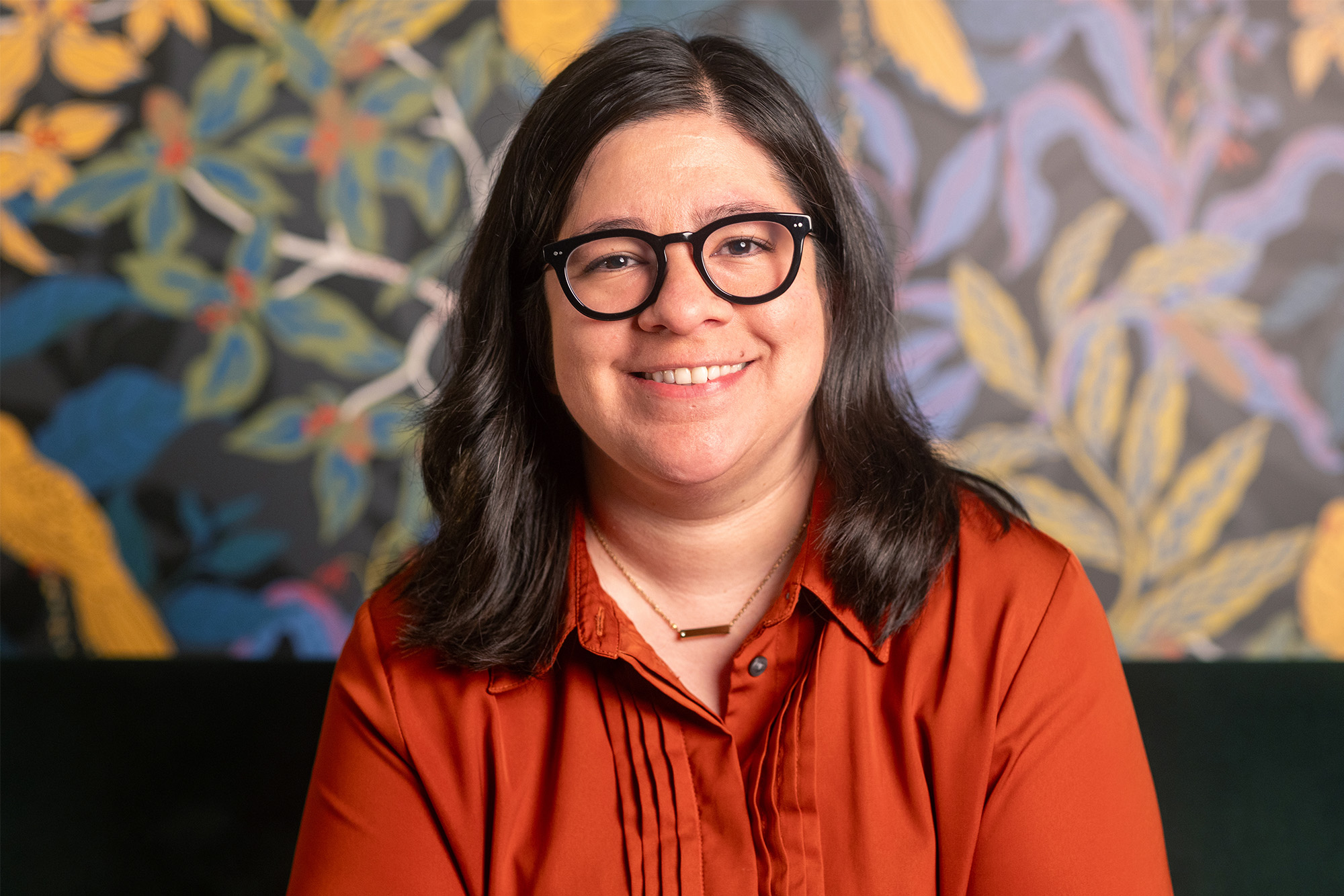
Alejandra Márquez, assistant professor of Spanish at Michigan State University, researches representation of gender and sexuality in Latin America. Her current book project looks at modern literary representations of same-sex desire between women in Mexico and examines how those narratives challenge or perpetuate perceptions of gender and sexuality.
Here, Márquez explores LGBTQIA+ representation in the U.S. and Mexico and the ways mainstream Pride celebrations have sometimes strayed from being spaces for protest and activism.
How has Pride Month evolved since it started in the U.S. in 1970?
When Pride first started in 1970, it was much more political. We often forget that Pride started as a commemoration of the 1969 Stonewall Riots, and that those riots happened as a response to police violence to the LGBTQIA+ community. There has also been a tendency to forget the crucial role that trans women and women of color, like Marsha P. Johnson and Sylvia Rivera, played.
In the 1980s, Pride shifts with the AIDS crisis and becomes more focused on public health and demanding accountability from the government. Then, in the 1990s, we start to see more commercialization of Pride, more corporate sponsorships and growing visibility.
The commercialization of Pride and Pride Month celebrations ties into the pink economy purchasing power of the LGBTQIA+ community. That influence on marketing and business strategies in the last 20 years has led to some superficial corporate gestures aimed more at profit than real LGBTQIA+ support.
Fast forward to now and we are starting to see more pushback against that commercialization. There are groups like the Reclaim Pride Coalition that organize marches aiming to be different from the more mainstream Pride events. These marches have no corporate sponsorship and no police participation, acknowledging that Stonewall was a response to the police violence.
How has Pride expanded over the years, including in Mexico?
There has been an expansion in Pride events and recognition from bigger cities to smaller towns across the U.S. and in global reach. Right now, there are multiple countries with Pride celebrations, including Mexico, where Mexico City is often thought of as the LGBTQIA+ capital of Latin America. That expansion has really contributed to LGBTQIA+ people’s visibility.
One of the ways in which Pride is similar in the U.S. and Mexico is that they both started as a form of activism. Pride and LGBTQIA+ activism in Mexico — ever since its start in 1979 — have inspired different groups with different ideals.
These groups in Mexico have changed and grown with time and have started their own marches, like the Reclaim Pride Coalition example in the U.S. The Marcha Lencha is an example of a recent march that emerged as something different from the more commercial Pride. The Marcha Lencha also sought to appeal to women and people who do not feel like they fit the label of lesbian.
What changes have you seen in representation of LGBTQIA+ people?
LGBTQIA+ representation has shifted tremendously over the past few decades. You have more nuanced representation in mass media and pop culture. Now we see more inclusion of complex LGBTQIA+ characters with acknowledgment of intersectionality, how race or class play into identity.
There has also been a shift in LGBTQIA+ representation in Mexico, which is my area of study.
In the ‘90s and even up until about 2010, it was completely unthinkable to see an LGBTQIA+ character in Latin American telenovelas. In the last 10 years, we are seeing a lot more LGBTQIA+ characters included in these soap operas and that has helped with visibility.
It has made LGBTQIA+ people more part of the culture and has also created more backlash and resistance, which shows that visibility and representation don’t necessarily end discrimination.
Pride Month is a space to continue to fight for LGBTQIA+ rights but also to celebrate people’s identities. It’s important to see people, celebrate each other and understand there is no one way of being part of the LGBTQIA+ community. Learning about how other communities express themselves and exist differently helps us see how our way of viewing the world around us is not the only way.
How is LGBTQIA+ and gender identity perceived in Mexico?
There are social and cultural stereotypes about gender roles in Mexico — the idea of the macho man and the passive woman — but these don’t reflect the full picture. Gender norms are shifting and experiences vary depending on region, class and other factors.
Religion also plays a role, but Mexico is a secular country so there is a clear separation between church and state that would not allow religion to infringe on rights. That said, we can’t overlook serious issues like homophobia and hate crimes, including femicide.
Legally, Mexico first discussed marriage equality in 1998 at a forum on sexual diversity and human rights, and that meeting led to early reforms in Mexico City’s Civil Code, which included penalties for discrimination. These were the first antidiscrimination policies in Mexico and laid the foundation for future legal progress.
In 2015, the Supreme Court in Mexico declared that state-level marriage bans were unconstitutional. By 2023, all Mexican states had recognized same sex marriage. These legal policies have helped increase public acceptance of sexual diversity in Mexico.

