Jump to HeaderJump to Main ContentJump to Footer
Michigan State University
MSUTODAY
  • Browse Stories By

    Topics

    Explore stories by subject area

    • Arts and Culture
    • Business and Economy
    • Climate and Environment
    • Education and Learning
    • Engineering, Science and Technology
    • Government and Society
    • Health and Medicine
    • Media and Communications
    • MSU Leadership and Impact
    • Sports and Recreation
    • Student and Campus Experience
    View All Stories

    Collections

    Curated story series

    • Turfgrass
    • Ask the Expert
    • Big Ideas
    • Climate solutions
    • Water at MSU
    • Mobility
    • Spartan Perspectives
    • Student views
    • Graduate voices
    • Faculty voices
    View All Collections

    Featured

    Editor's picks

    • 9 reasons to love being a Spartan

      Aug. 28, 2026

      9 reasons to love being a Spartan

    • NIH awards multi-university team over $4M to improve women’s health

      Sept. 15, 2026

      NIH awards multi-university team over $4M to improve women’s health

MSUTODAY
  • Browse Stories By

< Browse Stories By

Topics

Explore stories by subject area

  • Arts and Culture
  • Business and Economy
  • Climate and Environment
  • Education and Learning
  • Engineering, Science and Technology
  • Government and Society
  • Health and Medicine
  • Media and Communications
  • MSU Leadership and Impact
  • Sports and Recreation
  • Student and Campus Experience
  • View All Stories

Collections

Curated story series

  • Turfgrass
  • Ask the Expert
  • Big Ideas
  • Climate solutions
  • Water at MSU
  • Mobility
  • Spartan Perspectives
  • Student views
  • Graduate voices
  • Faculty voices
  • View All Collections

Featured

Editor's picks

  • 9 reasons to love being a Spartan

    Aug. 28, 2026

    9 reasons to love being a Spartan

  • NIH awards multi-university team over $4M to improve women’s health

    Sept. 15, 2026

    NIH awards multi-university team over $4M to improve women’s health

  • For Media
  • Experts
  • Releases and Statements
  • Sign Up
  • Update Information

Resources

  • A to Z Index
  • Find People
  • Maps
  • Email
  • Student Information System (SIS)
  • D2L
  • Libraries
  • Tech Support
  • MSU Misconduct Hotline
  • Social Media Directory
  • Events Calendar
  • For Media
Michigan State University
MSUToday
  • For Media
  • Experts
  • Releases and Statements
  • Sign Up
  • Update Information

May 6, 2025

Want to understand grasslands? Look at the bigger picture.

New research examines the factors that influence the makeup of plant species in grasslands.

By: Caleb Hess

Which factors do you consider when moving to a new area — school districts, home size or distance from work? If hundreds of people are competing for a spot, what determines who gets in?

Communities are ultimately shaped by an interplay of local factors, such as home size, and regional ones, such as school districts. New research published in the journal Ecology Letters examines how local and regional factors determine the makeup of plant species in grasslands.

Researchers from Michigan State University's Brudvig Restoration Ecology lab are working to solve a longstanding question in community ecology: How do regional and local factors jointly determine biodiversity?

The authors argue that while both influence biodiversity, the effects of regional factors need to be better understood to help combat biodiversity loss.

Most prior research in the field has focused on how local factors — including competition for resources such as soil nutrients and moisture — shape ecological communities.
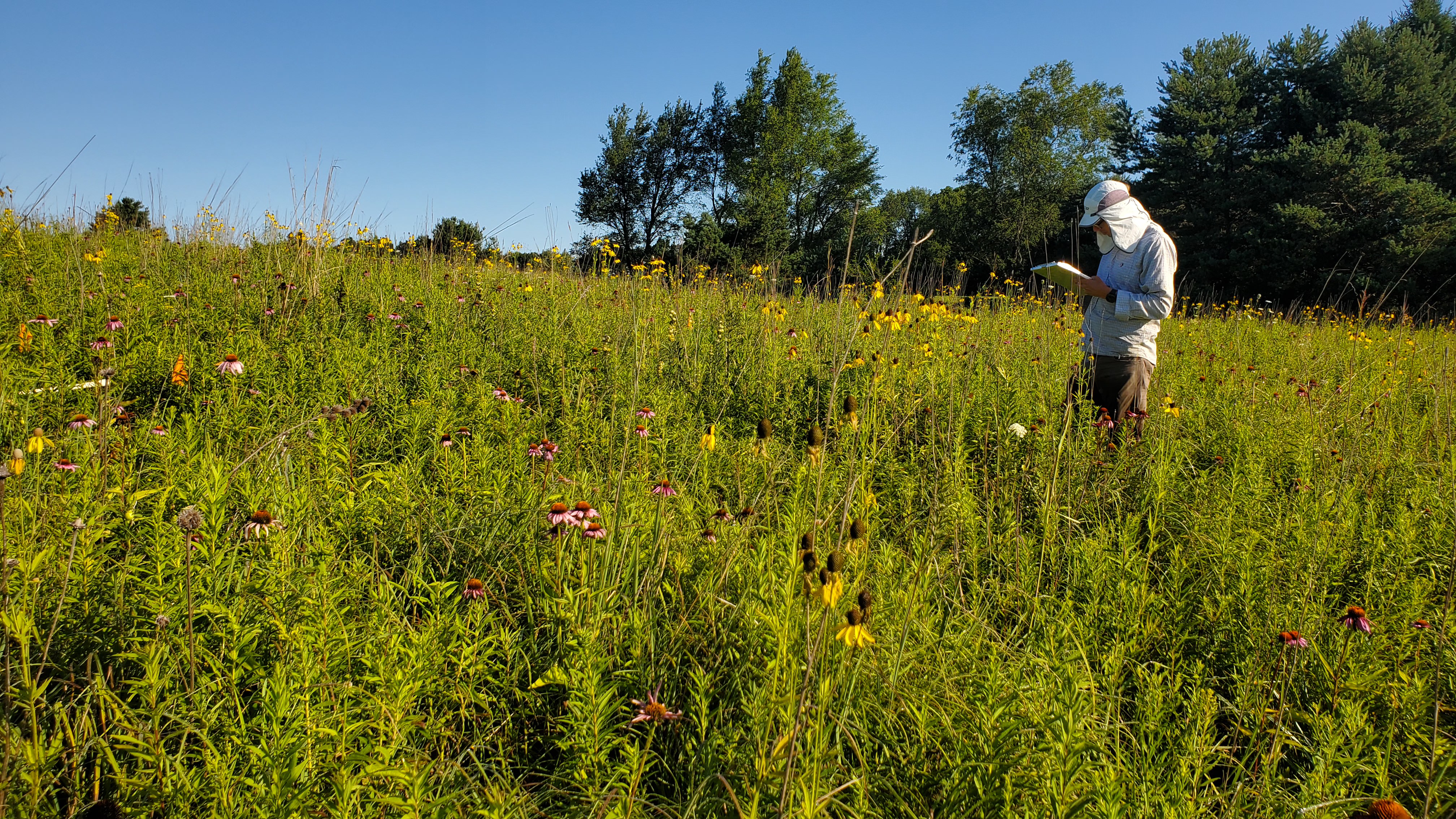
Grasslands
Professor Lars Brudvig takes notes while sampling a grassland study site. Credit: Chris Catano.

This has resulted in a disproportionate understanding of how processes within communities shape biodiversity compared to those that span large regions and multiple communities. Such studies, the authors explain, have relied on observation alone – and have often been conducted under controlled conditions. “Such non-experimental approaches make it very challenging to draw cause-and-effect conclusions,” Brudvig explained.

Helping to fill the gap, this research demonstrates that regional conditions alter the makeup of communities, providing a more nuanced picture of how biodiversity is determined.  

To study this, the researchers seeded plots across 12 grassland sites with varying soil moisture levels using mixes of native grass seeds that ranged in diversity from 30 species to eight species. The number of seeds dispersed ranged from 270 to 970 per square meter.

This allowed the researchers to parse out how the influx of species into communities influences their makeup over time, relative to the impact of soil moisture, which influences plant growth and competition between species at the local level. 

How many species and individuals were introduced to the plots altered the makeup of species expected based on soil moisture alone. This revealed that local factors which drive inter-species competition can only partially explain shifts in biodiversity when studied alone. 

Across study sites where immigration was high, initial diversity within each site began high, but diversity across sites remained low. Over time, the variety of species within individual sites declined as well, as species best suited to the environment gained dominance. Communities stemming from an influx of many individuals from a small number of species were shaped more decisively by local factors. 

In sites where highly diverse seed mixes were distributed, species variety remained higher in and across the study sites, resulting in greater local species diversity, and limiting diversity loss over time.
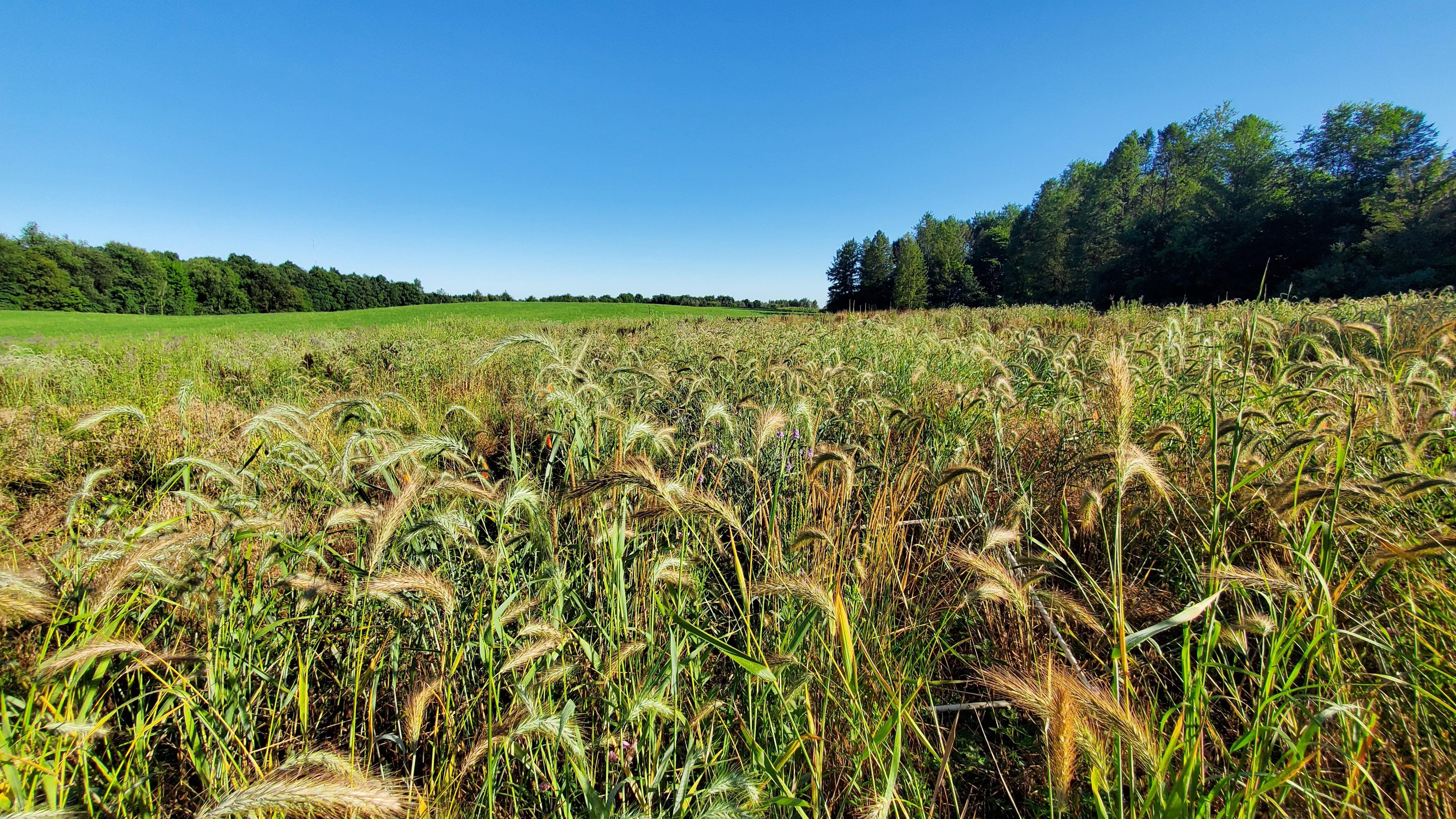
Grasslands
Some plots became dominated by a small number of species.

Essentially, local factors are more influential when a particularly well-adapted species can thrive. However, in systems where high biodiversity takes root early on, this variation helps limit one species — even if it has an advantage — from gaining dominance.

These findings suggest that immigration from a highly varied group of species helps maintain species diversity over time, overcoming local ecological factors which would otherwise encourage a single well-adapted species to assert dominance. 

This interplay between factors at different scales has long gone understudied and undervalued. Now, these findings may help deepen scientists’ understanding of the complex interplay of factors at the regional and local levels which shape ecological communities.  

Understanding how these processes shape a region’s ecology can better equip scientists to develop powerful conservation strategies, including approaches that could mitigate further biodiversity loss worldwide. 

“We wanted to find a way to combine the power of experimental manipulations with the realism and complexity of nature,” Brudvig said.

This story originally featured on the College of Natural Science website.

Latest News

MSUToday Weekly Update

The MSUToday Weekly Update email showcases how Spartans are making a difference through academic excellence, research impact and community outreach. Get inspired by these stories of innovation, collaboration and determination. Plus, enjoy photos and videos of campus and more MSU content to help keep you connected to the Spartan community.

Sign UpUpdate My Information

Connect With Us

Visit our Facebook pageVisit our page on XVisit our Instagram pageVisit our LinkedIn pageVisit our YouTube pageVisit our TikTok page

Health and Safety

  • MSU Police and Public Safety
  • Olin Health Center
  • Counseling & Psychiatric Services (CAPS)
  • University Health and Wellbeing
  • MSU Health Care
  • Civil Rights and Title IX
  • Our Commitment
  • Center for Survivors
  • Security & Fire Safety Report
  • University Policy on Relationship Violence and Sexual Misconduct
  • Notice of Non-Discrimination, Anti-Harassment and Non-Retaliation
  • Health Care Non-Discrimination Notice

Support Services

  • Disability Resources
  • Supportive Services
  • Learning Resources

Working at MSU

  • Human Resources
  • EBS Login
  • Job Postings
  • Employee Assistance Program

Reports

  • CARES Act Funding
  • Student Achievement and Outcomes

Contact us

517-355-1855

Address

Michigan State University 426 Auditorium Road East Lansing, MI 48824

Follow Us

  • Visit our Facebook page
  • Visit our page on X
  • Visit our Instagram page
  • Visit our TikTok page
  • Visit our LinkedIn page
  • Visit our YouTube page

If you're having accessibility issues, please let us know.

Know More: Campus Safety Information and ResourcesTransparency Reporting: Budget & Salary/Compensation
  • Contact Information|
  • Site Map|
  • Privacy Statement|
  • Site Accessibility|
  • Call MSU: (517) 355-1855|
  • Visit: msu.edu|
  • Notice of Nondiscrimination|

SPARTANS WILL|© Michigan State University|
