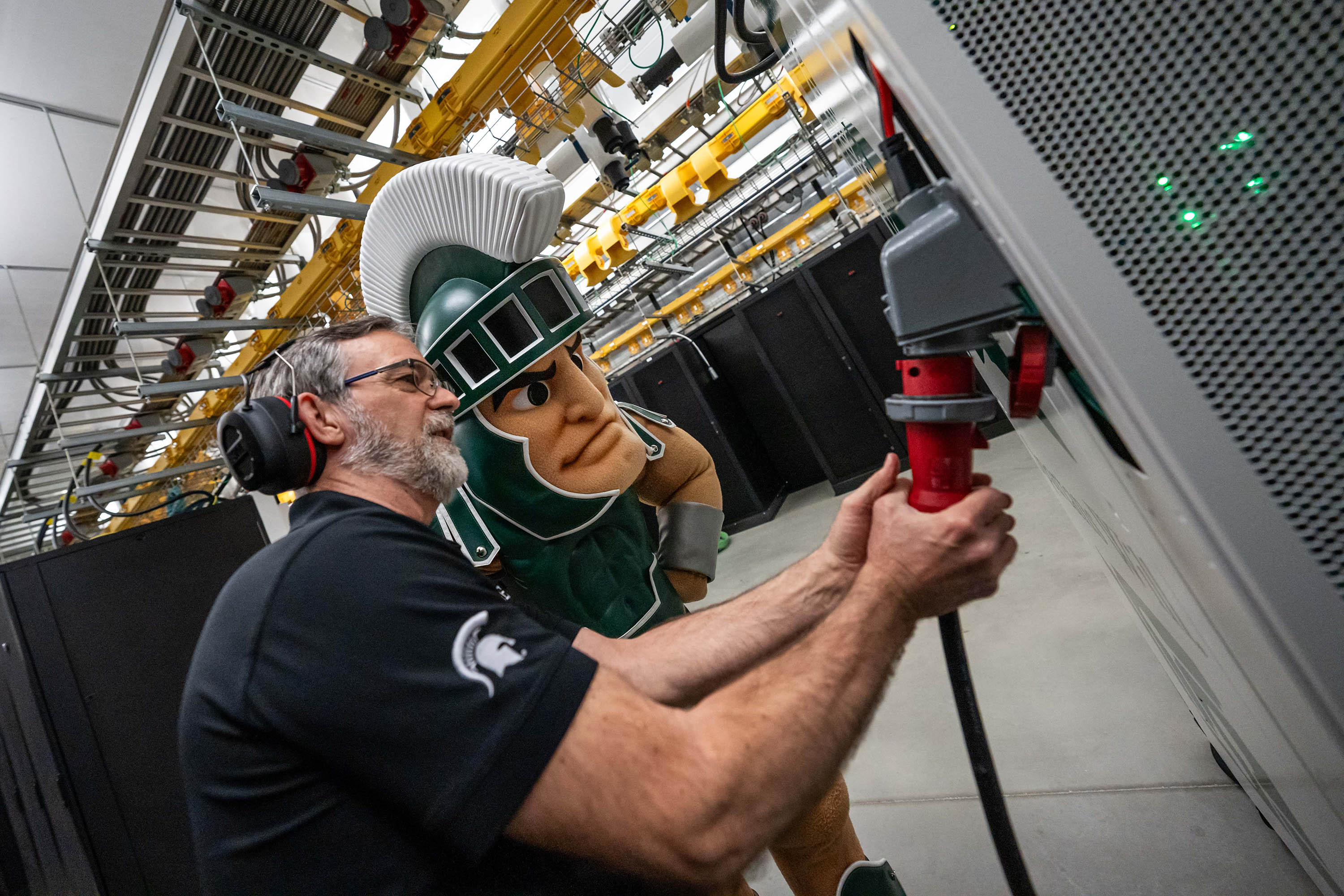
Research that would take thousands of years to complete can be completed in weeks by leveraging the power of a supercomputer.
The supercomputing center at MSU, named the Institute for Cyber-Enabled Research, or ICER, accelerates computational research with a bold philosophy: to maximize 'kilo-sciences per second' — the term ICER affectionately uses to describe supercharging the pace and impact of research across disciplines.
20th anniversary event
ICER celebrated the 20th anniversary of enabling researchers to accelerate their discoveries with MSU’s supercomputer in an event held in the MSU Union Ballroom in late February.
When its first supercomputer powered up in 2005, it was cutting-edge. Today, that throughput would be less than one PlayStation 5.
The name ICER was coined later in 2009, and the focus expanded to include a team of research consultants that would broaden access to supercomputers.
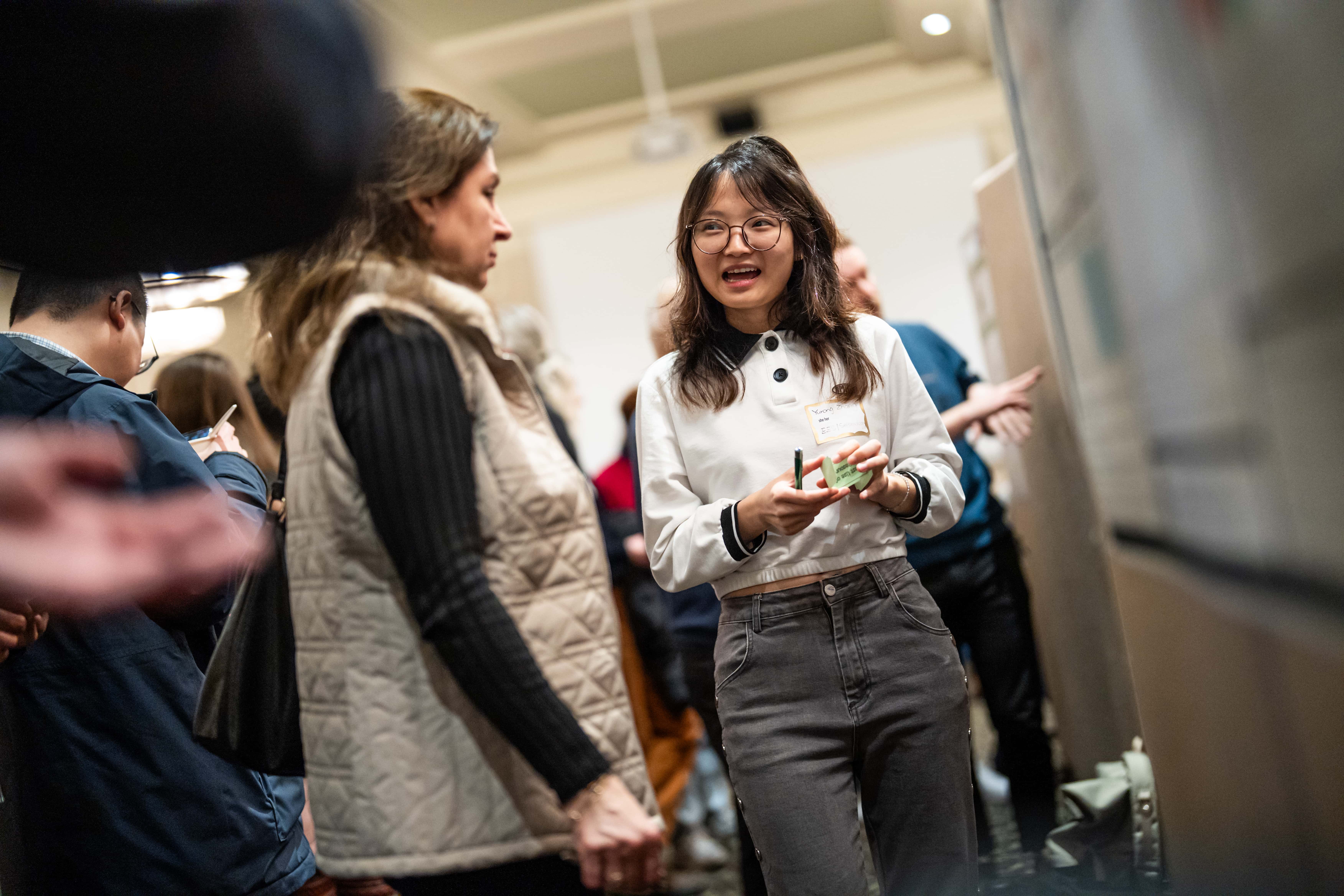
For the event, ICER displayed a 3D timeline showing the growth of its computing and support resources over the past 20 years, and a poster session highlighted the transformative research conducted with the supercomputer.
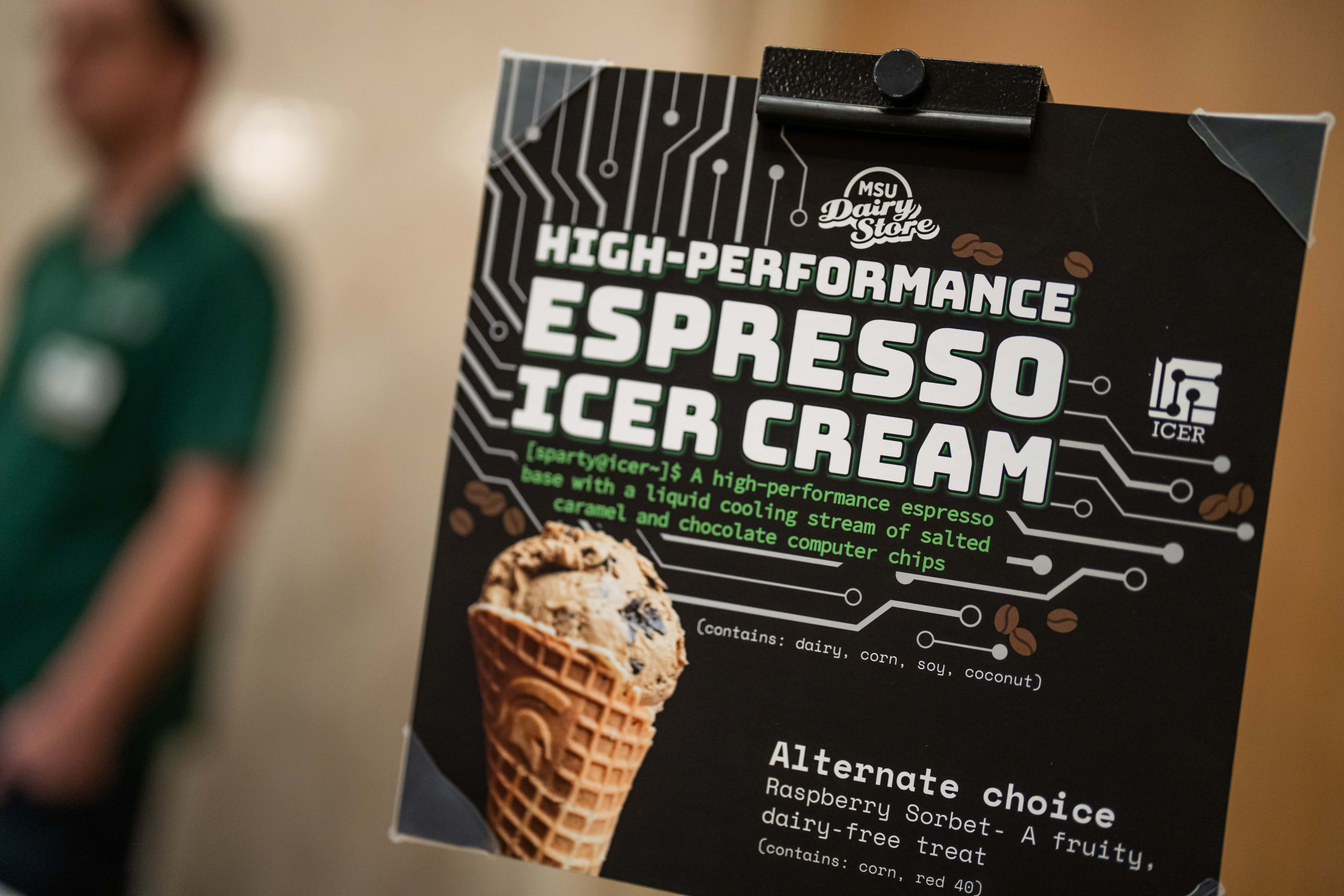
With a name like ICER, what better way to celebrate than with ICER Cream?
In honor of this milestone, the MSU Dairy Store created a new flavor: the High-Performance Espresso ICER Cream, with a stream of liquid-cooling caramel and chocolate computer chips.
Speakers presented at the event to highlight the past, present, and future of ICER. Andy Keen, ICER’s lead system administrator who has been with ICER since the beginning in 2005, and Dirk Colbry, ICER’s director of user support who started as an ICER user in 2005, shared stories and anecdotes about the history of ICER.
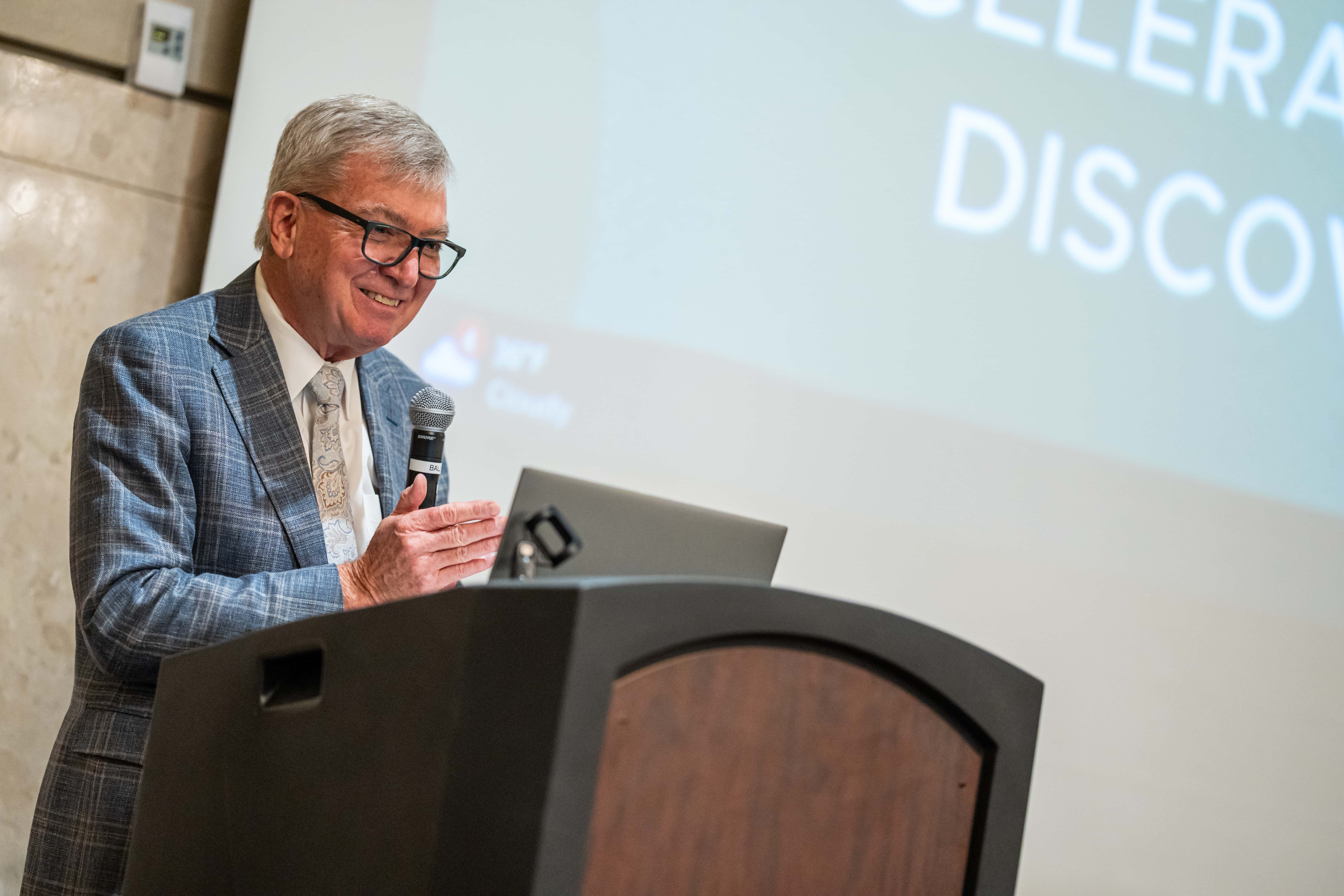
Doug Gage, vice president for research and innovation, led the presentations by highlighting the importance of high-performance computing at MSU.
“The benefits that high-performance computing has had on Michigan State University’s research and innovation are truly remarkable,” said Gage. “There is a vital need for these cutting-edge computational resources, empowering students, faculty, and researchers across disciplines to accelerate their discoveries. While the future is unfolding rapidly before us, this event gives us just the right moment to pause, appreciate, and reflect on how far ICER has come in 20 years.”
Supercomputing at MSU
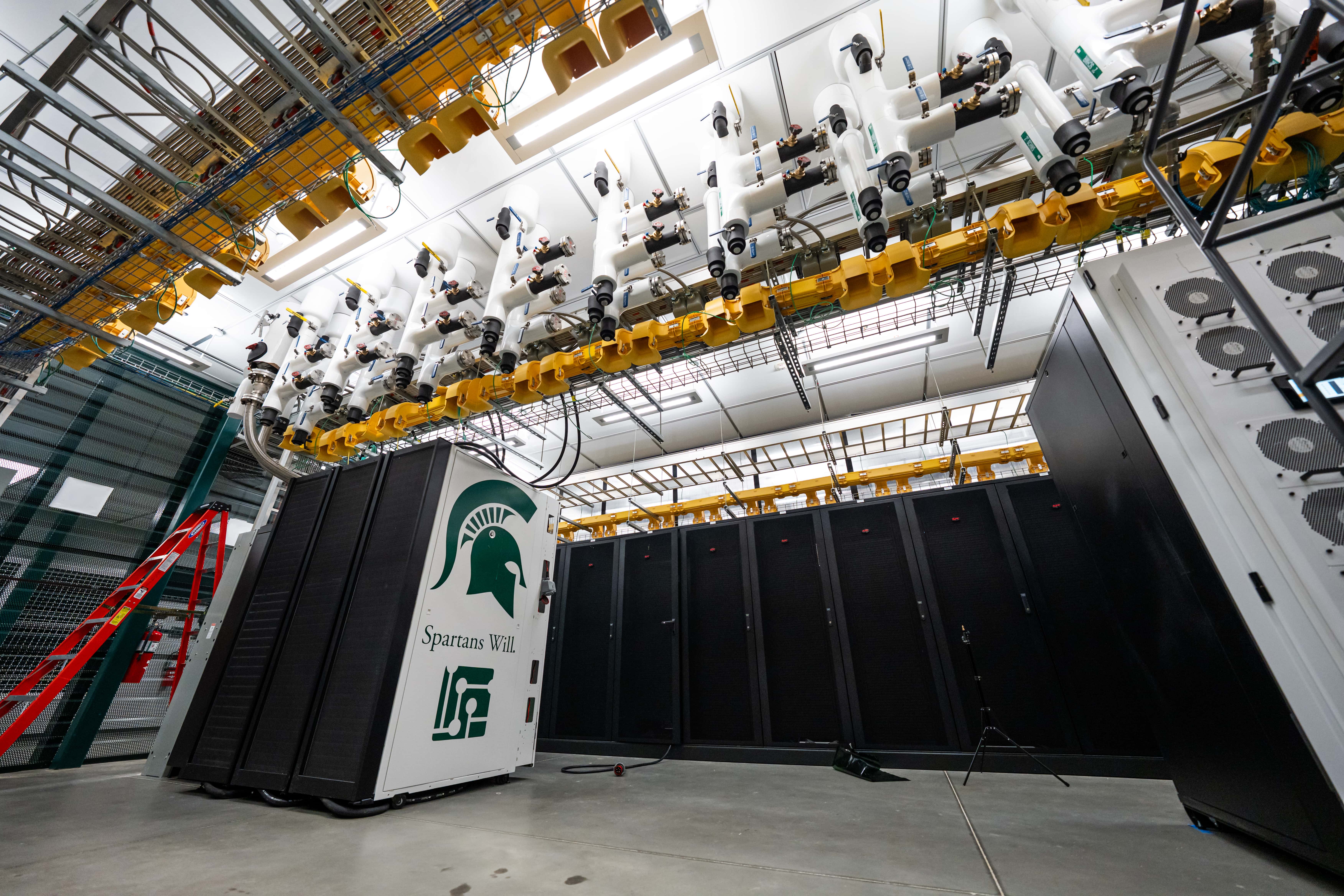
At MSU, the supercomputer refers to the high-performance computing center, or HPCC, housed by ICER in a building called the data center. At the data center, tall stacks of computer hardware are lined up in rows filling a large room. Computer chips work in parallel to accomplish many tasks simultaneously.
Thanks to the new 2025 hardware cluster, the current throughput of the supercomputer is double what it was in 2020. However, the physical space occupied by the hardware is smaller. This increase in hardware density necessitated a new liquid cooling system capable of regulating the temperature more efficiently than air cooling.
Safely bringing liquid cooling to the data center was a significant, multi-year effort that will pay dividends in energy efficiency and propel MSU into the future of what is possible with supercomputing technology.
Featured research
Computational researchers at MSU and partner institutions across Michigan use ICER’s supercomputer to improve our world.
The research conducted includes improving crop yield, creating sustainable batteries, modeling supernovas, uncovering the mysteries of human memory, and developing digital immune systems capable of evolving on their own.
The researchers come from medicine, education, natural sciences, arts, business, agriculture, engineering and over 150 other units from MSU’s campus and partner institutions.
Votes were cast by attendees of the anniversary event poster session. Naamna Modi won “Best Poster Presentation” for her poster titled “Benchmarking Parallel Code Using R”. Jackson Barnes won “Best Use of ICER Resources” for his poster titled “Forming planetesimals through the gravitational collapse of pebble clouds.”
Two ICER users were among the speakers at the event. Grace Smith-Vidaurre, a member of the 1855 Professorships Initiative from the Office of the Provost, shared a presentation about her research aiming to gain new insights into the diversity of information that animals communicate through vocal signals.
Joey Rodriguez, a professor in the Department of Physics and Astronomy, discussed his research group’s focus on understanding how planets form and evolve by studying exoplanets, planets that orbit stars other than the Sun, and the disks of gas and dust that they form within.
Future of ICER
Just as computers were once new but are now ubiquitous in virtually all fields of study, the same is predicted to be true for supercomputers. However, in some scholarly areas, there is no preexisting culture around high-performance computing in research. It can be more difficult for scientists in these areas to use supercomputing.
ICER Director Brian O’Shea spoke about the future of ICER at the 20th-anniversary event, noting that propelling MSU into the future of research computing means reducing the barriers to entry and making it more accessible to all academic backgrounds with easier-to-use software and a plethora of support options.
Another significant consideration is energy efficiency. Running a data center consumes a substantial amount of electricity to power and cool the computers within it. Hardware designed for AI applications is particularly power-hungry.
ICER is committed to reducing the climate impact of MSU’s supercomputer by making energy efficiency a key factor when purchasing hardware to meet the growing breadth of researchers’ needs. The new liquid cooling system is a critical component in reducing the energy expenditure necessary to maintain the operating temperature of the hardware to prevent overheating.
The utilization of the hardware is equally important for efficiency. If a researcher communicates inefficiently with the supercomputer, it can result in an unnecessary workload for the hardware. Part of ICER’s support services will include educating researchers about techniques for accomplishing their work in a way that minimizes climate impact.
Supercomputing pushes the boundaries of what was thought to be possible with computational research. Years of scientific investigation can now be calculated in days. The team behind MSU’s supercomputer are leaders in supporting researchers to increase their kilo-science per second output to better understand ourselves, our world, and our universe.
This story originally appeared on the Institute for Cyber-Enabled Research website.

