Jump to HeaderJump to Main ContentJump to Footer
Michigan State University
  • Browse Stories By

    Topics

    Explore stories by subject area

    • Arts and Culture
    • Business and Economy
    • Climate and Environment
    • Education and Learning
    • Engineering, Science and Technology
    • Government and Society
    • Health and Medicine
    • Media and Communications
    • MSU Leadership and Impact
    • Sports and Recreation
    • Student and Campus Experience
    View All Stories

    Collections

    Curated story series

    • Turfgrass
    • Ask the Expert
    • Big Ideas
    • Climate solutions
    • Water at MSU
    • Mobility
    • Spartan Perspectives
    • Student views
    • Graduate voices
    • Faculty voices
    View All Collections

    Featured

    Editor's picks

    • The Spartans behind your favorite Michigan golf courses

      July 22, 2026

      The Spartans behind your favorite Michigan golf courses

    • MSU in the 1990s: 10 Spartan milestones

      July 14, 2026

      MSU in the 1990s: 10 Spartan milestones

MSUTODAY
  • Browse Stories By

< Browse Stories By

Topics

Explore stories by subject area

  • Arts and Culture
  • Business and Economy
  • Climate and Environment
  • Education and Learning
  • Engineering, Science and Technology
  • Government and Society
  • Health and Medicine
  • Media and Communications
  • MSU Leadership and Impact
  • Sports and Recreation
  • Student and Campus Experience
  • View All Stories

Collections

Curated story series

  • Turfgrass
  • Ask the Expert
  • Big Ideas
  • Climate solutions
  • Water at MSU
  • Mobility
  • Spartan Perspectives
  • Student views
  • Graduate voices
  • Faculty voices
  • View All Collections

Featured

Editor's picks

  • The Spartans behind your favorite Michigan golf courses

    July 22, 2026

    The Spartans behind your favorite Michigan golf courses

  • MSU in the 1990s: 10 Spartan milestones

    July 14, 2026

    MSU in the 1990s: 10 Spartan milestones

  • For Media
  • Experts
  • Releases and Statements
  • Sign Up
  • Update Information

Resources

  • A to Z Index
  • Find People
  • Maps
  • Email
  • Student Information System (SIS)
  • D2L
  • Libraries
  • Tech Support
  • MSU Misconduct Hotline
  • Social Media Directory
  • Events Calendar
  • For Media
Michigan State University
MSUToday
  • For Media
  • Experts
  • Releases and Statements
  • Sign Up
  • Update Information
MSUTODAY

May 12, 2025

Detroit shines: Creating community, celebrating innovation, embracing resilience on the Spartan Bus Tour


Inspiring. Uplifting. Soulful. Authentic. These were some of the words that participants of the Spartan Bus Tour used to describe their immersive two-day, 254-mile trip through the Detroit metropolitan area May 5-6.

Sixty faculty and administrators from Michigan State University joined President Kevin M. Guskiewicz, Ph.D., at 14 stops throughout the region to learn more about the communities in Detroit and how MSU works with partners to support the city’s economic development, advance the arts, transform schools, improve health and protect the environment. 

“Imagine embarking on a two-day learning experience on wheels, where your sense of institutional purpose is reawakened by the stories, struggles and triumphs of a city in motion,” said Marcio Oliveira, vice provost for Teaching and Learning Innovation at MSU. “This wasn’t just an off-campus journey — it was a call to action. As we witnessed both the depth and potential of MSU’s engagement with local communities, I was reminded of the power of education to shape lives and strengthen organizations.”

This edition of the Spartan Bus Tour offered a more focused opportunity to learn about a specific region following the success of its inaugural journey through 13 cities in central and western Michigan in October 2024.

Jump to: Day 1 | Day 2 

Day 1, morning

Embracing resilience, honoring the past and building the future 

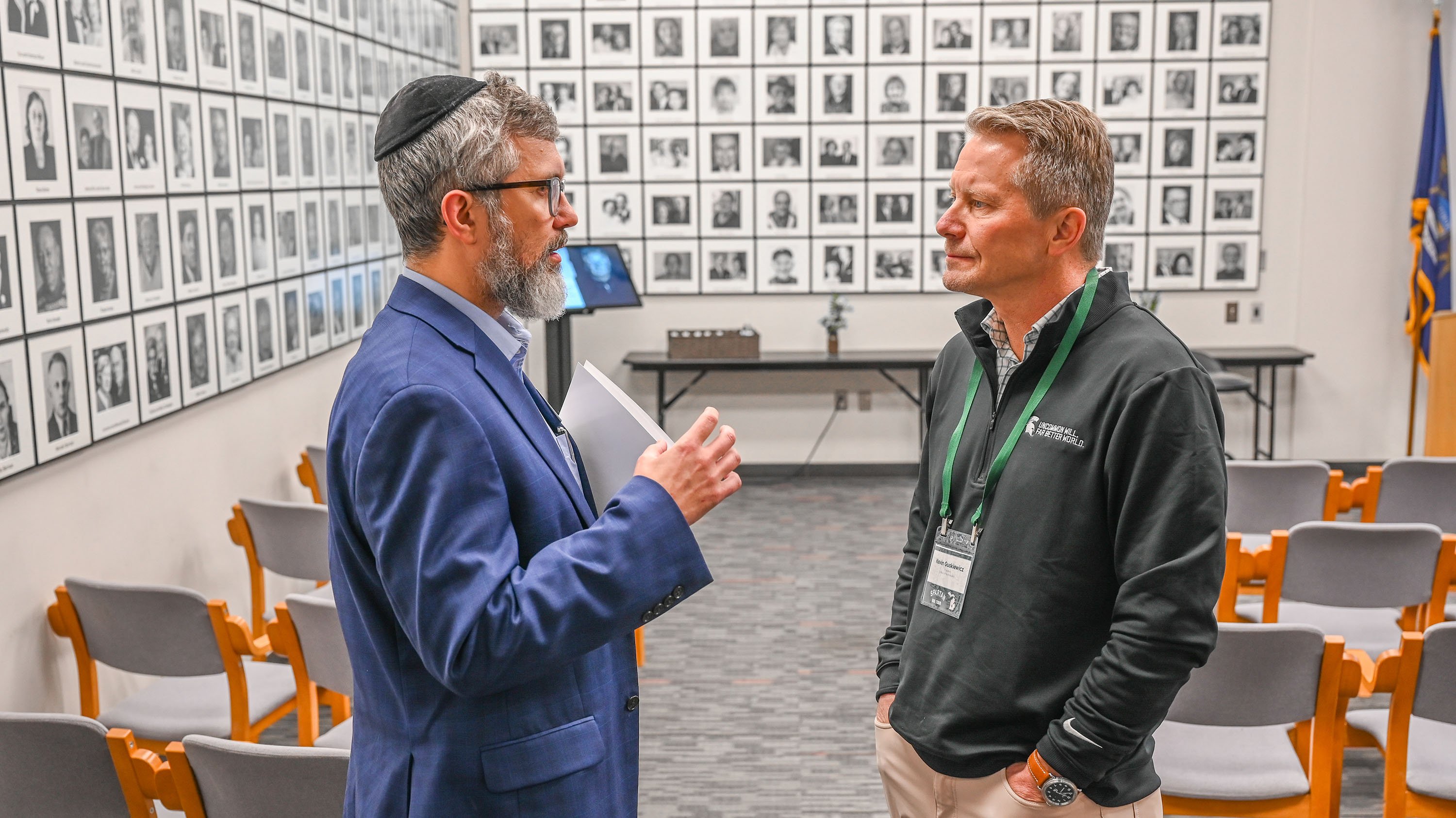
The first stop on the Spartan Bus Tour was the Zekelman Holocaust Center in Farmington Hills, whose mission over the last 40 years has been to “engage, educate and empower by remembering the Holocaust.” Participants were greeted by CEO Rabbi Eli Mayerfeld.

“This visit with MSU comes at a pivotal moment in our history, where we are meeting the moment together and investing in teaching students and community members about the danger of hate and where it leads,” Mayerfeld told participants. “We have worked with many faculty members at MSU over the years on various projects, including on exhibitions, workshops and ethics trainings, and we hope to strengthen the ways that we work together into the future.”

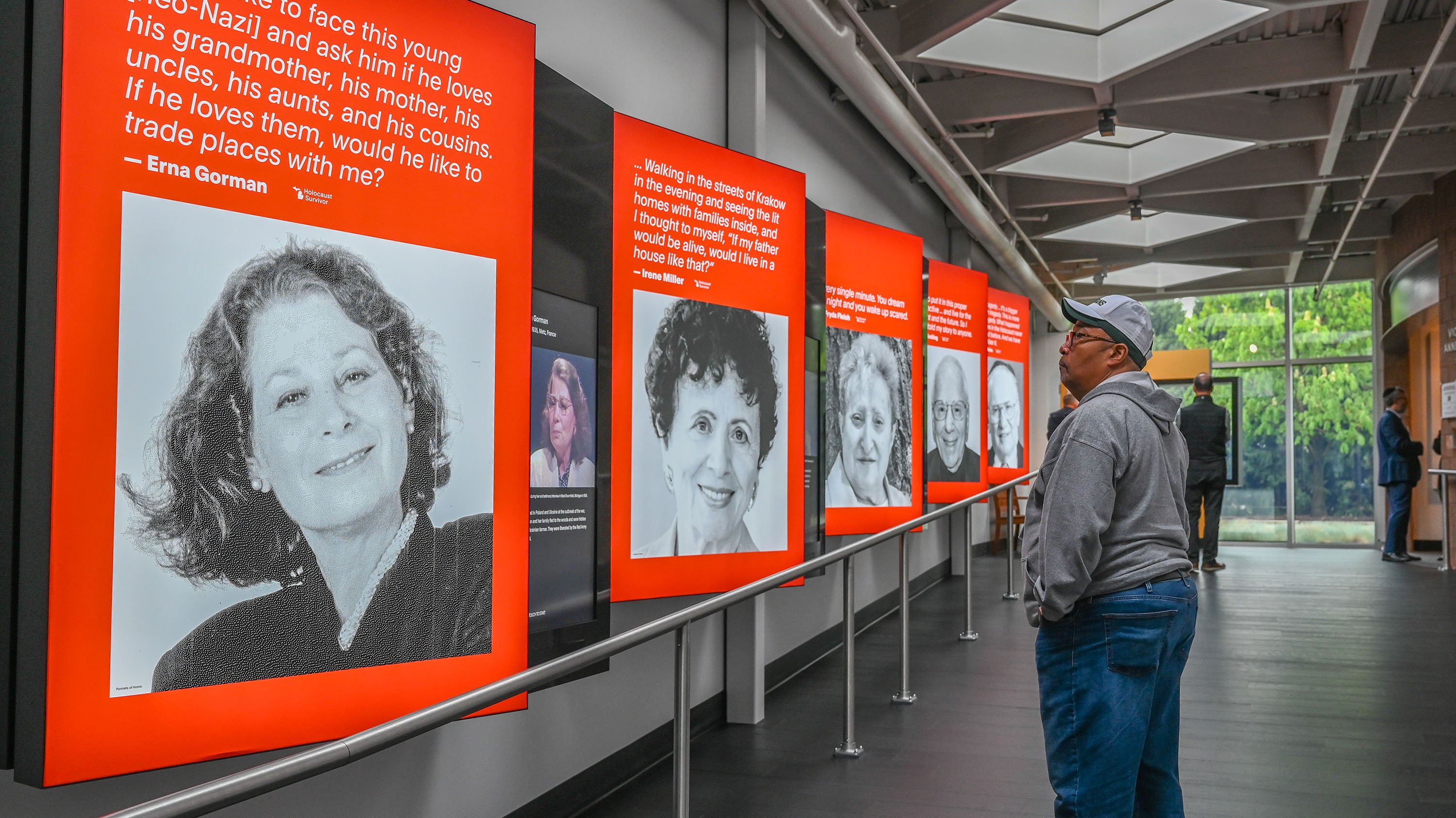
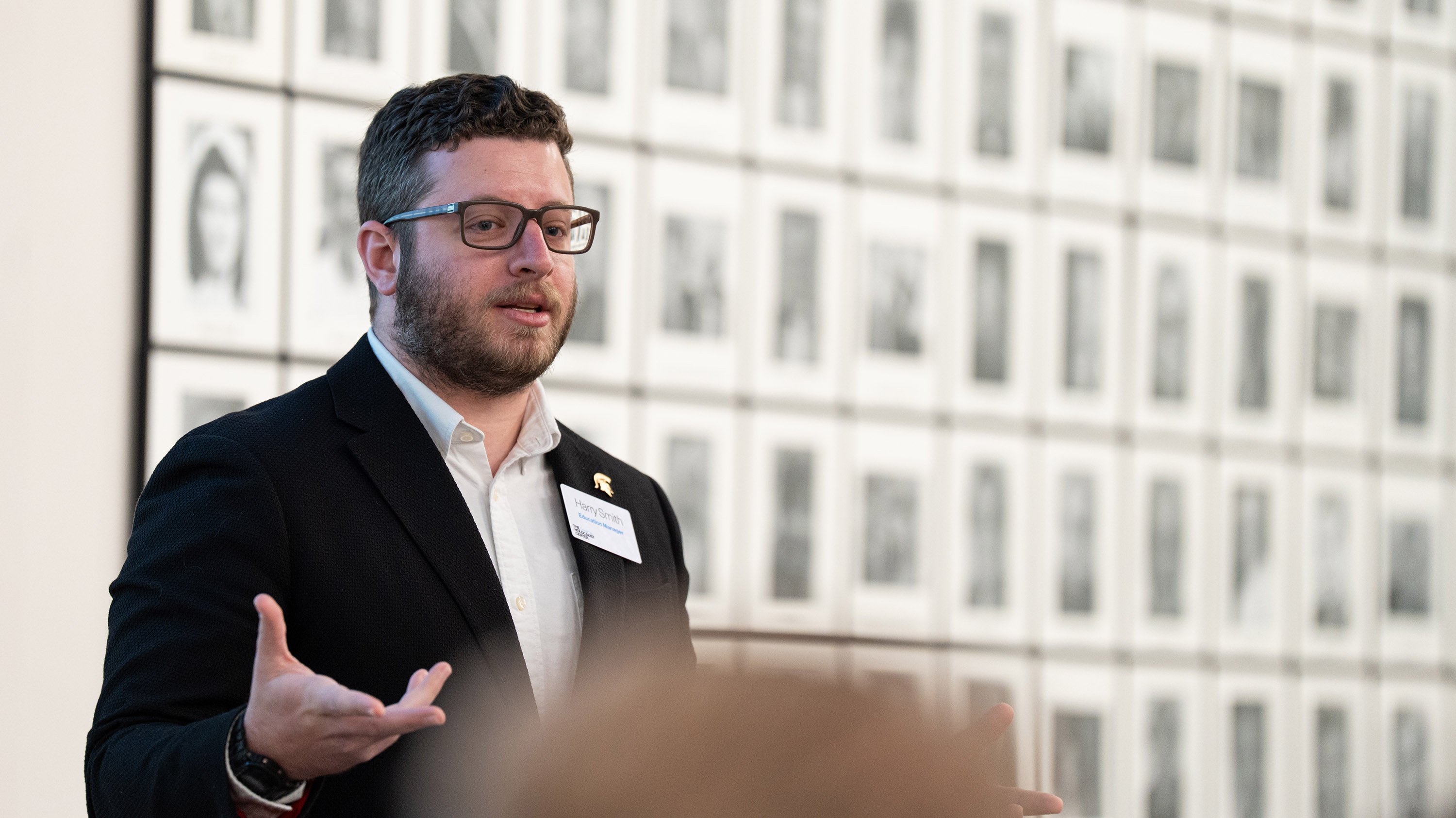
Education coordinator Harry Smith led participants through several of the center’s recently renovated exhibitions, including the “Eternal Flame and Memorial Wall,” “Genocide in the East,” the “Anne Frank Tree and Garden” and more.

“Welcoming MSU faculty and administrators to the Zekelman Holocaust Center was deeply meaningful to me — not just as a proud Spartan, but as a Jewish student who once felt unseen on campus,” said Smith, who graduated from the College of Social Science in 2016 with a bachelor’s degree in history.

Many faculty members, like LeConté Dill, associate professor of African American and African Studies in the College of Arts and Letters, were deeply moved by the visit.

“We were immediately confronted with hard truths of state-sanctioned violence, discrimination, and xenophobia,” said Dill. “We were confronted with the knowing that, in many ways, this is still our present day. We were invited to remember resistance and coping.”

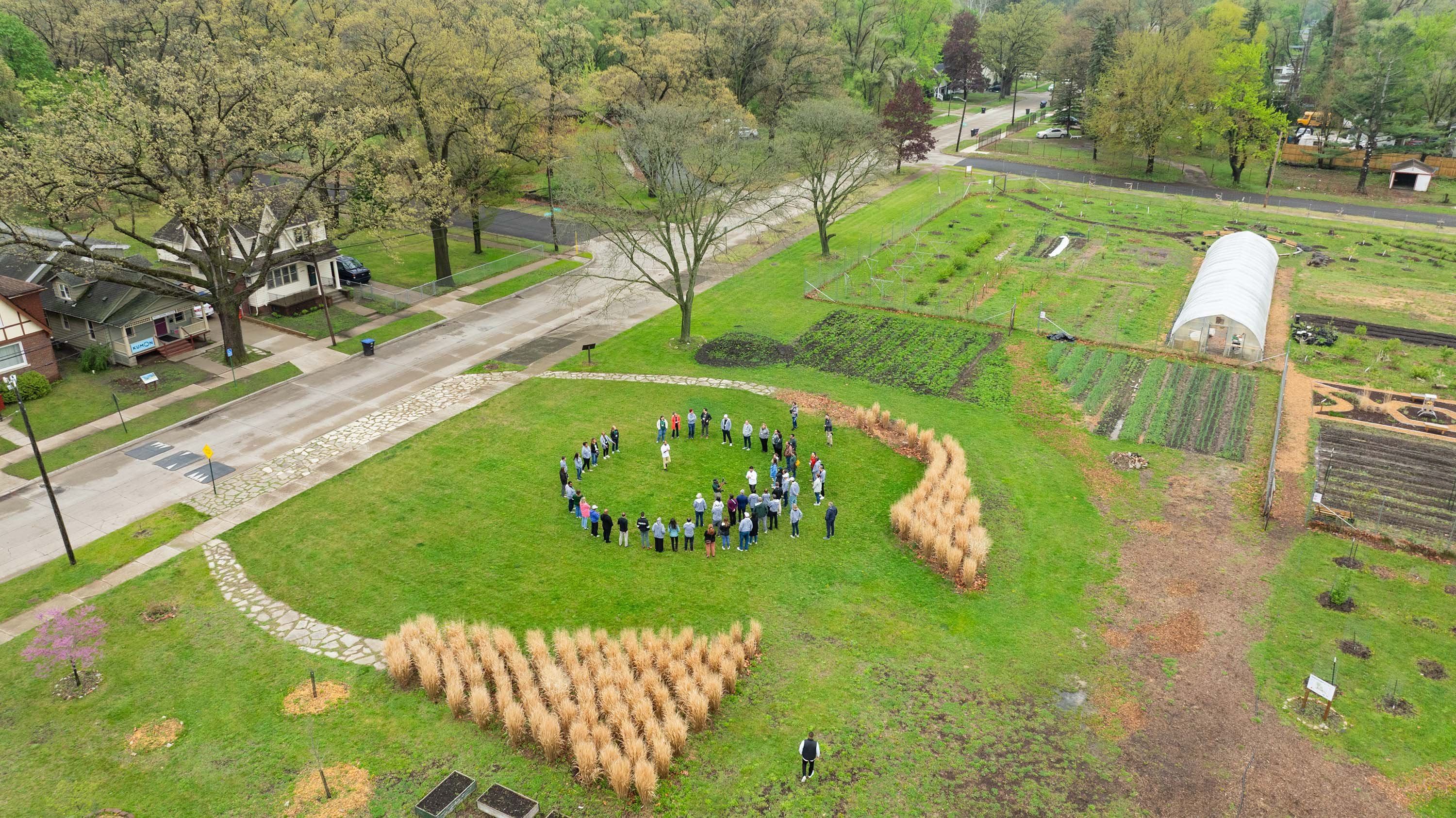
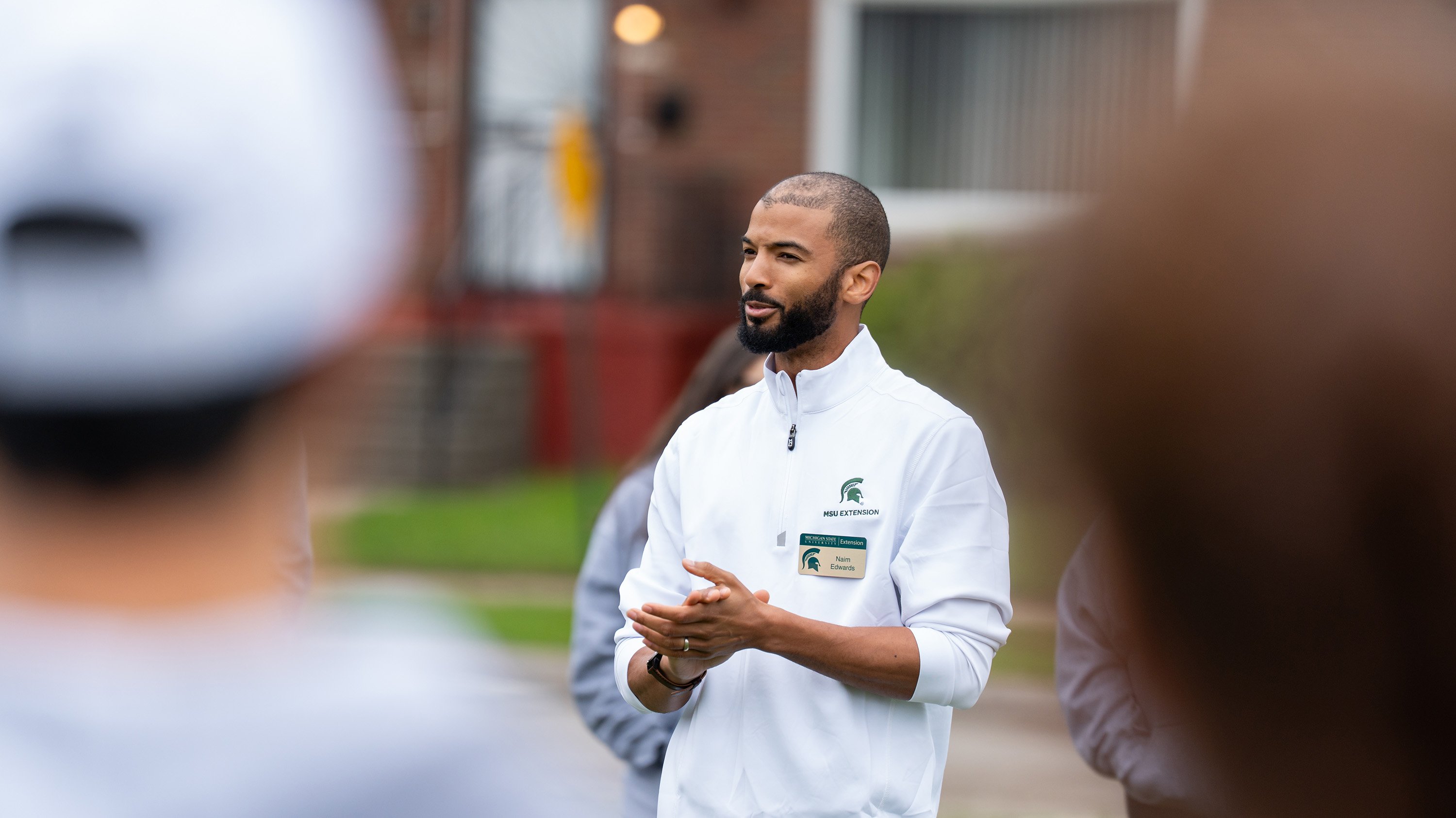
From remembrance to resilience, the bus traveled to northwest Detroit’s Riverdale neighborhood to visit the Detroit Partnership for Food, Learning and Innovation, or DPFLI, MSU Extension’s first and only urban agriculture center in the state. Surrounded by perennial fruit and nut trees, director Naim Edwards described how the center serves as both a living lab and a lifeline.

“Detroit has a lot of vacant land and people with untapped knowledge,” Edwards said. “Here, we’re building something that connects the two, giving people a way in. You don’t need a degree to grow food, to support your community, to be part of something.”

Edwards pointed to DPFLI’s youth training programs, MSU Extension workshops and research gardens — all designed to meet community needs and feed residents. He said that since its founding in 2017, the partnership has provided more than 2 million pounds of food to nearby Brightmoor Connection Food Pantry.

“This is MSU showing it cares about Detroit residents off-campus and in neighborhoods that are often overlooked,” he added.

The third stop on Day 1 brought the bus to the Shepherd and LANTERN, two spaces launched by Library Street Collective’s ongoing artistic commitment to Detroit’s Little Village neighborhood. Participants spent time perusing the grounds of the Shepherd, a historic church renovated into a gallery and community space that also boasts a bed and breakfast, two forthcoming restaurants, the Charles McGee Legacy Park, and a public skate park designed by Tony Hawk and artist McArthur Binion.

“There’s a lot of focus downtown when you think of Detroit, but I’m hoping that people on the bus are seeing some of the innovative and important efforts happening in the neighborhoods of the city,” said Anthony Curis, co-founder of the Shepherd and Library Street Collective. “The work that we do here is at the intersection of the needs of the community and the artistic talent that persists here.”

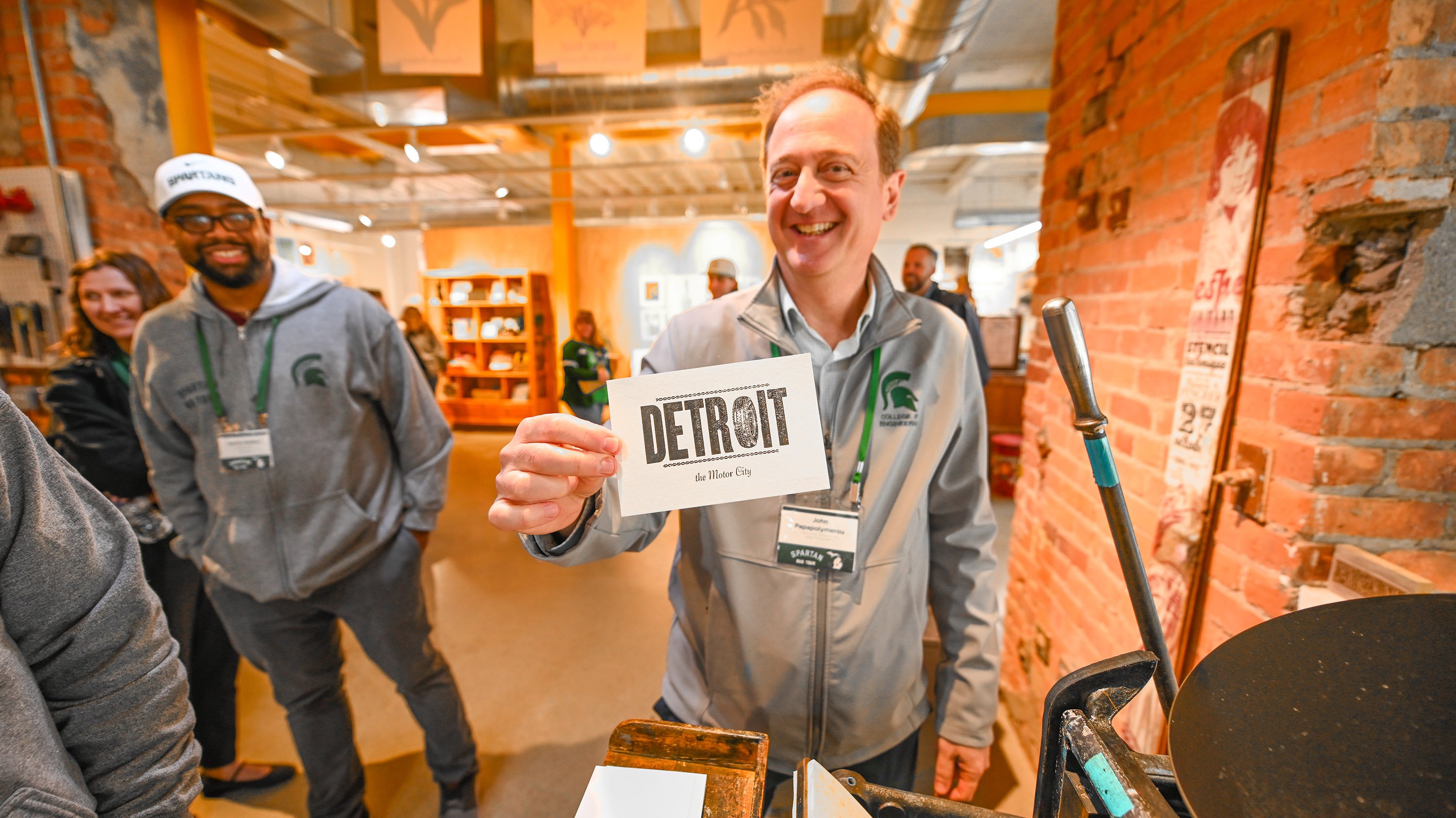
After eating a catered lunch from Michigan & Trumbull Pizza, participants toured LANTERN Detroit, a mixed-use warehouse space that is home to two nonprofits, including Signal-Return, a studio that preserves and teaches traditional letterpress printing, and Progressive Arts Studio Collective, a space dedicated to supporting artists with developmental disabilities and/or mental health differences to advance independent artistic practices and build individual career paths in the art and design fields.
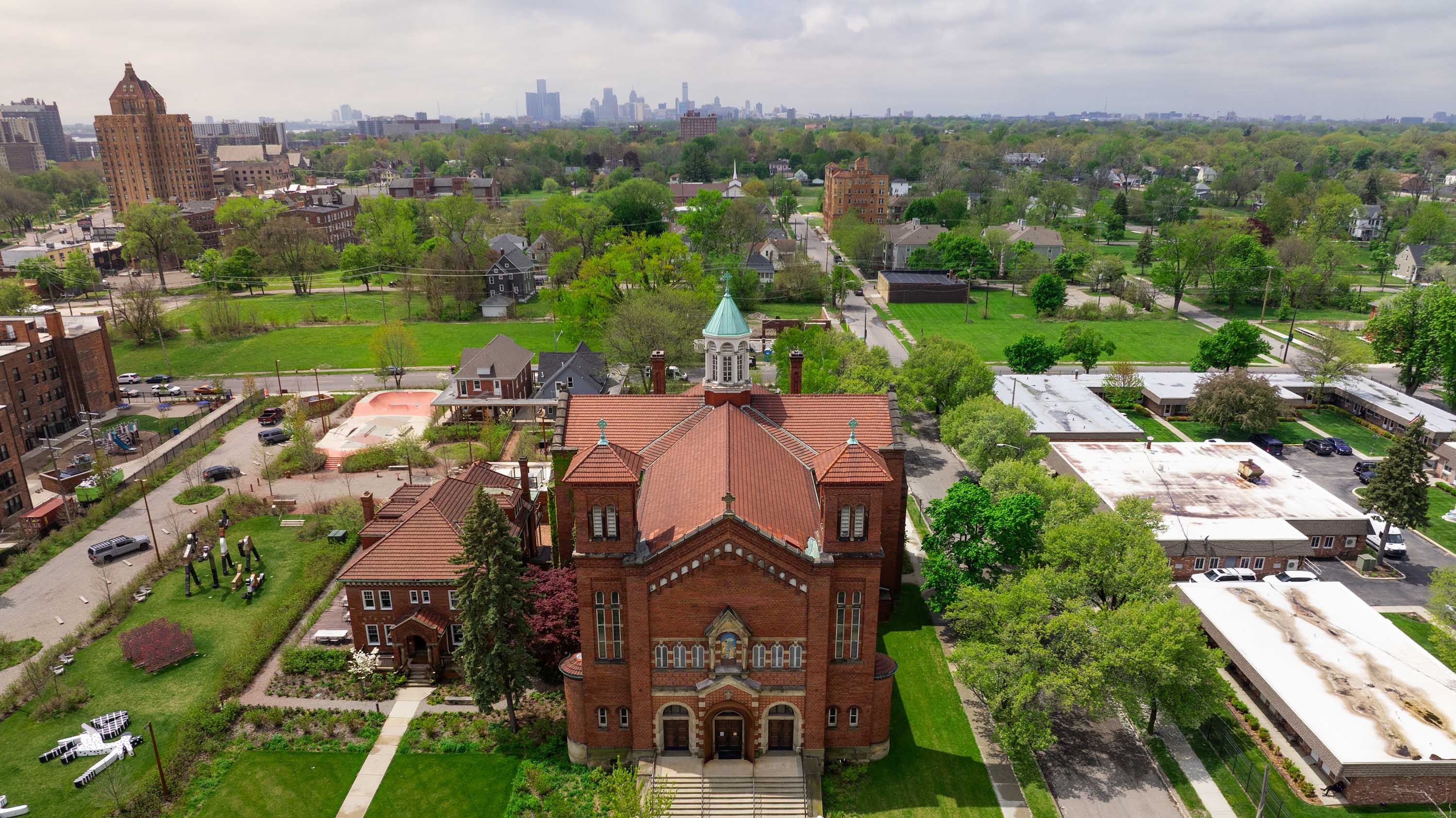
An aerial view of an old church building with the Detroit skyline in the background
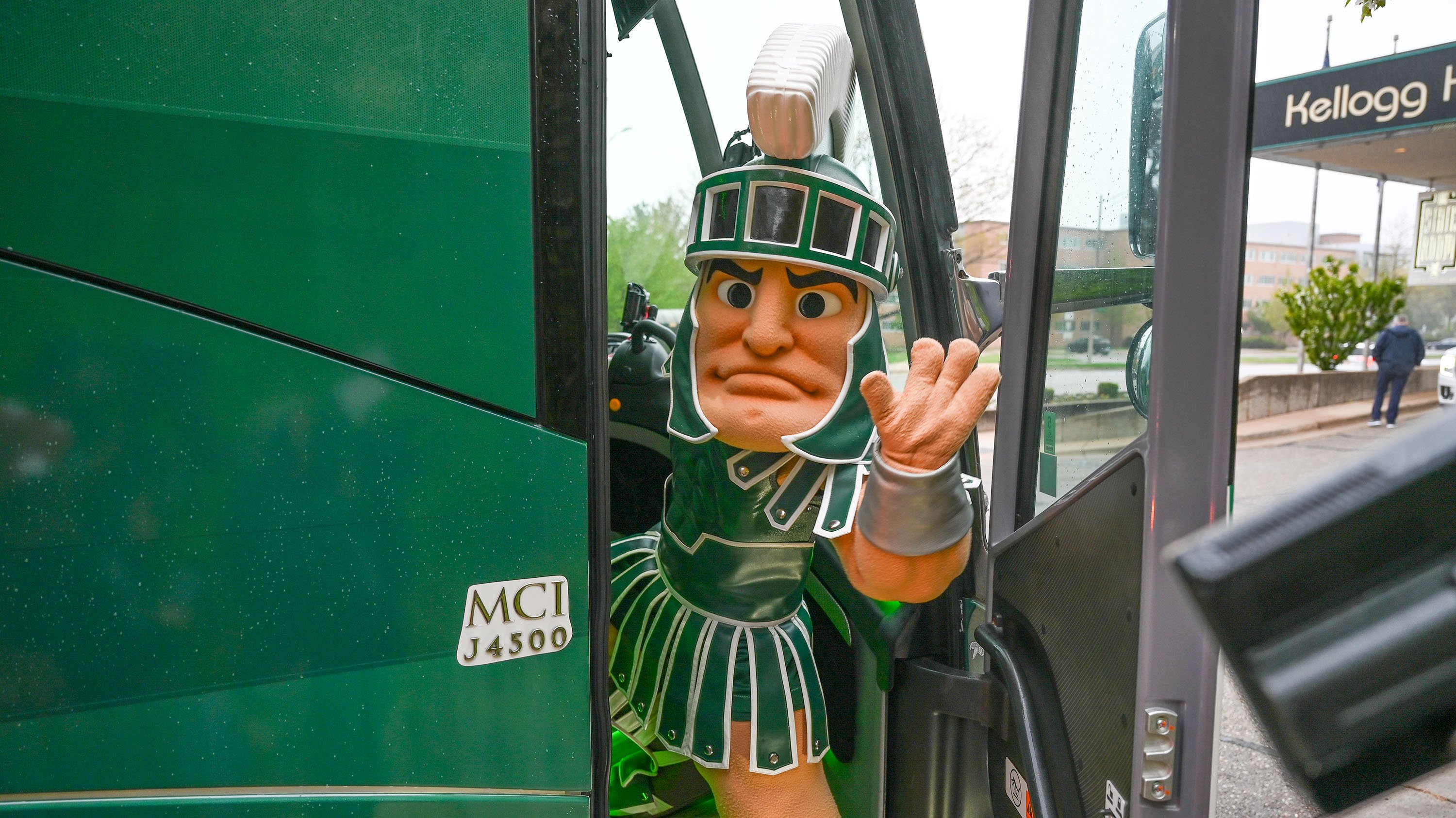
Sparty entering a bus
A man speaks to a group of people on the steps of a building
A man holds up a print that says ?Greetings from Detroit.? The ?O? in Detroit is a rubber tire.
Two men talking
A man walks through a museum exhibition.
A man speaking at a podium
Aerial photo of people in a circle at an urban farm.
A man speaking
Close up of a person taking a photo of green space on their cell phone.
A group of people stand near a clay pizza oven.
An aerial view of an old church building with the Detroit skyline in the background
Sparty entering a bus
The Shepherd is a historic church in Detroit’s East Village neighborhood that was recently transformed into a cultural arts center that offers multi-faceted programming, including exhibitions, public projects and performance. Photo by Garret Morgan.
Sparty sends off the Spartan Bus Tour on the morning of May 5 as they leave Michigan State University’s Kellogg Center and head to Detroit. Photo by Derrick L. Turner.
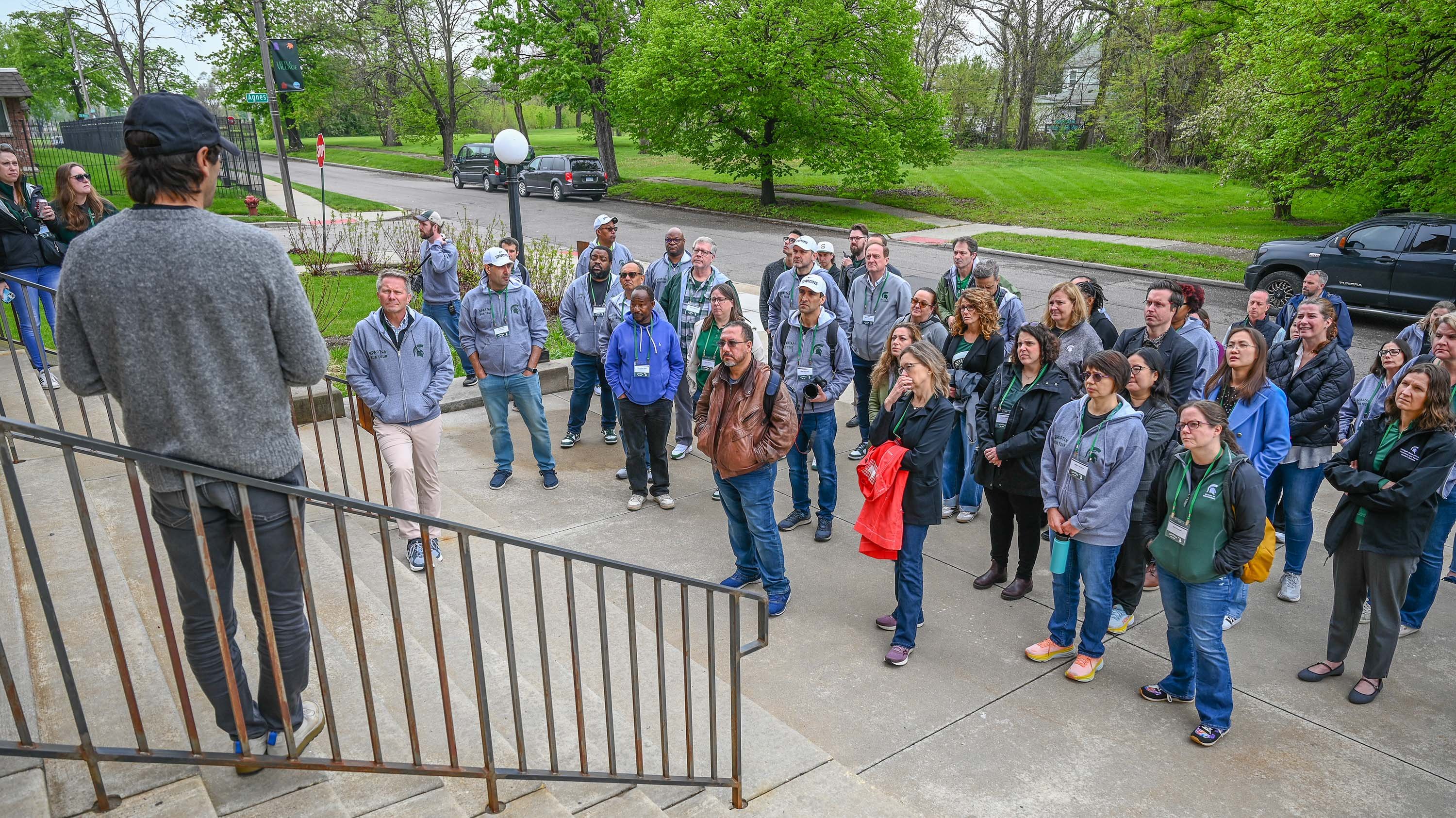
Anthony Curis, partner at Library Street Collective introduces the group to the Shepard, a church that was recently converted into a cultural events center in Detroit’s East Village. It opened in 2024 on 3.5 acres of new, publicly accessible park and green space. Photo by Derrick L. Turner.
John Papapolymerou, interim dean of the MSU College of Engineering, makes a print at Signal Return, a letterpress print studio located in the LANTERN building, which is one of Library Street Collective’s many artistic ventures. Photo by Derrick L. Turner.
MSU President Kevin M. Guskiewicz, Ph.D. speaks with Rabbi Eli Mayerfield, CEO of the Zekelman Holocaust Center. Photo by Derrick L. Turner.
Kwesi Brookins, MSU vice provost for outreach and engagement, explores an exhibition at the Zekelman Holocaust Center. Photo by Derrick L. Turner.
Harry Smith, education manager at the Zekelman Holocaust Center, welcomes the Spartan Bus Tour to the museum. Smith is an MSU alum. Photo by Nick Schrader.
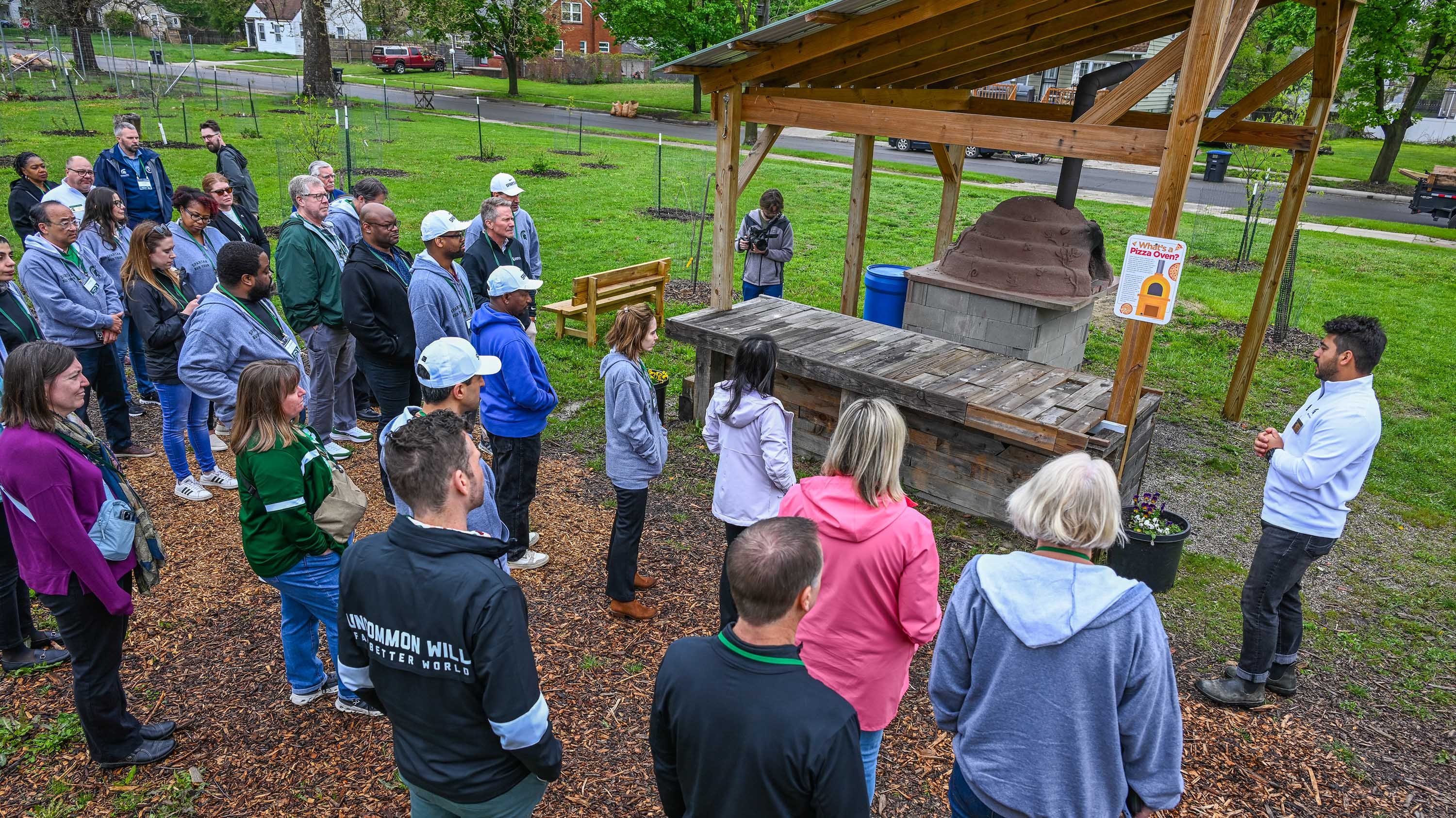
Faculty members gather at the second stop of the Spartan Bus Tour to learn about the the Detroit Partnership for Food Learning and Innovation, or DPFLI, an MSU facility that supports urban agriculture in northwest Detroit. Photo by Garret Morgan.
Naim Edwards, the director of DPFLI. Photo by Nick Schrader.
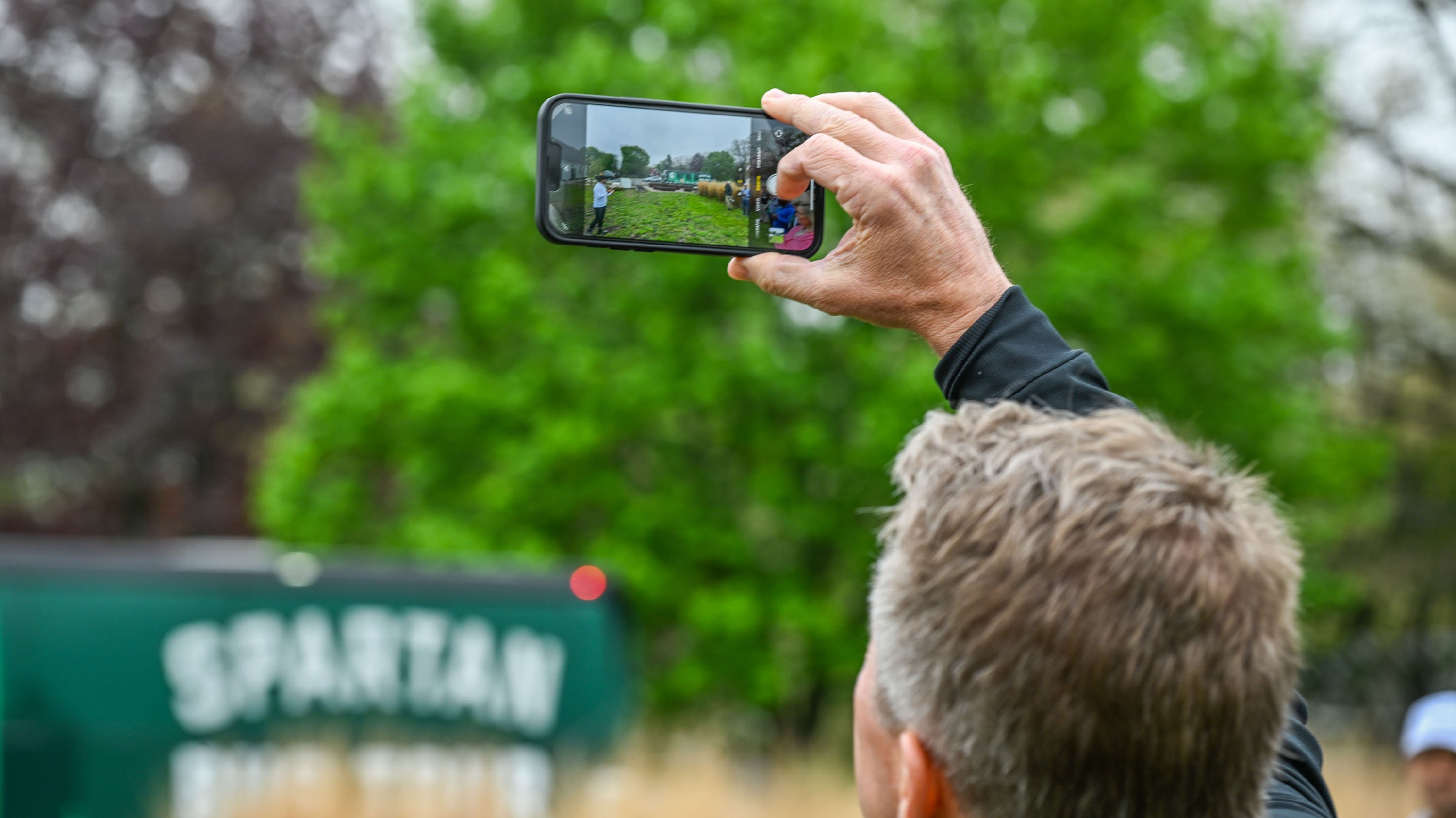
MSU President Kevin M. Guszkiewicz takes a photo at DPFLI. Photo by Derrick L. Turner.
Stathis Pauls shows the group the pizza oven at DPFLI, MSU Extension's first urban agricultural center. DPFLI hosts regular pizza nights for the community in Detroit’s Brightmoor neighborhood. Photo by Derrick L. Turner.
The Shepherd is a historic church in Detroit’s East Village neighborhood that was recently transformed into a cultural arts center that offers multi-faceted programming, including exhibitions, public projects and performance. Photo by Garret Morgan.
Sparty sends off the Spartan Bus Tour on the morning of May 5 as they leave Michigan State University’s Kellogg Center and head to Detroit. Photo by Derrick L. Turner.

01 / 11

Day 1, afternoon

Celebrating innovation; living for the city 

The afternoon shifted gears, quite literally, with a stop in Troy at Magna International, North America’s largest automotive parts supplier and a long-standing MSU partner. Heather Holm, Magna’s employer brand manager, explained how the company is helping shape the future of mobility.

“From autonomous vehicles to last-mile delivery, we’re innovating how people and goods move,” said Holm. “And we’ve worked with MSU for over 25 years to make sure students have the hands-on skills to thrive.”

Holm emphasized Magna’s robust network of MSU alumni and its participation in the Michigander Scholars Program, which has provided meaningful internship experiences for Spartan students exploring careers in mobility and advanced manufacturing.

The “innovation” theme for the afternoon continued with a visit to the Apple Developer Academy, Apple’s first U.S.-based academy that was launched in 2021 in partnership with MSU, with support from the Gilbert Family Foundation.

“The long-standing relationship between MSU and Apple goes back to about seven years ago with the establishment of the iOS Design Lab on East Lansing’s campus,” said Sarah Gretter. “There were some Apple executives who were Spartan alumni and they wanted to do more, and that’s why we’re here today.”

According to Gretter, the academy offers free programs to Detroit residents who are taught the essentials of coding, design and business with Apple tools.

Learners like Andi Powell were there with their teams to discuss their process, how they work together to solve problems and overcome challenges in order to build applications that they hope will one day be available in Apple’s App Store.

“I haven’t just learned how to produce an application,” said Dowell, who is working with a team to build an app involving innovative solutions that use technology for sustainability. “I have learned that if I don’t know how to do something specific to move to the next goal, that there is always somebody nearby who probably does, and that through collaboration and fostering relationships, you can accomplish almost anything.”

The final stop on Day 1 was at Detroit’s iconic Motown Museum. Founded in 1985, the museum is home to the iconic Hitsville U.S.A. studio and an extensive array of Motown artifacts, photographs, apparel and memorabilia. The museum is dedicated to celebrating, promoting and preserving the Motown story, from its humble beginnings in a private home to sparking an international movement.

“This is a special part of American history, part of what changed the world for the better,” said Calvin Hobbs, a docent at the museum who led the tour. “What they did in these houses is a part of the fabric of what we know today as the Civil Rights Movement. Not to mention, Detroit has always been a center of innovation and entrepreneurship — most people think about automotive industry in that respect, but it is true in the creative industry as well.”

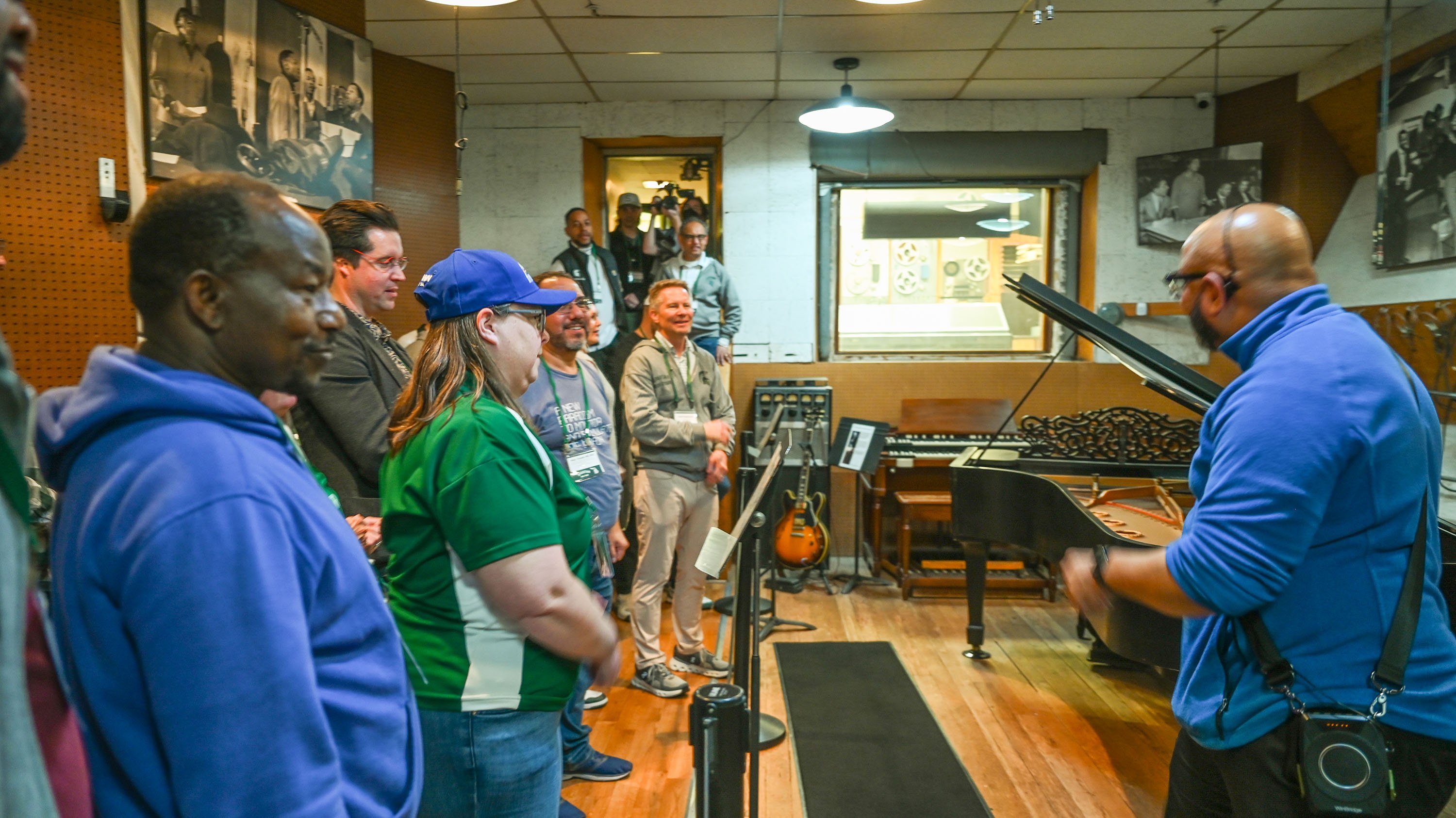
Day 1 ended with a group sing-along to “My Girl” in Studio A, the same room where the Temptations recorded the hit song more than 60 years ago.

A woman holding a microphone. She is standing at a circular dinner table. Others seated at her table are looking at her.
Three men talking
Four men talking
A man talking a selfie with a large group of people behind him.
Overhead view of downtown Detroit
A woman poses for a photo outside of a white building with royal blue doors and trim. The words ?Hitsville USA? are on the front of the building
A hand puts a pin on a map. The map is covered in pins.
People touring a preserved recording studio
A woman holding a microphone. She is standing at a circular dinner table. Others seated at her table are looking at her.
Three men talking
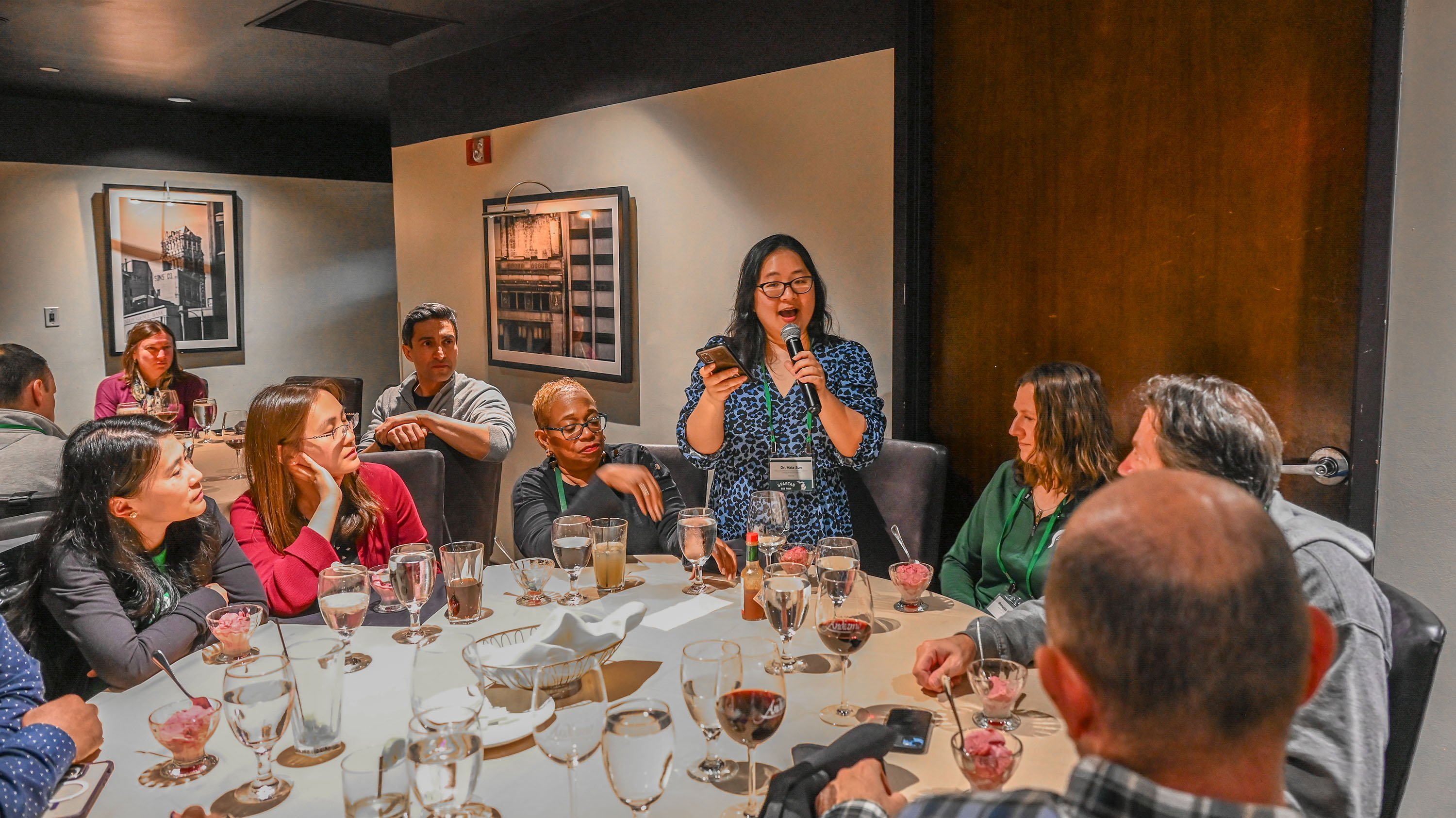
Hala Sun, associate director of assessment and evaluation for MSU Evidence Driven Learning Innovation, shares reflections during dinner at the end of the first day of the bus tour. Photo by Derrick L. Turner.
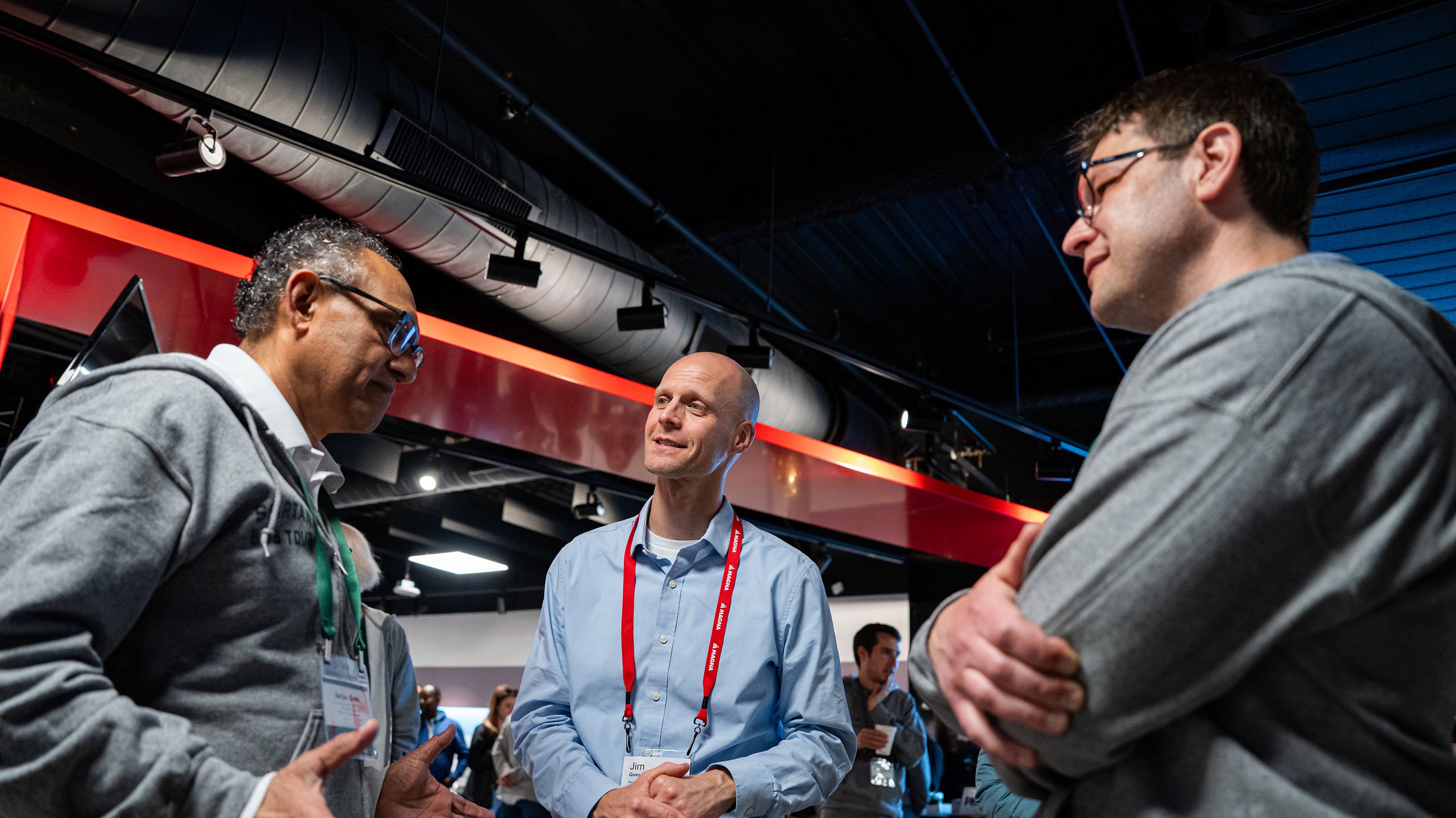
From left to right: Sanjay Gupta, Eli Broad Professor in the Broad College of Business; Jim Quesenberry, director of research and development at Magna and an MSU alum;  and John Zubeck, associate professor of physiology, chat during the bus tour’s visit to Magna International’s U.S. headquarters. Photo by Nick Schrader.
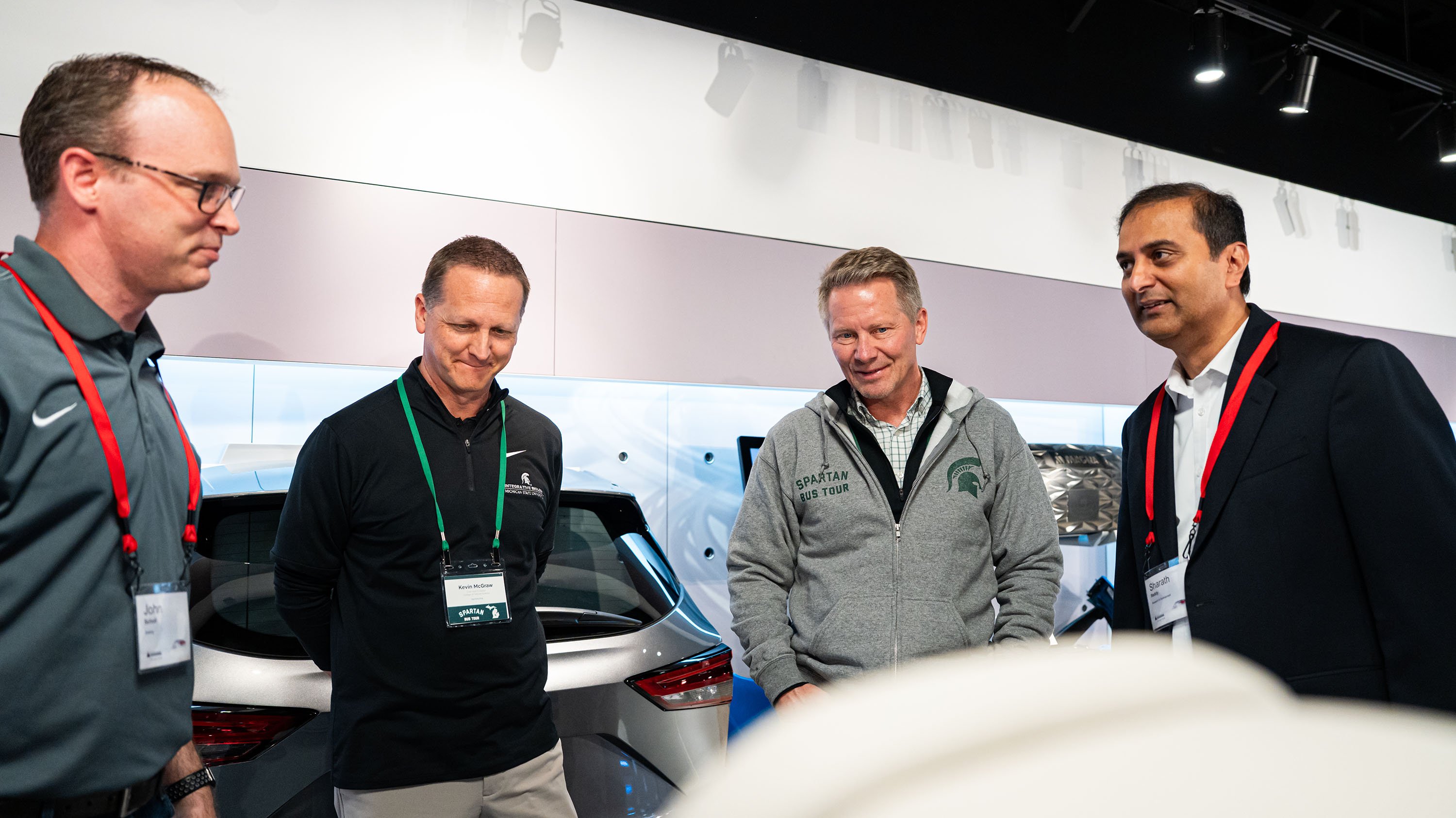
Kevin McGraw, chair of of the MSU Department of Integrative Biology, and MSU President Kevin M. Guskiewicz, Ph.D. learn about the future of mobility from Magna’s experts.
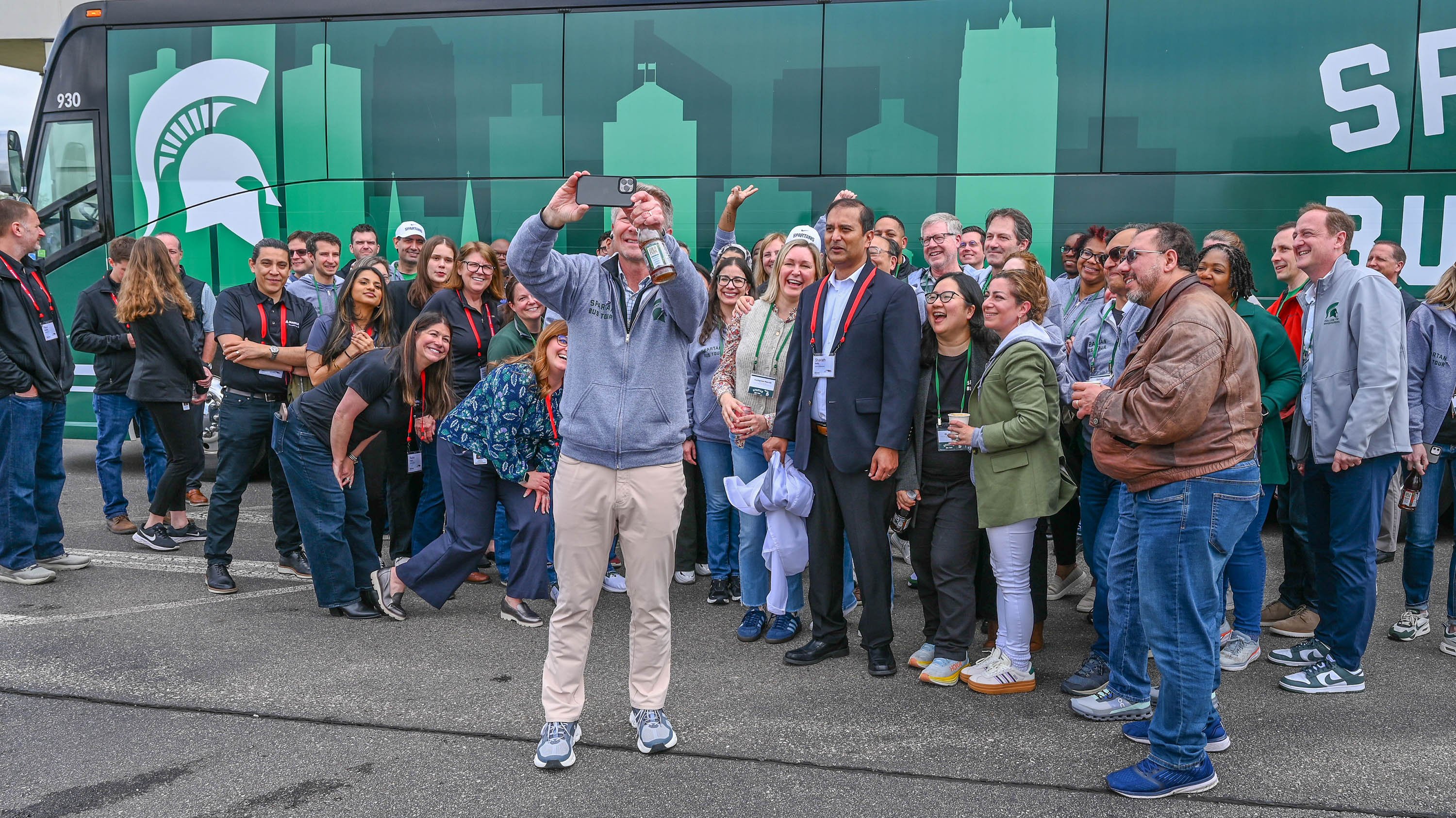
MSU President Kevin M. Guskiewicz, Ph.D. takes a selfie with Spartan Bus Tour participants and Magna employees. Photo by Derrick L. Turner.
The Apple Developer Academy is located in downtown Detroit. Photo by Garret Morgan.
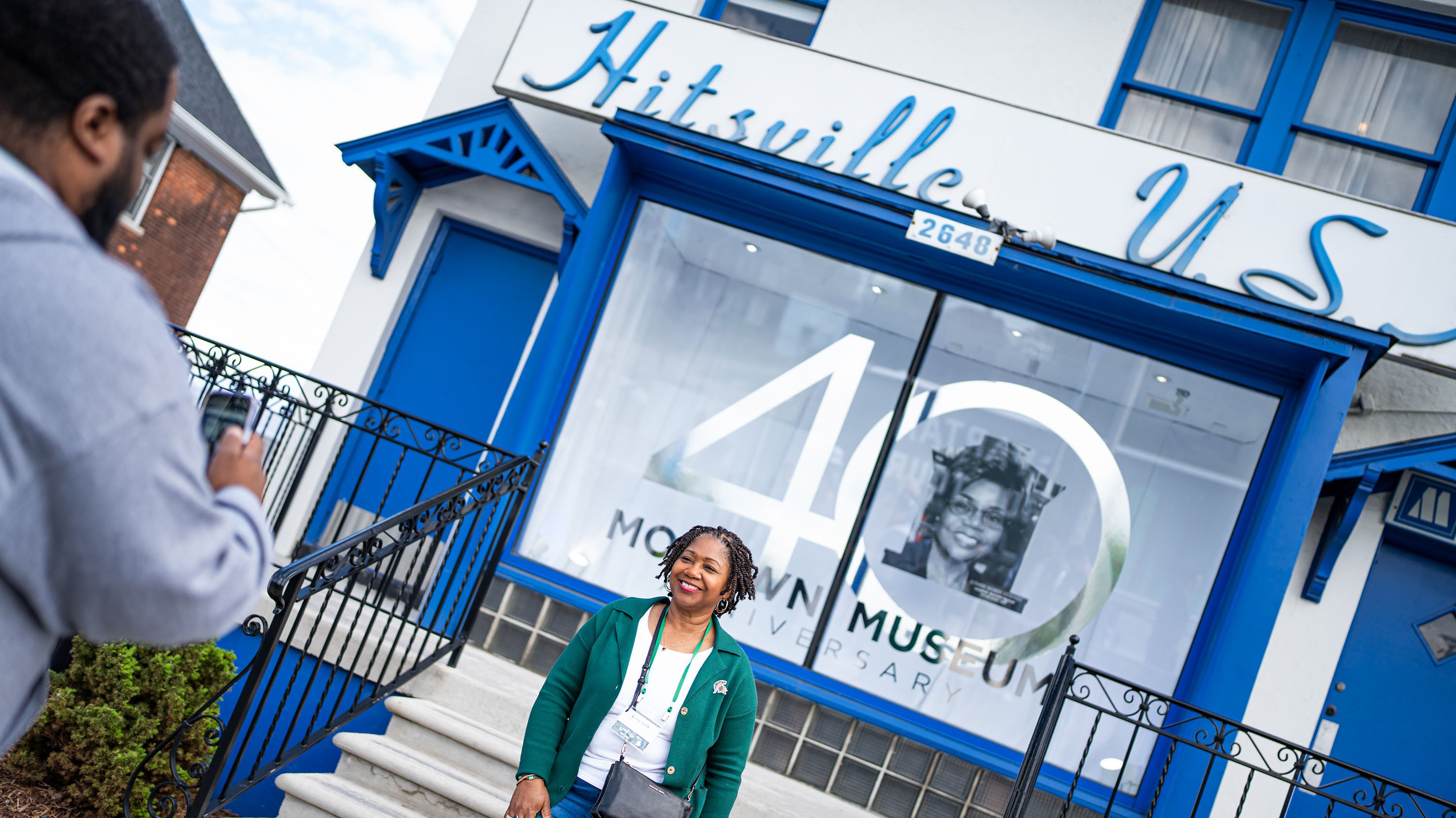
Emilie Smith, professor of human development and family studies, poses for a photo outside of the Motown Museum. Photo by Nick Schrader.
People come from all around the world to visit the Motown Museum. Photo by Nick Schrader.
As part of their Motown Museum tour, participants saw Studio A, where some of the genre’s most famous songs were recorded. Photo by Derrick L. Turner.
Hala Sun, associate director of assessment and evaluation for MSU Evidence Driven Learning Innovation, shares reflections during dinner at the end of the first day of the bus tour. Photo by Derrick L. Turner.
From left to right: Sanjay Gupta, Eli Broad Professor in the Broad College of Business; Jim Quesenberry, director of research and development at Magna and an MSU alum;  and John Zubeck, associate professor of physiology, chat during the bus tour’s visit to Magna International’s U.S. headquarters. Photo by Nick Schrader.

01 / 08

Day 2, morning

Creating community through health, hope and jazz 

The tour’s second day opened at the MSU Detroit Center on Woodward Avenue, where bus tour participants got a chance to hear about one of the university’s longest-standing community outposts for researchers like Amber Pearson, associate professor in the Charles Stewart Mott Department of Public Health, who conduct research in the city.

“I have worked in Detroit neighborhoods studying various topics, such as the health impacts of the restoration of community parks,” said Pearson, who presented alongside Rev. Dr. Ventra Asana, a community liaison who works closely with her on her projects. “The Detroit Center has been integral to me as a place where I can collaborate with researchers, students and community leaders who partner with me in this work.”

Housed within the MSU Detroit Center is the MSU Community Music School – Detroit, or CMS-D. Students, parents and teachers welcomed the group with personal stories and a jazz ensemble performance.

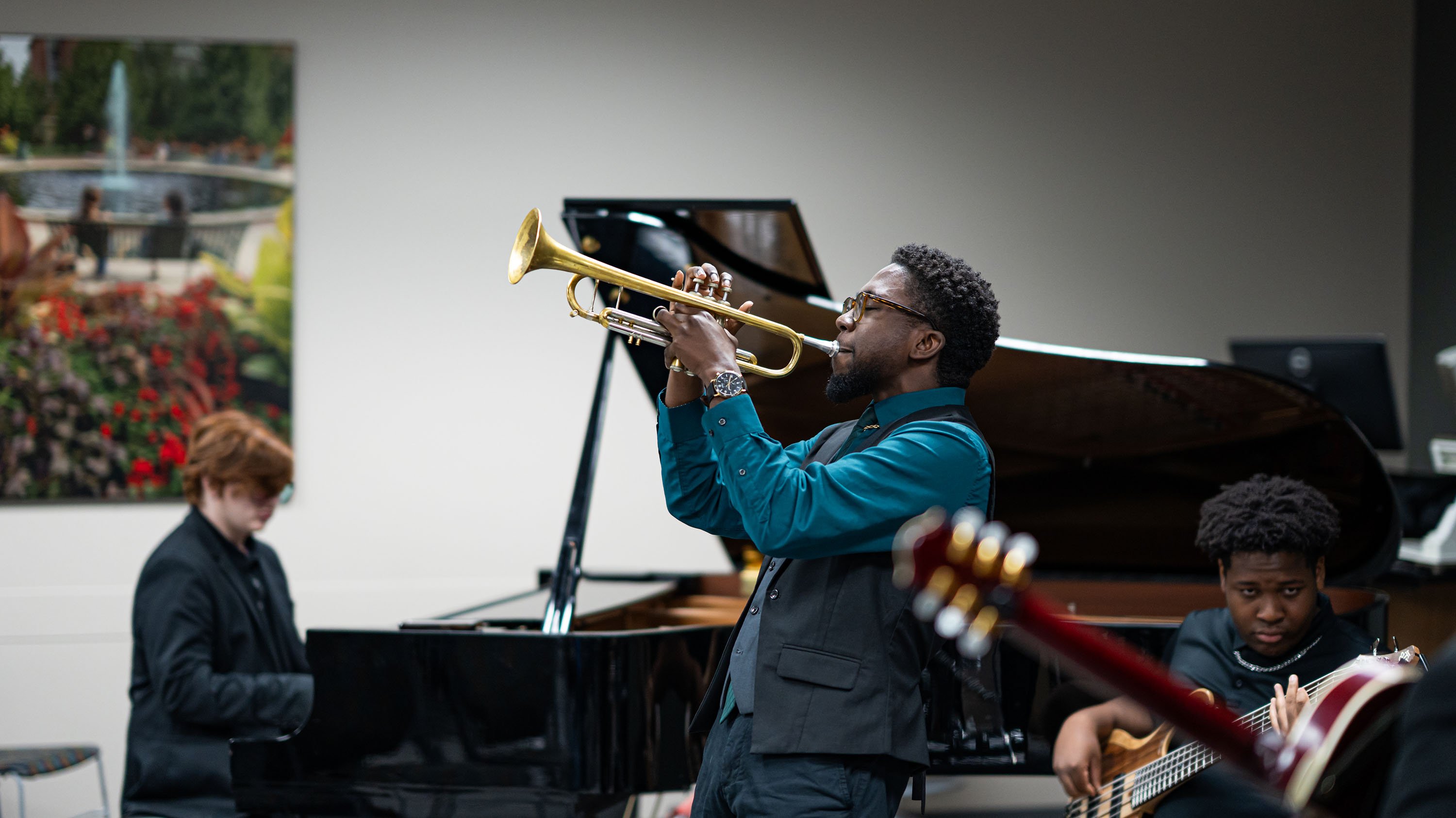
“This program made me who I am,” said trumpeter and MSU senior Jauron Perry, an alum of CMS-D. “It gave me mentors, opportunities and a path to study music at MSU.”

Luke Sittard, another CMS-D alum and current faculty member, called it a full-circle experience. “Now I’m mentoring the next generation. That’s the power of this place.”

Paola Smith, CMS-D’s assistant director, emphasized the school’s role in the city’s cultural fabric. “Our youngest student is 3 months old. Our oldest is 94. Music is a tool for connection — for building a better Detroit.”

The next stop was at the 335,000-square-foot Henry Ford Health + Michigan State University Health Sciences research facility that is currently under construction. Set to open in 2027, the building will serve as an epicenter for innovation and discovery, with a special focus on ending health disparities. President and CEO Bob Riney was there to welcome the group and to explain the importance of the partnership between the two institutions.

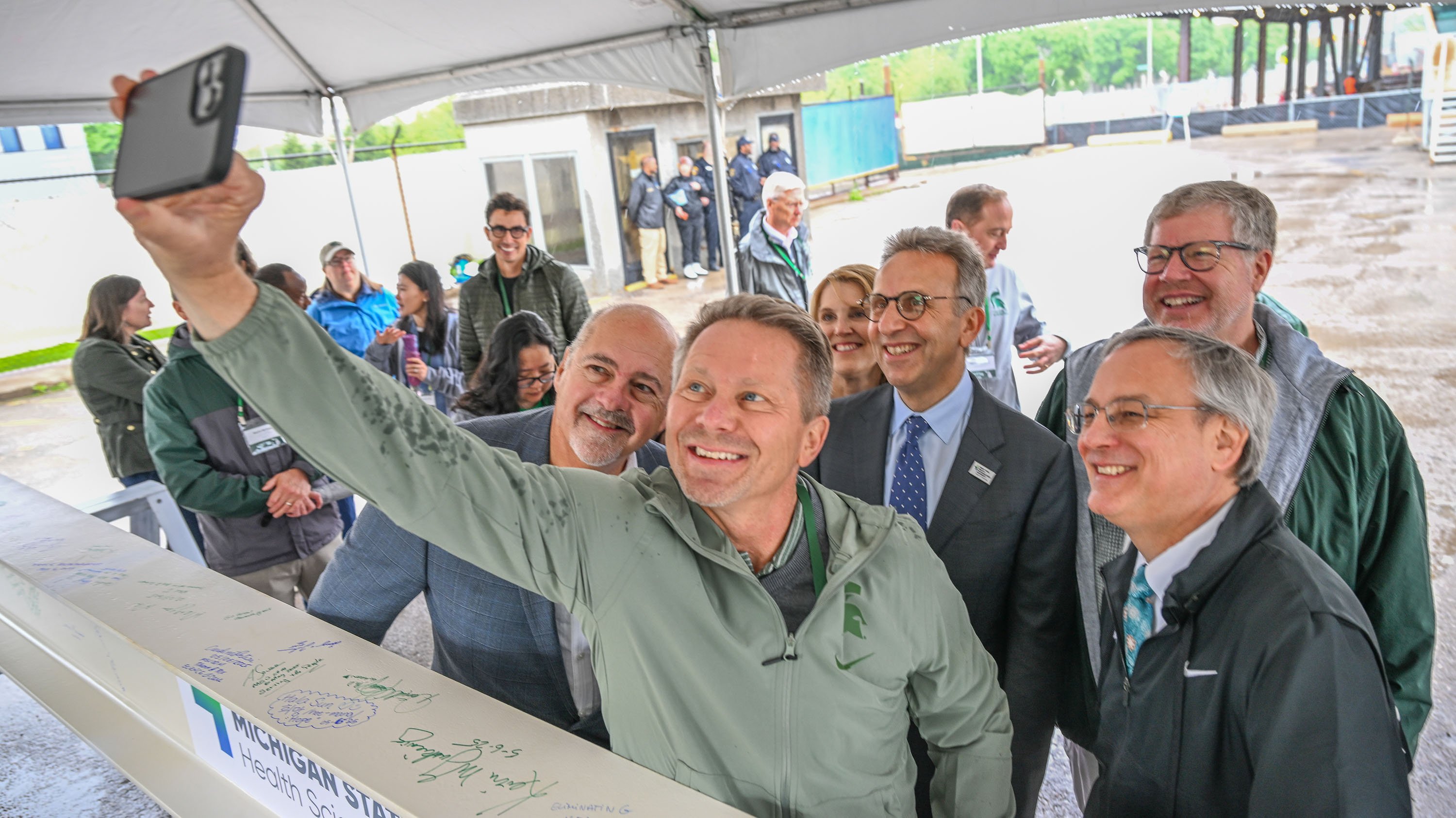
“We want it to improve lives; to offer better care, better outcomes and more equity,” said Riney, who invited the group to sign a beam in honor of a loved one who has passed from a disease or who has survived because of advances in medicine.

Next, the bus headed to the Fisher Building, a landmark Detroit skyscraper located in the New Center area that was designed by Albert Kahn and built in 1928. In 2023, MSU bought a 79% stake in the building and plans to open an innovation center there in the near future. There, participants had lunch and explored the building’s many murals and iconic theater.

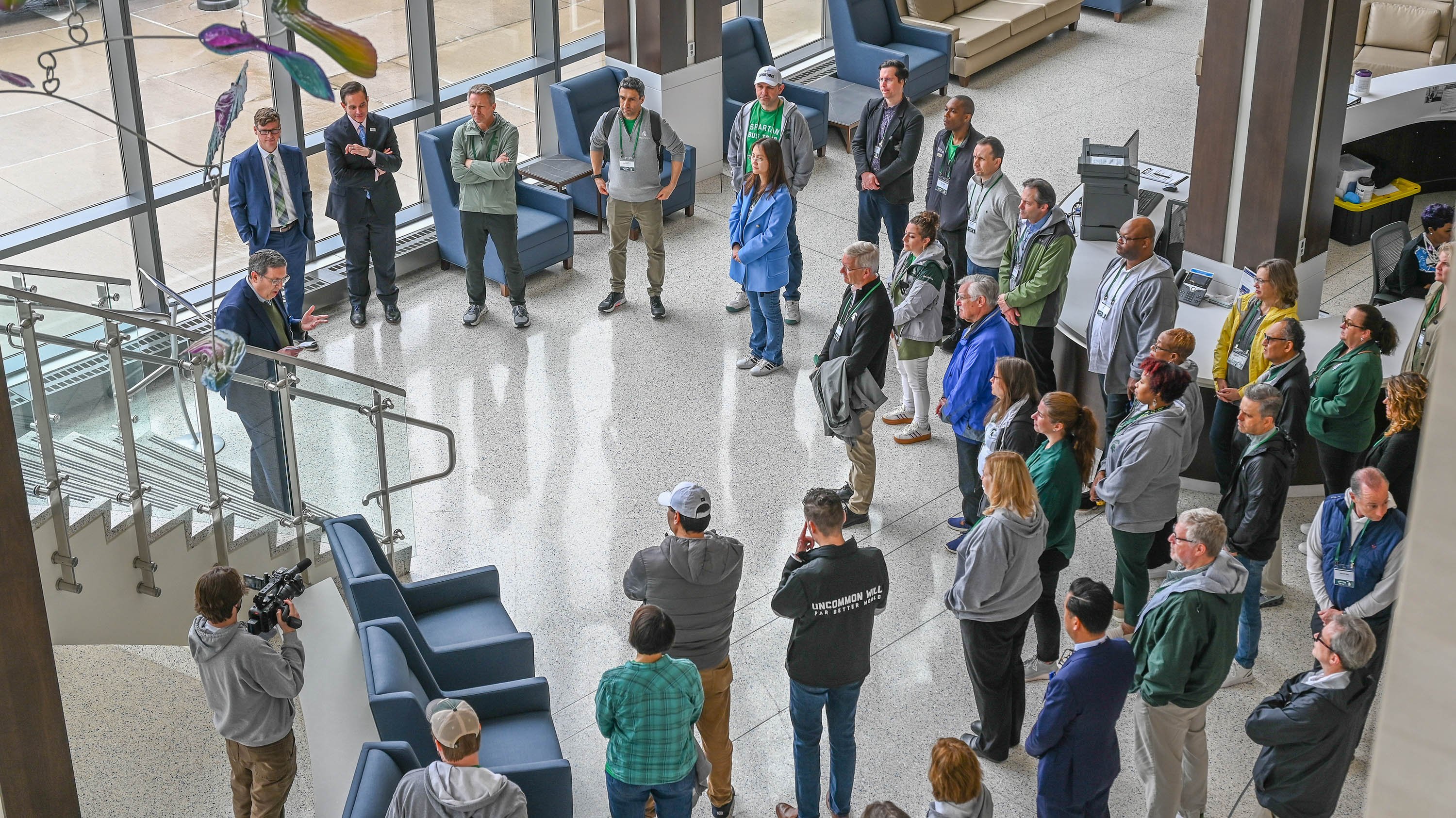
A group of people standing in a circle inside a building
A person plays a trumpet. In the background, there is a person playing a piano.
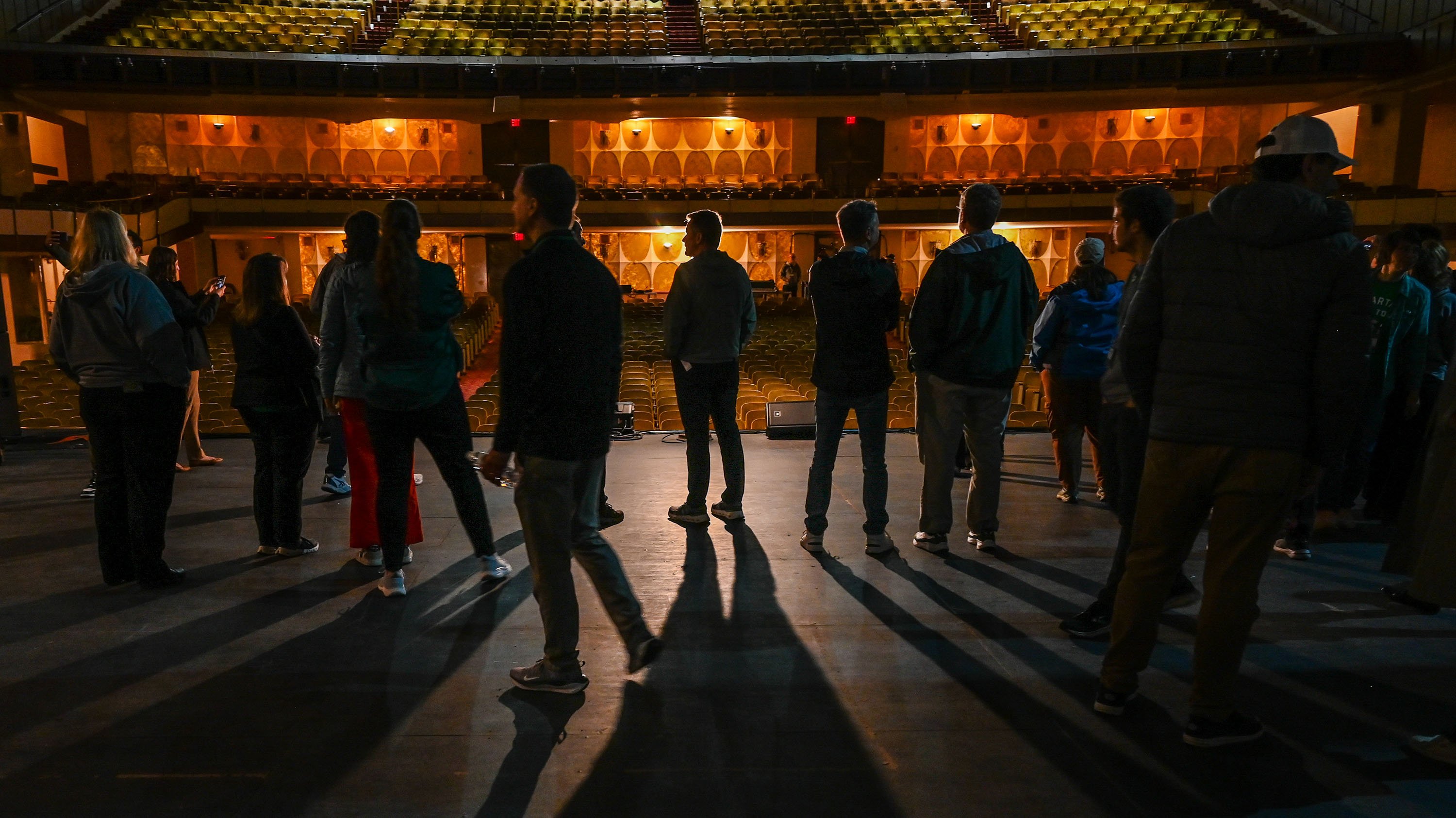
Shadows of people on stage
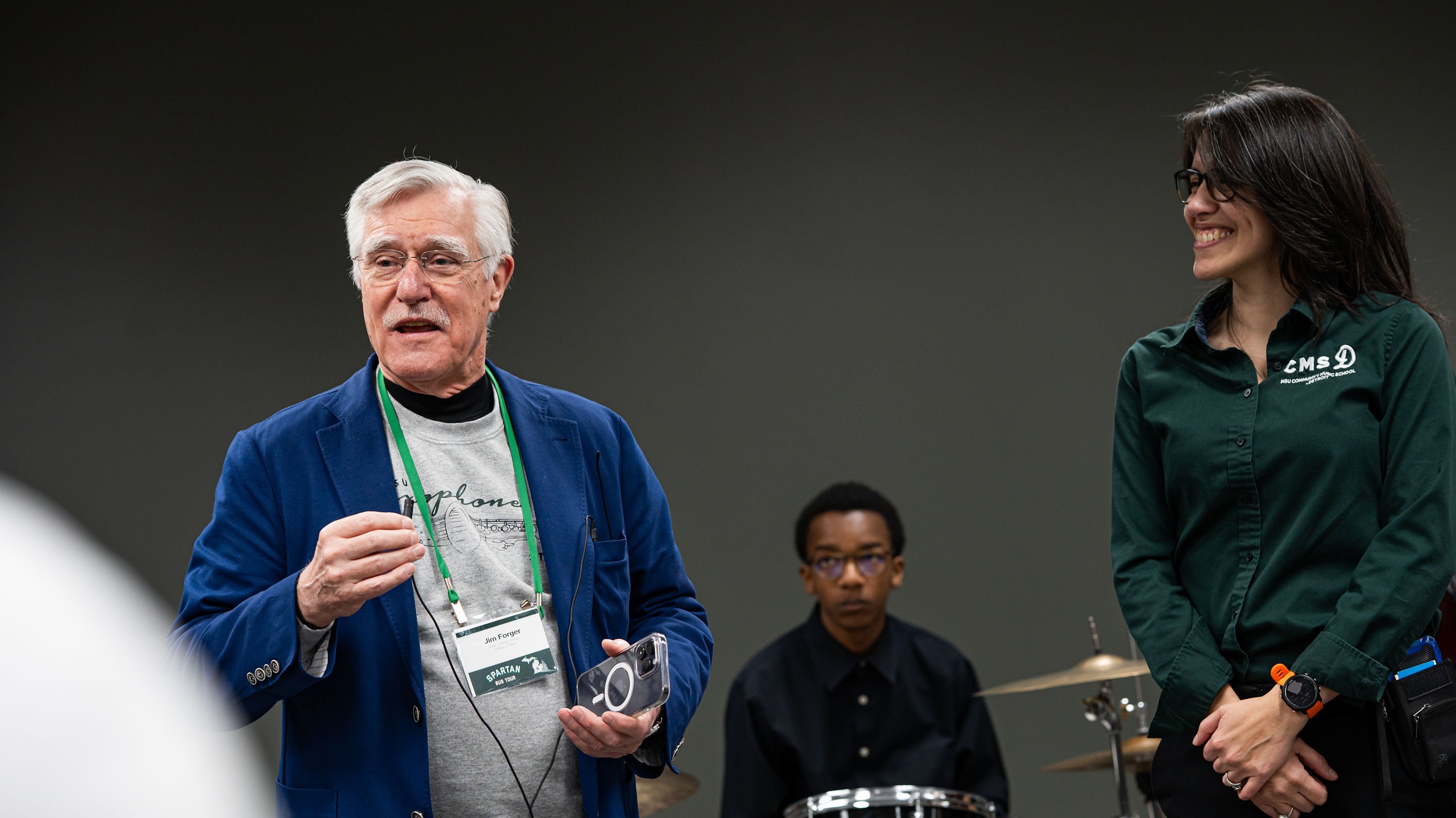
A man talking while a woman stands next to him and smiles.
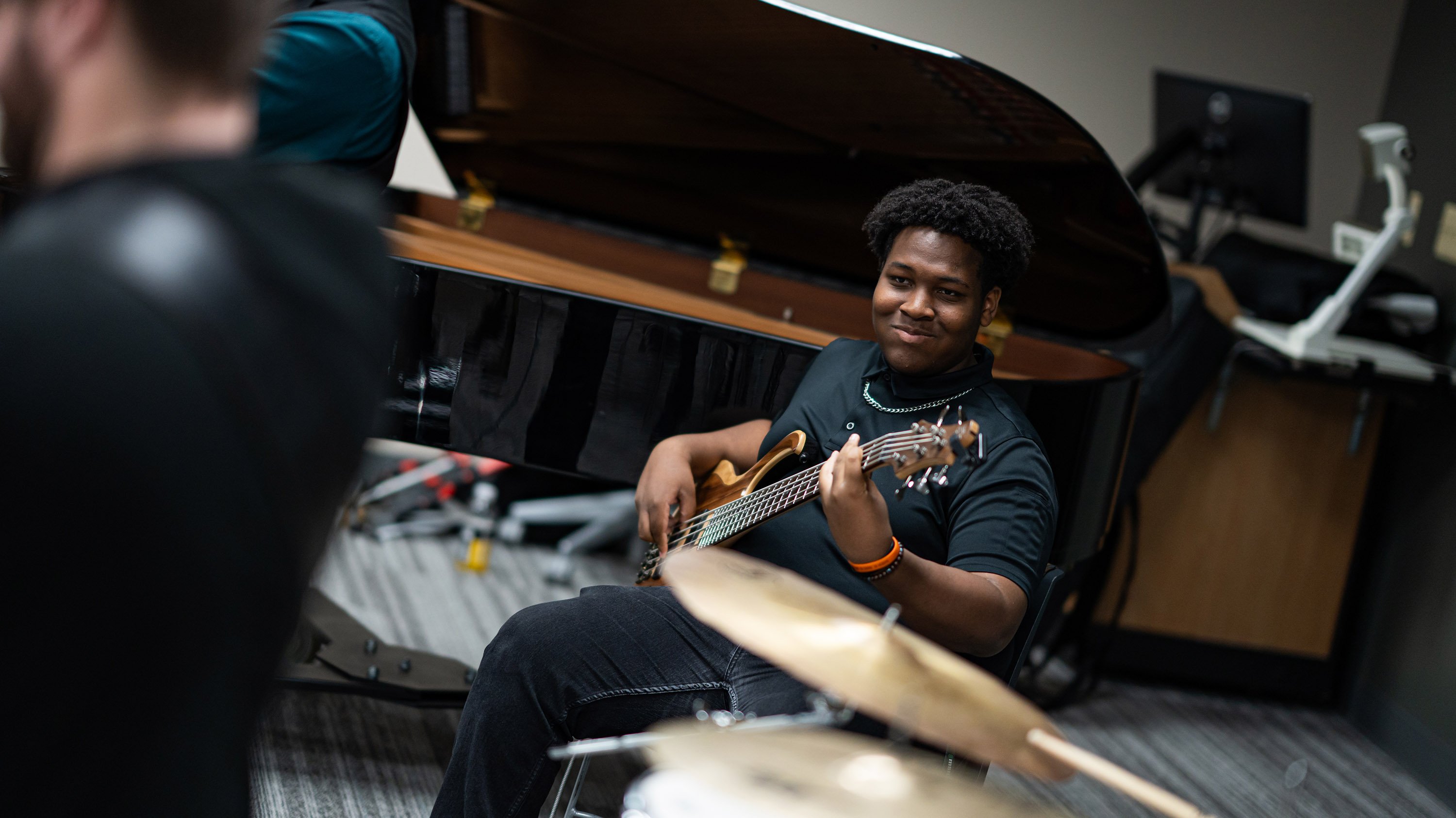
A person playing bass guitar
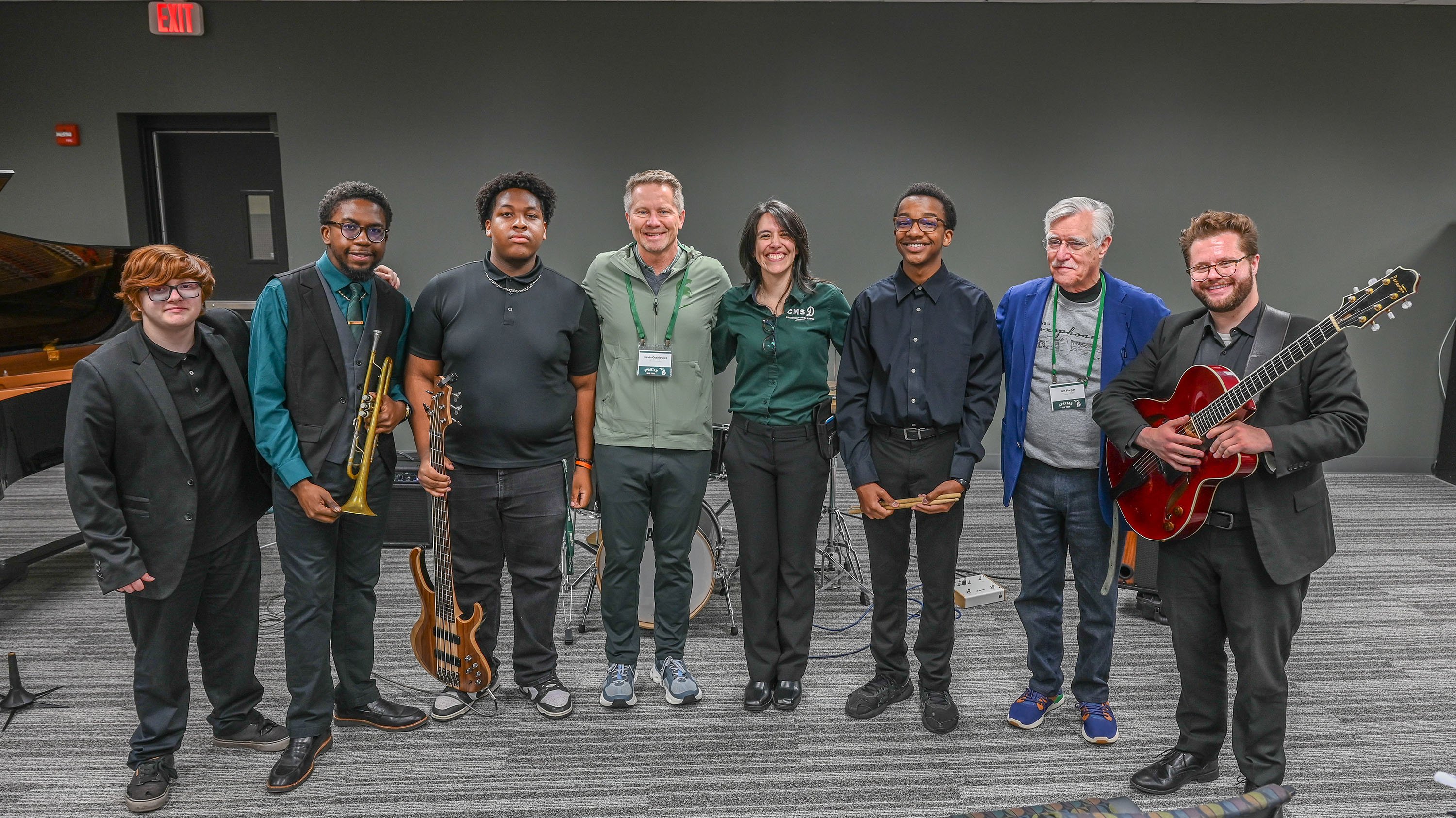
A group photo of young musicians with MSU administrators.
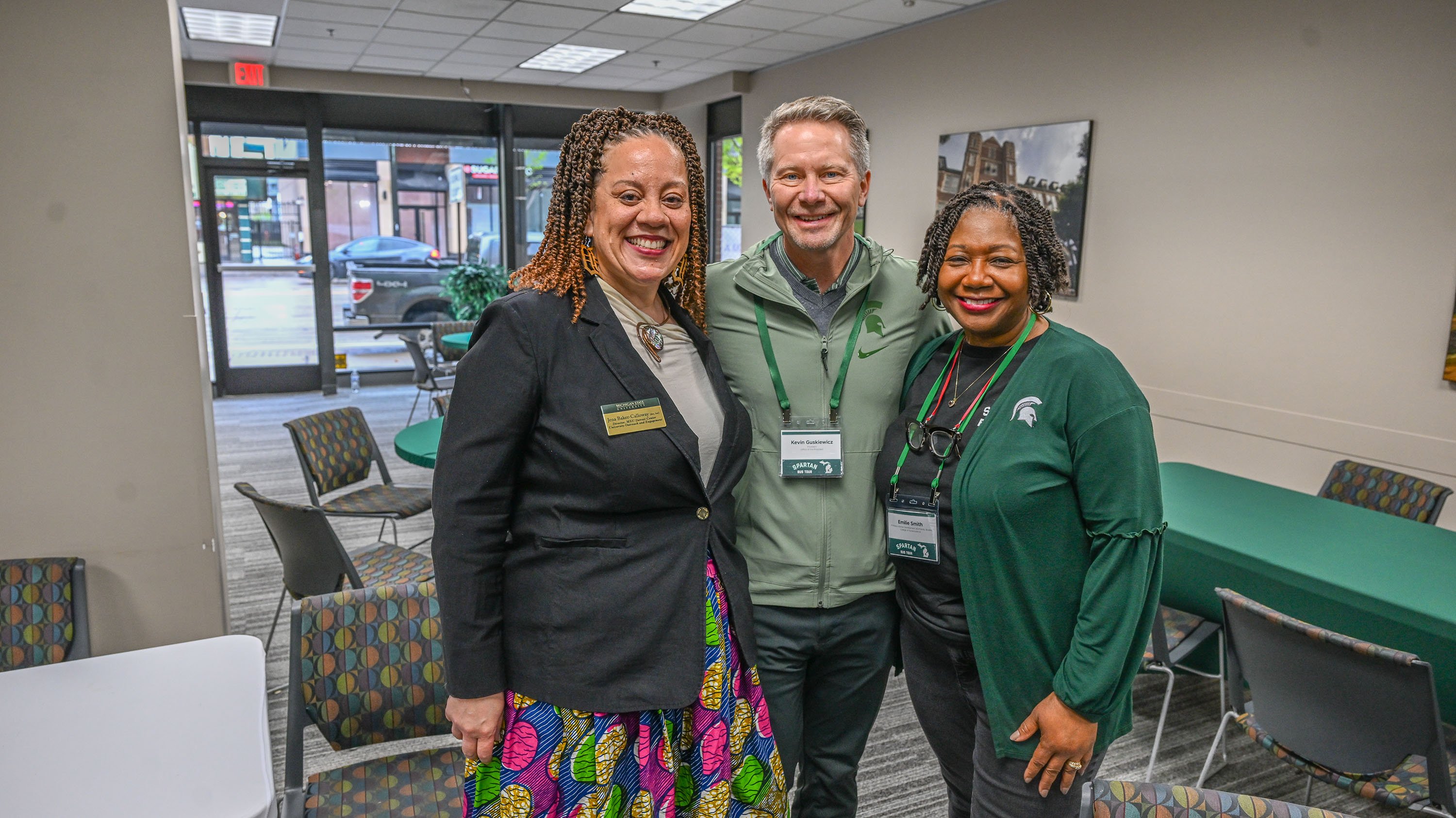
Three people pose for a photo
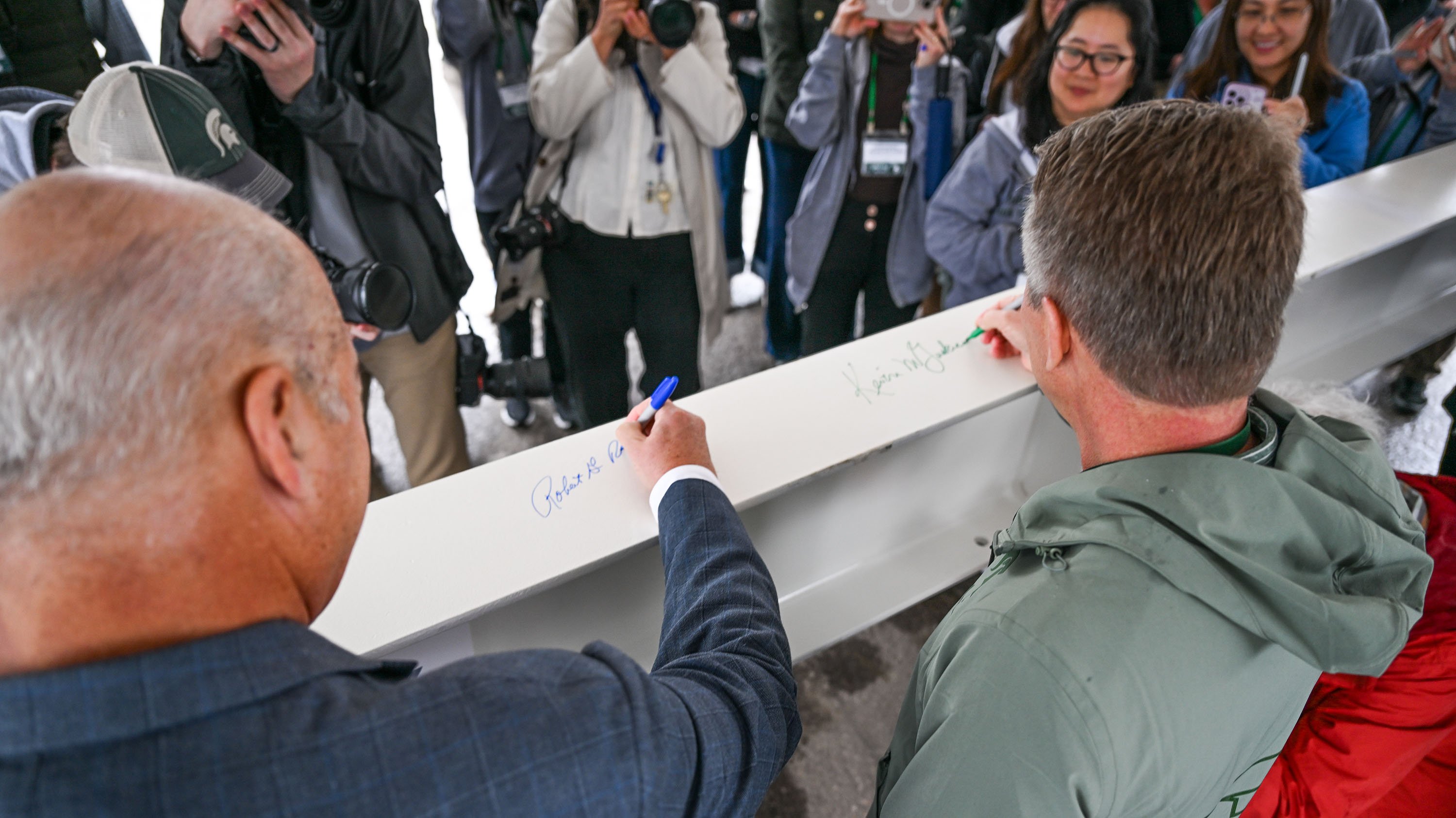
Two men signing a beam
Close up of signatures on a white construction beam
A group of people taking a selfie. They are standing near a white construction beam with signatures on it.
A group of people standing in a circle inside a building
A person plays a trumpet. In the background, there is a person playing a piano.
Bus tour participants toured the Henry Ford Cancer Institute’s Brigette Harris cancer pavilion. Photo by Garret Morgan.
Jauron Perry, a jazz studies student at MSU and intern at the MSU Community Music School-Detroit, or CMSD, (trumpet), and Jacob Hart, a current student at CMSD (piano) play during the bus tour’s visit to the MSU Detroit Center. Photo by Nick Schrader.

Attendees toured Fisher Theatre after lunch at the MSU-owned Fisher Building. Photo by Derrick L. Turner.

James Forger (left), dean of the MSU College of Music, and Paola Smith, assistant director of the MSU Community Music School-Detroit, tell bus tour participants about CMSD’s programs and mission. Photo by Nick Schrader.
A CMSD student smiles while performing for bus tour participants. Photo by Nick Schrader.
Musicians pose for a picture with MSU President Kevin M. Guskiewicz, Ph.D., CMSD Assistant Director Paola Smith, and MSU College of Music Dean James Forger. Photo by Derrick L. Turner.
From left: Jena Baker Calloway, director of the MSU Detroit Center, MSU President Kevin M. Guszkiewicz, Ph.D; and Emilie Smith, professor of human development and family studies at MSU. Photo by Derrick L. Turner.
Robert G. Reiny, president and CEO of Henry Ford Health, and Kevin M. Guskiewicz, Ph.D., President of MSU, sign a beam at the MSU-Henry Ford Health Center construction site. Photo by Derrick L. Turner.
Bus tour participants signed a beam that will be on display at the new Henry Ford Health-MSU Health Sciences building for 100 years. Some chose to honor people they know who have battled an illness or disease. Photo by Nick Schrader.
MSU President Kevin M. Guskiewicz, Ph.D. takes a selfie with Henry Ford Health and MSU Health Sciences leaders. Photo by Derrick L. Turner.
Bus tour participants toured the Henry Ford Cancer Institute’s Brigette Harris cancer pavilion. Photo by Garret Morgan.
Jauron Perry, a jazz studies student at MSU and intern at the MSU Community Music School-Detroit, or CMSD, (trumpet), and Jacob Hart, a current student at CMSD (piano) play during the bus tour’s visit to the MSU Detroit Center. Photo by Nick Schrader.

01 / 10

Day 2, afternoon

Detroit as a classroom: Exploring identity, culture, art in action 

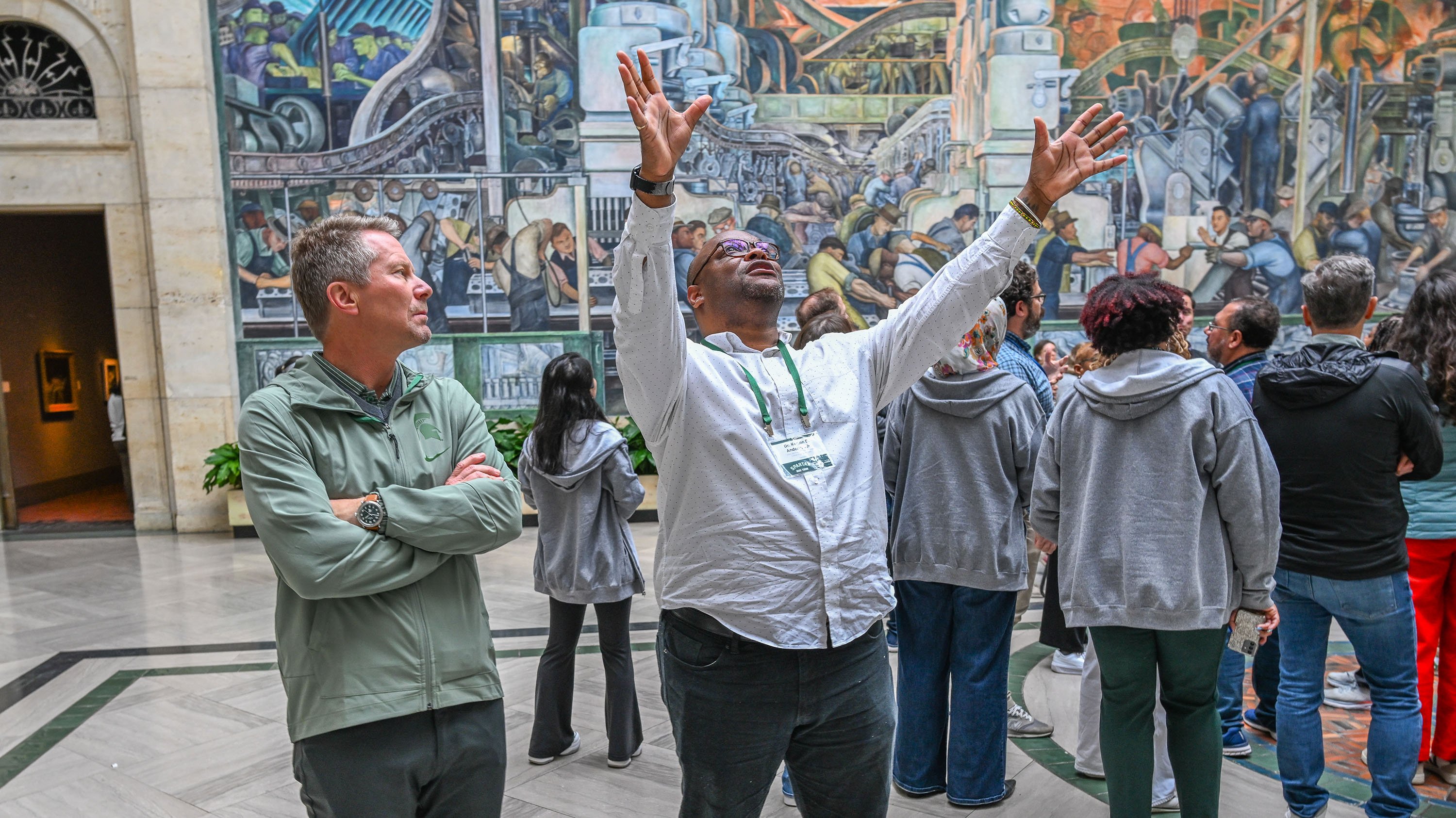
In the afternoon, participants had a chance to spend some time at the Detroit Institute of Arts, or DIA, where they explored two spaces: “Tiff Massey: 7 Mile + Livernois,” an exhibition about Black identity and Detroit history, and Diego Rivera’s famous “Detroit Industry Murals.”

“They had a great taste of Detroit art today, from the Diego Rivera murals painted in the 1930s to Tiff Massey’s exhibition, created as a reflection of the city in present day,” said DIA Director Salvador Salort-Pons. “We hope visitors feel welcome, inspired and curious to come back, hopefully with their students.”

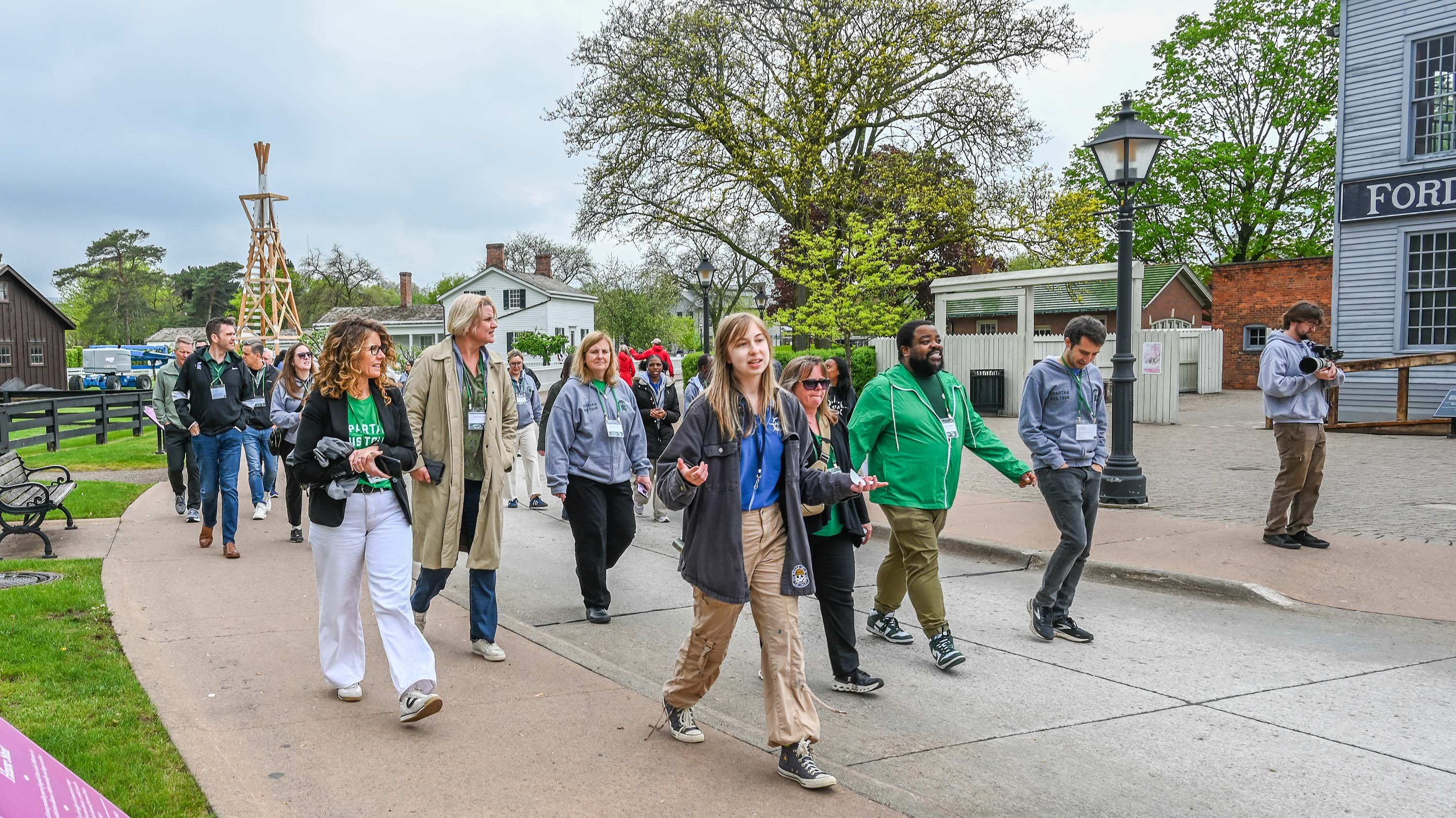
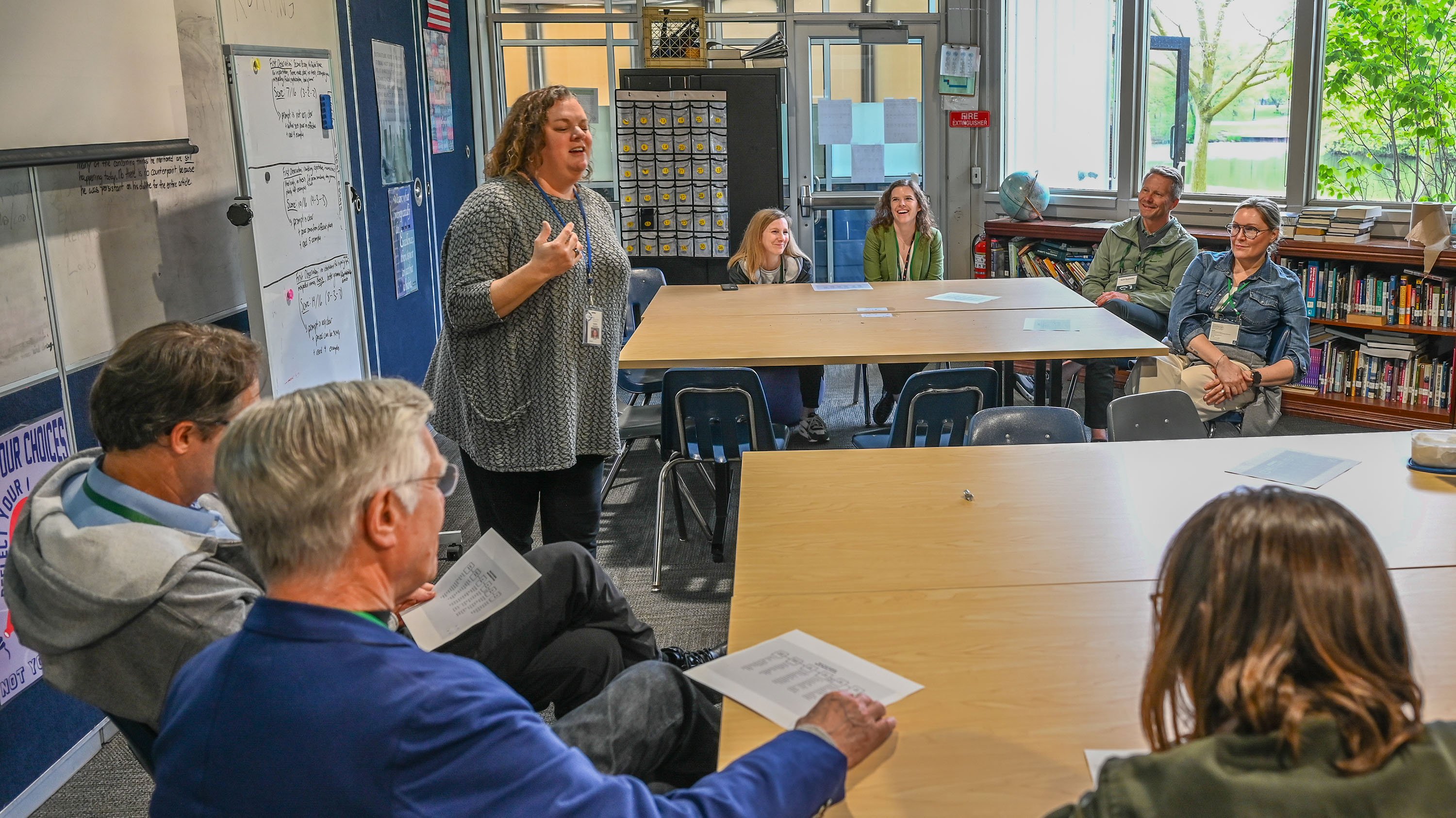
Next, the bus traveled to the Henry Ford Academy, a charter high school on the grounds of the Henry Ford Museum and Greenfield Village in Dearborn. Its unique location offers students daily immersion in American history and innovation by using museum artifacts in everyday lessons. Groups of faculty were led by students to classes on campus, where they got the chance to drop in on several elective classes that students were participating in.

“Visiting schools like Henry Ford Academy reflects our commitment to building meaningful connections with students early in their educational journey,” said John Ambrose, director of admissions at MSU. “These visits are an opportunity to share what MSU has to offer, establish relationships with school leadership and faculty, and provide encouragement as students begin thinking about their college future.”

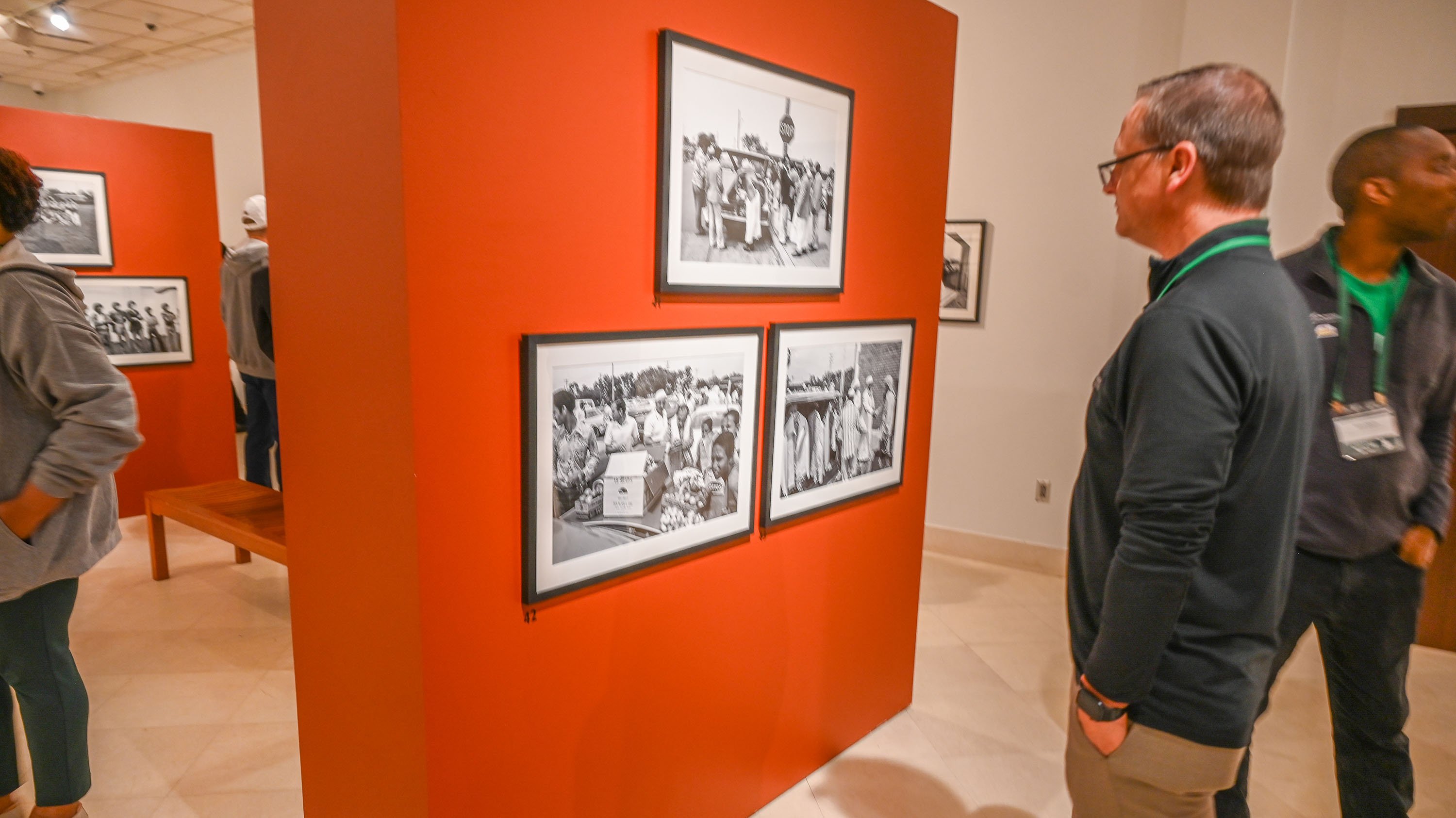
The final stop on the Detroit leg of the Spartan Bus Tour was the Arab American National Museum, also located in Dearborn — a city that is home to the largest concentration of Arab Americans in the United States. Founded in 2005, the museum is the first and only institution in the country dedicated to documenting, preserving and sharing the rich history, culture and contributions of Arab Americans. It houses one of the nation’s most comprehensive archives of oral histories, historical documents and cultural artifacts.

According to Deputy Director Jumana Salamey, the museum’s mission is to tell authentic stories of diverse Arab American experiences.

“The museum itself was inspired by the post-9/11 narratives about Arab Americans that were being told by others,” she said. “This museum allows us to tell our own stories with pride and complexity. We want visitors to leave knowing our experiences are different, but they’re also deeply American.”

The museum partnered with the Arab Community Center for Economic and Social Services, or ACCESS, to discuss some of the complex conversations happening today and how current world events are affecting Arab Americans in Dearborn and, by extension, Arab American students on MSU’s campus.

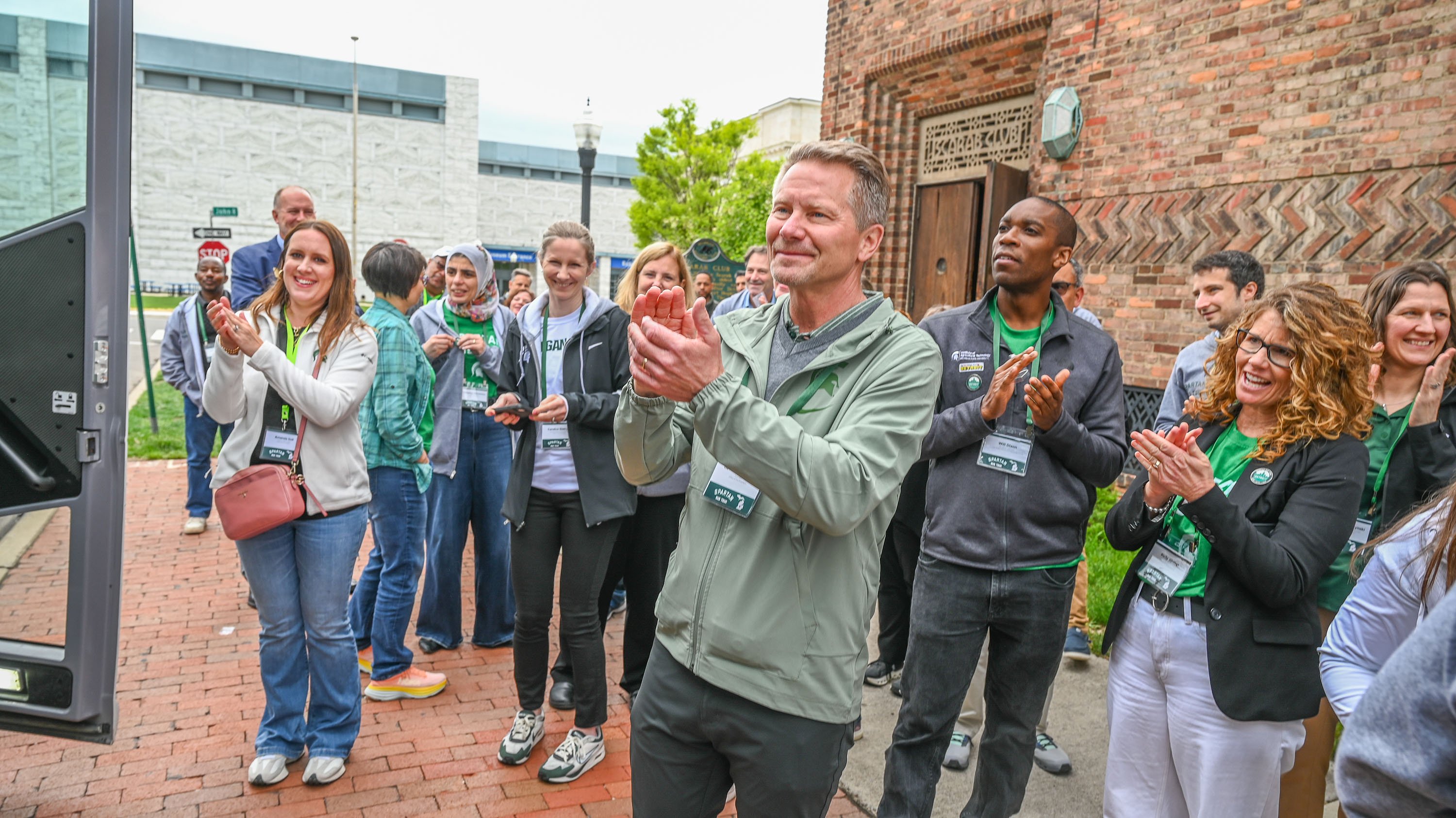
After a closing reception at the Scarab Club in Detroit’s Cultural Center Historic District that brought together participants, site hosts and other friends of the university, the bus rolled back toward East Lansing.

“This trip reminded us of who we are and who we serve,” said Guskiewicz. “We have 560,000 living alumni and about 130,000 of them live in the metro Detroit area. We have a responsibility to the people of Detroit, and I hope that this tour reaffirmed the university’s commitment to its people and its future and inspired that commitment to grow even stronger.”

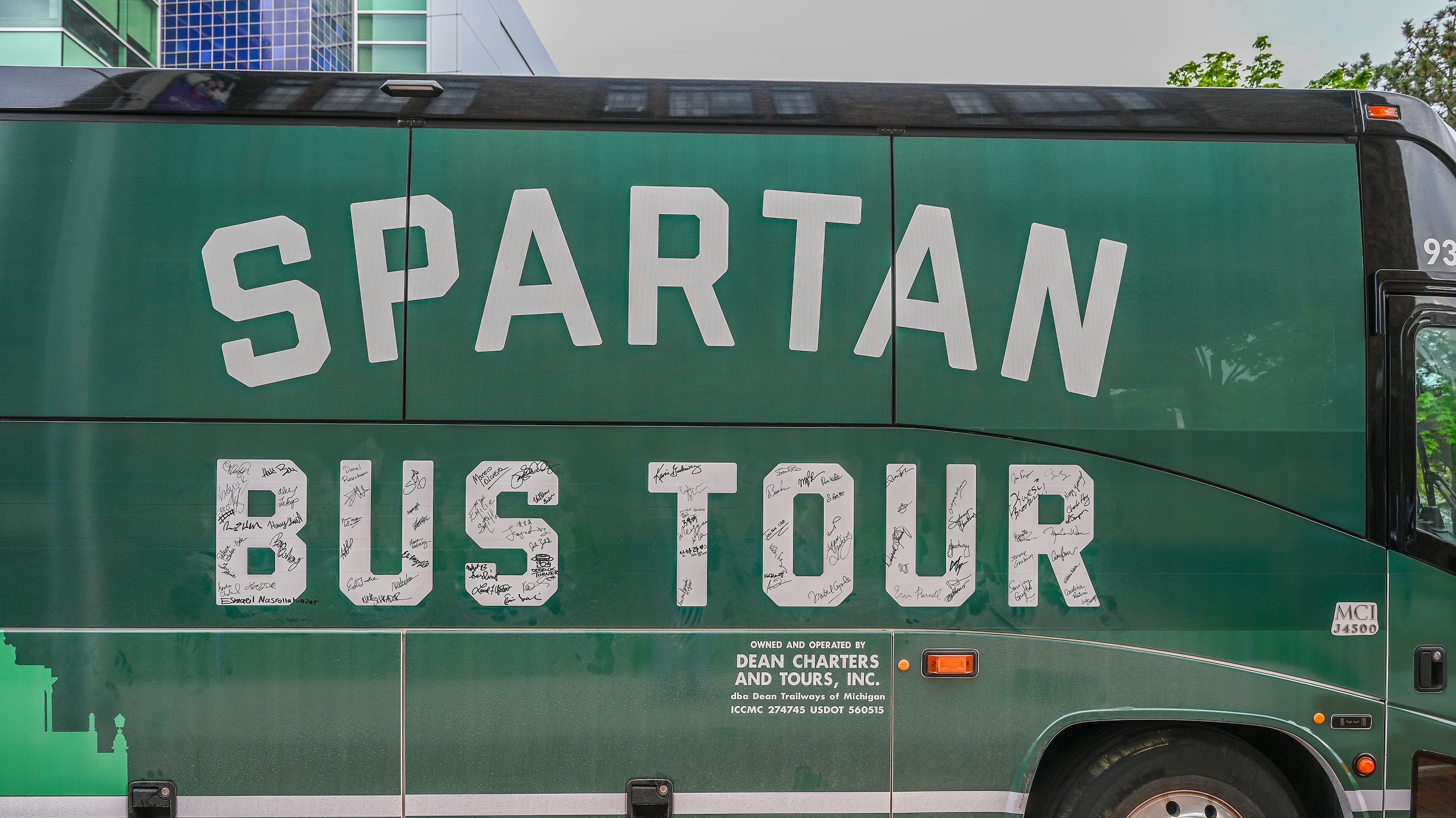
A green bus with ?Spartan Bus Tour? written in white on the side. There are signatures inside the block letters of ?Spartan Bus Tour?
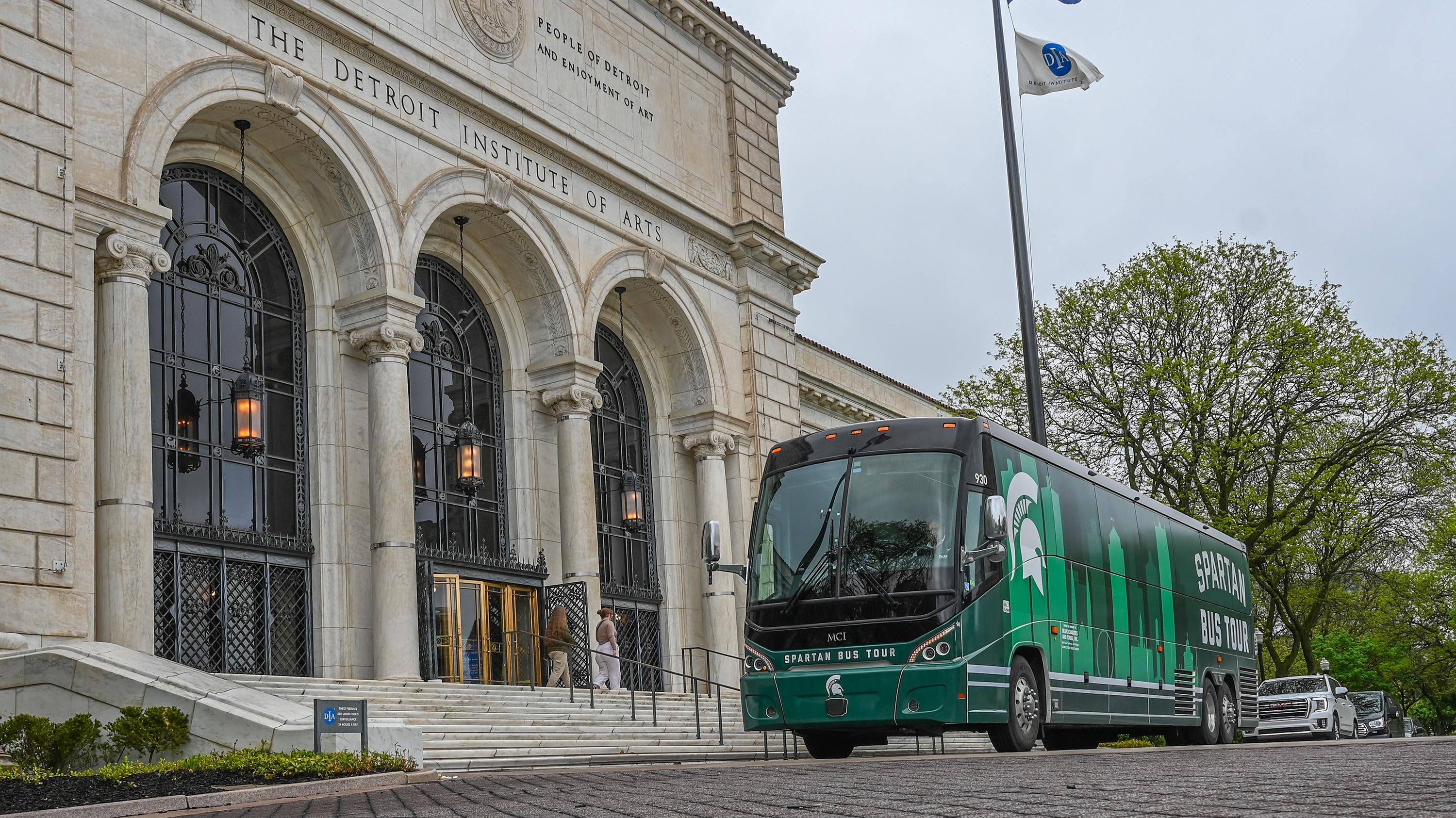
A bus with a white Spartan head and green outline of the Detroit skyline outside of a white stone building. The lettering above the entrance above the building says ?Detroit Institute of Arts?
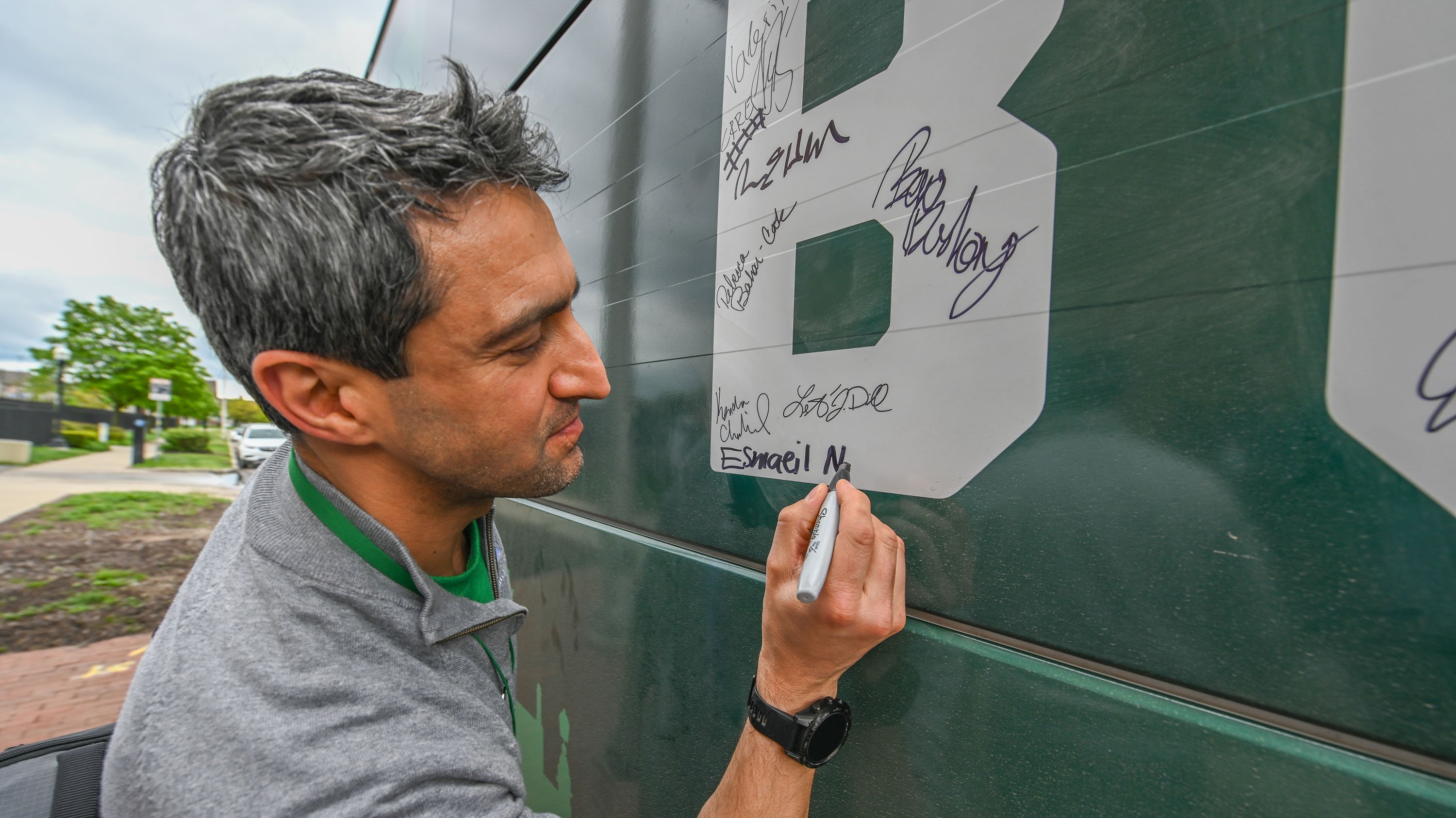
A man writes his signature inside a block letter ?B?
A group of people clapping
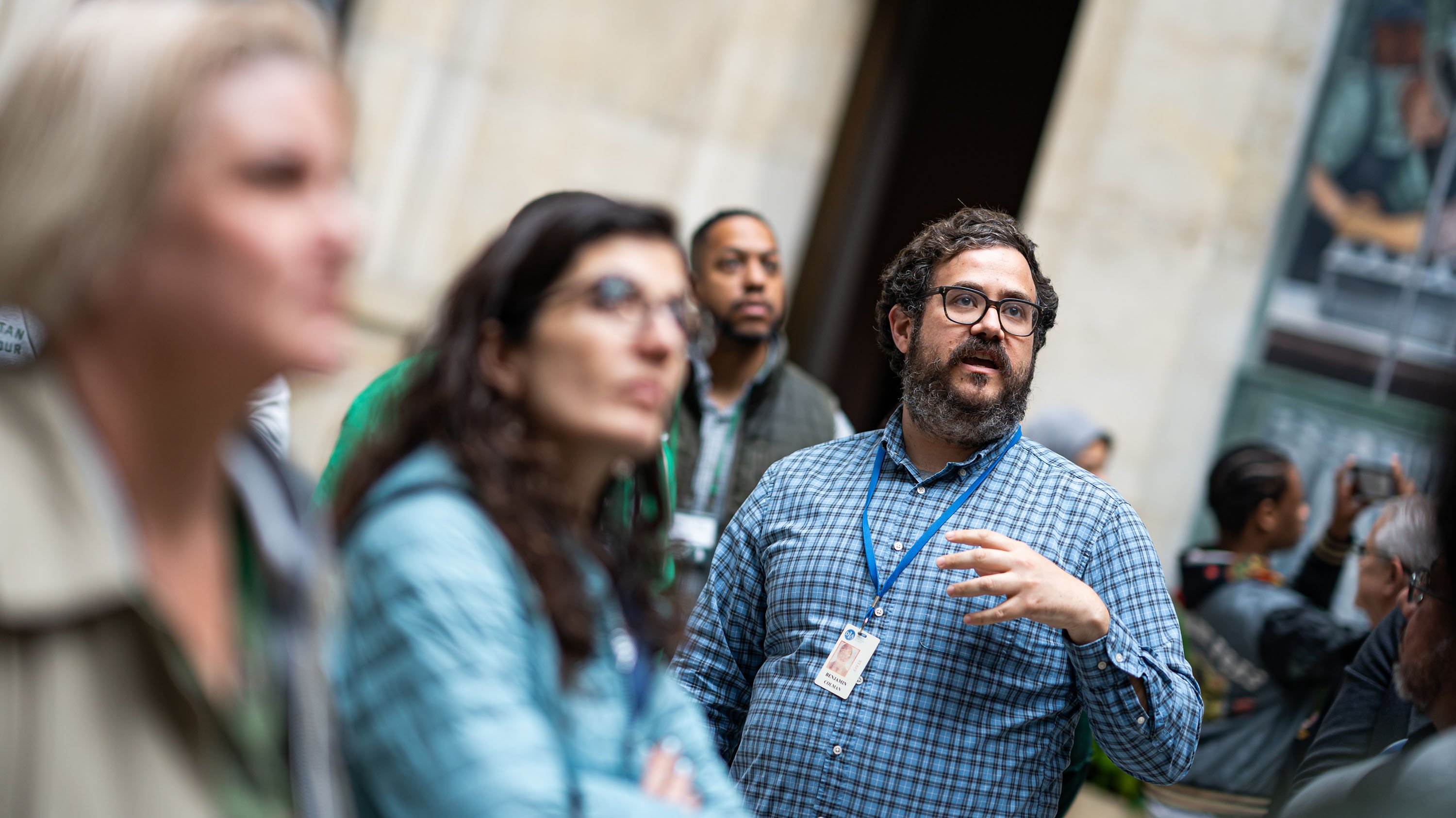
A man speaks as a group of people listen
A man smiles with his arms raised toward the sky while another man stands cross-armed next to him. Murals depicting the auto industry are on the wall behind them.
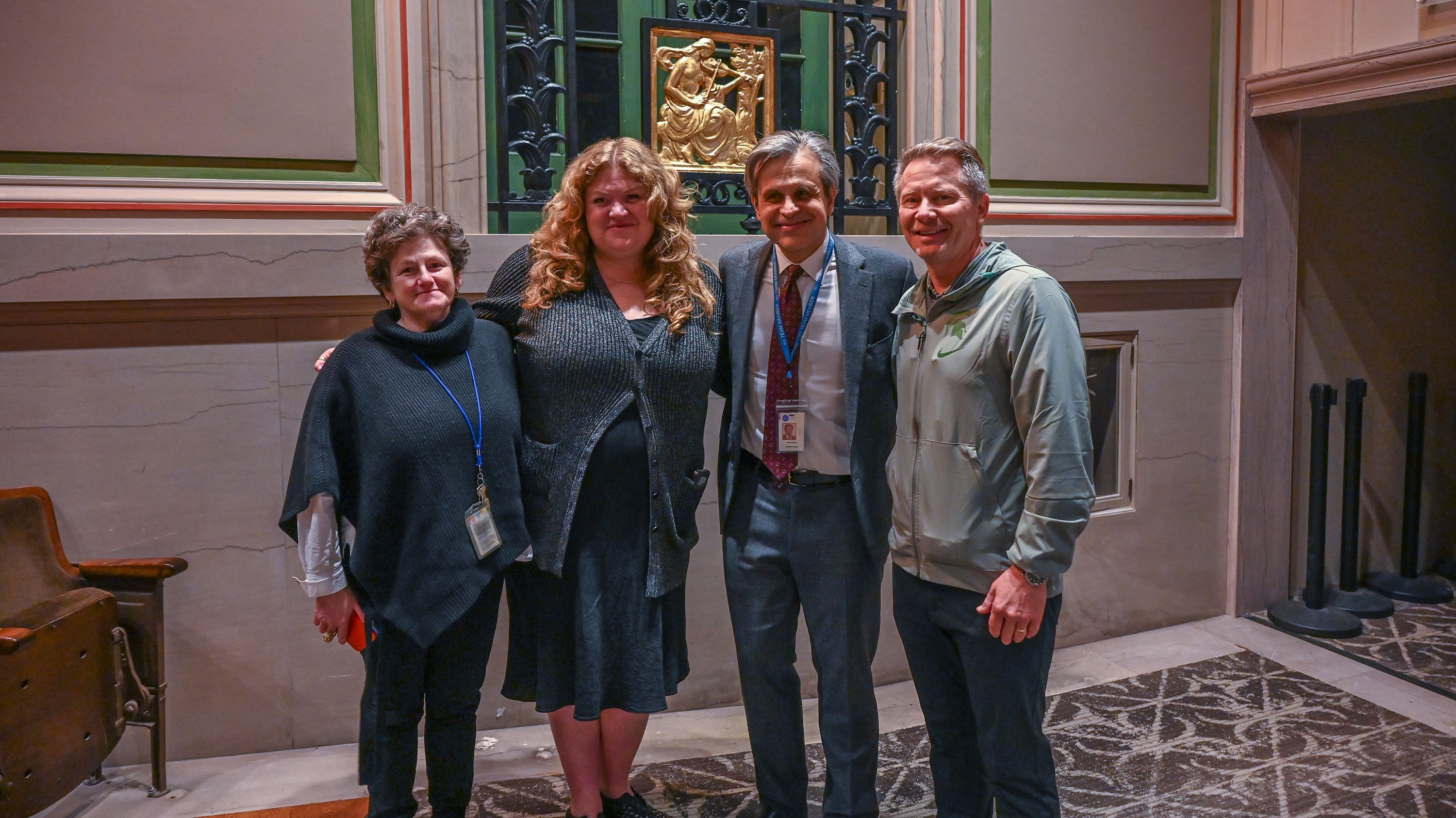
Four people pose for a photo. Behind them, there is gold square with a woman playing a string instrument with a bow carved into it.
A group of people walking in a historical village
People in a classroom
A man and woman pose for a photo.
A man looking at photos on a wall
A green bus with ?Spartan Bus Tour? written in white on the side. There are signatures inside the block letters of ?Spartan Bus Tour?
A bus with a white Spartan head and green outline of the Detroit skyline outside of a white stone building. The lettering above the entrance above the building says ?Detroit Institute of Arts?
It’s a tradition for participants to sign the bus at the end of the bus tour. Photo by Derrick L. Turner.
The Spartan Bus Tour arrives at the Detroit Institute of Arts. Photo by Derrick L. Turner.
Esmaeil Nasrollahiazar, viticulture educator with MSU Extension, signs the bus. Photo by Derrick L. Turner.
MSU President Kevin M. Guskiewicz and bus tour participants celebrate a successful two days in Detroit. Photo by Derrick L. Turner.
Ben Coleman, associate curator for American Art at the DIA, showed the group the museum’s famous Detroit Industry Murals, a series of frescos by Diego Rivera. Photo by Nick Schrader.
Kaston D. Anderson, associate professor of psychology, and MSU President Kevin M. Guskiewicz admire the Detroit Industry Murals. Photo by Derrick L. Turner.
From left to right: Judith F. Dolkart, deputy director of art, education and programs at the DIA; Katie Pfohl, associate curator of contemporary art at the DIA; Salvador Salort-Pons, director of the DIA; and Kevin M. Guskiewicz, Ph.D., MSU President. Photo by Derrick L. Turner.
Henry Ford Academy students guide bus tour participants through Greenfield Village. Students at the academy take hands-on classes at the village and Henry Ford Museum. Photo by Derrick L. Turner.
Bus tour participants learn what a typical lesson at Henry Ford Academy looks like. Photo by Derrick L. Turner.
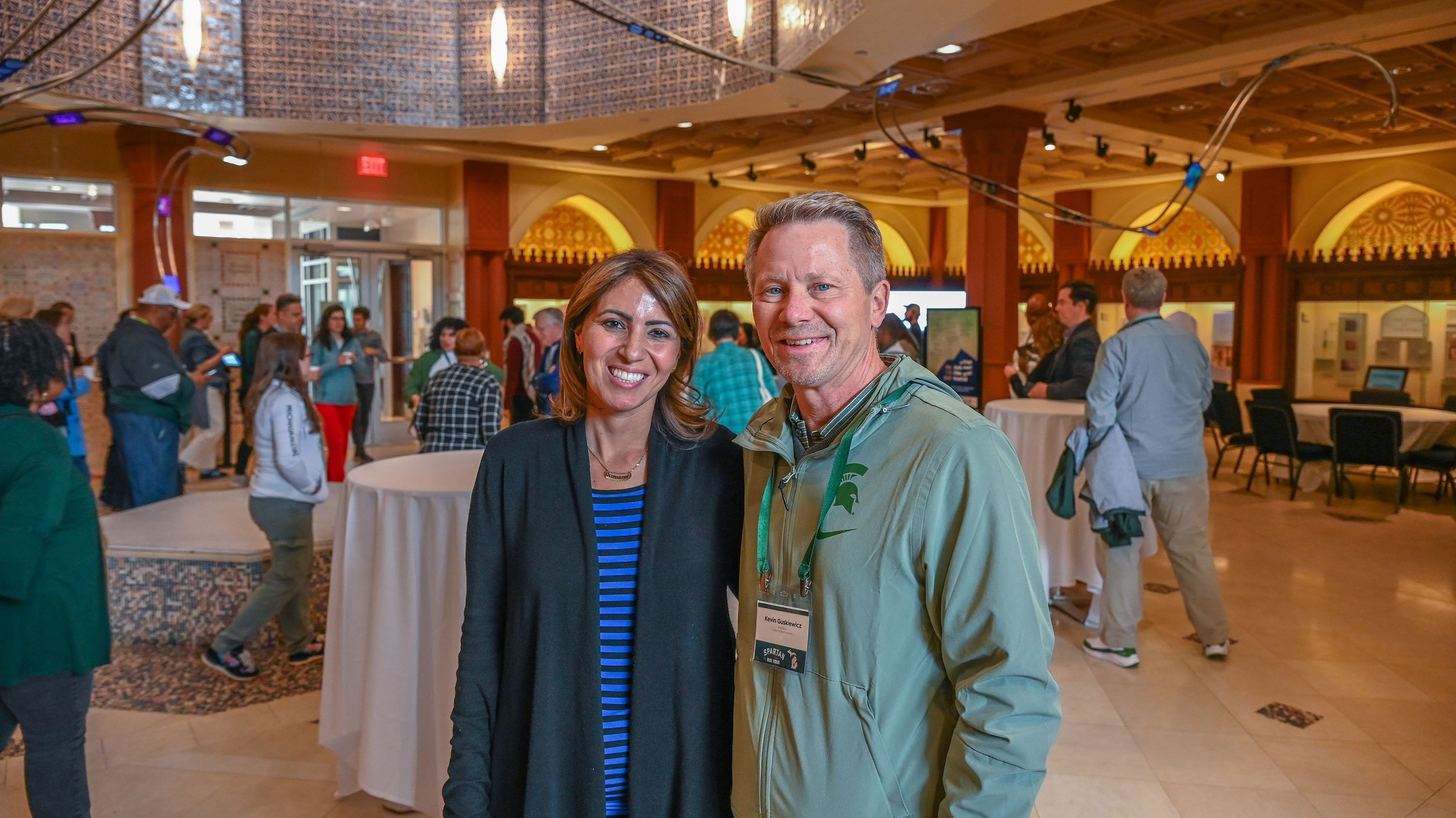
Jumana Salamey, deputy director of the Arab American National Museum, and MSU President Kevin M. Guskiewicz, Ph.D.  Photo by Derrick L. Turner.

Kevin McGraw, chair of the Department of Integrative Biology, looks at photos during the bus tour’s visit to the Arab-American National Museum. 

It’s a tradition for participants to sign the bus at the end of the bus tour. Photo by Derrick L. Turner.
The Spartan Bus Tour arrives at the Detroit Institute of Arts. Photo by Derrick L. Turner.

01 / 11

MEDIA CONTACTS

Sydney Hawkins, Alex Tekip

Latest News

MSUToday Weekly Update

The MSUToday Weekly Update email showcases how Spartans are making a difference through academic excellence, research impact and community outreach. Get inspired by these stories of innovation, collaboration and determination. Plus, enjoy photos and videos of campus and more MSU content to help keep you connected to the Spartan community.

Sign UpUpdate My Information

Connect With Us

Visit our Facebook pageVisit our page on XVisit our Instagram pageVisit our LinkedIn pageVisit our YouTube pageVisit our TikTok page

Health and Safety

  • MSU Police and Public Safety
  • Olin Health Center
  • Counseling & Psychiatric Services (CAPS)
  • University Health and Wellbeing
  • MSU Health Care
  • Civil Rights and Title IX
  • Our Commitment
  • Center for Survivors
  • Security & Fire Safety Report
  • University Policy on Relationship Violence and Sexual Misconduct
  • Notice of Non-Discrimination, Anti-Harassment and Non-Retaliation
  • Health Care Non-Discrimination Notice

Support Services

  • Disability Resources
  • Supportive Services
  • Learning Resources

Working at MSU

  • Human Resources
  • EBS Login
  • Job Postings
  • Employee Assistance Program

Reports

  • CARES Act Funding
  • Student Achievement and Outcomes

Contact us

517-355-1855

Address

Michigan State University 426 Auditorium Road East Lansing, MI 48824

Follow Us

  • Visit our Facebook page
  • Visit our page on X
  • Visit our Instagram page
  • Visit our TikTok page
  • Visit our LinkedIn page
  • Visit our YouTube page

If you're having accessibility issues, please let us know.

Know More: Campus Safety Information and ResourcesTransparency Reporting: Budget & Salary/Compensation
  • Contact Information|
  • Site Map|
  • Privacy Statement|
  • Site Accessibility|
  • Call MSU: (517) 355-1855|
  • Visit: msu.edu|
  • Notice of Nondiscrimination|

SPARTANS WILL|© Michigan State University|