Jump to HeaderJump to Main ContentJump to Footer
Michigan State University
  • Browse Stories By

    Topics

    Explore stories by subject area

    • Arts and Culture
    • Business and Economy
    • Climate and Environment
    • Education and Learning
    • Engineering, Science and Technology
    • Government and Society
    • Health and Medicine
    • Media and Communications
    • MSU Leadership and Impact
    • Sports and Recreation
    • Student and Campus Experience
    View All Stories

    Collections

    Curated story series

    • Turfgrass
    • Ask the Expert
    • Big Ideas
    • Climate solutions
    • Water at MSU
    • Mobility
    • Spartan Perspectives
    • Student views
    • Graduate voices
    • Faculty voices
    View All Collections

    Featured

    Editor's picks

    • The Spartans behind your favorite Michigan golf courses

      July 22, 2026

      The Spartans behind your favorite Michigan golf courses

    • MSU in the 1990s: 10 Spartan milestones

      July 14, 2026

      MSU in the 1990s: 10 Spartan milestones

MSUTODAY
  • Browse Stories By

< Browse Stories By

Topics

Explore stories by subject area

  • Arts and Culture
  • Business and Economy
  • Climate and Environment
  • Education and Learning
  • Engineering, Science and Technology
  • Government and Society
  • Health and Medicine
  • Media and Communications
  • MSU Leadership and Impact
  • Sports and Recreation
  • Student and Campus Experience
  • View All Stories

Collections

Curated story series

  • Turfgrass
  • Ask the Expert
  • Big Ideas
  • Climate solutions
  • Water at MSU
  • Mobility
  • Spartan Perspectives
  • Student views
  • Graduate voices
  • Faculty voices
  • View All Collections

Featured

Editor's picks

  • The Spartans behind your favorite Michigan golf courses

    July 22, 2026

    The Spartans behind your favorite Michigan golf courses

  • MSU in the 1990s: 10 Spartan milestones

    July 14, 2026

    MSU in the 1990s: 10 Spartan milestones

  • For Media
  • Experts
  • Releases and Statements
  • Sign Up
  • Update Information

Resources

  • A to Z Index
  • Find People
  • Maps
  • Email
  • Student Information System (SIS)
  • D2L
  • Libraries
  • Tech Support
  • MSU Misconduct Hotline
  • Social Media Directory
  • Events Calendar
  • For Media
Michigan State University
MSUToday
  • For Media
  • Experts
  • Releases and Statements
  • Sign Up
  • Update Information
MSUTODAY
Climate and Climate Solutions

Feb. 24, 2025

MSU researchers use open-access data to study climate change effects in 24,000 US lakes

Each summer, more and more lake beaches are forced to close due to toxic algae blooms. While climate change is often blamed, new research suggests a more complex story: climate interacts with human activities like agriculture and urban runoff, which funnel excess nutrients into the water. The study sheds light on why some lakes are more vulnerable than others and how climate and human impacts interact — offering clues to why the problem is getting worse.

Michigan State University researchers discovered key climate-related patterns in algal biomass levels through time for freshwater lakes. They used novel methods to create and analyze long-term datasets for thousands of lakes from open-access government resources and from satellite remote sensing. This research, published in Proceedings of the National Academy of Sciences, provides crucial insights into how climate affects lake ecosystems. 

The team studied chlorophyll levels, a measure of algal biomass, in lakes across the U.S. from the last 34 years. Climate change is thought to intensify lake algal blooms and increase the likelihood of “regime shifts,” or sudden and long-lasting changes in the structure and function of an ecosystem.
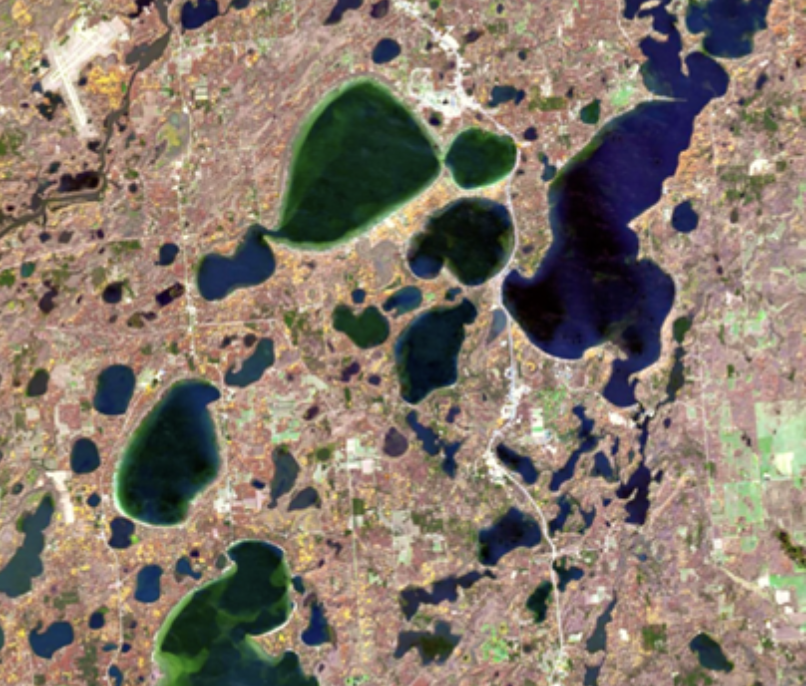
Landsat-8 Image Credit: Courtesy of U.S. Geological Survey

“Our research demonstrates that the relationship between climate change and algal biomass is more complex than expected,” said Patricia Soranno, a professor in the MSU College of Natural Science and one of the co-lead authors of this study. “While climate change is a significant driver in algal biomass, we found that the impacts are not always gradual or predictable. To effectively manage and protect lakes, we need to study these effects in many different local and regional contexts.” 

Traditionally, researchers have struggled to determine how climate effects algal biomass because of the lack of available lake sampling data. To overcome this challenge, the MSU team, led by Soranno and Patrick Hanly, a quantitative ecologist in the MSU College of Agriculture and Natural Resources, developed a novel approach. Leveraging over 30 years of publicly available satellite imagery, researchers used machine learning to create an unprecedented dataset of algal biomass in 24,452 U.S. lakes.The team combined this dataset with LAGOS-US, a large geospatial research platform that describes lake features of the U.S. that Soranno and Kendra Spence Cheruvelil, dean of MSU’s Lyman Briggs College and others have spent years developing. Their analysis is one of the first to document a causal link between climate and algae.  
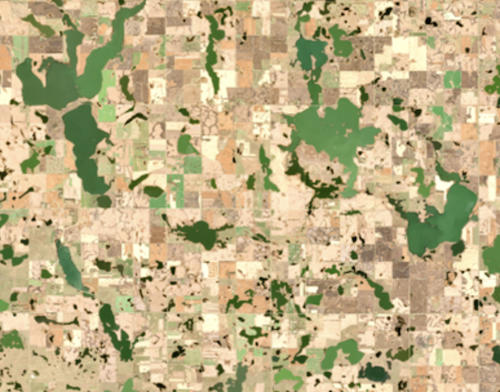
Aerial view of lakes.
High-resolution optical images used for land monitoring Credit: ESA Sentinel-2 L2A image, obtained from the Copernicus Browser using the True Color algorithm under the CC BY-SA IGO 3.0 license.

They found that climate caused changes in algal biomass in about a third of tested lakes, but in unexpected ways. For lakes with climate-related changes, only 13% were prone to regime shifts, only 4% increased in productivity, whereas 71% of them had abrupt, but only temporary changes. 

This lack of a general and sustained change may appear reassuring. However, annual abrupt changes in biomass that were detected have not typically been measured using common methods, leaving these abrupt changes understudied. This has led to gaps in understanding of the effects of climate on water quality such as algal biomass. Luckily, the methods used in this paper can capture these abrupt fluctuations that traditional approaches might miss. 

This large-scale approach also uncovered variability in climate-driven algal responses that depend on environmental conditions and the level of human disturbance. Lakes with low to moderate human impacts were more likely to respond to climate, while lakes already under heavy human pressures, like increased nutrient input from agriculture, were less likely linked to climate. 

“Our findings emphasize the importance of considering both climate and other measures of human impacts when assessing the health of lakes, especially over decades,” said Spence Cheruvelil. “This research provides a crucial foundation for developing effective strategies to mitigate the impacts of these stressors and protect the valuable resources that lakes provide.”


MEDIA CONTACTS

Emilie Lorditch
Climate and Climate SolutionsClimate and EnvironmentWaterNatural SciencesEngineering, Science and Technology

Latest News

MSUToday Weekly Update

The MSUToday Weekly Update email showcases how Spartans are making a difference through academic excellence, research impact and community outreach. Get inspired by these stories of innovation, collaboration and determination. Plus, enjoy photos and videos of campus and more MSU content to help keep you connected to the Spartan community.

Sign UpUpdate My Information

Connect With Us

Visit our Facebook pageVisit our page on XVisit our Instagram pageVisit our LinkedIn pageVisit our YouTube pageVisit our TikTok page

Health and Safety

  • MSU Police and Public Safety
  • Olin Health Center
  • Counseling & Psychiatric Services (CAPS)
  • University Health and Wellbeing
  • MSU Health Care
  • Civil Rights and Title IX
  • Our Commitment
  • Center for Survivors
  • Security & Fire Safety Report
  • University Policy on Relationship Violence and Sexual Misconduct
  • Notice of Non-Discrimination, Anti-Harassment and Non-Retaliation
  • Health Care Non-Discrimination Notice

Support Services

  • Disability Resources
  • Supportive Services
  • Learning Resources

Working at MSU

  • Human Resources
  • EBS Login
  • Job Postings
  • Employee Assistance Program

Reports

  • CARES Act Funding
  • Student Achievement and Outcomes

Contact us

517-355-1855

Address

Michigan State University 426 Auditorium Road East Lansing, MI 48824

Follow Us

  • Visit our Facebook page
  • Visit our page on X
  • Visit our Instagram page
  • Visit our TikTok page
  • Visit our LinkedIn page
  • Visit our YouTube page

If you're having accessibility issues, please let us know.

Know More: Campus Safety Information and ResourcesTransparency Reporting: Budget & Salary/Compensation
  • Contact Information|
  • Site Map|
  • Privacy Statement|
  • Site Accessibility|
  • Call MSU: (517) 355-1855|
  • Visit: msu.edu|
  • Notice of Nondiscrimination|

SPARTANS WILL|© Michigan State University|