If you listened to the radio, Spotify, Apple Music or watched a sporting event this summer or fall, chances are you’ve heard Kendrick Lamar’s hit song “Not Like Us,” the first track in the illustrious rapper’s career to debut at No. 1 on the Billboard Hot 100.
Considered one of the best diss tracks of all time, “Not Like Us” was used by USA Basketball after an exhibition win over Canada leading up to the 2024 Paris Olympics, the Los Angeles Dodgers during their World Series championship run, and by several college football teams, including Grambling State University, a historically Black college in Grambling, Louisiana, and the University of Tennessee.
On. Feb. 9, “Not Like Us” will likely make it to one of music’s biggest stages, as Lamar headlines the Super Bowl LIX halftime show at the Caesars Superdome in New Orleans — the fifth consecutive Black artist to do so. Beginning April 19, the song will grace stadiums across the U.S. and Canada as the 17-time Grammy winner embarks on the Grand National Tour, co-headlining with SZA. The tour comes to Ford Field in Detroit on June 10.
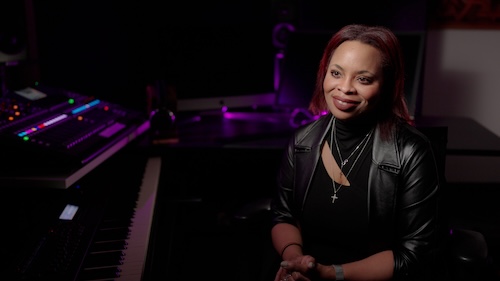
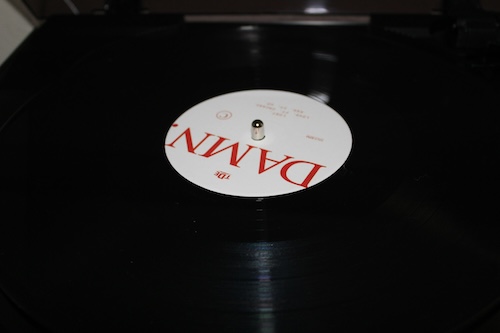
Christina L. Myers, assistant professor in the Michigan State University School of Journalism, studies the intersection of race and media, with a particular focus on narratives about Black experiences in music, sports and news. Part of her dissertation focused on Lamar’s 2017 album, “Damn.,” which won the Pulitzer Prize.
Here, Myers discusses the significance of Lamar headlining the Super Bowl halftime show, his cultural influence, and why his music matters.
What does it mean for the Super Bowl to have an artist like Kendrick Lamar as its halftime performer? How will he use this moment?
The Super Bowl is the biggest stage that any artist would want to have the opportunity to be on. The level of respect for Kendrick’s artistry is what puts him on this level. People understand that what he is saying matters — that you want to pay attention to whatever is coming out of Kendrick Lamar’s mouth.
He is being given a platform, not just for us to enjoy the beats and sounds that come with who Kendrick is, but it will be the impactful words he shares that will resonate. He will have the attention of the country, of this world, during those few minutes, and I know he’s going to be masterful in what narratives, what songs he’s going to be sharing during that time.
He certainly sets himself apart not only by his music and lyricism but by how he's able to elevate them, launching them as a tool for social change and cultural change — both of which are so necessary at this time.
What is the significance of Black artists performing at the Super Bowl halftime show?
Sports and music are two areas that can really bring people together beyond racial, gender, economic and class lines. The Super Bowl halftime show is a beautiful opportunity to put these Black artists in the spotlight and to give them their rightful due, which is necessary.
Music from Black artists has really inspired every genre of music, from country to rock to jazz. All those influences have been steeped in Black traditions. Spotlighting Black artists at the Super Bowl halftime show is giving them their due respect: not only for them, but other Black artists who have come before them, who have set the path, who set the lane and have really illustrated the power and the influence beyond a racial line.
What makes Lamar’s music so impactful?
Kendrick is so impactful and influential because when we listen to him rap, it’s as if we are reading the words from his own personal diary. He speaks about the human condition. He speaks about traumas and navigating success and what it looks like in this society: this duality of him as a Black man operating in this society versus his celebrity.
He also challenges this idea of his faith and what really grounds him and roots him in this space. He talks about police brutality. He talks about racial equity in such unique and beautiful ways that require us to hold up a mirror to who we are as a society and the daily struggles and things that we must contend with not only as individuals, but as Black people, and as a society overall.
What can Lamar teach us about authenticity?
Kendrick is more than just an amazing lyricist. He is a culture shifter. He shows that you can have great power, influence and success by being authentic and true to who you are. He reps Compton through and through. He is proud of who he is — and there’s beauty in acknowledging where you came from. Because when you remember where you came from, you’ll never forget it. You’ll hold strong to those roots.
And that speaks to who our ancestors are, that speaks to what really grounds us as a people, that speaks to what’s beautiful about Black experiences: we’re rooted in the rich soil and grounded in what our ancestors have paid for us.
How has Lamar’s music increased visibility and knowledge of some of the issues that Black Americans face?
Music is one of the purest forms of ensuring that our stories are being told without editorial interferences, without institutionalized and systemic obstacles that prevent us from being who we are. In a world where stories of Black history are constantly being challenged, music is the purest form of solidifying Black narratives. It cannot be touched.
Rapper Chuck D once said that hip-hop is like the Black CNN. What he’s really saying is that, through our music, we can share the stories of our lives that we may not be seeing in mainstream media or, if we’re seeing them in the news, they always lean to these very stereotypical ideals of who we are as a people.
What Kendrick is really offering us — through his lens, through the story of his life — are these ideals, these perspectives that individuals who may not share our lived experiences may not otherwise appreciate or pay attention to if it were not for Kendrick Lamar. Ten to 20 years from now people will know Kendrick Lamar, and his music and the ideas and realities of what he’s speaking to will continue to resonate.
What is unique about Lamar’s writing and how his tracks are produced?
I look at Kendrick’s music as a wake-up call. It is like holding a mirror up to society. It makes you reflect on this idea of what success and failure look like, and how capitalism and greed can take us away from our roots and what we’re grounded in and what makes us human.
It’s hard to talk about Kendrick without getting political because his music is deeply rooted in policy and politics. He brilliantly speaks about his life in Compton. He speaks about the gun violence and having to contend with grief. He talks about corporate greed and how it has a negative impact on people in his community who have been overlooked and lost.
His music tells us that if we want change, we have to start with our own community. Kendrick’s tracks are so personalized to his experiences, but also to today’s societal climate. It almost requires us to take a step back and to look at what is happening around us: in our communities and in our country as a whole.
How does Lamar add layers and complexity to his songs — especially to his well-known diss tracks?
Kendrick has mastered the art of the “diss track.” On his most recent album, Kendrick has a song called “6:16 in LA” that is in response to Drake’s songs “Push Ups” and “Taylor Made Freestyle,” which mocks Kendrick for appearing on a remix of Taylor Swift’s song “Bad Blood” and implies that Swift’s fans, called Swifties, helped elevate Kendrick into his current position. The producer of “6:16 in LA” is Jack Antonoff, who is known for his work with Swift.
“Not Like Us” is known widely for its unapologetic takedown of Drake — but that’s only one part of the song’s story. On “Not Like Us” Kendrick ties the appropriation of Black sounds to colonization. He brings in this rich history that is tied to the Black experience, and he does it in such a very smart way that you have to take a moment to pause and think — and oftentimes Google — ‘What exactly is he talking about when he’s speaking about this?’
One thing I Iove about Kendrick Lamar is I have to sit with his music to fully understand it. He has so many cues that he’s pulling from and so many inspirations from the West Coast and nuances that he incorporates that there’s no way you can catch all of them on the first listen.
What is your favorite Kendrick Lamar track and why?
“How Much a Dollar Cost” from “To Pimp a Butterfly,” which is one of my favorite Kendrick albums. The song is a story that Kendrick shares about a homeless man in South Africa. The man asked him for ten rand, which is about a dollar. The song is a conversation between Kendrick and this homeless man about the ideas of success and greed. Kendrick’s like, “I’m holding on to every dollar that I have earned.”
Toward the end of the song, you get an idea who this homeless man is. One of the last lines of the song says, “I’ll tell you just how much a dollar cost, the price of having a spot in heaven. Embrace your loss. I am God.” Not only does Kendrick tackle grappling with success and greed, which are both very human things, but he also brings into mind his faith, which is core to who he is. The illustration that he provides through this narrative is just so powerful, which is why it is certainly one of my favorite tracks.

