Jump to HeaderJump to Main ContentJump to Footer
Michigan State University
  • Browse Stories By

    Topics

    Explore stories by subject area

    • Arts and Culture
    • Business and Economy
    • Climate and Environment
    • Education and Learning
    • Engineering, Science and Technology
    • Government and Society
    • Health and Medicine
    • Media and Communications
    • MSU Leadership and Impact
    • Sports and Recreation
    • Student and Campus Experience
    View All Stories

    Collections

    Curated story series

    • Turfgrass
    • Ask the Expert
    • Big Ideas
    • Climate solutions
    • Water at MSU
    • Mobility
    • Spartan Perspectives
    • Student views
    • Graduate voices
    • Faculty voices
    View All Collections

    Featured

    Editor's picks

    • The Spartans behind your favorite Michigan golf courses

      July 22, 2026

      The Spartans behind your favorite Michigan golf courses

    • MSU in the 1990s: 10 Spartan milestones

      July 14, 2026

      MSU in the 1990s: 10 Spartan milestones

MSUTODAY
  • Browse Stories By

< Browse Stories By

Topics

Explore stories by subject area

  • Arts and Culture
  • Business and Economy
  • Climate and Environment
  • Education and Learning
  • Engineering, Science and Technology
  • Government and Society
  • Health and Medicine
  • Media and Communications
  • MSU Leadership and Impact
  • Sports and Recreation
  • Student and Campus Experience
  • View All Stories

Collections

Curated story series

  • Turfgrass
  • Ask the Expert
  • Big Ideas
  • Climate solutions
  • Water at MSU
  • Mobility
  • Spartan Perspectives
  • Student views
  • Graduate voices
  • Faculty voices
  • View All Collections

Featured

Editor's picks

  • The Spartans behind your favorite Michigan golf courses

    July 22, 2026

    The Spartans behind your favorite Michigan golf courses

  • MSU in the 1990s: 10 Spartan milestones

    July 14, 2026

    MSU in the 1990s: 10 Spartan milestones

  • For Media
  • Experts
  • Releases and Statements
  • Sign Up
  • Update Information

Resources

  • A to Z Index
  • Find People
  • Maps
  • Email
  • Student Information System (SIS)
  • D2L
  • Libraries
  • Tech Support
  • MSU Misconduct Hotline
  • Social Media Directory
  • Events Calendar
  • For Media
Michigan State University
MSUToday
  • For Media
  • Experts
  • Releases and Statements
  • Sign Up
  • Update Information
MSUTODAY
MSU Community Engagement

Jan. 23, 2025

Student view: My experience with the Leadership in Medicine for the Underserved program

Juan Jimenez is a third-year student at Michigan State University College of Human Medicine. As part of the Leadership in Medicine for the Underserved program, he recently completed an elective at Wellness Services in Flint,where he spent time learning about specialty HIV care and syringe service programs, and assisted staff in creating and distributing harm reduction kits for clients.

As cars and bicycles pull up in the shared parking lot of an unassuming building, Yashica Ellis and her staff get ready to help their clients stay safe. A gentleman in a long, old coat, a woman with missing teeth each receive a bag of items that can keep them alive, though at first glance many people would think otherwise. This is not a shelter for folks experiencing homelessness, a free clinic for the uninsured nor is it a food bank for those with little to nothing in their refrigerator (if they even have access to one). This is Wellness AIDS Services, a community organization where individuals and couples can come for HIV testing and counseling. It is also a place where many clients come to pick up a bag of needles, testing strips, snorting kits, bubble pipes, Narcan kits and condoms as part of its STEP program. A safe, humanizing space for those with substance use disorder, one that at times feels like a covert mission. It shouldn’t have to be that way, however. Today is the day we start looking at our community members as people in need of help, and while providing clean needles may not be the exact answer to tackling addiction, it certainly is a promising start.
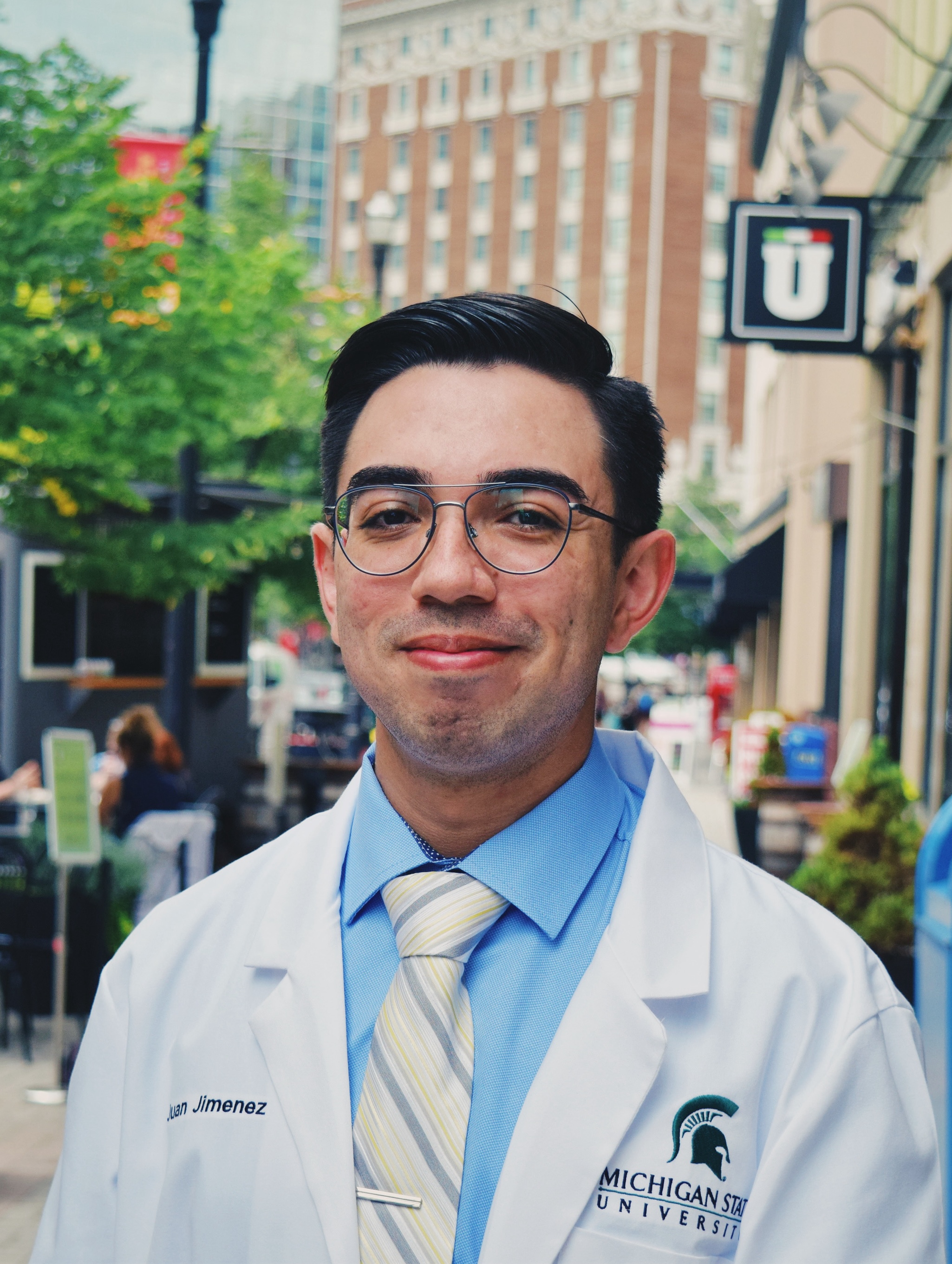
A person in a white lab coat in a city.
Juan Jimenez. Courtesy photo.

Syringe service programs like the Syringe Treatment Exchange Program at Wellness operate under the premise of harm reduction – that is, a public health strategy that minimizes the harm associated with drug use while simultaneously maintaining all peoples’ rights to dignity and safety. People who use heroin are still people, and they deserve to use it in a safe manner if they so choose just as people with HIV are still people worthy of care and dignity. The impacts of substance use extend beyond the individual, as we know that diseases like Hepatitis C and HIV are spread via contaminated needles and unprotected sex. Thus, the work of organizations like Wellness Services is critical to ensuring public health.

According to the Michigan Department of Health and Human Services, SSPs can help reduce overdose rates, reduce the prevalence of HIV and Hepatitis C by up to 50% in both, and increase proper disposal of syringes and access to substance use treatment programs. Like Wellness Services, many of these programs include HIV and Hepatitis C testing, connect individuals to medical care, provide wound care, and offer social support and case management services. Their work in catching folks who have fallen through cracks opened by societal stigma, socioeconomic factors, and limited public resources often takes a backseat when politicians and the media hyperfocus on the needles and boofing kits they provide, claiming that doing so further encourages addiction. On the contrary, our longstanding and predominant societal view of addiction as a crime and personal moral failure rather than a biopsychological issue and public health concern only adds fuel to the fire.

In order to help put out that fire, we need to start thinking about policy at the local and state level. Earlier in the day, Yashica had given a brief history of Wellness Services and the legality of SSPs across the state. Oftentimes a big hurdle in the establishment and success of a program concerns local and state ordinances that govern delivery and possession of syringes. Though a local ordinance allows Wellness Services to operate in Flint, possession of syringes is not protected outside of its city borders. Thus, an individual who is detained by police in neighboring Flint Township or Flushing can have their items confiscated if there are no protective local ordinances in those towns. People can do their part by advocating at both local city halls and the state capital for laws that protect individuals and allow for easier establishment of SSPs. Additionally, advocating for increased funding for and promotion of these programs, expanding Narcan access, and ultimately starting a discussion about safe injection sites can help shift the paradigm for tackling substance use.

We can no longer continue to push our most vulnerable neighbors into the shadows of shame and neglect. Addiction is not won by denial and castigation, but rather via collective responsibility and empathy. SSPs are the starting point for so many, and we must therefore promote and invest in these life saving programs heavily.


MEDIA CONTACTS

Amy Nienhouse
MSU Community EngagementMSU Leadership and ImpactAddiction and RecoveryHealth and MedicineMSU Community Engagement

Collection

more content from this collection

Student Views

Latest News

MSUToday Weekly Update

The MSUToday Weekly Update email showcases how Spartans are making a difference through academic excellence, research impact and community outreach. Get inspired by these stories of innovation, collaboration and determination. Plus, enjoy photos and videos of campus and more MSU content to help keep you connected to the Spartan community.

Sign UpUpdate My Information

Connect With Us

Visit our Facebook pageVisit our page on XVisit our Instagram pageVisit our LinkedIn pageVisit our YouTube pageVisit our TikTok page

Health and Safety

  • MSU Police and Public Safety
  • Olin Health Center
  • Counseling & Psychiatric Services (CAPS)
  • University Health and Wellbeing
  • MSU Health Care
  • Civil Rights and Title IX
  • Our Commitment
  • Center for Survivors
  • Security & Fire Safety Report
  • University Policy on Relationship Violence and Sexual Misconduct
  • Notice of Non-Discrimination, Anti-Harassment and Non-Retaliation
  • Health Care Non-Discrimination Notice

Support Services

  • Disability Resources
  • Supportive Services
  • Learning Resources

Working at MSU

  • Human Resources
  • EBS Login
  • Job Postings
  • Employee Assistance Program

Reports

  • CARES Act Funding
  • Student Achievement and Outcomes

Contact us

517-355-1855

Address

Michigan State University 426 Auditorium Road East Lansing, MI 48824

Follow Us

  • Visit our Facebook page
  • Visit our page on X
  • Visit our Instagram page
  • Visit our TikTok page
  • Visit our LinkedIn page
  • Visit our YouTube page

If you're having accessibility issues, please let us know.

Know More: Campus Safety Information and ResourcesTransparency Reporting: Budget & Salary/Compensation
  • Contact Information|
  • Site Map|
  • Privacy Statement|
  • Site Accessibility|
  • Call MSU: (517) 355-1855|
  • Visit: msu.edu|
  • Notice of Nondiscrimination|

SPARTANS WILL|© Michigan State University|