Jump to HeaderJump to Main ContentJump to Footer
Michigan State University
  • Browse Stories By

    Topics

    Explore stories by subject area

    • Arts and Culture
    • Business and Economy
    • Climate and Environment
    • Education and Learning
    • Engineering, Science and Technology
    • Government and Society
    • Health and Medicine
    • Media and Communications
    • MSU Leadership and Impact
    • Sports and Recreation
    • Student and Campus Experience
    View All Stories

    Collections

    Curated story series

    • Turfgrass
    • Ask the Expert
    • Big Ideas
    • Climate solutions
    • Water at MSU
    • Mobility
    • Spartan Perspectives
    • Student views
    • Graduate voices
    • Faculty voices
    View All Collections

    Featured

    Editor's picks

    • The Spartans behind your favorite Michigan golf courses

      July 22, 2026

      The Spartans behind your favorite Michigan golf courses

    • MSU in the 1990s: 10 Spartan milestones

      July 14, 2026

      MSU in the 1990s: 10 Spartan milestones

MSUTODAY
  • Browse Stories By

< Browse Stories By

Topics

Explore stories by subject area

  • Arts and Culture
  • Business and Economy
  • Climate and Environment
  • Education and Learning
  • Engineering, Science and Technology
  • Government and Society
  • Health and Medicine
  • Media and Communications
  • MSU Leadership and Impact
  • Sports and Recreation
  • Student and Campus Experience
  • View All Stories

Collections

Curated story series

  • Turfgrass
  • Ask the Expert
  • Big Ideas
  • Climate solutions
  • Water at MSU
  • Mobility
  • Spartan Perspectives
  • Student views
  • Graduate voices
  • Faculty voices
  • View All Collections

Featured

Editor's picks

  • The Spartans behind your favorite Michigan golf courses

    July 22, 2026

    The Spartans behind your favorite Michigan golf courses

  • MSU in the 1990s: 10 Spartan milestones

    July 14, 2026

    MSU in the 1990s: 10 Spartan milestones

  • For Media
  • Experts
  • Releases and Statements
  • Sign Up
  • Update Information

Resources

  • A to Z Index
  • Find People
  • Maps
  • Email
  • Student Information System (SIS)
  • D2L
  • Libraries
  • Tech Support
  • MSU Misconduct Hotline
  • Social Media Directory
  • Events Calendar
  • For Media
Michigan State University
MSUToday
  • For Media
  • Experts
  • Releases and Statements
  • Sign Up
  • Update Information
MSUTODAY
Natural Sciences

Oct. 21, 2024

Tropical mammals react to changes in lunar light

By: Caleb Hess, Cathrine Glosli

The full moon is shrouded in fanciful superstition about bringing out the worst in people, from causing werewolf transformations to prompting erratic, strange or inexplicable behaviors. It turns out, however, that the lunar cycle can impact behavior — at least in tropical mammals.  

New research appearing in the Proceedings of the Royal Society B reveals that half of the mammal species in tropical forests adjust their behaviors in response to the moon’s phases and corresponding variations in light.  

Michigan State University ecologist Lydia Beaudrot, who studies tropical ecology and conservation, was among the international cohort of researchers who contributed to the study.  

As human development rapidly and drastically alters some of the darkest places on Earth — including the shaded understories of tropical forests — researchers are racing to understand what happens in these systems under the cover of night.

“This research has implications for how habitat degradation may impact some tropical animals,” Beaudrot said.

No flash photography, please
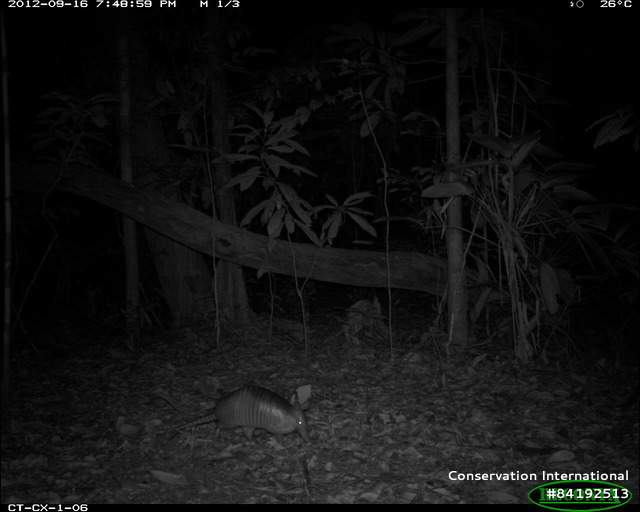

Armadillo
Armadillos are lunar phobic and less active when there is more lunar/moon illumination. Taken by a wildlife camera. Credit: TEAM - Tropical Ecology Assessment and Monitoring Network.

To understand how tropical mammals reacted to natural fluctuations in light, the researchers examined 2.1 million photographs from automatic wildlife cameras installed across 17 protected forests over three continents.  

The image set was sourced from the Tropical Ecology Assessment and Monitoring, or TEAM, Network, which Beaudrot calls an “incredible resource for the scientific community.”  

TEAM developed a standardized data-collection system encompassing a global network of parks with game cameras, providing a large-scale dataset by which scientists can examine changes to tropical ecosystems.

By analyzing these images, researchers could derive how nocturnal behaviors changed across 86 mammal species, based on variations of nighttime light levels.  

They found that half of the observed species altered their activity levels or timing, or both, in response to changes in light levels.

Beaudrot, an assistant professor in MSU’s Department of Integrative Biology, explains that “For tropical forest animals that are awake at night, not all nights are the same. In fact, which species are active depends a lot on the moon.”

What we do in the shadows
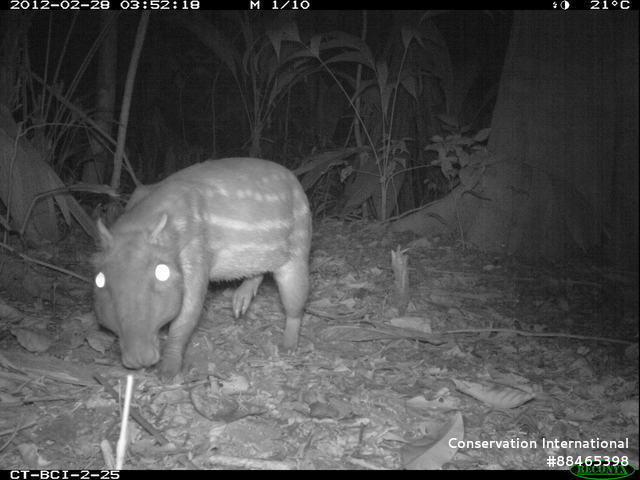
Paca
Pacas are lunar phobic and less active when there is more lunar/moon illumination. Taken by a wildlife camera. Credit: TEAM - Tropical Ecology Assessment and Monitoring Network.
Of the 86 total observed species of mammal, 12 species decidedly avoided moonlight, while three species were more likely to emerge under moonlit conditions.  

“These were the species with the most pronounced reactions,” said Richard Bischof, professor at the Norwegian University of Life Sciences, or NMBU, and a first author on the paper.  

While some species exhibited behaviors on the extremes, half of the total study species showed some amount of change in behavior corresponding to lunar phases.

Overall, 30% of species avoided the moonlight, compared to 20% that showed some level of attraction to it.

These changes included shifts in when, or even if, species went out at night to travel or seek out food.

Notably, nocturnal species, especially rodents, were overrepresented among species that avoided the full moon.   

These behaviors may be closely linked with species’ feeding habits — and whether they’re predators or prey. But for either group, going out at night presents a set of strategic tradeoffs.  

“Imagine playing hide-and-seek in a dark room and, then, somebody lights a candle,” Bischof said. “The light, even if it is weak, may make it easier for you to find your way around the room. But if you are the one hiding, you suddenly become a lot easier to detect.”

Going out at night? Not a very bright idea
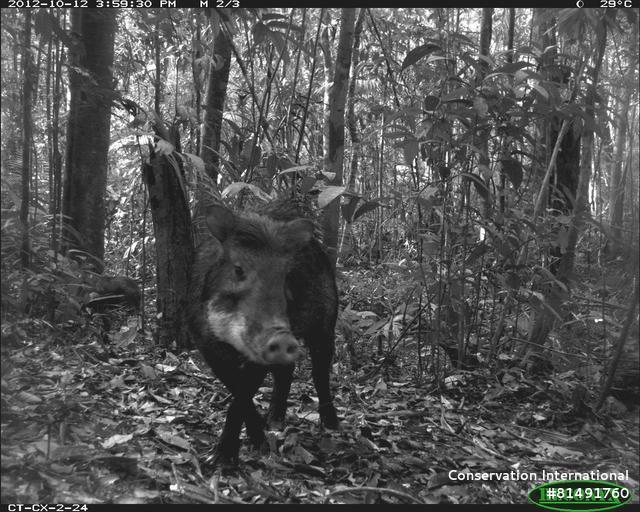

Peccary
White-lipped peccary: Peccaries are lunar philic and shift their activity towards nights with high lunar illumination. Taken by a wildlife camera. Credit: TEAM - Tropical Ecology Assessment and Monitoring Network.

Increased illumination may make food easier to find and terrain easier to traverse, but it also makes an animal easier to spot — a disadvantage for creatures who rely on the cover of night to move around unseen.  

However, the pronounced impact of light — even in the dim forest understory — is spurring concern over how habitat degradation and fragmentation could reshape forest communities.

Human development can reshape or destroy natural habitats. As forests are cleared for land, lumber or other natural resources, pollution can have dire impacts on soil, water and air — and even the light that animals rely on for safety and stealth.

In these transformed environments, thinned forest canopies provide less cover from natural light, and artificial light sources can disrupt natural cycles.  

As a result, some animals may miss essential opportunities to secure food or move to new locations. And while some species may better adapt to brighter nights, many species — and even entire ecological communities — could lose.


MEDIA CONTACTS

Emilie Lorditch
Natural SciencesEngineering, Science and Technology

Latest News

MSUToday Weekly Update

The MSUToday Weekly Update email showcases how Spartans are making a difference through academic excellence, research impact and community outreach. Get inspired by these stories of innovation, collaboration and determination. Plus, enjoy photos and videos of campus and more MSU content to help keep you connected to the Spartan community.

Sign UpUpdate My Information

Connect With Us

Visit our Facebook pageVisit our page on XVisit our Instagram pageVisit our LinkedIn pageVisit our YouTube pageVisit our TikTok page

Health and Safety

  • MSU Police and Public Safety
  • Olin Health Center
  • Counseling & Psychiatric Services (CAPS)
  • University Health and Wellbeing
  • MSU Health Care
  • Civil Rights and Title IX
  • Our Commitment
  • Center for Survivors
  • Security & Fire Safety Report
  • University Policy on Relationship Violence and Sexual Misconduct
  • Notice of Non-Discrimination, Anti-Harassment and Non-Retaliation
  • Health Care Non-Discrimination Notice

Support Services

  • Disability Resources
  • Supportive Services
  • Learning Resources

Working at MSU

  • Human Resources
  • EBS Login
  • Job Postings
  • Employee Assistance Program

Reports

  • CARES Act Funding
  • Student Achievement and Outcomes

Contact us

517-355-1855

Address

Michigan State University 426 Auditorium Road East Lansing, MI 48824

Follow Us

  • Visit our Facebook page
  • Visit our page on X
  • Visit our Instagram page
  • Visit our TikTok page
  • Visit our LinkedIn page
  • Visit our YouTube page

If you're having accessibility issues, please let us know.

Know More: Campus Safety Information and ResourcesTransparency Reporting: Budget & Salary/Compensation
  • Contact Information|
  • Site Map|
  • Privacy Statement|
  • Site Accessibility|
  • Call MSU: (517) 355-1855|
  • Visit: msu.edu|
  • Notice of Nondiscrimination|

SPARTANS WILL|© Michigan State University|