Jump to HeaderJump to Main ContentJump to Footer
Michigan State University
  • Browse Stories By

    Topics

    Explore stories by subject area

    • Arts and Culture
    • Business and Economy
    • Climate and Environment
    • Education and Learning
    • Engineering, Science and Technology
    • Government and Society
    • Health and Medicine
    • Media and Communications
    • MSU Leadership and Impact
    • Sports and Recreation
    • Student and Campus Experience
    View All Stories

    Collections

    Curated story series

    • Turfgrass
    • Ask the Expert
    • Big Ideas
    • Climate solutions
    • Water at MSU
    • Mobility
    • Spartan Perspectives
    • Student views
    • Graduate voices
    • Faculty voices
    View All Collections

    Featured

    Editor's picks

    • The Spartans behind your favorite Michigan golf courses

      July 22, 2026

      The Spartans behind your favorite Michigan golf courses

    • MSU in the 1990s: 10 Spartan milestones

      July 14, 2026

      MSU in the 1990s: 10 Spartan milestones

MSUTODAY
  • Browse Stories By

< Browse Stories By

Topics

Explore stories by subject area

  • Arts and Culture
  • Business and Economy
  • Climate and Environment
  • Education and Learning
  • Engineering, Science and Technology
  • Government and Society
  • Health and Medicine
  • Media and Communications
  • MSU Leadership and Impact
  • Sports and Recreation
  • Student and Campus Experience
  • View All Stories

Collections

Curated story series

  • Turfgrass
  • Ask the Expert
  • Big Ideas
  • Climate solutions
  • Water at MSU
  • Mobility
  • Spartan Perspectives
  • Student views
  • Graduate voices
  • Faculty voices
  • View All Collections

Featured

Editor's picks

  • The Spartans behind your favorite Michigan golf courses

    July 22, 2026

    The Spartans behind your favorite Michigan golf courses

  • MSU in the 1990s: 10 Spartan milestones

    July 14, 2026

    MSU in the 1990s: 10 Spartan milestones

  • For Media
  • Experts
  • Releases and Statements
  • Sign Up
  • Update Information

Resources

  • A to Z Index
  • Find People
  • Maps
  • Email
  • Student Information System (SIS)
  • D2L
  • Libraries
  • Tech Support
  • MSU Misconduct Hotline
  • Social Media Directory
  • Events Calendar
  • For Media
Michigan State University
MSUToday
  • For Media
  • Experts
  • Releases and Statements
  • Sign Up
  • Update Information
MSUTODAY
Infrastructure and Transportation

Nov. 21, 2024

Smarter city planning: MSU researchers use brain activity to predict visits to urban areas

Urbanization, the process by which cities and towns expand in size and population, is rapidly advancing globally, and the percentage of people living in urban environments has increased from 33% in 1960 to 57% in 2023.

headshot of Dar Meshi.
Dar Meshi, an associate professor in the Department of Advertising and Public Relations and director of the Social Media and Neuroscience Lab at MSU

Now, researchers from Michigan State University are the first to measure brain activity to make predictions that could help inform enhanced urban planning and design that addresses the well-being of residents and visitors.

Dar Meshi, an associate professor in the Department of Advertising and Public Relations and director of the Social Media and Neuroscience Lab at MSU, led the study, which was recently published in the journal Nature Cities and included collaborators from the University of Lisbon in Portugal. Together, they found that the brain’s reward system can shape human behavior within urban environments and aid in designing cities that promote sustainable living.

Because urban areas typically offer better access to educational and employment opportunities, advanced health care facilities and diverse cultural and recreational activities, they can contribute to a higher standard of living. However, the swift pace of urbanization also gives rise to challenges such as lack of green spaces, increased traffic noise, and social inequities, emphasizing the need for sustainable urban development strategies that prioritize health, safety and well-being for residents.

To better understand how to create proactive urban planning frameworks, Meshi and his co-authors used principles from the budding field of neurourbanism — the study of measuring the human brain to predict and understand the influence of urban environments on behavior — to conduct the study.   

“Neurourbanism has the potential to contribute significantly to the design of cities that prioritize cognitive, emotional and physical well-being,” Meshi said. “By prioritizing the well-being of individuals, cities can create environments that are conducive to the overall health and happiness of their inhabitants.”
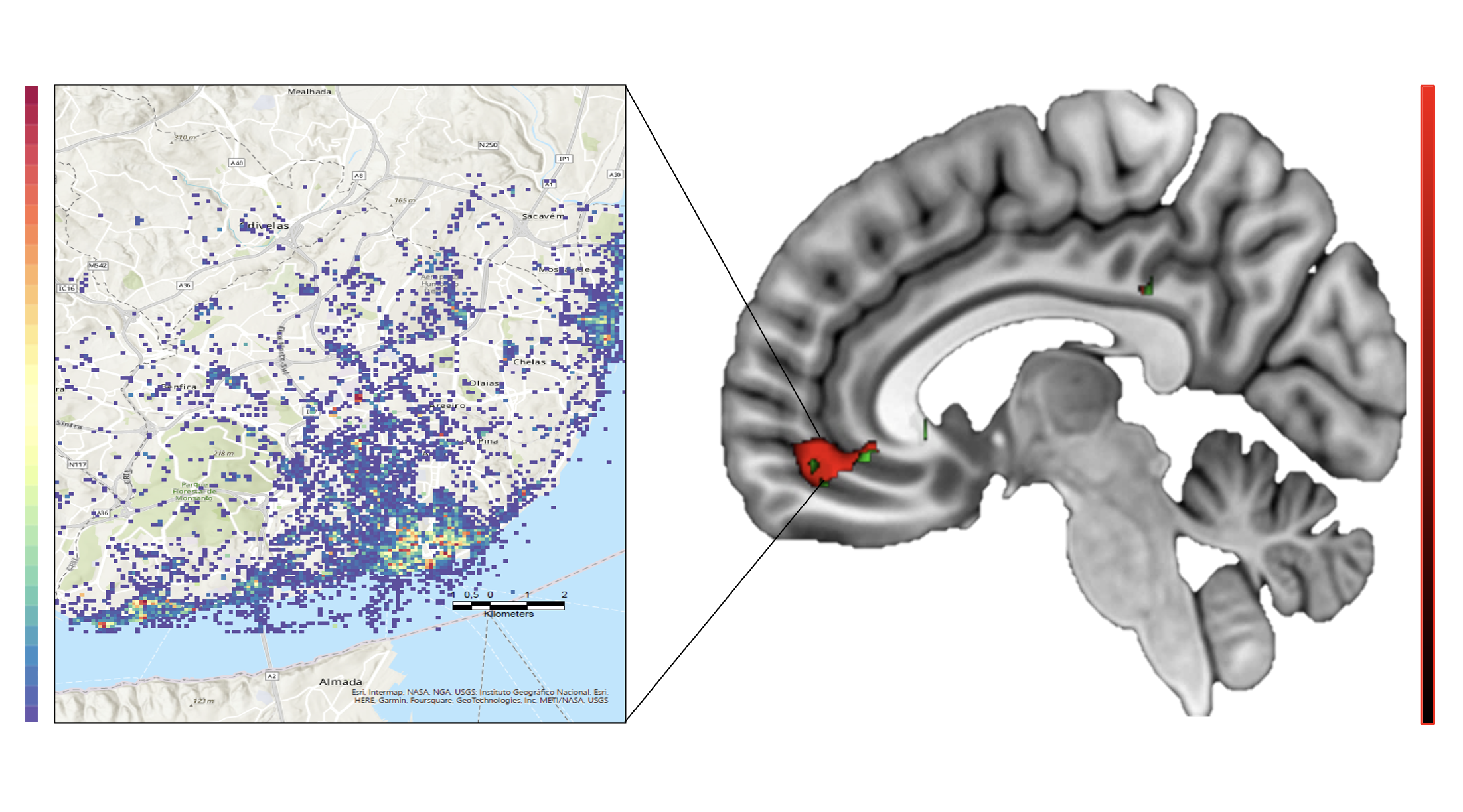
On the left side of the image, there is a map with purple dots at certain locations. Some locations have a greater concentration of purple dots than others. On the right, there is a black and white image of a brain. There is a red dot drawn in the front of the brain to indicate a specific region of interest.
Brain activity in the ventromedial prefrontal cortex predicted the number of visits to certain locations in Lisbon, Portugal. The density of photos shared on the photo sharing site Flickr for each location served as a proxy for measuring visitation patterns.

Neurourbanism employs brain-scanning tools, such as functional magnetic resonance imaging, or fMRI. FMRI detects changes in blood oxygen levels, known as the blood oxygen level dependent, or BOLD, signal, and uses this signal to identify the brain regions that are active during specific tasks or mental processes. When neurons — cells that send and receive signals in your brain — become more active, they require more oxygen. Blood flows to the active areas to meet this demand, and the fMRI detects where changes in blood oxygenation levels occur.

Meshi and his colleagues focused on the ventromedial prefrontal cortex, or vmPFC, a key region in the brain’s reward system involved in valuation and decision-making.

“Previous neuroforecasting research has used activity in the brain’s reward system, including the vmPFC, to predict a variety of population behaviors, such as food choices, music purchasing, crowdfunding outcomes and stock market prices, making it a valuable region to study with respect to urban planning,” said Ardaman Kaur, a postdoctoral researcher in the MSU Institute for Quantitative Health Sciences and Engineering and one of the study’s authors.

For this study, 77 participants in the U.S. who had never visited Lisbon, Portugal, underwent fMRI scanning while viewing and rating photos depicting urban environments in the city. The photos were geotagged images posted on the photo-sharing application Flickr. The density of photos for each region served as a proxy for measuring visitation patterns around Lisbon.

The findings from the study suggest that the neural activity in the vmPFC can predict people’s visitation patterns to or away from a specific environment.

“People typically make decisions to maximize value, and because certain urban areas induce greater value-related brain activity than others, people in the city are more likely to travel to, or take pictures of, those certain areas,” Meshi said.
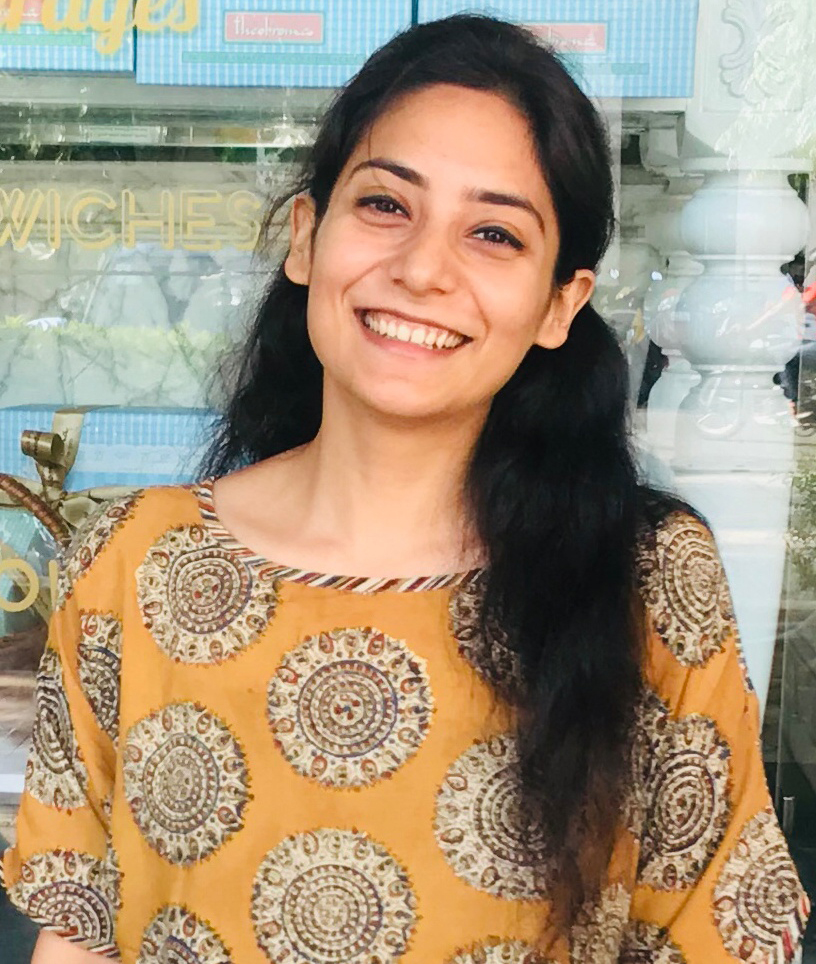
Portrait of Ardaman Kaur
Ardaman Kaur, a postdoctoral researcher in the MSU Institute for Quantitative Health Science and Engineering.

According to Meshi, the results of the study imply that the vmPFC may be involved in processing a range of value judgements within urban environments, including perceptual, cognitive, social and cultural values.

“Individuals may be drawn to visit urban spaces not only because of their aesthetic appeal, but also due to their sociocultural relevance,” he said. “This could include places with historical significance or social importance, which may not necessarily be aesthetically pleasing, but still hold considerable value.”

Kaur said this research sheds important light on how our brains may encode information related to urban environments and drive visits around these environments.

“The insights from our study can potentially aid in the development of future human-centric cities, specifically tailored to how our brains perceive and interact with the environment,” Kaur said.

Meshi believes the neurourbanistic approach used in his team’s work can contribute to refining urban planning strategies, ultimately fostering enhanced livability and well-being.

“By incorporating these findings into the urban infrastructure and services, we may be able to create cites that are more efficient and enhance population livability and make it easier for residents to get from place to place,” he said.


 

MEDIA CONTACTS

Alex Tekip
Infrastructure and TransportationGovernment and SocietyPublic HealthHealth and MedicineMSU ResearchMSU Leadership and Impact

Latest News

MSUToday Weekly Update

The MSUToday Weekly Update email showcases how Spartans are making a difference through academic excellence, research impact and community outreach. Get inspired by these stories of innovation, collaboration and determination. Plus, enjoy photos and videos of campus and more MSU content to help keep you connected to the Spartan community.

Sign UpUpdate My Information

Connect With Us

Visit our Facebook pageVisit our page on XVisit our Instagram pageVisit our LinkedIn pageVisit our YouTube pageVisit our TikTok page

Health and Safety

  • MSU Police and Public Safety
  • Olin Health Center
  • Counseling & Psychiatric Services (CAPS)
  • University Health and Wellbeing
  • MSU Health Care
  • Civil Rights and Title IX
  • Our Commitment
  • Center for Survivors
  • Security & Fire Safety Report
  • University Policy on Relationship Violence and Sexual Misconduct
  • Notice of Non-Discrimination, Anti-Harassment and Non-Retaliation
  • Health Care Non-Discrimination Notice

Support Services

  • Disability Resources
  • Supportive Services
  • Learning Resources

Working at MSU

  • Human Resources
  • EBS Login
  • Job Postings
  • Employee Assistance Program

Reports

  • CARES Act Funding
  • Student Achievement and Outcomes

Contact us

517-355-1855

Address

Michigan State University 426 Auditorium Road East Lansing, MI 48824

Follow Us

  • Visit our Facebook page
  • Visit our page on X
  • Visit our Instagram page
  • Visit our TikTok page
  • Visit our LinkedIn page
  • Visit our YouTube page

If you're having accessibility issues, please let us know.

Know More: Campus Safety Information and ResourcesTransparency Reporting: Budget & Salary/Compensation
  • Contact Information|
  • Site Map|
  • Privacy Statement|
  • Site Accessibility|
  • Call MSU: (517) 355-1855|
  • Visit: msu.edu|
  • Notice of Nondiscrimination|

SPARTANS WILL|© Michigan State University|