A Michigan State University researcher has received a $325,000 grant from the U.S. Department of Agriculture’s National Institute of Food and Agriculture to develop a yeast-based biopesticide that targets spotted wing drosophila, an invasive pest of berries and tree fruits.
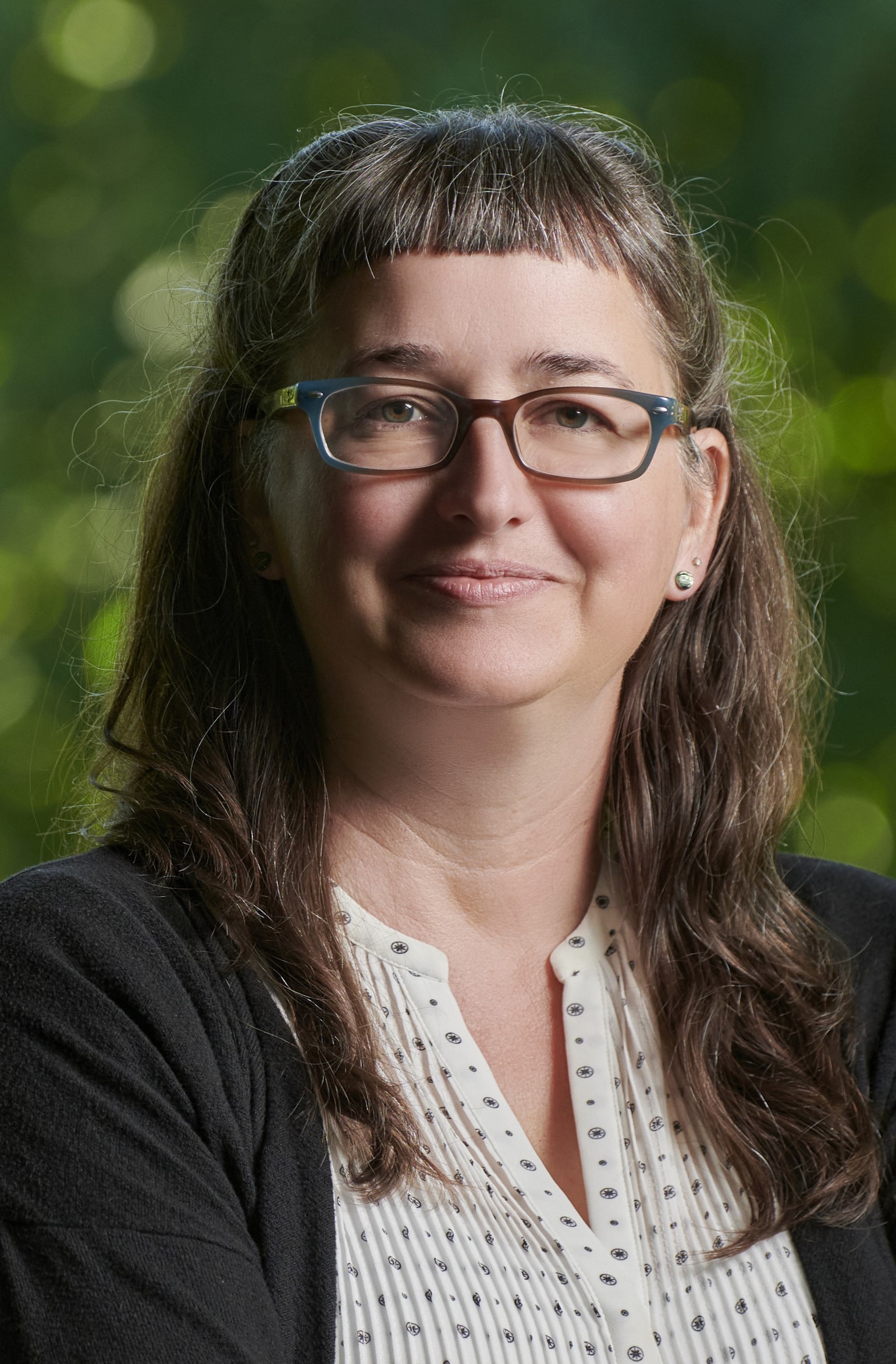
Julianna Wilson, an assistant professor in the Department of Entomology and tree fruit specialist with MSU Extension, leads the multistate team. Partnering on the project is Molly Duman Scheel, a professor of medical and molecular genetics at Indiana University.
Researchers are striving to create a yeast-based biopesticide that is built on a model proven effective in other fly and mosquito species. The product works by interfering with the pests’ ribonucleic acid protein translation, which was first used in combating destructive nematodes.
Wilson said this type of product is uniquely effective compared to conventional pesticides because it focuses on gene expression in target organisms, while leaving non-target organisms unharmed.
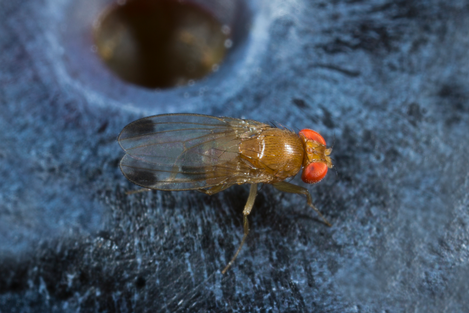
A native of East Asia that’s about the size of a grain of rice, SWD was first detected in North America in 2008. MSU researchers discovered the pests in West Michigan in 2010, which have since wreaked havoc on growers of soft-fleshed fruits such as berries and cherries.
SWD presents several unique challenges with management. While most pests infect decaying fruit, SWD females possess an egg-laying mechanism called an ovipositor, which is serrated and can puncture ripe fruit.
Additionally, populations of crop-damaging insects tend to have distinct generations, but SWD is different. Several generations can live simultaneously and build throughout the year, overwhelming vulnerable crops and wild plants.
“It is hard to think of any other invasive species in recent memory that has caused as rapid of a disruption to integrated pest management programs in as many crops as SWD,” said Wilson, whose work is supported in part by MSU AgBioResearch. “Their propensity to lay eggs in ripe fruit that results in infestation prior to harvest has created a major problem.”
More than a decade of research around the country has led to various pesticide recommendations, but the issues persist. The growing economic costs for growers and the long-term resistance effects of frequent pesticide sprays are leading to severe consequences.
“When fruit is at a susceptible stage, growers still depend on weekly applications of mostly broad-spectrum contact insecticides because of how rapidly and prolifically it will reproduce,” Wilson said. “And because there’s zero tolerance for larvae in fruit at harvest, these conditions have resulted in high economic costs to growers and a high risk for emergence of insecticide-resistant SWD populations.”
The new project brings together Wilson’s experience in applied, on-farm research and extension with Scheel’s expertise in RNA pesticide development.
Yeast will be used as the foundation because of its attract-and-kill properties for SWD. Using her team’s previous studies in mosquitoes as a model, Scheel has already identified a yeast strain that’s toxic to SWD but will not harm non-target organisms.
“We are excited to apply this new technology, which has worked well in mosquitoes, to the development of new methods for SWD control,” Scheel said. “Working with Dr. Wilson’s talented team at MSU will accelerate translation of this technology from our lab to the field.”
For the first objective, researchers will scale up production of the biopesticide for laboratory and field testing.
Secondly, the team will examine whether the biopesticide can outcompete other potential attractants, as well as the durability of the attractant qualities, ensuring that they last for an entire growing season. The effects the product has on other insects, including SWD parasitoids, will also be evaluated.
The third objective will be to assess and define a deployment strategy, which researchers hypothesize will be along the margins of orchards adjacent to the areas from which SWD are expected to emigrate.
Finally, the team will use extension resources to convey the effectiveness of the newly developed biopesticide and work to gain support for its implementation.
While the project will take place in Michigan and Indiana, researchers say the outcomes should be relevant to growers worldwide.
Wilson said Michigan is a particularly good location to test new management products because of the great relationships with crop commodity organizations such as the Michigan Cherry Committee and the Michigan Blueberry Commission.
“We want to do everything we can to protect these essential industries for Michigan agriculture,” Wilson said. “We pride ourselves on our agricultural diversity. Michigan is the third-largest producer of blueberries and the largest producer of tart cherries in the U.S., crops for which SWD has significantly disrupted integrated pest management programs. SWD has increased the cost of relevant crop production by roughly 30% since its arrival, so this is something we need to address as soon as possible through innovative solutions.”
This story originally appeared on the AgBioResearch website.

