Jump to HeaderJump to Main ContentJump to Footer
Michigan State University
MSUTODAY
  • Browse Stories By

    Topics

    Explore stories by subject area

    • Arts and Culture
    • Business and Economy
    • Climate and Environment
    • Education and Learning
    • Engineering, Science and Technology
    • Government and Society
    • Health and Medicine
    • Media and Communications
    • MSU Leadership and Impact
    • Sports and Recreation
    • Student and Campus Experience
    View All Stories

    Collections

    Curated story series

    • Turfgrass
    • Ask the Expert
    • Big Ideas
    • Climate solutions
    • Water at MSU
    • Mobility
    • Spartan Perspectives
    • Student views
    • Graduate voices
    • Faculty voices
    View All Collections

    Featured

    Editor's picks

    • 9 reasons to love being a Spartan

      Aug. 28, 2026

      9 reasons to love being a Spartan

    • NIH awards multi-university team over $4M to improve women’s health

      Sept. 15, 2026

      NIH awards multi-university team over $4M to improve women’s health

MSUTODAY
  • Browse Stories By

< Browse Stories By

Topics

Explore stories by subject area

  • Arts and Culture
  • Business and Economy
  • Climate and Environment
  • Education and Learning
  • Engineering, Science and Technology
  • Government and Society
  • Health and Medicine
  • Media and Communications
  • MSU Leadership and Impact
  • Sports and Recreation
  • Student and Campus Experience
  • View All Stories

Collections

Curated story series

  • Turfgrass
  • Ask the Expert
  • Big Ideas
  • Climate solutions
  • Water at MSU
  • Mobility
  • Spartan Perspectives
  • Student views
  • Graduate voices
  • Faculty voices
  • View All Collections

Featured

Editor's picks

  • 9 reasons to love being a Spartan

    Aug. 28, 2026

    9 reasons to love being a Spartan

  • NIH awards multi-university team over $4M to improve women’s health

    Sept. 15, 2026

    NIH awards multi-university team over $4M to improve women’s health

  • For Media
  • Experts
  • Releases and Statements
  • Sign Up
  • Update Information

Resources

  • A to Z Index
  • Find People
  • Maps
  • Email
  • Student Information System (SIS)
  • D2L
  • Libraries
  • Tech Support
  • MSU Misconduct Hotline
  • Social Media Directory
  • Events Calendar
  • For Media
Michigan State University
MSUToday
  • For Media
  • Experts
  • Releases and Statements
  • Sign Up
  • Update Information
Diseases, Conditions and Treatments

Dec. 10, 2024

Fighting prostate cancer, from farm to table, at MSU

By: Connor Yeck
With a nod to bringing local, fresh ingredients directly to our dinner plates, Michigan State University researchers will soon be applying their own farm-to-table approach to the fight against prostate cancer. From therapeutic ingredient production to research and testing — it’s all happening at MSU.


The special ingredient in this approach is promethium-149, or 149Pm.


This isotope has promising qualities for targeted radiotherapy — a process that delivers radioactive isotopes directly to cancer cells to damage their DNA.


Supported by a new Strategic Partnership Grant from the Michigan State University Research Foundation, the interdisciplinary team will establish a framework on MSU’s campus that streamlines the development of a 149Pm-based radiopharmaceutical as an effective prostate cancer therapeutic.


This integrated system will use cutting-edge facilities including the Facility for Rare Isotope Beams, or FRIB; the Institute for Quantitative Health Science and Engineering, better known as IQ; as well as newly expanded radiochemistry laboratories in MSU’s Department of Chemistry.


The discoveries made will help improve the survival rate of cancer patients, as well as train the next generation of scientists working to transform novel isotopes into effective drug delivery systems.

 

Professor Carolina de Aguiar Ferreira, whose research at MSU centers on radiolabeling and disease detection
Carolina de Aguiar Ferreira

“Our farm-to-table approach is unique to MSU, spanning from radionuclide production through preclinical testing,” said Carolina de Aguiar Ferreira, one of the project’s three leads and an assistant professor in the departments of Radiology, Pharmacology and Toxicology and Biomedical Engineering.


In collaboration with Katharina Domnanich and Alyssa Gaiser, both assistant professors and project leads in the Department of Chemistry and FRIB, the team will help establish a platform that can eventually test other promising radionuclides that might be used against a variety of cancers.


“We would love to see our 149Pm project be just the beginning of a wonderful, interdisciplinary collaboration for an isotope production-to-nuclear medicine application pipeline,” Domnanich said.


“We’re excited about the potential to make a real difference in patients’ lives,” de Aguiar Ferreira added.


Packing a radioactive punch


In radiopharmaceutical therapy, radioisotopes are attached to molecules that naturally seek out a disease’s unique biochemical traits within the body.


Like miniature heat-seeking missiles, these can reach cancer cells even if they’ve spread to multiple locations, all while sparing nearby healthy cells.
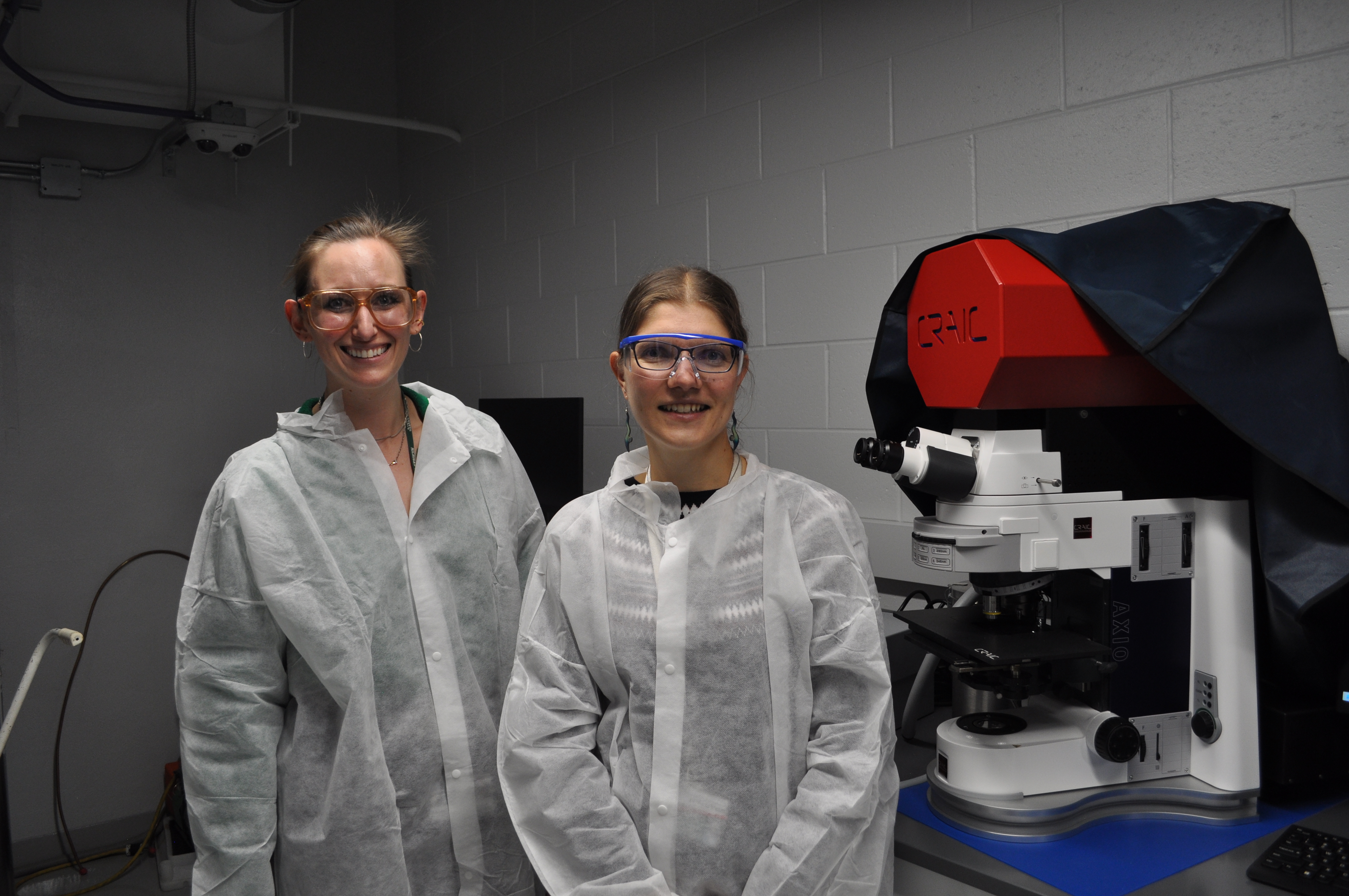
 

Professors Alyssa Gaiser (left) and Katharina Domnanich (right) in the Department of Chemistry's newly-finished radiochemistry laboratories
L-R: Alyssa Gaiser and Katharina Domnanich

Recently, the Food and Drug Administration approved a radiopharmaceutical that uses the isotope lutetium-177, or 177Lu, in tandem with a prostate-specific membrane antigen, or PSMA. This is a targetable protein that prostate cancer cells produce at exceptionally high levels.


Though promising, treatments with the lutetium-177-labeled PSMA only extend prostate cancer patient survival by a matter of months. Studies suggest the largest drawback is an inadequate amount of radiation being delivered to cancer sites.


With 149Pm, the MSU team sees an isotope that packs a bigger punch with a higher dose of radiation, alongside other impactful qualities such as its potential to be paired with other cancer-targeting molecules.


“This work brings together expertise in isotope production, separations, radiolabeling, and mouse studies from Katharina, Carolina and myself,” Gaiser said, who often works with 147Pm, another isotope of promethium that can be used in nuclear batteries.


“Starting with 149Pm for prostate cancer treatment, we’re pioneering a comprehensive strategy for developing targeted radiopharmaceutical therapies,” de Aguiar Ferreira offered. “But our vision extends beyond this initial focus.”


A future harvest

Soon, the researchers will begin comparing the efficiency of 149Pm against that of the industry standard, 177Lu. This includes investigating how effective 149Pm is at promoting anti-tumor effects and how the two isotopes impact tumor immune systems.


To acquire 149Pm for study, the project will make use of FRIB, where radioisotopes are produced and harvested.
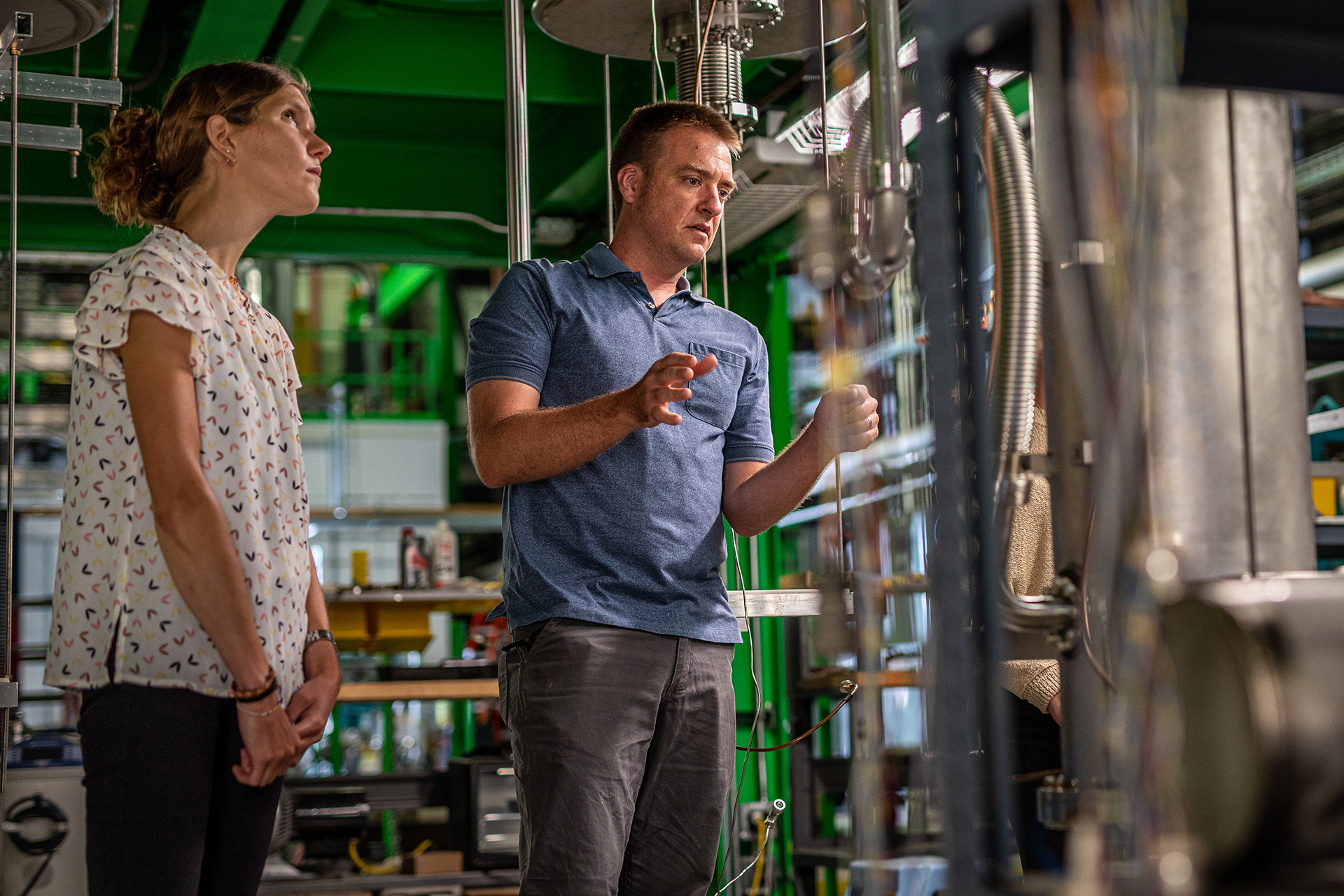
 Professors Katharina Domnanich (left) and Greg Severin, who along with Alyssa Gaiser are pioneering isotope harvesting efforts at the Facility for Rare Isotope Beams at Michigan State University.
Katharina Domnanich and Greg Severin

Through accelerator activities that create ultra-rare isotopes, facilities like FRIB can generate research quantities of scientifically valuable radioisotope byproducts. With the right systems in place, these can be collected and used by researchers in a variety of contexts, from plant science and PET scans to material science and astrophysics.


“Isotope harvesting was started about 10 years ago at FRIB’s predecessor facility, the National Superconducting Cyclotron Laboratory,” Domnanich explained.


“FRIB’s isotope harvesting program is a game-changer for our research, as it gives us the unprecedented opportunity to access and test a wide range of unique isotopes that are simply not available anywhere else,” de Aguiar Ferreira said.


By bridging isotope production with cancer biology and preclinical testing in a single setting, the researchers’ project looks to establish MSU as a preeminent leader in radiopharmaceutical and translational research.


“It is truly novel that we can do a full production-to-preclinical testing investigation of nearly any isotope for medical applications, all on MSU’s campus,” Gaiser said.


MEDIA CONTACTS

Emilie Lorditch
Diseases, Conditions and TreatmentsHealth and MedicineNatural SciencesEngineering, Science and TechnologyNuclear Science

Collection

more content from this collection

Fighting Cancer

Latest News

MSUToday Weekly Update

The MSUToday Weekly Update email showcases how Spartans are making a difference through academic excellence, research impact and community outreach. Get inspired by these stories of innovation, collaboration and determination. Plus, enjoy photos and videos of campus and more MSU content to help keep you connected to the Spartan community.

Sign UpUpdate My Information

Connect With Us

Visit our Facebook pageVisit our page on XVisit our Instagram pageVisit our LinkedIn pageVisit our YouTube pageVisit our TikTok page

Health and Safety

  • MSU Police and Public Safety
  • Olin Health Center
  • Counseling & Psychiatric Services (CAPS)
  • University Health and Wellbeing
  • MSU Health Care
  • Civil Rights and Title IX
  • Our Commitment
  • Center for Survivors
  • Security & Fire Safety Report
  • University Policy on Relationship Violence and Sexual Misconduct
  • Notice of Non-Discrimination, Anti-Harassment and Non-Retaliation
  • Health Care Non-Discrimination Notice

Support Services

  • Disability Resources
  • Supportive Services
  • Learning Resources

Working at MSU

  • Human Resources
  • EBS Login
  • Job Postings
  • Employee Assistance Program

Reports

  • CARES Act Funding
  • Student Achievement and Outcomes

Contact us

517-355-1855

Address

Michigan State University 426 Auditorium Road East Lansing, MI 48824

Follow Us

  • Visit our Facebook page
  • Visit our page on X
  • Visit our Instagram page
  • Visit our TikTok page
  • Visit our LinkedIn page
  • Visit our YouTube page

If you're having accessibility issues, please let us know.

Know More: Campus Safety Information and ResourcesTransparency Reporting: Budget & Salary/Compensation
  • Contact Information|
  • Site Map|
  • Privacy Statement|
  • Site Accessibility|
  • Call MSU: (517) 355-1855|
  • Visit: msu.edu|
  • Notice of Nondiscrimination|

SPARTANS WILL|© Michigan State University|