Tom Fernandez, an MSU professor in the Department of Horticulture, has spent much of his 25-year career at MSU studying how to effectively manage water in greenhouses and nurseries to increase water-use efficiency and reduce nutrient runoff.
With funding support from Project GREEEN — Michigan’s plant agriculture initiative based at MSU and supported by the Michigan Plant Coalition, Michigan Department of Agriculture and Rural Development, MSU AgBioResearch and MSU Extension — Fernandez has developed management strategies to ensure agricultural inputs such as fertilizers and pesticides aren’t washed away from their intended targets, harming the surrounding environment and diminishing water quality.

According to the U.S. Environmental Protection Agency, about a half million tons of pesticides, 12 million tons of nitrogen and 4 million tons of phosphorous fertilizer are annually applied to crops. The runoff of these inputs contributes to some of the leading strains on water quality.
In greenhouses and nurseries, it’s easy to overwater many plants because the containers they’re in allow water to easily drain. Fernandez has found that by applying water based on a plant’s daily water use, irrigation can be reduced between 30%-80% depending on the species, and growers can conserve water and reduce the runoff of nutrients from the potting mix.
In addition to minimizing the runoff of nutrients from fertilizers, such as nitrates and phosphates, Fernandez has also examined how to lessen the movement of pesticides from the soil and nontarget areas. Pesticides are sprayed over the top of plants, so as a result, they hit unintended spaces such as the gaps between plants or the groundcover in greenhouses and nurseries. When irrigation is applied overhead, the pesticides in these spaces can move with the water and impact its quality.
Like how the movement of nutrients from fertilizer in the soil were reduced, Fernandez said applying less water to plants can help mitigate pesticides from moving in the soil and from nontarget surfaces. He also said that micro-irrigating individual pots using spray stakes, which fan water over single containers, proved to significantly reduce the surface runoff of pesticides.
“Time really is on our side when we’re thinking about both nutrients and pesticides,” Fernandez said. “The longer we keep them from getting into water systems, the more can happen to them biologically so they don’t cause a problem.”
With these strategies, Fernandez said there became a better understanding for how to irrigate container plants without promoting runoff. Since then, he’s taken on a new project: studying how to treat the water used in production by addressing the amount of nutrients and pesticides in it after application.
Beginning in 2018, Fernandez and Gemma Reguera, associate dean of faculty affairs and development in MSU’s College of Natural Science and professor in the Department of Microbiology, Genetics and Immunology, started to examine how nutrients from fertilizers interact with bioreactors, as well as to what extent bioreactors separate them from water used in greenhouses — an undertaking originally studied by Fernandez’s former doctoral student Damon Abdi, now an assistant professor of horticulture at Louisiana State University.
What do these bioreactors look like?
“They have a fancy name, but they’re really just big tubs of woodchips,” Fernandez said.
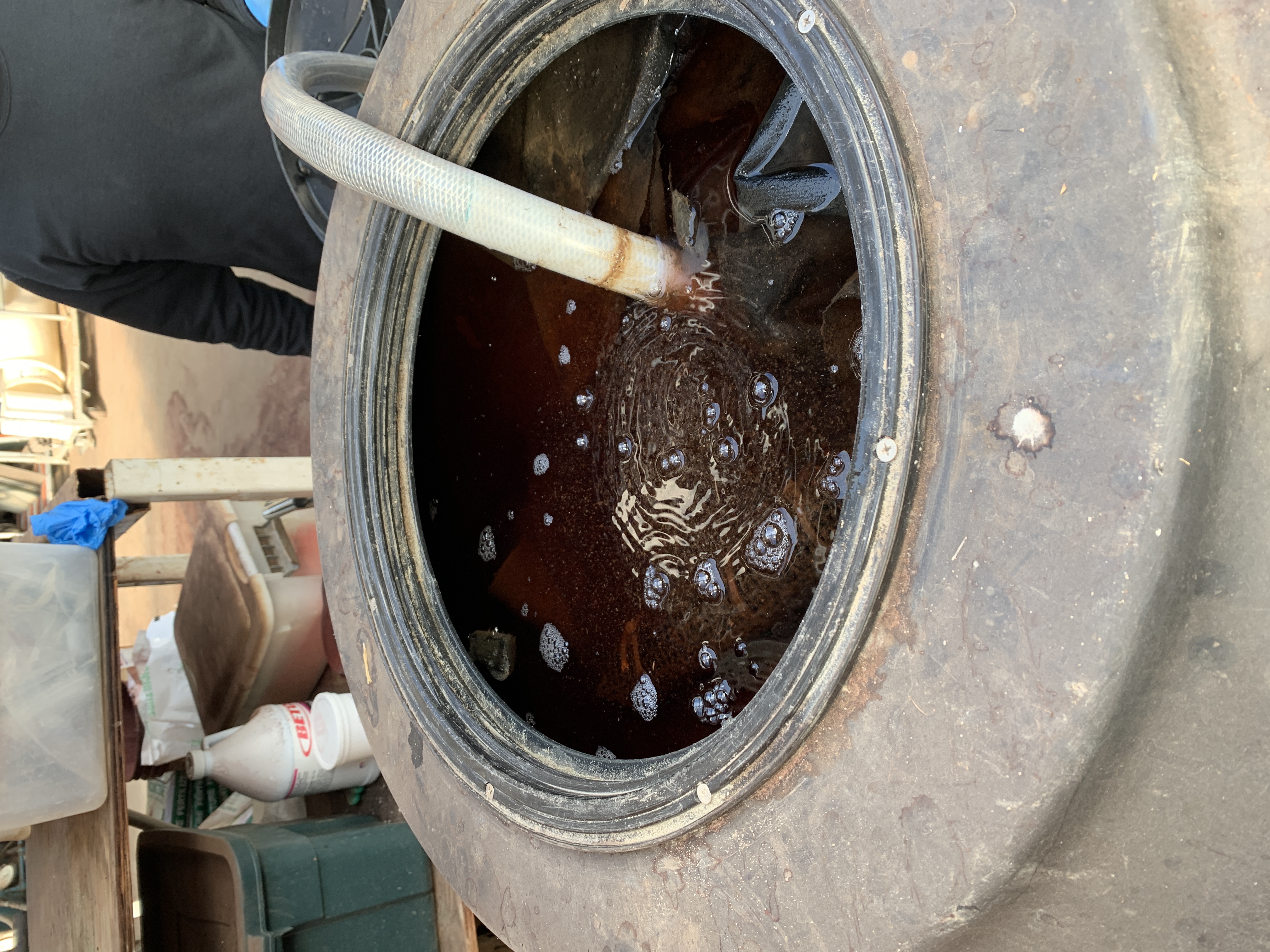
Fernandez said they originally developed a two-stage bioreactor system composed of woodchips, which convert nitrates into nitrogen gas, and heat-expanded clay, which gives the phosphorus from phosphates a large surface area to bind to when water runs through it.
Research showed that when water ran through the system, over 95% of nitrates could be taken out, and 80%-87% of phosphates could be broken down and removed. Fernandez and his team discovered that the activity occurred mostly in the woodchips, so the second stage of the bioreactor that implemented heat-expanded clay has since been discontinued.
This function of the bioreactor is critical for water that may not be reused in operations because it reduces the chance nutrients discharge into and contaminate the environment. However, many modern greenhouses and nurseries operate using closed-loop water systems where water is kept within the facility and oftentimes recycled in production. Fernandez said for water that’s recycled, he’s received inquiries about the potential to recycle nutrients in the bioreactor while reducing the presence of pesticides.
“Our partners wanted to remove the pesticides but keep the nutrients in the water because they’re paying for those — that’s fertilizer,” Fernandez said.
To keep the nutrients in water, water must travel through the bioreactor at a quicker pace. When it does so, there’s less time for the bioreactor to become anaerobic — a state without oxygen — preventing nutrients such as nitrates to be off-gassed.
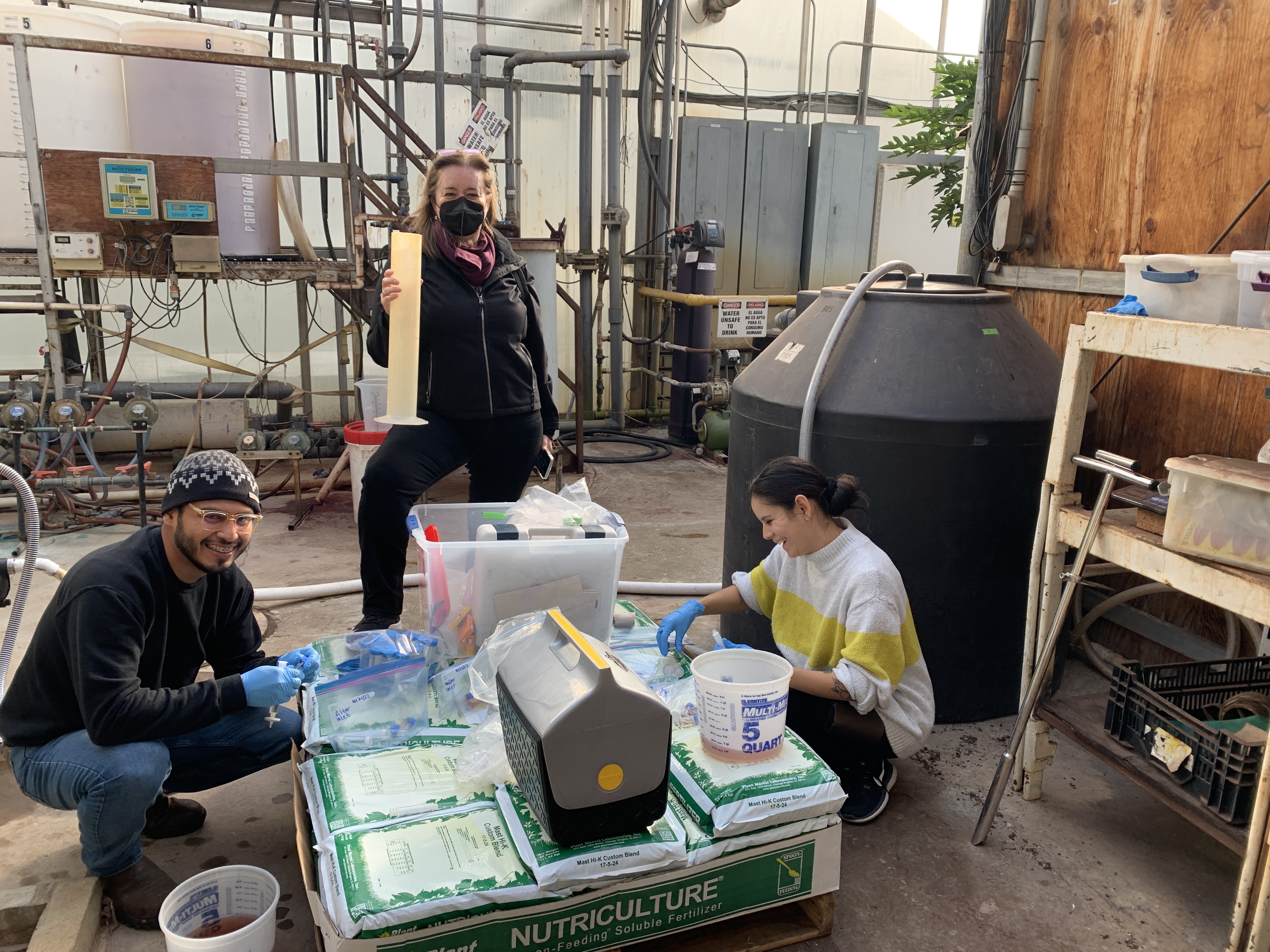
After modifying the bioreactor to allow water to move through it at around a 4-hour pace instead of a 72-hour pace, which was roughly the amount of time it took for nutrients to be removed from water, Fernandez said his team has been able to recycle 90%-100% of the nutrients in water to be used again for production.
Fernandez and Reguera also observed that when pesticides ran through the bioreactor, they didn’t affect the functionality of the microorganisms working within the system. In fact, they found that — depending on the mobility of each pesticide in water — the bioreactor could reduce the total amount of pesticides in water anywhere between 30%-75%.
“In our lab experiments, we found if we went to a low retention time — the length in which water is kept within the bioreactor — we could keep the nutrients in the water stream and remove many of the pesticides,” Fernandez said.
Amy Upton, executive director of the Michigan Nursery and Landscape Association, said the data from Fernandez and his team’s research helps the greenhouse and nursery industries market their clean-water production, and the hands-on demonstrations offered by the team aid growers in evaluating and adopting these technologies.
“Water quality and security are critically important to the nursery and greenhouse industries,” Upton said. “Dr. Fernandez and his team’s research not only address quality and security, but also incorporate important aspects such as improved soilless substrates that optimize water and nutrient retention and proven at-scale treatment technologies that reduce pesticides and pathogens in water sources.
“Michigan’s nursery and greenhouse industries are appreciative of the support from Dr. Fernandez and his team, as well as the continued funding support from Project GREEEN.”
Jim Kells, coordinator of Project GREEEN, said the novel ability to manage nutrients in the water will help greenhouses and nurseries increase sustainability and efficiency.
“Through research supported by Project GREEEN, Dr. Fernandez has developed innovative systems to minimize water use and reduce pesticides in water while recycling valuable nutrients,” Kells said. “This research has the potential to reduce the environmental impact of greenhouse and nursery systems while increasing grower profitability.”
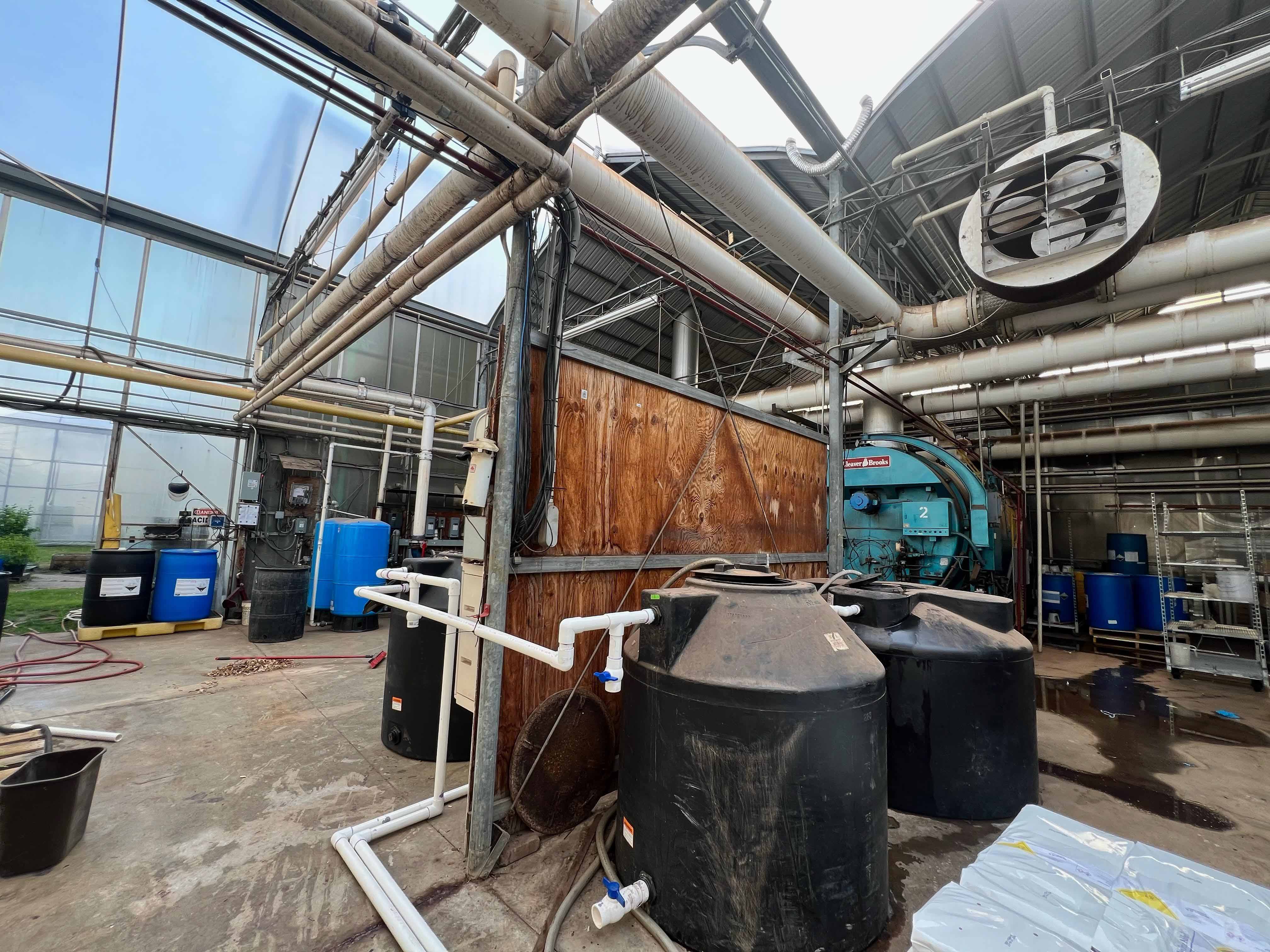
This will be the third year in which Fernandez and his team, including doctoral students Henry Gonzalez and Marcela Tabares, monitor how bioreactors perform within a large-scale greenhouse operation. Using 300- and 600-gallon water tanks as the bioreactor containers, Fernandez said they’re currently studying how pesticides degrade differently in anaerobic (without oxygen) and aerobic (with oxygen) conditions, hoping that the information gathered can further advance the degree to which pesticides can be removed from water.
“It’s really the first time I know of that anyone has used this type of system for bioreactors,” Fernandez said.
This story originally appeared in the AgBioResearch website.

