When boats leave inland lakes, they might have a stowaway on board.
Invasive species can hitch a ride on trailers and gear in many ways. An aquatic plant like Eurasian watermilfoil could be tangled in the propeller. Algae like starry stonewort could get stuck on a boat trailer’s taillights. And zebra mussel larvae could hide in live well tank.
These aquatic invasive species lurk in Michigan’s lakes, looking for the opportunity to hitch a ride and spread to new waters. MSU Extension’s Clean Boats, Clean Water mobile boat wash is working to make sure that doesn’t happen.
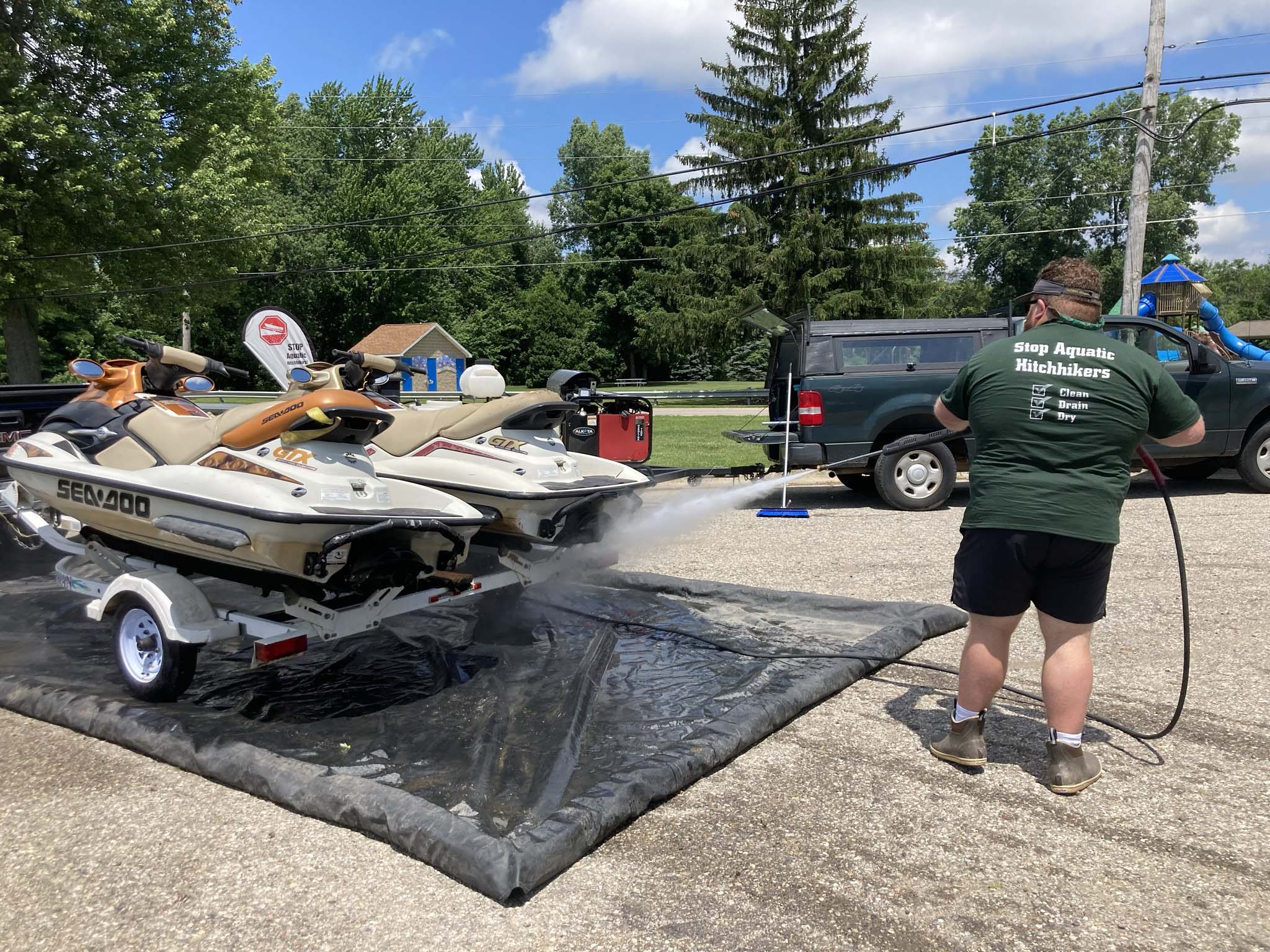
All summer, a crew of students and other seasonal staff manned a mobile boat wash at about 40 stops around Michigan. They crisscrossed the state with their heated high-pressure washer, containment system and invasive species resources to demonstrate to boaters how to clean their vessel and trailer before they head home. Their goal was to help increase aquatic invasive species awareness and show the community just how easy it is to clean their boats. Altogether, they washed 146 boats, at least 23 of which had visible plant debris.
“Anything is better than nothing,” said Kelsey Bockelman, an MSU Extension aquatic invasive species prevention educator. “We’re teaching boaters easy steps they could take every time they come off the lake that would take less than 10 minutes. We want to make them passionate about taking care of their lake.”
This summer marked Clean Boats, Clean Waters’ tenth season. Jo Latimore, MSU aquatic ecologist and outreach specialist, said the program is a joint effort among MSU, the U.S. Forest Service and the Michigan Department of Environment, Great Lakes and Energy.
The three groups came together when research showed most boaters knew aquatic invasive species were a problem and that they should clean their boats, but they were confused by how to do it.
“There was a lot of concern among boaters that it was going to be onerous and time confusing,” Latimore said. “We thought it would be great if we could show boaters that it can actually be a pretty painless process.”
Growing like a weed
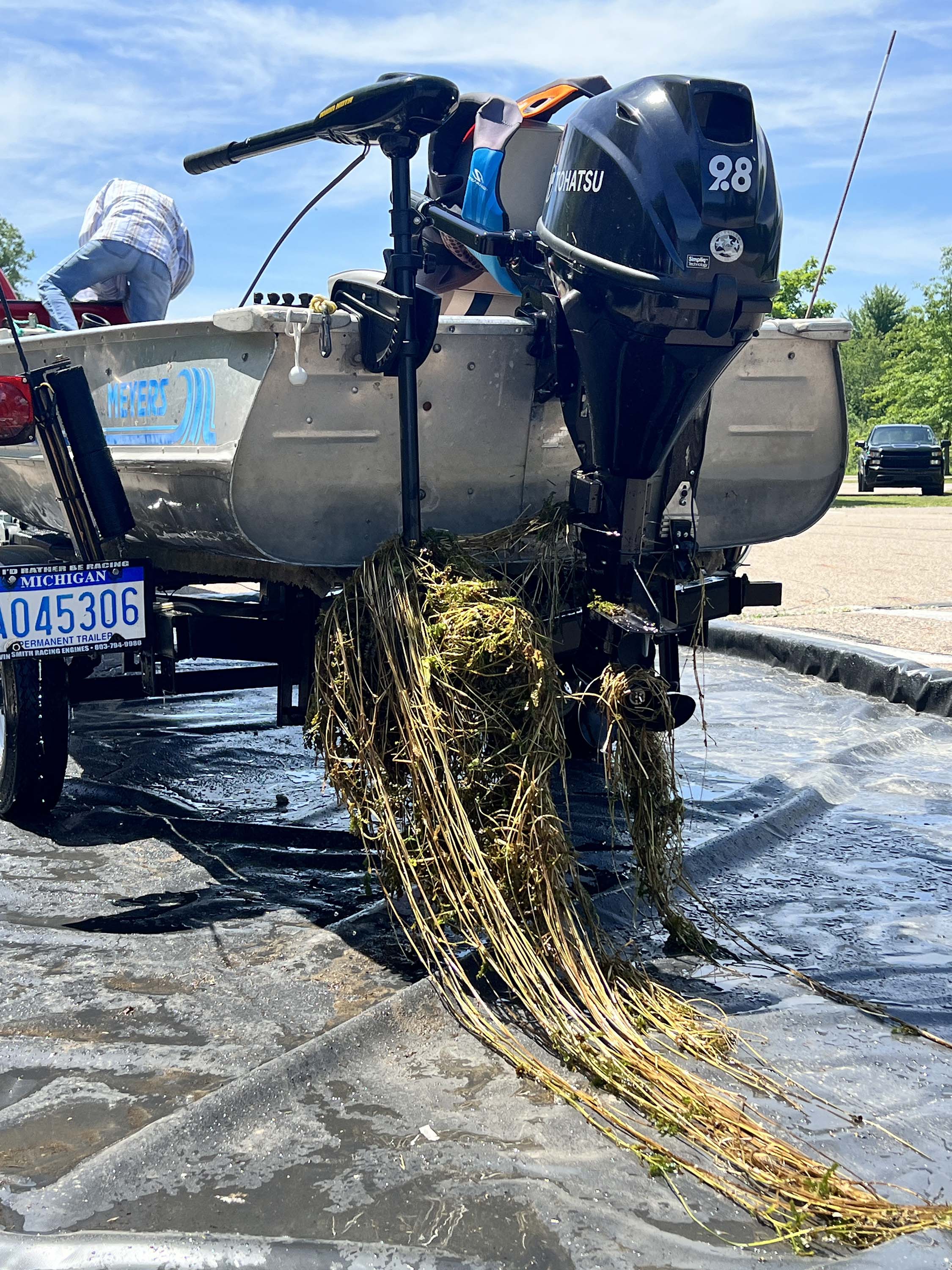
Invasive aquatic plants are easily spread because they don’t always need seeds to grow. A Eurasian watermilfoil stem stuck in a boat trailer’s taillights could be enough to launch a new infestation if that trailer takes a dip in a pristine lake. Once an invasion takes hold, it’s very difficult to stop. Eradication methods, like herbicide treatments and physical removal, are often costly and could need to be repeated over time.
These plant hitchhikers spread rapidly, crowding out native plants and changing the physical environment for the fish, frogs and turtles who call that lake home. Some aquatic plants grow so tall that they rise to the surface, creating mats that block sunlight for anything trying to grow underneath and cause issues for recreators.
“That’s what makes these non-native species so problematic,” Latimore said. “They’re really tolerant. They can be out of the water for quite a while and still survive. They’re tough and difficult to kill, like a weed.”
When aquatic invasive plants spread throughout inland lakes, boats were identified as a primary culprit, Bockelman said. That’s why Michigan law requires boaters to clean and dispose of aquatic organisms, including plants, from boats and trailers before leaving the launch, as well as draining all water from live wells, bilges and ballast tanks. While not required, the state recommends they wash off all mud and debris and let the boats and equipment dry for five days before launching into a different body of water or, at a minimum, dry after cleaning.
Stopping the spread
How do you clean a boat? That’s where Clean Boats, Clean Waters comes in.
Laura Lepek, a senior fisheries management major at MSU, joined the Clean Boats, Clean Waters crew for her third summer this year. She and her fellow workers scrub down boats with a power washer and trap the water that drips off the boat in a containment mat. They show boaters how to pull out their live wells and any other plugs to release any trapped water. They’re told to either let their boat airdry for a few days or wipe it down with a dry towel. Boaters and anglers also need to dispose of any bait in a trash container.
Lepek said their most important job is education and outreach. Not only does the crew give boaters an example of what to do, but they also hand out informational pamphlets and swag like stickers and koozies. Their hope is people will head home with a better understanding of how to clean their boats, and the motivation to do it on their own.
“Our boat washes are like demonstrations to show people how they should be cleaning their boats,” Lepek said. “All of our outreach materials teach people about the laws about invasive species.”
Clean Boats, Clean Waters also offers $3,000 grants to local communities. That money can be used to hang up signs about proper cleaning techniques, host educational presentations or even install their own boat decontamination station.
Why not?
The No. 1 reason most people don’t wash their boats is time and lack of equipment. Maybe they’re in a rush to leave a lake, and they think it will take too long to wash their boat. Bockelman said anything they can do will help. Even wiping off mud and pulling weeds from propellers can prevent the spread of invasive species.
Others say they don’t take their boats to any other lakes. Latimore said it’s important for them to wash their boats to help set a good example for visitors. Other boaters will see they’re expected to stop at a cleaning station and will be more likely to do so themselves.
Most people aren’t spreading invasive species on purpose, Lepek said. They just don’t have the right information.
“I’ve been doing this for three years, and the main thing I’ve learned is that people do care about their lakes at the end of the day,” Lepek said. “They just don’t how to take care of it. That’s why education is so important.”
This story was originally featured on the Water Alliance website.

