Jump to HeaderJump to Main ContentJump to Footer
Michigan State University
MSUTODAY
  • Browse Stories By

    Topics

    Explore stories by subject area

    • Arts and Culture
    • Business and Economy
    • Climate and Environment
    • Education and Learning
    • Engineering, Science and Technology
    • Government and Society
    • Health and Medicine
    • Media and Communications
    • MSU Leadership and Impact
    • Sports and Recreation
    • Student and Campus Experience
    View All Stories

    Collections

    Curated story series

    • Turfgrass
    • Ask the Expert
    • Big Ideas
    • Climate solutions
    • Water at MSU
    • Mobility
    • Spartan Perspectives
    • Student views
    • Graduate voices
    • Faculty voices
    View All Collections

    Featured

    Editor's picks

    • 9 reasons to love being a Spartan

      Aug. 28, 2026

      9 reasons to love being a Spartan

    • NIH awards multi-university team over $4M to improve women’s health

      Sept. 15, 2026

      NIH awards multi-university team over $4M to improve women’s health

MSUTODAY
  • Browse Stories By

< Browse Stories By

Topics

Explore stories by subject area

  • Arts and Culture
  • Business and Economy
  • Climate and Environment
  • Education and Learning
  • Engineering, Science and Technology
  • Government and Society
  • Health and Medicine
  • Media and Communications
  • MSU Leadership and Impact
  • Sports and Recreation
  • Student and Campus Experience
  • View All Stories

Collections

Curated story series

  • Turfgrass
  • Ask the Expert
  • Big Ideas
  • Climate solutions
  • Water at MSU
  • Mobility
  • Spartan Perspectives
  • Student views
  • Graduate voices
  • Faculty voices
  • View All Collections

Featured

Editor's picks

  • 9 reasons to love being a Spartan

    Aug. 28, 2026

    9 reasons to love being a Spartan

  • NIH awards multi-university team over $4M to improve women’s health

    Sept. 15, 2026

    NIH awards multi-university team over $4M to improve women’s health

  • For Media
  • Experts
  • Releases and Statements
  • Sign Up
  • Update Information

Resources

  • A to Z Index
  • Find People
  • Maps
  • Email
  • Student Information System (SIS)
  • D2L
  • Libraries
  • Tech Support
  • MSU Misconduct Hotline
  • Social Media Directory
  • Events Calendar
  • For Media
Michigan State University
MSUToday
  • For Media
  • Experts
  • Releases and Statements
  • Sign Up
  • Update Information
Michigan Schools

Sept. 9, 2024

Elevating Michigan’s teachers through outdoor learning

Professor Gail Richmond and scholars from the Michigan State University College of Education developed an innovative approach to urban elementary science education by integrating outdoor learning into the curriculum.

“The idea is to bring educators together and help them think about how they might leverage the outdoor spaces around their buildings and neighborhoods to help kids learn in meaningful ways,” said Richmond, who serves as associate chairperson of the Department of Teacher Education and director of the Teacher Preparation Program. “We focused on using areas familiar to the students, transforming them from spaces they merely walk through into dynamic learning environments.”
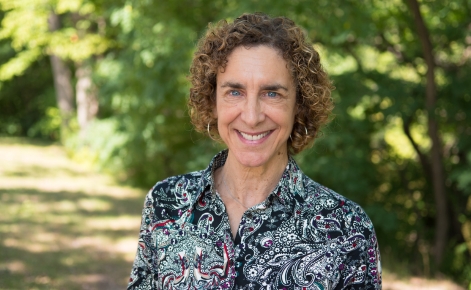
Professor Gail Richmond
Gail Richmond. Courtesy photo.

Funded by an over $2,100,000 National Science Foundation grant, the ongoing five-year project started in 2019 partnered scholars with nearly 50 educators from Lansing and Detroit, Michigan, to develop strategies for using outdoor spaces to teach science in meaningful and culturally responsive ways.

A core component of the project was addressing social justice issues.

Through previous research, Richmond and her team recognized that many urban children, particularly those from marginalized communities, often feel unwelcome or excluded from public parks, nature reserves and other outdoor environments traditionally used for education.

The team worked closely with teachers to identify and address the barriers their students faced, from the physical neglect of local parks to the broader societal biases that make these spaces feel inaccessible.

“Often, children of color do not feel welcome in spaces like nature parks or zoos. We focused on making these places feel relevant and accessible to their lives and experiences.” Richmond said. “We wanted to center our students in ways that felt relevant to their lives, ensuring that their priorities and lived experiences were considered in the educational process.”

The research team did this by working closely with teachers to integrate culturally relevant content into their outdoor lessons, and by addressing safety concerns raised by teachers.

Outdoor outcomes

Richmond’s team – including Ph.D. students Grace Tukurah and Kara Haas, Postdoctoral Research Associates Roberta Hunter and Eleanor Kenimer, senior staff person Irene Bayer, and colleague Professor Tali Tal (Technion Israel Institute of Technology) – found that teachers who engaged in the program transformed their approach to outdoor education, viewing schoolyards and local environments as rich educational resources that educators could leverage to teach science in ways that are both culturally relevant and socially just.

The scholars also found that teachers became more attuned to the social justice implications of their teaching environments, recognizing and addressing the barriers their students faced in accessing outdoor spaces, such as safety concerns, environmental neglect and societal biases.

“Going outside with them [students] always made me anxious. But I realized, after the program, that we can transform these spaces into safe and meaningful learning environments,” said one teacher who participated in the project. “Now, I tell my students, ‘You deserve a safe place to be, and we will learn to care for our learning home because we deserve this place to learn.’”

Research methods

The study, published in Cultural Studies of Science Education, involved several types of qualitative research methods. These included:

Field Notes: Multiple sets of field notes were collected from participant teachers during both virtual and in-person professional development sessions. These notes captured direct observations of teacher activities and interactions, as well as the researchers’ reflective impressions of these events.
Interviews: The team conducted pre- and post-program interviews with teachers. These interviews explored teachers’ expectations, challenges, and reflections on their relationships with outdoor instructional spaces and how these evolved over the course of the program.
Daily Reflections: Teachers were asked to complete daily written reflections during the summer session.

Since funding for the project has recently been renewed, Richmond and her team are expanding their efforts by developing additional resources and tools to support more educators in integrating outdoor learning into their science curricula and by supporting educators in taking on more leadership roles in their schools and districts.

This story originally ran on the College of Education website. 

MEDIA CONTACTS

Marco Schimizzi, Lauren Knapp
Michigan SchoolsEducation and LearningMSU ResearchMSU Leadership and ImpactElementary Education

Collection

more content from this collection

Greater Lansing

Latest News

MSUToday Weekly Update

The MSUToday Weekly Update email showcases how Spartans are making a difference through academic excellence, research impact and community outreach. Get inspired by these stories of innovation, collaboration and determination. Plus, enjoy photos and videos of campus and more MSU content to help keep you connected to the Spartan community.

Sign UpUpdate My Information

Connect With Us

Visit our Facebook pageVisit our page on XVisit our Instagram pageVisit our LinkedIn pageVisit our YouTube pageVisit our TikTok page

Health and Safety

  • MSU Police and Public Safety
  • Olin Health Center
  • Counseling & Psychiatric Services (CAPS)
  • University Health and Wellbeing
  • MSU Health Care
  • Civil Rights and Title IX
  • Our Commitment
  • Center for Survivors
  • Security & Fire Safety Report
  • University Policy on Relationship Violence and Sexual Misconduct
  • Notice of Non-Discrimination, Anti-Harassment and Non-Retaliation
  • Health Care Non-Discrimination Notice

Support Services

  • Disability Resources
  • Supportive Services
  • Learning Resources

Working at MSU

  • Human Resources
  • EBS Login
  • Job Postings
  • Employee Assistance Program

Reports

  • CARES Act Funding
  • Student Achievement and Outcomes

Contact us

517-355-1855

Address

Michigan State University 426 Auditorium Road East Lansing, MI 48824

Follow Us

  • Visit our Facebook page
  • Visit our page on X
  • Visit our Instagram page
  • Visit our TikTok page
  • Visit our LinkedIn page
  • Visit our YouTube page

If you're having accessibility issues, please let us know.

Know More: Campus Safety Information and ResourcesTransparency Reporting: Budget & Salary/Compensation
  • Contact Information|
  • Site Map|
  • Privacy Statement|
  • Site Accessibility|
  • Call MSU: (517) 355-1855|
  • Visit: msu.edu|
  • Notice of Nondiscrimination|

SPARTANS WILL|© Michigan State University|
