Jump to HeaderJump to Main ContentJump to Footer
Michigan State University
  • Browse Stories By

    Topics

    Explore stories by subject area

    • Arts and Culture
    • Business and Economy
    • Climate and Environment
    • Education and Learning
    • Engineering, Science and Technology
    • Government and Society
    • Health and Medicine
    • Media and Communications
    • MSU Leadership and Impact
    • Sports and Recreation
    • Student and Campus Experience
    View All Stories

    Collections

    Curated story series

    • Turfgrass
    • Ask the Expert
    • Big Ideas
    • Climate solutions
    • Water at MSU
    • Mobility
    • Spartan Perspectives
    • Student views
    • Graduate voices
    • Faculty voices
    View All Collections

    Featured

    Editor's picks

    • The Spartans behind your favorite Michigan golf courses

      July 22, 2026

      The Spartans behind your favorite Michigan golf courses

    • MSU in the 1990s: 10 Spartan milestones

      July 14, 2026

      MSU in the 1990s: 10 Spartan milestones

MSUTODAY
  • Browse Stories By

< Browse Stories By

Topics

Explore stories by subject area

  • Arts and Culture
  • Business and Economy
  • Climate and Environment
  • Education and Learning
  • Engineering, Science and Technology
  • Government and Society
  • Health and Medicine
  • Media and Communications
  • MSU Leadership and Impact
  • Sports and Recreation
  • Student and Campus Experience
  • View All Stories

Collections

Curated story series

  • Turfgrass
  • Ask the Expert
  • Big Ideas
  • Climate solutions
  • Water at MSU
  • Mobility
  • Spartan Perspectives
  • Student views
  • Graduate voices
  • Faculty voices
  • View All Collections

Featured

Editor's picks

  • The Spartans behind your favorite Michigan golf courses

    July 22, 2026

    The Spartans behind your favorite Michigan golf courses

  • MSU in the 1990s: 10 Spartan milestones

    July 14, 2026

    MSU in the 1990s: 10 Spartan milestones

  • For Media
  • Experts
  • Releases and Statements
  • Sign Up
  • Update Information

Resources

  • A to Z Index
  • Find People
  • Maps
  • Email
  • Student Information System (SIS)
  • D2L
  • Libraries
  • Tech Support
  • MSU Misconduct Hotline
  • Social Media Directory
  • Events Calendar
  • For Media
Michigan State University
MSUToday
  • For Media
  • Experts
  • Releases and Statements
  • Sign Up
  • Update Information
MSUTODAY
MSU Economic Impact

Aug. 7, 2024

MSU advances rural health care through education and innovation

By: Bridgette Bauer

Unfortunately for many, the place where they live is also a predictor of their life span, especially for rural residents. Nearly 2 million Michigan residents live in rural communities where there are significant barriers to health care resources such as long commutes to hospitals and clinics, a shrinking pool of providers and a lack of high-speed internet.

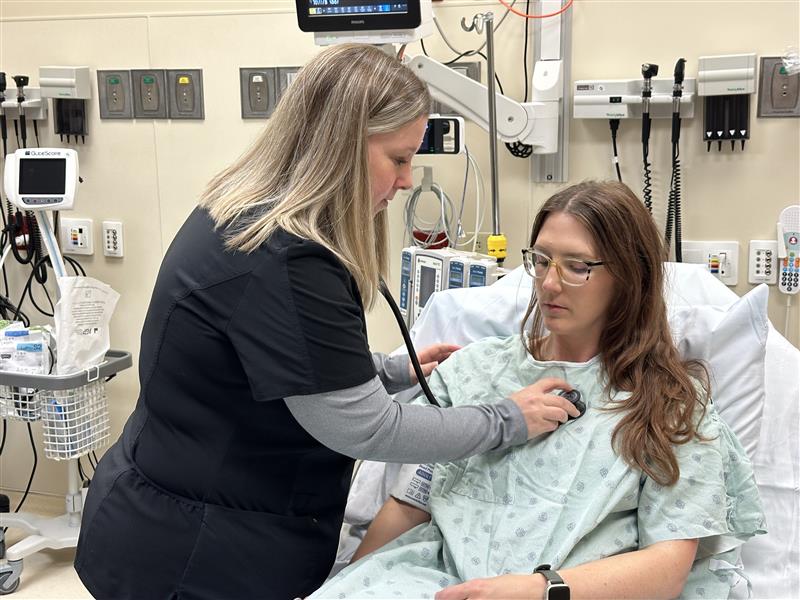
Nurse uses stethoscope on female patient
MSU College of Nursing alumna Mindy Turchin cares for a patient in Escanaba in Michigan’s Upper Peninsula. Photo courtesy of the MSU College of Nursing

Prioritizing rural health equity is part of the sustainable health theme in MSU’s 2030 strategic plan and ensures that everyone has the chance to lead a healthy life, no matter where they live.

The university has long had a presence that reaches all areas of Michigan to create a national model for improving health and well-being in underserved communities, including rural areas of the state. The following are some examples of MSU’s commitment to helping residents, training the next generation of health care providers and providing specialty programs targeted at mental health.

Programs for residents of all ages in all places

The MSU College of Nursing is sharing stories of alumni and students who are providing care to some of Michigan’s most vulnerable rural communities. This is the first video in the upcoming series.

Access is crucial to managing chronic conditions, preventing disease and promoting overall well-being. The Michigan Center for Rural Health partners with the MSU College of Osteopathic Medicine on Project ECHO®, or Extension for Community Healthcare Outcomes. 

Experts meet virtually with rural doctors and talk through challenges while providing updated information about specific areas of health care. This innovative model creates a community collaboration that strengthens preventative care in rural areas while helping local health care workers gain expertise they need to provide services that may not currently be available in their regions.  

“We are a nonprofit State Office of Rural Health,” says John Barnas, executive director of the Michigan Center for Rural Health. “Right now, we have 21 grant programs underway to support everything from veterans in the Upper Peninsula to a regional response to the opioid and substance use disorder crisis in northern Michigan. Our efforts focus on what’s happening inside hospitals as well as within the communities. We are an affiliate of MSU and have enjoyed working closely with them since 1991 to improve family and community medicine.”

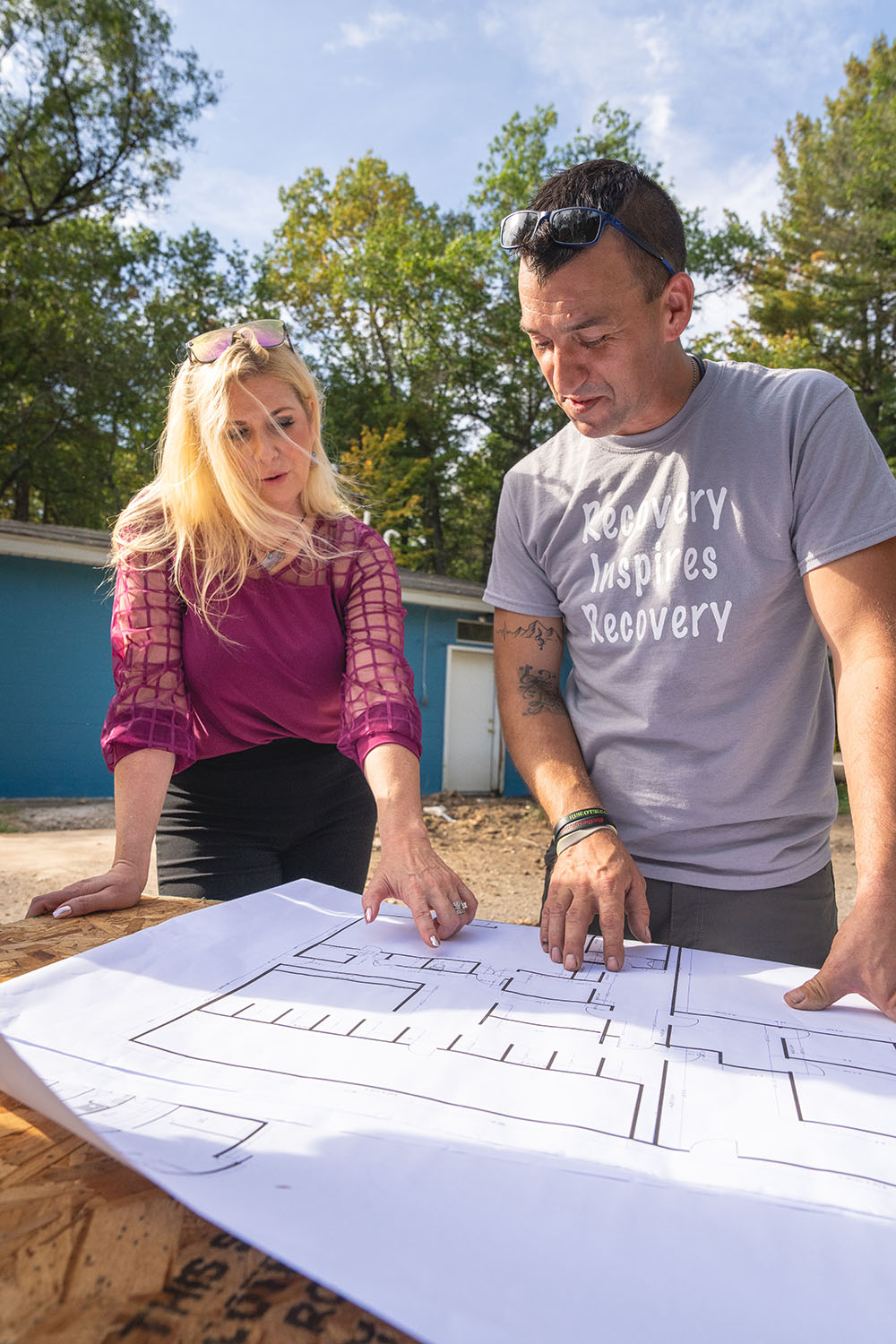
Joyce Fetrow, project director of the Northern Michigan Opioid Response Consortium in the Center for Rural Health, looks over plans for Zach Williams’s recovery house called “The Nest,” which serves men in recovery near Oscoda in the “thumb” region of Michigan.
Joyce Fetrow, project director of the Northern Michigan Opioid Response Consortium in the Center for Rural Health, looks over plans for Zach Williams’s recovery house called “The Nest,” which serves men in recovery near Oscoda in the “thumb” region of Michigan. Photo by: Steve Jessmore Photography

Another program aimed at northern Michigan communities is Eat My ABCs, organized by researchers in the MSU College of Nursing. Their goal is to increase children’s consumption of fruits and vegetables as well as improve household food security and overall healthy weight. 

The recently completed project was implemented in 26 day care classes totaling more than 400 students. This 14-week program taught children about fruits and vegetables, including where they grow and the health benefits, as well as a mindful-eating food activity in which participants could see, feel, smell, taste and hear the food. Participating teachers received a four-hour, in-person training session with an MSU researcher and were given resources to use throughout the program.

“The program taught my kid not to be as picky because there were things that she had never tried and she would not try them,” says one parent. “Now, she’ll eat the different fruits or vegetables, and she’ll tell you what they are and if she likes them or not.”

Eat My ABCs also has resulted in an increase in average fruit intake among participants, a decrease in consumption of sweets and sugary drinks and nearly a 6% increase in participants with a healthy weight.

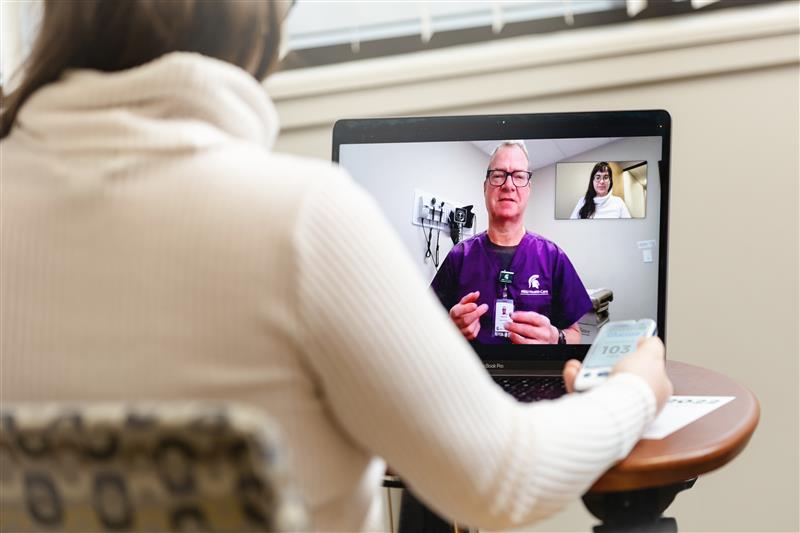
A patient is seen by their MSU Health Care provider during a virtual visit.
A patient is seen by their MSU Health Care provider during a virtual visit. Photo by: Matthew Mitchell Photography

For patients of all ages, virtual visits are available through MSU Health Care for rural residents who have limited access to primary care providers. This program enables patients to receive regular check-ups, manage chronic conditions and address health concerns from the comfort of their home.

Similarly, the MSU Center for Bleeding and Clotting Disorders offers physical outreach clinics in lower Michigan and the Upper Peninsula, including clinics for the Amish population, as well as telemedicine clinics.

Training the next generation of providers

For more than 50 years, the Leadership in Rural Medicine programs in the MSU College of Human Medicine have been training future physicians in medically underserved rural communities and small towns across Michigan. The programs encourage and empower students to practice in these areas following graduation. In the Upper Peninsula, this includes the Rural Physician Program based in Marquette, and in Traverse City and Midland, it is known as the Rural Community Health Program.


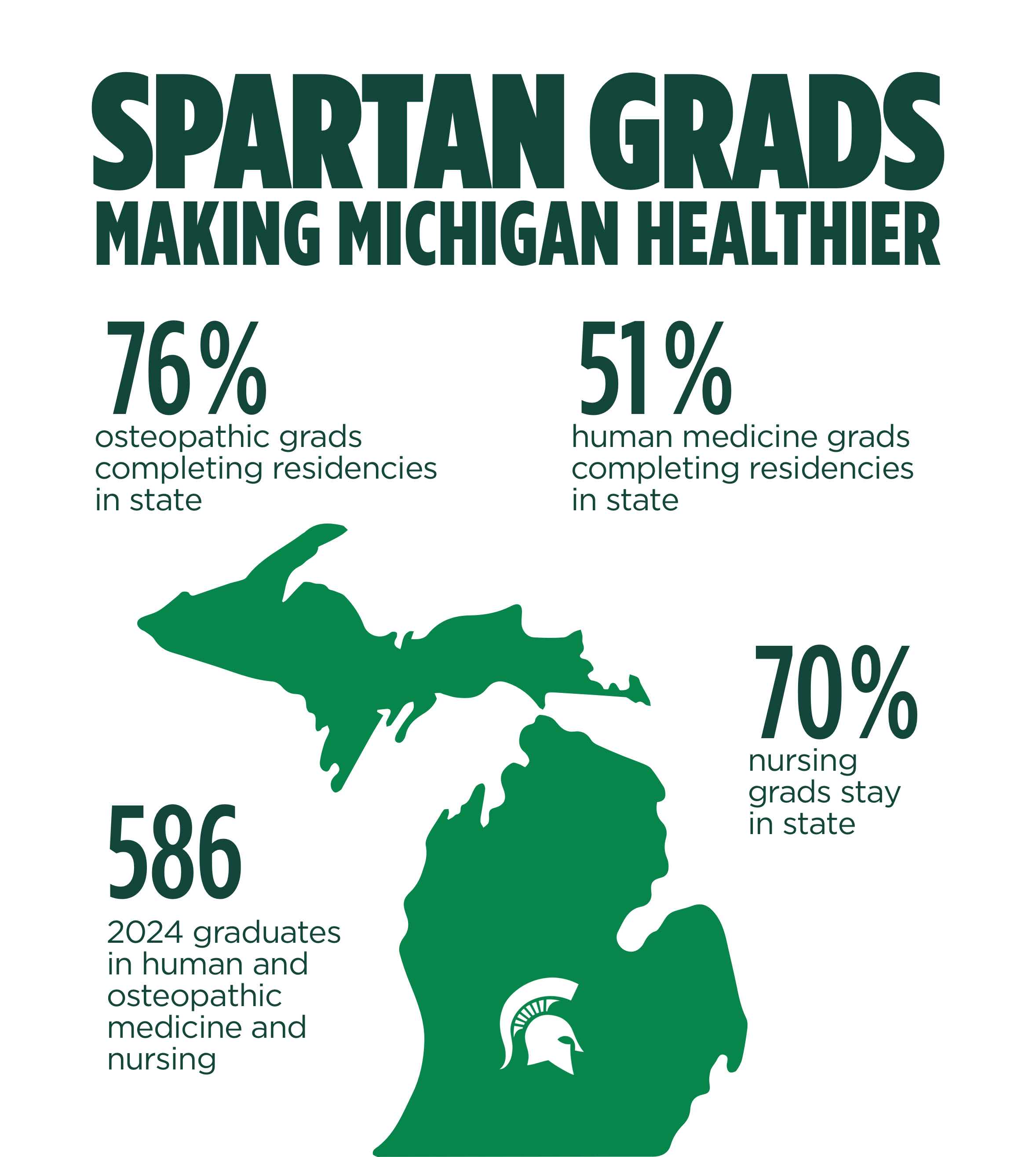
Spartan Grads Making Michigan Healthier; 76% osteopathic grads completing residencies in state; 51% human medicine grads completing residencies in state; 586 2024 graduates in human and osteopathic medicine and nursing; 70% nursing grads stay in state

Students gain experience caring for patients facing health issues prevalent in rural areas, such as higher rates of substance use disorders and chronic conditions. Students also receive training in many settings, from rural hospitals to small outpatient clinics to wilderness survival.

“As someone who was born and raised in rural northern Michigan, the Leadership in Rural Medicine program enabled me to care for the underserved patients that I've always held close to my heart,” says urogynecology fellow Hope Bauer. “The opportunity to be a part of the local community, while learning under the supervision of phenomenal physicians, was incredible.

“Once I complete my fellowship training, I will be joining a practice in western Michigan, where a large portion of the referral base is from rural, underserved locations,” Bauer adds. “The LRM program and my clinical experiences during that time helped me to become the surgeon that I am today.”
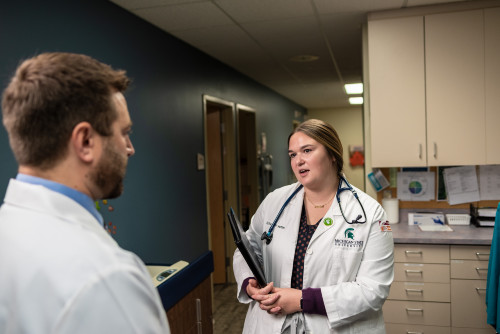
 

Elizabeth Martin, a fourth-year College of Human Medicine student, speaks with physician David Buzanoski
Elizabeth Martin, a fourth-year College of Human Medicine student, speaks with physician David Buzanoski during her clerkship in Midland. Martin and other medical students get hands-on experience and become embedded in the health care community through the Leadership in Rural Medicine program. Photo courtesy of the College of Human Medicine

First- and second-year medical students in the MSU College of Osteopathic Medicine have the opportunity to help medically underserved communities while learning clinical skills through its Community Integrated Medicine. Students also provide patients with information on healthy lifestyles, cancer screenings, vaccinations and other local resources tailored to the unique needs of every patient and community.

In 2024, 44 of the College of Human Medicine graduates have participated in a Leadership in Rural Medicine program and 380 students were active in the College of Osteopathic Medicine’s program.

Another College of Nursing initiative will greatly increase the number of nurses in the state who care for survivors of sexual assault, with a focus on training in rural communities. The program includes in-person clinical experiences in East Lansing and ongoing remote learning and, by the time the program concludes in December 2024, it will have trained more than 200 nurses from across the state, including many in rural areas and the northern part of the state, as well as the Upper Peninsula.
Improving mental health and wellness

The MSU College of Nursing is dedicated to increasing the number of mental health nurses in medically underserved areas by offering stipends to students who want to become psychiatric mental health nurse practitioners. Once they earn accreditation, students who receive the stipend must work for at least two years in a designated medically underserved area in Michigan, many of which are rural.

MIDOCs is a state-funded program to expand graduate medical education and residency positions in select specialties to recruit and retain physicians in underserved areas in Michigan.

The MSU College of Human Medicine is one of four participating medical schools along with Central Michigan University, Wayne State University and Western Michigan University. This year, the College of Human Medicine had six MIDOCs residents.

As part of the MIDOCs program, the MSU Department of Psychiatry created a rural track for psychiatry residents in both the colleges of osteopathic and human medicine who are interested in practicing in rural communities. Residents spend the first two years of the program studying in East Lansing and the last two in Marquette, where they learn and contribute to psychiatric education.

“At MSU, we believe that everyone in every corner of the state deserves access to quality health care because quality of life is so closely related to health,” says Aron Sousa, executive dean for health sciences. “There’s a reason that Spartan doctors, nurses and health care experts remain in Michigan after graduation: they are deeply committed to serving their communities and addressing unique local health and well-being needs.”

Learn more about MSU's statewide impact on the health of Michiganders through stories and data.

MEDIA CONTACTS

Dalin Clark
MSU Economic ImpactMSU Leadership and ImpactHealth ProfessionsHealth and MedicinePublic Health

Collection

more content from this collection

Keeping Families Healthy

Latest News

MSUToday Weekly Update

The MSUToday Weekly Update email showcases how Spartans are making a difference through academic excellence, research impact and community outreach. Get inspired by these stories of innovation, collaboration and determination. Plus, enjoy photos and videos of campus and more MSU content to help keep you connected to the Spartan community.

Sign UpUpdate My Information

Connect With Us

Visit our Facebook pageVisit our page on XVisit our Instagram pageVisit our LinkedIn pageVisit our YouTube pageVisit our TikTok page

Health and Safety

  • MSU Police and Public Safety
  • Olin Health Center
  • Counseling & Psychiatric Services (CAPS)
  • University Health and Wellbeing
  • MSU Health Care
  • Civil Rights and Title IX
  • Our Commitment
  • Center for Survivors
  • Security & Fire Safety Report
  • University Policy on Relationship Violence and Sexual Misconduct
  • Notice of Non-Discrimination, Anti-Harassment and Non-Retaliation
  • Health Care Non-Discrimination Notice

Support Services

  • Disability Resources
  • Supportive Services
  • Learning Resources

Working at MSU

  • Human Resources
  • EBS Login
  • Job Postings
  • Employee Assistance Program

Reports

  • CARES Act Funding
  • Student Achievement and Outcomes

Contact us

517-355-1855

Address

Michigan State University 426 Auditorium Road East Lansing, MI 48824

Follow Us

  • Visit our Facebook page
  • Visit our page on X
  • Visit our Instagram page
  • Visit our TikTok page
  • Visit our LinkedIn page
  • Visit our YouTube page

If you're having accessibility issues, please let us know.

Know More: Campus Safety Information and ResourcesTransparency Reporting: Budget & Salary/Compensation
  • Contact Information|
  • Site Map|
  • Privacy Statement|
  • Site Accessibility|
  • Call MSU: (517) 355-1855|
  • Visit: msu.edu|
  • Notice of Nondiscrimination|

SPARTANS WILL|© Michigan State University|