Rose Kithan-Lundquist, a doctoral student in MSU’s Department of Microbiology, Genetics and Immunology, will be defending her dissertation later this summer. Her research focuses on the microbial communities and immune system of apples — not the trees, but the fruit. She’s studying how the microbiome of post-harvest apples might be manipulated so that apples can be stored for a longer time before they begin to rot.
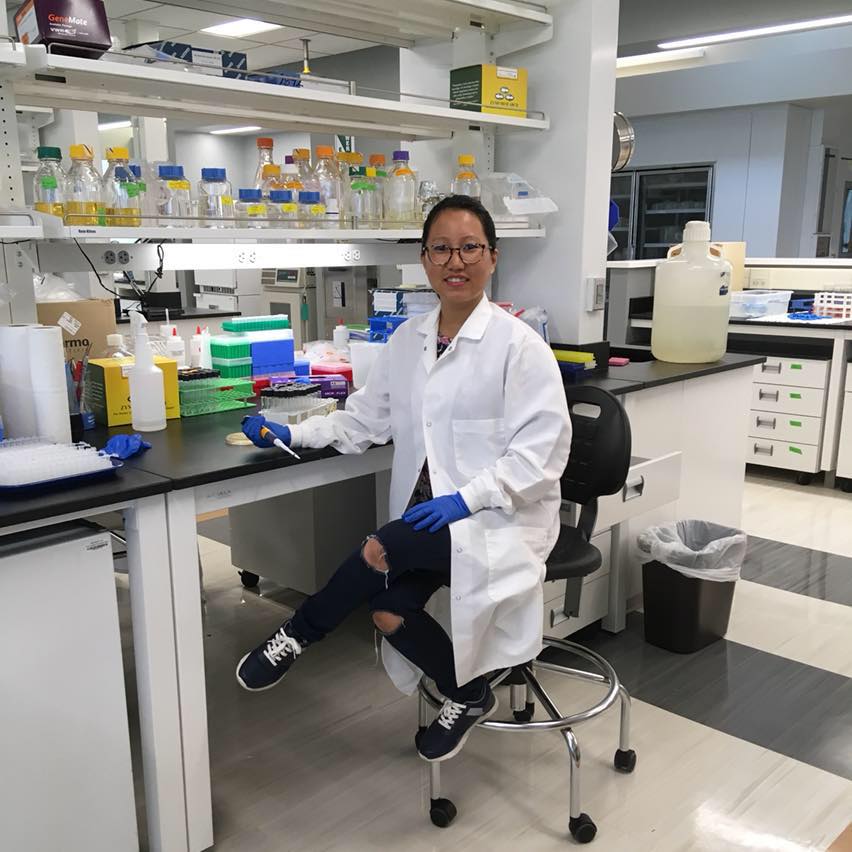
Kithan-Lundquist’s background inspired her work. She was born and raised in Nagaland, a small agrarian state in Northeast India.
“We are a small indigenous tribal people there,” Kithan-Lundquist said. She is part of a large family with five siblings. Her mom was a homemaker, and her dad was heavily involved in agriculture.
“My dad grew up in a very, very small village where they were mostly farmers,” Kithan-Lundquist said. He was one of the first in his village to attend college, where he earned his bachelor’s degree in agriculture, and he eventually went on to become the director of the state’s department of agriculture.
“So, growing up, I got a lot of exposure to that when I would go with my dad to the project sites and villages.”
When Kithan-Lundquist graduated from high school, she decided to follow in her father’s footsteps and chose to attend Nagaland University to pursue her own bachelor’s degree in agriculture. Upon completion of that degree, she went to Tamil Nadu Agriculture University in South India where she earned a master’s degree in agriculture biotechnology.
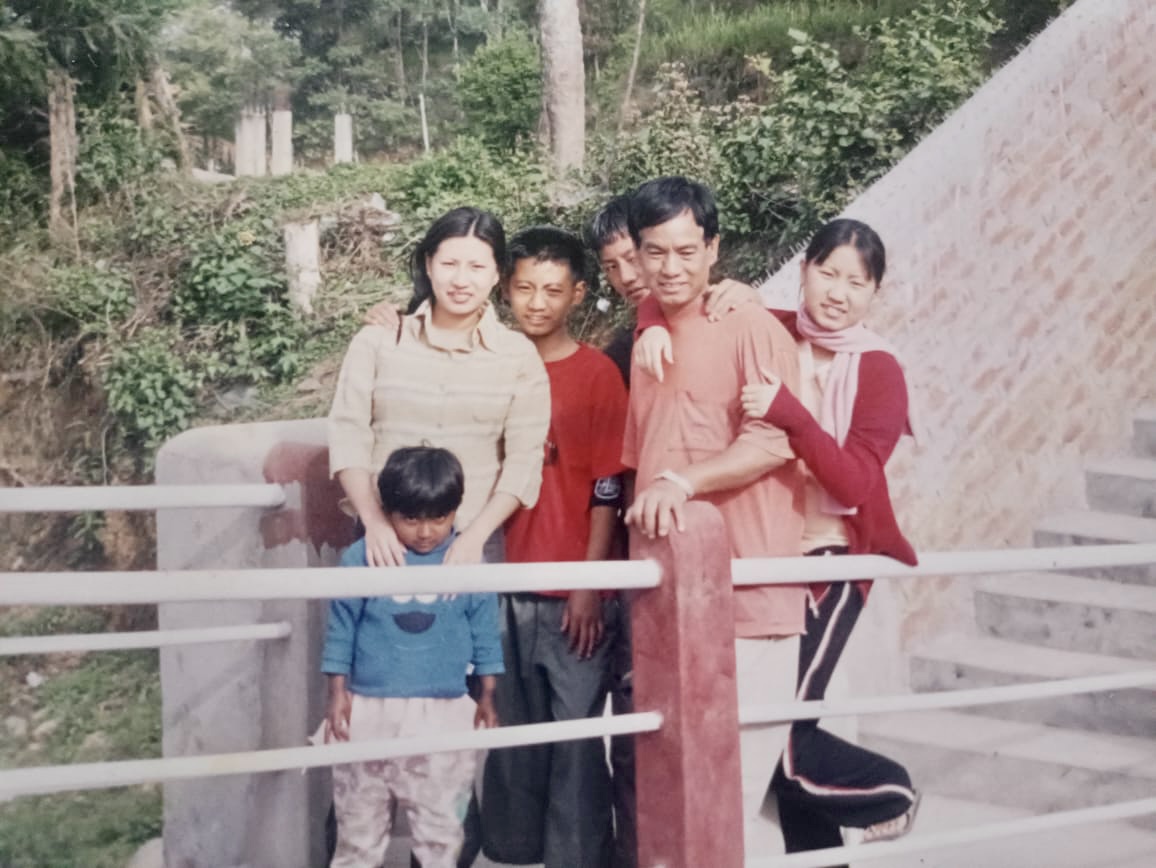
It was while she was working on that master’s degree that she learned about a newly created program providing scholarships for Indian students to complete graduate degrees in agriculture studies at Cornell University. Applicants had to earn admission to Cornell independent of winning the scholarship. Kithan-Lundquist applied to Cornell, was accepted, and received a scholarship that covered everything including flights to and from New York.
“The program offered me the opportunity to go to Cornell for a second master's degree in plant breeding and genetics. I like exploring, and I’m ambitious, so I took it.”
At Cornell, she met the man who would later become her husband. He was working on his Ph.D. at the time.
After earning her degree at Cornell in 2011, Kithan-Lundquist returned to Nagaland to be with her family. While she was home, she worked as a deputy project director in the Agriculture Technology Management Agency, a government extension agency. “I was working with farmers and talking with them about diseases and other things,” she said, “but not really working in the lab.”
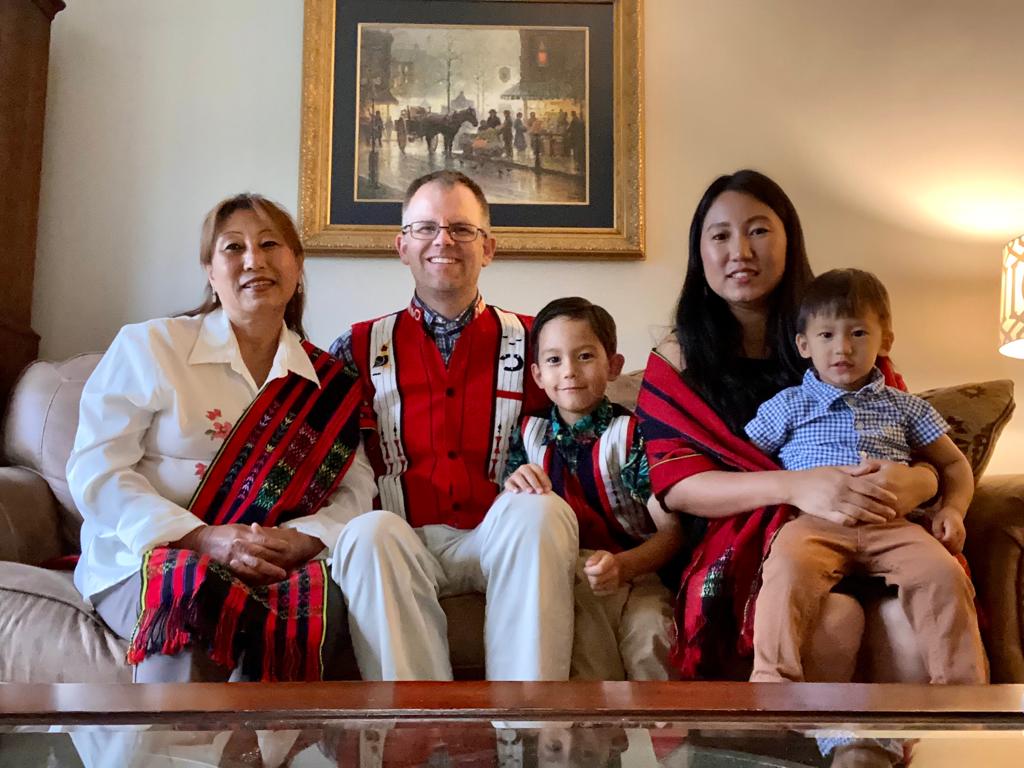
A few years later, Kithan-Lundquist and her husband got married. At the time, he was working on a postdoctoral fellowship at the University of Dusseldorf, Germany, so Kithan-Lundquist joined him in Germany and took a job as a student lab technician.
“There, I started working in the lab again,” she said, “I fell so in love with working in the lab. I thought that this is something that I really want to do for my next career step. I was not really sure if I was good at it, but I really liked it.”
Kithan-Lundquist’s next move came several years later when her husband took a job at the Noble Research Institute in Oklahoma. They had had their first child, and she decided to stay home as a full-time mother for a little while.
However, in 2017 she was hired as a lab technician at the institute, but this time she was studying plant-microbe interactions. It was her first foray into microbiology, and she was hooked.
“My field was always plants, plants, plants, and I really enjoyed it. I wanted to do a Ph.D., but I was not really sure what I wanted to do because I’d studied agriculture, biotechnology, plant breeding,” Kithan-Lundquist said. “But when I was in Oklahoma, I was studying how nitrogen-fixing bacteria enhance the biomass of switchgrass, and that's when I came to recognize I wanted to pursue my Ph.D. in plant-microbe interactions.
“I saw firsthand — when you have these bacteria and fungi, the plants grow so well, but when you don’t have those, the plants are not as healthy. It was so fascinating. It was eye-opening for me to look at microbes in a different way.”
In 2018, when her husband came to MSU to take a faculty position as an assistant professor in the department of biochemistry, Kithan-Lundquist decided to pursue a Ph.D. in microbiology.
Initially, Kithan-Lundquist was working with Sheng-Yang He studying plant-microbe and microbe-microbe interactions using Arabidopsis as a plant model. However, He moved to Duke University in 2020, and although he remains her co-mentor and is deeply involved in her graduate research, Kithan-Lundquist had to transition to a new lab here at MSU.
Now, she is working in George Sundin’s lab studying the apple microbiome and immune response.
Her research has three main objectives. First, she is investigating how the apples' microbial communities and immune response change when the fruit is stored after being harvested. Second, she is researching whether the application of acibenzolar-S-methyl, a substance known to induce an immune response in plants, impacts the microbial communities and shelf life of the post-harvest apple. And third, she is working to determine the change in the microbial communities of the fruit throughout the course of a full season.
The goal is ultimately to find a way to extend the longevity of fresh food. This research would have a tremendous impact on Kithan-Lundquist’s home country.
“An ability to prolong the shelf life of fresh produce would mark a sea change in the economic opportunities for the farmers of Nagaland and reduce post-harvest food loss across the world,” she said.
As a mother, Kithan-Lundquist has faced different challenges than most doctoral students, and those challenges almost caused her to abandon her degree. However, her advisor’s empathy allowed her to continue her work.
During COVID, Kithan-Lundquist got pregnant with her second child. She couldn’t find a daycare provider and consequently thought that she would have to give up on her Ph.D. to take care of her son. She credits Sundin for her ability to continue her research. He let her take one semester as a part-time student with continued pay and insurance.
“I was on the verge of giving up, but both of my PIs were very supportive. I would come in for about 10 hours a week, so I was not completely out of touch with my research, but I was able to take care of my child until he was seven months old,” Kithan-Lundquist said. “That was such a blessing.”
Ultimately, Kithan-Lundquist hopes to work in industry, but she is keeping her options open. “As long as I get to do science and get to be with my family, I am happy."
This story originally appeared on the College of Natural Sciences website.

