Passover is a major Jewish holiday that begins this year on April 22 and ends on April 30. It celebrates the biblical story of the Israelites’ exodus from slavery in Egypt. The highlight of the holiday is a long ritual meal called a “seder” that uses food, song and ritual to explore the themes of liberation, freedom and redemption. A Haggadah (plural, Haggadot) is a book used as a guide through the ritual of the Passover Seder. The Haggadah is the most published Jewish text and has been modified for generations. It's basic text has remained relatively unchanged and is used as a template by Jews seeking to imagine the Jewish story anew.
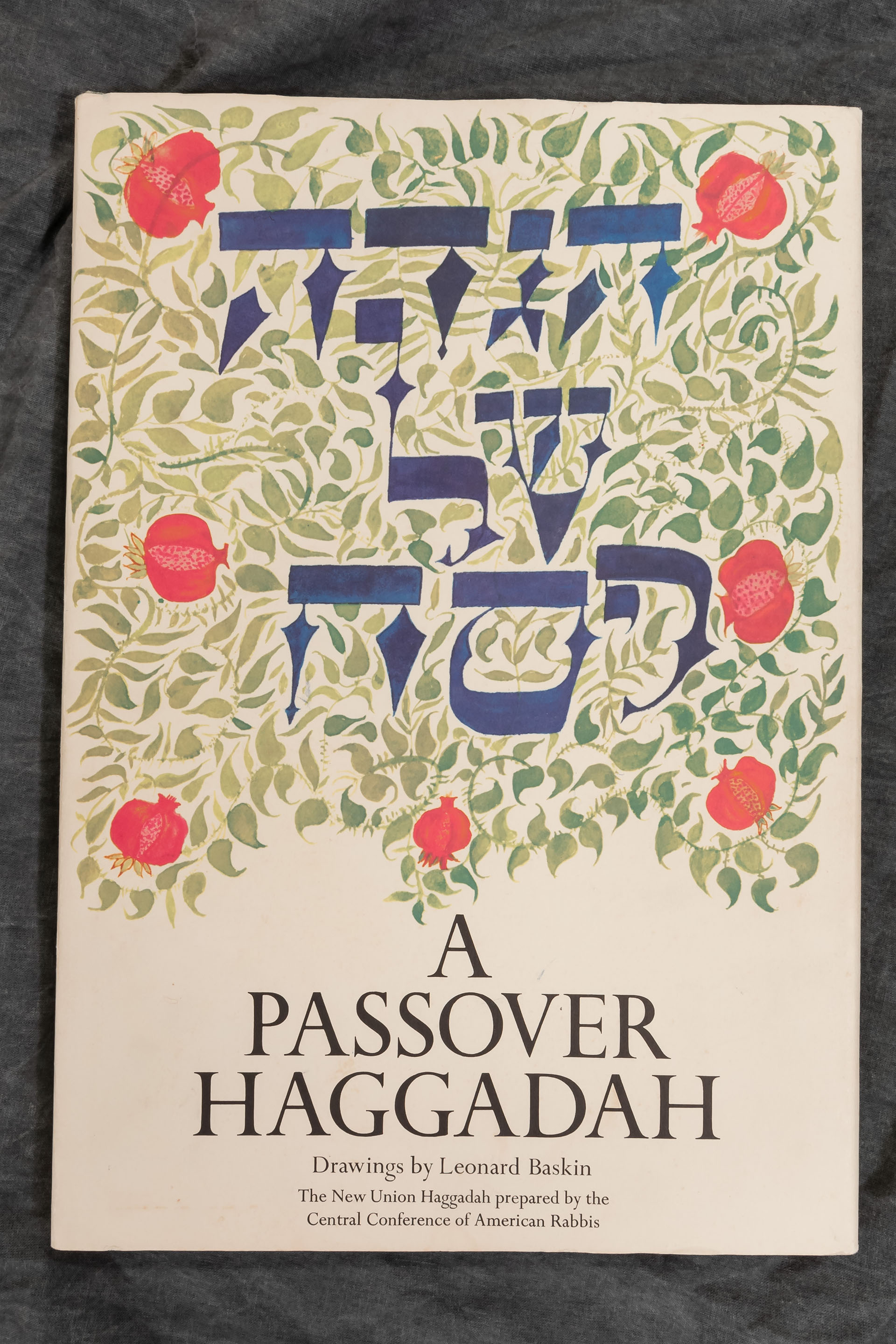
MSU Libraries holds the Sylvia B. Kruger Haggadah collection, which contains published Passover Haggadah mimeographed or photocopied versions intended for local use, and facsimiles of early printed books. These were produced all over the world between the 1920s and the 2000s and reflect diverse Jewish orientations and movements, including Orthodox, Conservative, Reform and Reconstructionist Judaism, Humanistic Judaism, feminism, the struggle for Soviet Jewry, the Civil Rights Movement in the United States, interfaith efforts and other influences on and changes in Jewish life in the 20th century. The collection also includes Haggadot rewritten and illustrated for children.
“The MSU Libraries Murray and Hong Special Collections is home to the much used and beloved collection of Haggadah donated by Sylvia Kruger — these texts help contextualize the reminders of the journey and the purpose of freedom. With more than 80 volumes, the collection actively reflects geographic and linguistic elements of the global need for peace,” said Leslie McRoberts, head of the Stephen O. Murray and Keelung Hong Special Collections and interim head of University Archives and Historical Collections.
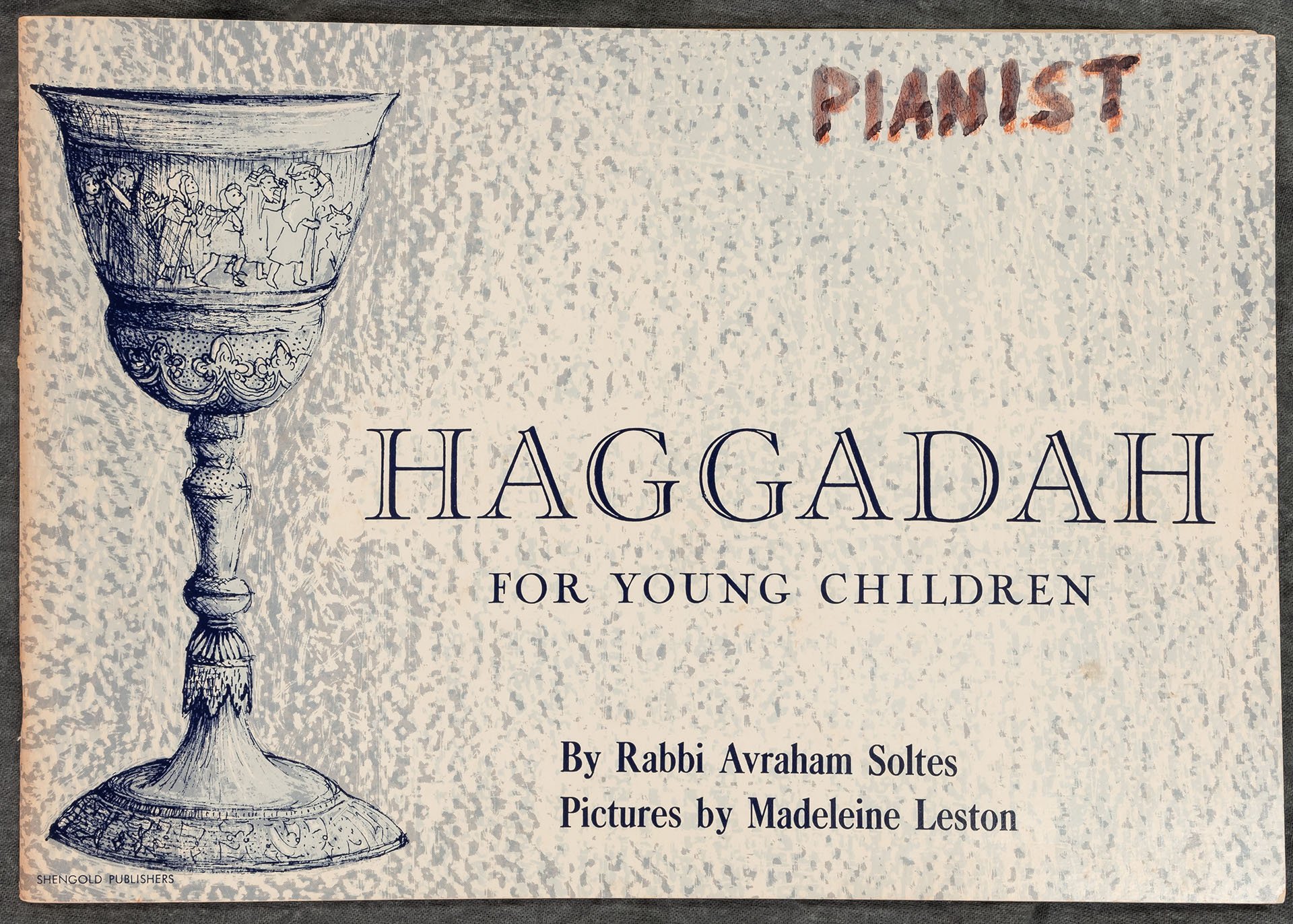 Photo: Austin DeRaedt. Courtesy: Sylvia B. Kruger Haggadah collection
Kruger compiled the Haggadah collection, bringing the pieces together throughout her life. She was a librarian, parent, grandparent and active member of the local Jewish community, and she collected Haggadot as part of her personal Judaica collection.
“I got a sense of how warm and welcoming she was when I visited her home. She described to me neighborhood gatherings where she invited people into her sukkah, an outdoor structure or booth erected and decorated for the fall harvest holiday of Sukkot,” said Middle East and Religious Studies Librarian Deborah Margolis, who was invited to Kruger’s house to see the collection. “Because the collection is so large and diverse, I don’t think all of the Haggadot were used at her Passover Seders; I think she herself wanted to appreciate and share the diversity of Jewish life, culture, communities and practice through this collection.”
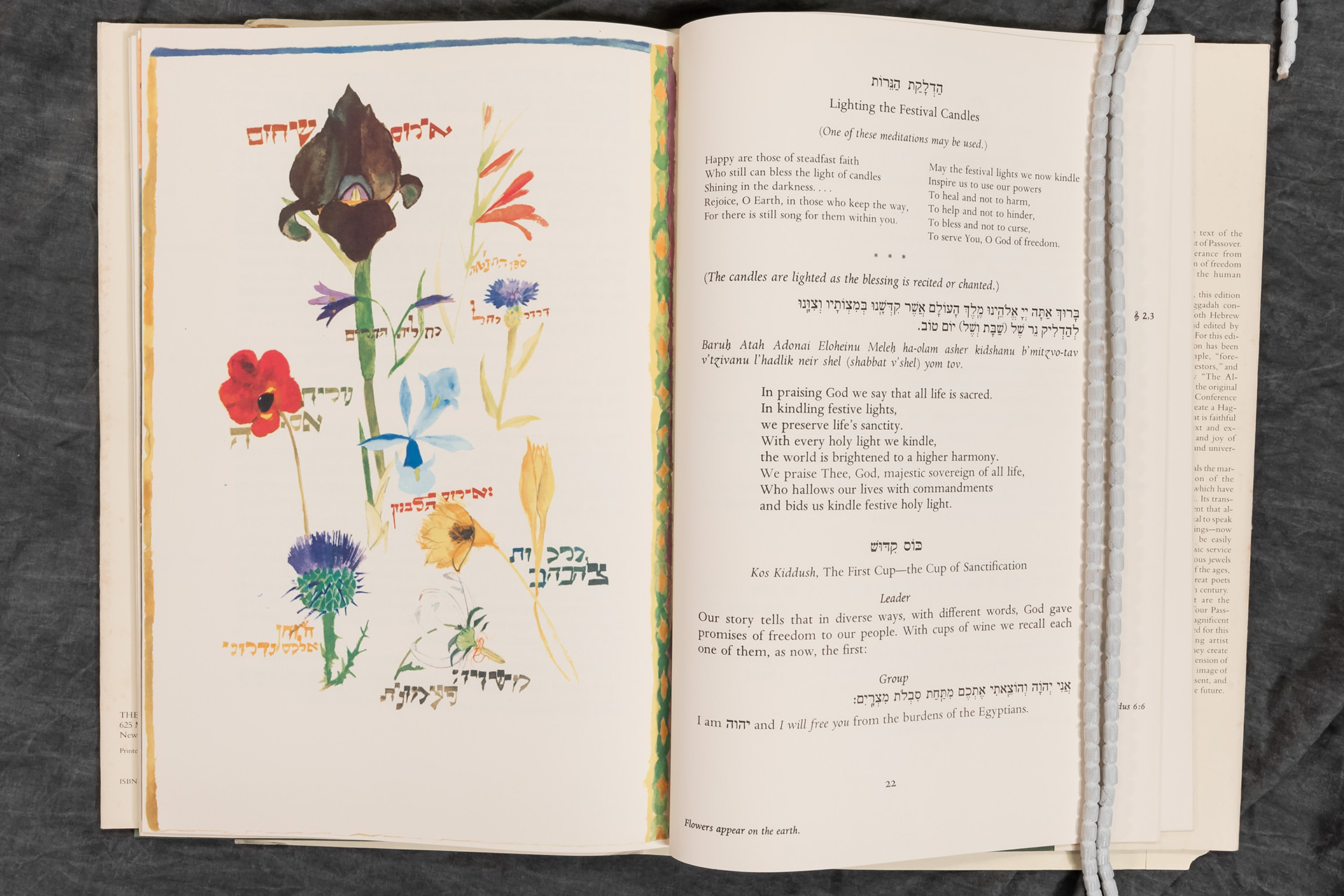
Photo: Austin DeRaedt. Courtesy: Sylvia B. Kruger Haggadah collection
Margolis’ visit to Kruger’s home inspired her to bring the collection to MSU. When she saw how diverse the collection was and how the Haggadot reflected Jewish life in the U.S. and connections with Israel and Europe, she thought that MSU faculty would be interested in using the texts to teach about Jewish history and life. This is exactly what Laura Yares, assistant professor of Religious Studies, does in her REL 310: Judaism class. For five years, she has used the collection as a capstone project for her students.
“All semester, we look at the ways that Judaism has evolved and has been reimagined by Jews in different historical, geographical and cultural contexts,” said Yares. “The Haggadah collection is a great primary source to illustrate that, and so for their final project, students choose a Haggadah to analyze and then use that analysis either to write a paper or as the inspiration for a creative project. I have had students do amazing creative work inspired by different Haggadot.”
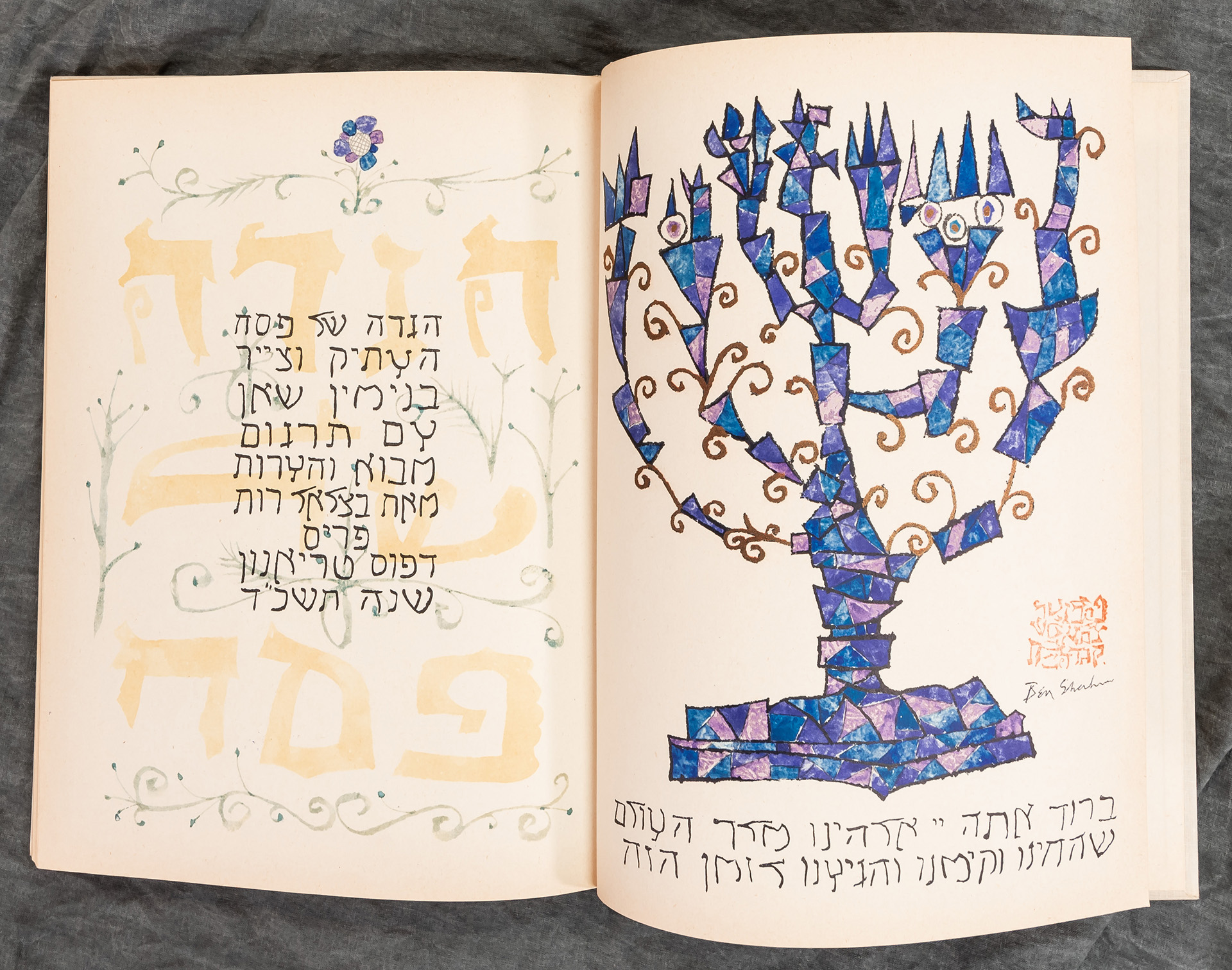 Photo: Austin DeRaedt. Courtesy: Sylvia B. Kruger Haggadah collection
The Haggadah collection holds great value in sharing an important aspect of the Jewish faith, and its presence at MSU has served as a catalyst for growing the collection — begetting deeper education and remembrance.
“As a consequence of being the home to the Kruger Haggadah collection, I have purchased additional Haggadot that help to broaden the already quite diverse picture painted by our established collection,” said Tad Boehmer, curator of rare books for Murray and Hong Special Collections. “In short, because of Sylvia Kruger and her passion for collecting these texts in their many forms, we regularly acquire more for the collection. These include Haggadot from a range of places and time periods.”

The Haggadah tells the story of liberation while offering ritual opportunities to reflect on what liberation means and the price it may extract from others. The collection is available to anyone who makes an appointment with the library.
“The Sylvia B. Kruger Haggadah collection is a beautiful example of MSU Libraries’ rich resources that celebrate diversity and inclusion. As a librarian, Kruger surely understood the importance of stories to create meaning and sustain knowledge across generations,” said MSU Libraries Associate Dean for Diversity, Inclusion and Organizational Development Alexandra Rivera. “We are fortunate that she chose to collect and preserve these Haggadot and to honor MSU Libraries with this important and inspirational collection of narratives of liberation.”
“I think that there is something special about handling these or other cultural heritage items; you can connect viscerally, in addition to connecting intellectually, to the content,” said Margolis. “I hope people, especially students, will gain an appreciation of the diversity of Jewish life and history by looking at these Haggadot. Students can also examine Haggadot like any information source: who published it, when and where. Who was the intended audience for this particular Haggadah?
“They can also ask what language or illustrations make a Haggadah different from other Haggadot and similar to other cultural artifacts from its time. Scholars may use them to study the history of Jewish practice in a particular community or as evidence of trends in Jewish religious observance or participation in political life.”

