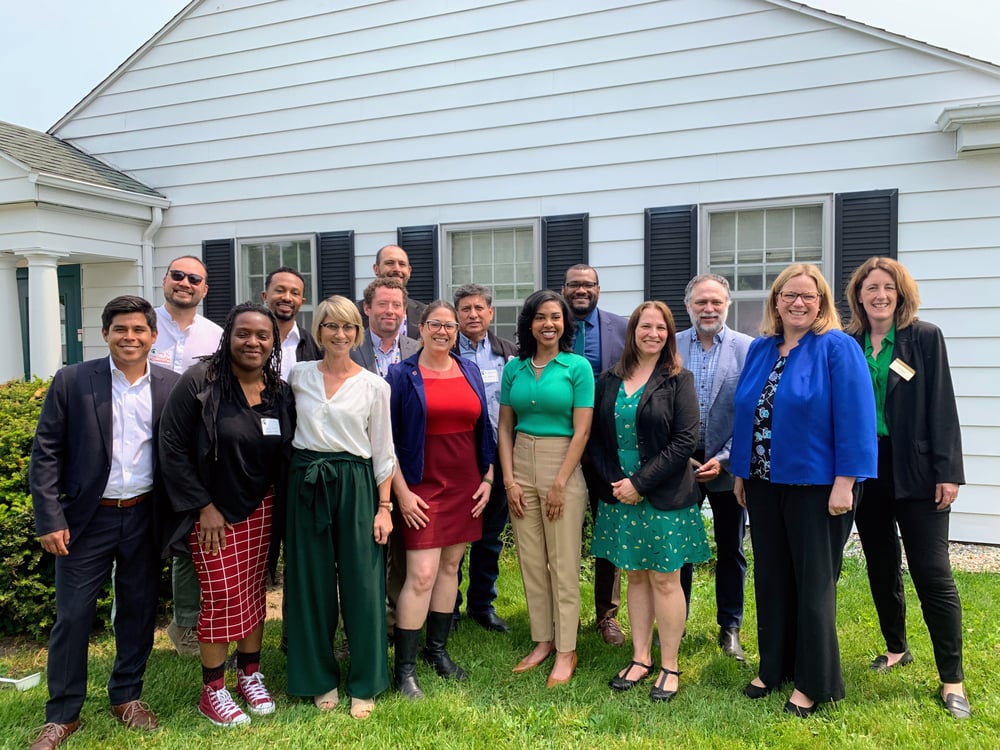
Named in May 2023, the Michigan State University Center for Regional Food Systems is the lead organization for the Great Lakes Midwest Regional Food Business Center. As one of 12 Regional Food Business Centers funded by the United States Department of Agriculture, this Center will support food and farming entrepreneurs throughout Illinois, Indiana, Michigan, and Wisconsin. Along with network coordinators representing each state, the Menominee Indian Tribe of Wisconsin will provide tribal coordination throughout the region. In July 2023, CRFS received $20 million from the USDA to launch and sustain this Center over the next five years. The partners will distribute over half of this award to entrepreneurs in business assistance and Business Builder grants. Across the region, the Great Lakes Midwest Regional Food Business Center will provide localized support to small- and mid-sized food and farm businesses owned by individuals from historically marginalized communities and in priority places.
“We will be working to make the funds and technical assistance that farmers and food businesses need more accessible,” Colleen Matts, rising Director of the Great Lakes Midwest Regional Food Business Center, said. After several years as the Director of Farm to Institution Programs at CRFS, Matts will transition in her role to lead this Regional Food Business Center. “The Business Builder awards will be going to farmers and food business owners, prioritizing those who, in USDA terms, have been underserved for decades. And with our partners, we aim to create a stronger, more connected network of diverse providers who can offer assistance to these entrepreneurs across the region.”
The USDA Regional Food Business Centers have three main responsibilities: coordination, technical assistance, and capacity building. Each Center aims to provide localized assistance to support entrepreneurs in connecting with local and regional supply chain partners, such as food hubs, institutions, and distributors. By providing pertinent and accessible business support coupled with Business Builder Awards, the Centers will help food and farm business owners access new markets. Through this initiative, the Great Lakes Midwest Regional Food Business Center aims to increase the sustainable success of food and farming businesses and the resilience of local and regional food systems.
The Center comprises state and regional network coordinators to accommodate the entrepreneurs' diverse needs. For regional tribal support, the Menominee Indian Tribe of Wisconsin’s Department of Agriculture and Food Systems, in partnership with the Great Lakes Intertribal Food Coalition, will serve Indigenous farmers and businesses. Across the four states, two non-profit food councils and two land grant university entities will assist entrepreneurs local to their work; Chicago Food Policy Action Council will lead in Illinois, the Northwest Indiana (NWI) Food Council will support Indiana, and the Food Finance Institute of the University of Wisconsin System focuses on Wisconsin. Coupled with supporting Michigan food and farm businesses, CRFS will coordinate the Great Lakes Midwest Regional Food Business Center.
Throughout the first two years of this five-year cooperative agreement, the five network coordinators of the Regional Food Business Center will collaborate to develop as a group and set their initial collective direction together. “We have some relationships among the regional partners already, but we certainly need to do a lot more together to get to know each other, strengthen relationships, foster trust, and center equity,” Matts said. “We need to talk through and come to agreement on things like governance and data sovereignty that will be important to guide our work with communities going forward.”
As stated by Dr. Jahi Johnson-Chappell, Director of CRFS, data sovereignty ensures that the community groups that will be served through this project do not have personal information extracted from them or taken out of their control. This principle was raised within CRFS by Food Systems Strategy Design Specialist Keesa Johnson and will guide the building phase of this Regional Food Business Center as the network coordinators learn the needs of the entrepreneurs in their area. Together, they will create methods to operationalize the provision of assistance and grants in supportive and accessible ways.
“Technical assistance is a very broad term,” said Jamie Rahrig, Outreach Specialist for CRFS. “A program partner once said that it’s anything a business owner needs at a specific time to start or scale their business.” This business support can include coaching, connections to new markets, and accessing training and resources across the region. Additionally, the Great Lakes Midwest Regional Food Business Center will strive to offer various methods of engagement, including resource sharing with language-appropriate materials, webinars, and more. According to Matts, the Center aims to be responsive to the needs that they hear of from food and farming entrepreneurs.
To support capacity building, the Great Lakes Midwest Regional Food Business Center will distribute over $10 million in technical assistance services and Business Builder awards. With individual awards of up to $100,000, this funding can be used towards expenses to support the growth and resilience of their business, such as business planning activities, software, equipment, and other needs related to building markets. Small- to mid-sized food and farm business owners from historically marginalized communities will be prioritized for this assistance. The partners intend to have Business Builder grant applications available by late 2024.
Leading the Great Lakes Midwest Regional Food Business Center will be complementary to the community, state, and national efforts of CRFS. To develop regionally integrated sustainable food systems, CRFS engages in applied research, education, and outreach dedicated to supporting equitable and just food and farm business development through providing clear funding opportunities, building connections to new market channels, and other business support. As CRFS grows to lead this Regional Food Business Center, they plan to hire five new positions in early 2024. These positions will add needed person-power and skills to build its capacity to connect available resources to food and farm business entrepreneurs. Across the next five years, CRFS hopes to create transformative changes within the state and region to lead towards their mission of developing integrated local food systems that are equitable, sustainable, diverse, healthy, green, and affordable.
“With this new Regional Food Business Center, we would like to see Black, Brown, and Indigenous People of Color accessing the services and funding they need to grow and scale their businesses in the ways they want and seek while ensuring more locally produced foods are available in our markets,” Rahrig said.
This story originally appeared on the College of Agriculture and Natural Resources website.

