This story contains references to lives lost and sensitive topics regarding violence perpetrated against women.

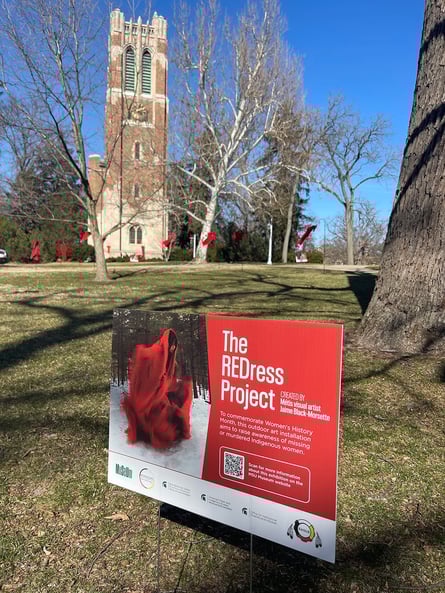
Women’s History Month is a time dedicated to recognizing women’s contributions and efforts throughout history. This observance begins on March 1, when people on MSU’s campus may notice 60 red dresses installed along West Circle Drive in areas around the MSU Museum and Beal Botanical Gardens. These dresses are part of an art installation titled “The REDress Project” by Métis artist Jaime Black-Morsette, which comes to MSU to commemorate Women’s History Month.
Black-Morsette created the project in 2009 in response to the ongoing crisis of missing and murdered Indigenous women and girls in North America.
Indigenous women in Canada and the United States face disproportionately high rates of violence, which is why Black-Morsette became inspired to create this art piece. The project raises awareness of the issue at hand and serves as a visual reminder of the growing number of those experiencing violence.
“Through the haunting beauty of suspended red dresses, ‘The REDress Project’ affirms our commitment to amplifying Indigenous voices, advocating for their rights and standing in solidarity against the epidemic of violence on Indigenous women and girls, demanding justice and accountability,” said MSU Native American Institute Interim Director Kevin Leonard, who played a role in connecting with Black-Morsette.
The project has traveled to over 50 locations globally, visiting museums and universities. To bring the exhibition to MSU, the MSU Museum collaborated with the campus Native American Institute, the American Indian and Indigenous Studies program, Beal Botanical Garden, EAGLE, or Educating Anishinaabe: Giving, Learning and Empowering, and Project 70/60 from the Office for Institutional Diversity and Inclusion.
The red dresses for the exhibition at MSU come from Black-Morsette’s collection, which has been gathered over time and from donations from local Native communities.
“MSU is sadly no stranger to issues of violence or sexual assault. And as we work to heal and do better as a community, having this installation here reminds us all of the resiliency in loss and the ways we all might work to raise visibility and make change,” said Kristin Arola, interim director of the American Indian and Indigenous Studies program and Gillmor Endowed Professor in Professional and Public Writing.
Raising visibility and making change is precisely what Black-Morsette had in mind when creating the project. The dresses are left empty, without mannequins, intentionally. They symbolize the absence and presence of Indigenous women and girls affected by violence while creating a platform to further the conversation.
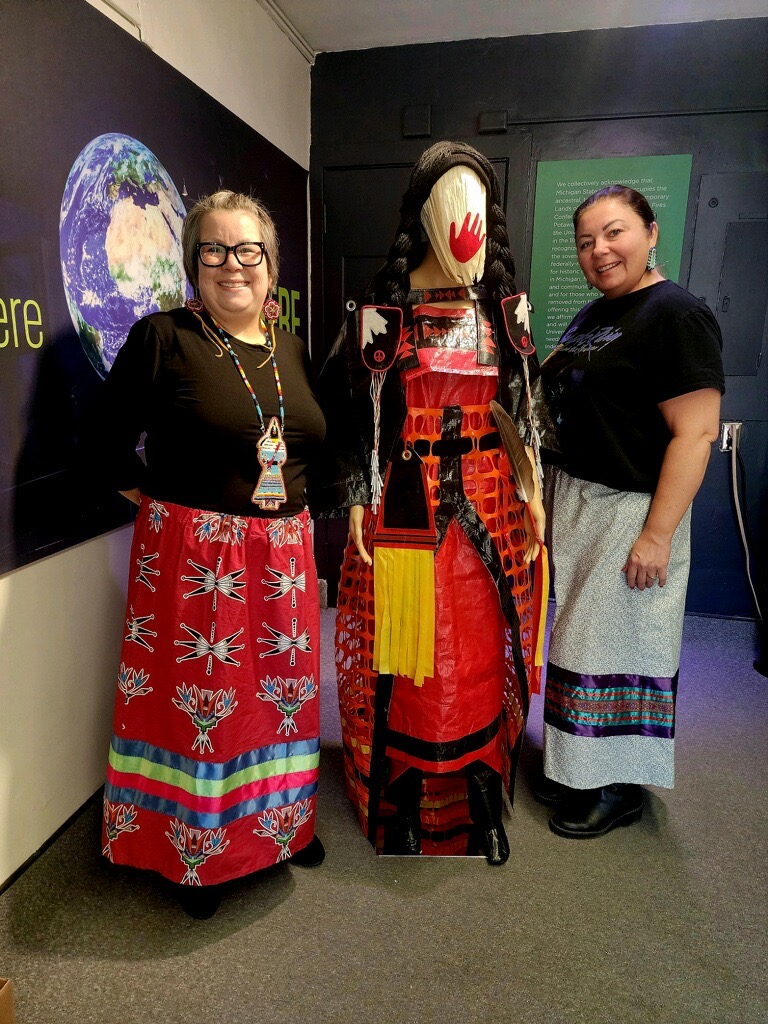
Becky Roy (left), Lansing resident and Wiikwemkoong First Nation Tribal member, helped create an art installation alongside the REDress exhibition to draw attention to the issue. As Roy worked on it, the project transformed and gathered interest from her friends in the Native community, including Rachel Rodgers (right), Wiikwemkoong First Nation Tribal member, who assisted with the setup. In addition, the following women community members contributed to the piece: Gloria Gizhiiwegdiziikwe Mainville Manitowabi, Ojibwa of Couchiching First Nation; Dr. Nichole Keway Biber, WaabanAnang, LTBB Waganakising Odawa, Mishiike Dodem; Roxanne DeLand-Phillips, LTBB Waganakising Odawa, Little Traverse Bay Band of Odawa Indians; Kathy Yates, Nokomis Board Member; Michelle DeLand, LTBB Waganakising Odawa; Carol Howard, Waabananangoons, LTBB Waganakising Odawa.
The Bureau of Justice reports that when Indigenous women are victims of violent crimes, 88% of the perpetrators are non-Indigenous. In the U.S., federally recognized Tribes lack jurisdiction to prosecute non-Indigenous people for crimes committed on Tribal land.
“Highlighting issues important to American Indian and Indigenous communities is an important act for MSU,” said Arola. “If we are to truly hold MSU accountable to the needs of American Indian and Indigenous peoples, as the AIIS land acknowledgment states, part of that work is leveraging our resources to raise awareness about issues important to our communities.”
To do this, the Office for Institutional Diversity and Inclusion, or IDI, with help from Arola and MSU Dialogues Coordinator Jade Richards, has sponsored a screening of the documentary “Bring Her Home” on March 12 from 5:30 to 8 p.m. at 108 Bessey Hall. The film follows three Indigenous women as they work to honor and bring about justice for their relatives who have been victims of the ongoing crisis.
“Both the art installation and the documentary bring awareness to the issue of MMIW [Missing and Murdered Indigenous Women] and shine a light on the loss and grief communities feel,” said Brady Velazquez, equity and compliance coordinator for IDI. “Jaime Black-Morsette said in an interview that she picked the color red because someone told her that red is the only color spirits can see, so both the art installation and the documentary act as a way to show and honor those lost — to symbolize that they aren’t forgotten and that people are fighting for their justice.”
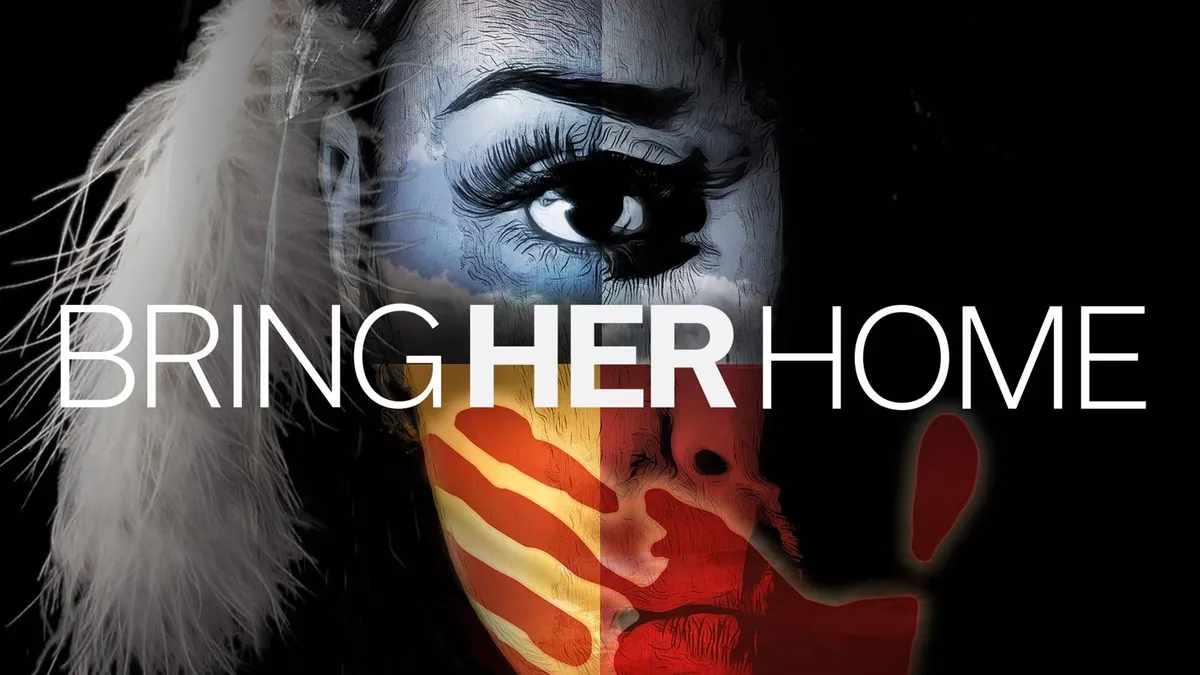
The film event will begin with a dinner catered by a local Native-owned food truck with Indigenous dishes. After the documentary screening, viewers will have the opportunity to engage in a thoughtful and productive conversation about the crisis. The film does contain depictions of violence, trauma and sensitive topics, so viewers are encouraged to step out and take breaks if needed.
“The MSU Museum is honored to present this installation in collaboration with our campus partners,” expressed MSU Museum Director Devon Akmon. “This project embodies our vision of an MSU community, inspired and informed by the arts, working collaboratively, creatively and equitably to solve problems and pursue a better world for all.”
Register for REDress Project events:
Opening reception
Friday, March 8, 2 to 5 p.m. at the MSU Libraries Green Room
Join the opening reception, featuring a talk with MSU School of Social Work Associate Professor Emeritus Dr. Suzanne Cross of the Saginaw Chippewa Tribe on “Murdered and Missing Indigenous, Women, Girls and Two-Spirit.” The talk starts at 2 p.m., followed by the reception at 3 p.m. Register for the talk and reception on MSU Museum.
“Bring Her Home” film screening and discussion
Tuesday, March 12, 5:30 to 8 p.m. at 108 Bessey Hall
Participate in the film screening and discussion of “Bring Her Home,” which follows three Indigenous women — an artist, an activist and a politician — as they fight to vindicate and honor their missing and murdered relatives who have fallen victim to a growing epidemic across Indian country. Despite the lasting effects of historical trauma, each woman must search for healing while navigating the racist systems that brought about this very crisis. Register on Eventbrite.
Meet REDress Project artist Jaime Black-Morsette
Thursday, March 14, 1 to 2 p.m. on Zoom
Presentation - REDress: Resistance Through Art — Bringing Awareness to the Crisis of Murdered and Missing Women through Art by Métis artist Jaime Black-Morsette. Register for the event on Zoom.
“The REDress Project” will run March 1 through 17. For more information on the installation, visit the MSU Museum website.

