Emerging diseases in plant agriculture sometimes appear without warning. What are Michigan farmers to do when one pops out of the blue and impacts their industry?
For 25 years, Project GREEEN has aided in the quick counter to some of Michigan’s most pressing issues surrounding infectious plant diseases. As Michigan State University scientists remain in direct communication with industry professionals and growers, they stay up to date on what pestilent diseases are threatening crop yields. In turn, they can apply for funding through Project GREEEN — Michigan’s cooperative plant agriculture initiative housed at MSU and comprised of Michigan’s Plant Coalition, the Michigan Department of Agriculture and Rural Development, MSU AgBioResearch and MSU Extension — to conduct novel research into diseases that have previously never (or rarely) been studied in the state.
“I think where Project GREEEN is so important is that it allows us a rapid response time,” said Mary Hausbeck, a University Distinguished Professor in the Department of Plant, Soil and Microbial Sciences. “On the plant pathology side, we’re often in the thick of it from the beginning. We aren’t necessarily hearing warnings from other states of a particular pathogen coming onto the horizon. That’s typically not how it works for us in vegetables and ornamentals.
“We are often responding directly to crop loss, which means growers’ livelihoods all of the sudden are greatly at risk.”
For example, the unexpected arrival of downy mildew roughly 20 years ago presented significant hardship to Michigan’s cucumber industry. Since the 1960s, genetic resistance against downy mildew has been bred into cucumbers, making the disease inconsequential for farmers.
But in 2005, it unexpectedly found a way to overcome resistance, striking farmers’ crops hard.
“It roared across the state devastating our crops,” Hausbeck said. “How could this happen? Where had the resistance gone that had held since the 1960s?”
Hausbeck leveraged Project GREEEN funds with federal dollars from the U.S. Department of Agriculture’s National Institute of Food and Agriculture, or USDA NIFA, to design spore traps that detect the presence of disease in the air.
Downy mildew, Hausbeck described, is the “quintessential snowbird.” It leaves for the winter and comes back in the spring through air currents. Partnering with growers across the state allowed Hausbeck to introduce spore traps on their farms. In doing so, farmers were able to better understand and prepare for when they needed to spray their crops with fungicides, a practice they prefer to limit because of the cost and the desire to produce healthy crops using as minimal spray as possible.
The latest funds from Project GREEEN have assisted in advancing this technology to the point where growers not only can detect downy mildew spores in the air, but also know details of the pathogen that previously weren’t able to be known so early, such as which cucurbit — cucumbers, pumpkins or squash — will be most susceptible.
“Project GREEEN not only helped us triage an amazingly wild situation that happened in 2005, but it also helped us get our legs under us so Michigan could continue to be number one in the nation in cucumber production,” Hausbeck said. “I think it’s a great success story.”
Similar technology has recently been built to monitor late blight, a devastating foliar disease that impacts potato and tomato crops. Jaime Willbur, an assistant professor in the Department of Plant, Soil and Microbial Sciences, said she’s used Project GREEEN funds to deploy spore samplers on Michigan commercial potato farms and at an inoculated research site on campus (in accordance with the Michigan Potato Industry Commission’s risk management agreement) to test if they can accurately detect late blight.
The late blight epidemic in Michigan has been mild for the past few years due to dry summers, but it was detected late in the 2022 growing season, and growers were worried that (unlike downy mildew) it would lie dormant during the winter and carry over in volunteer potatoes to the 2023 growing season.
Luckily, it didn’t — a conclusion that was confirmed by the Project GREEEN-sponsored spore samplers.
“We didn’t have late blight detection in the commercial areas we worked on last summer,” Willbur said. “This was supported by our sampler findings.”
With support from the Michigan Potato Industry Commission and Project GREEEN, the MSU Potato Pathology Program was able to optimize protocols for a rapid turnaround of information back to stakeholders.
Martin Chilvers, a professor in the Department of Plant, Soil and Microbial Sciences, agreed that Project GREEEN funding has been instrumental in expediting solutions for the onset of atypical diseases in the state.
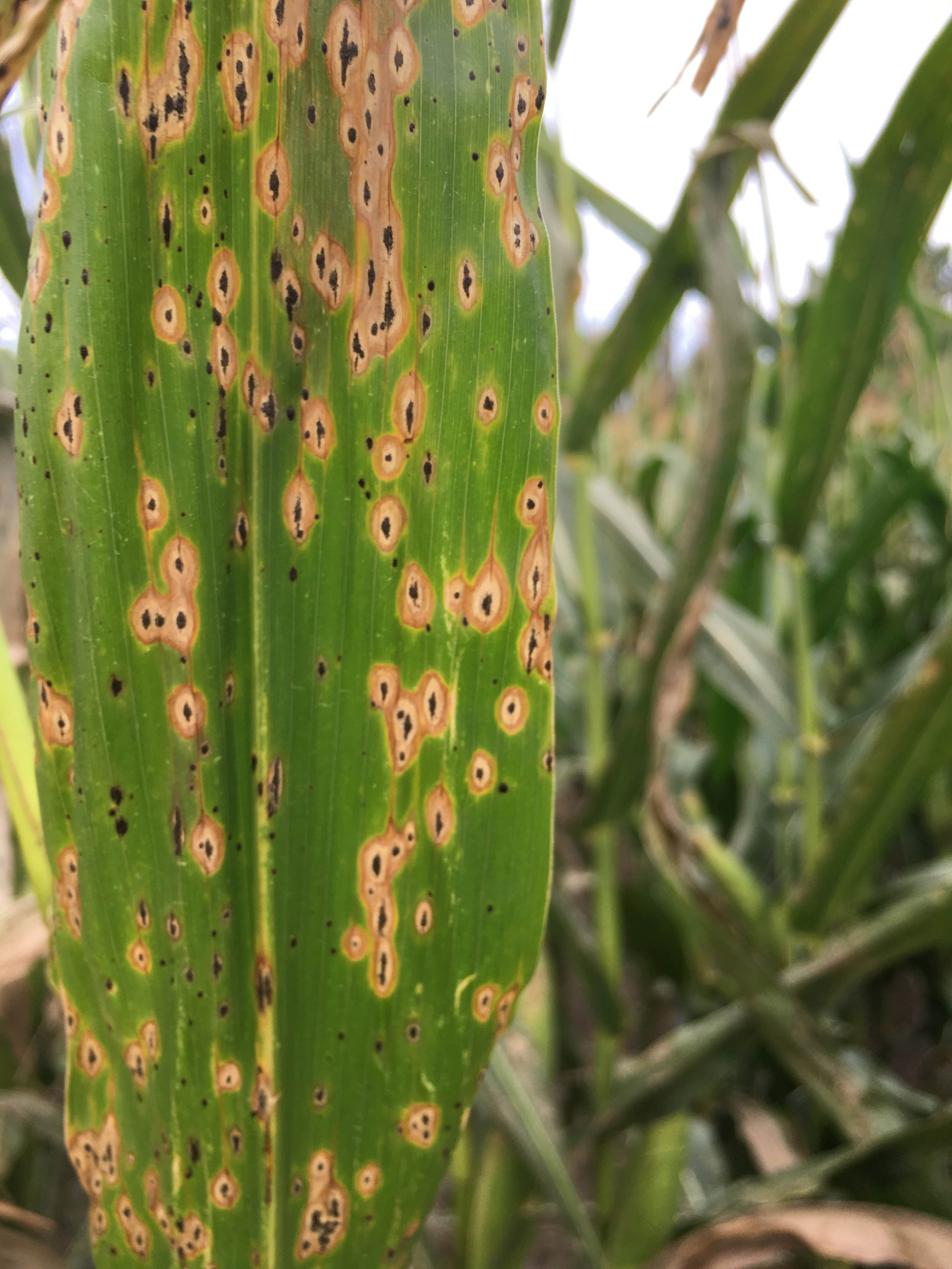
In 2016, tar spot — a fungal disease that induces small, black lesions on corn leaves — made its way north to Michigan. In 2018, it severely plagued farmers. 
Chilvers attributed the flexibility and nimbleness his lab had in quickly shifting focus toward the disease to Project GREEEN and the leveraged funding from the Corn Marketing Program of Michigan, or CMPM. He utilized the funds to hire graduate students who committed their time to study tar spot management strategies. Later, Chilvers said he integrated the funds with dollars from the Foundation for Food and Agricultural Research, as well as from the National Predictive Modeling Tool Initiative, to understand the disease at a deeper level.
“Tar spot has been the poster child in showing what Project GREEEN has allowed our lab to do on such short notice,” Chilvers said. “We’ve figured out which fungicides work for management and when they should be applied, and which hybrids are susceptible or resistant to the pathogen.”
Kristin Poley, director of research and agronomy for the CMPM, said that in addition to having the capacity to coordinate research and discover solutions to diseases at a prompt pace, Project GREEEN also boosts the timely facilitation of information to growers. She said this was key in managing tar spot.
“Most importantly, Project GREEEN allows us and our researchers at MSU to better use our connection to MSU Extension and get those results immediately out to farmers,” Poley said. “It’s not enough that we’re doing the work on emerging diseases. We must be able to get those results out to our farmers, and that’s what this partnership is good at.”
Federal funds back Project GREEEN-supported research into safeguarding Michigan fruit
About 10 years ago, high density planting became a popular method apple growers began using to manage their orchards. Smaller trees planted about 18 inches apart have given growers the chance to optimize their yield by planting more trees and reducing labor efforts.
While having trees planted so close together has benefited growers, it also has caused George Sundin, a University Distinguished Professor in the Department of Plant, Soil and Microbial Sciences, to stay alert.
“The problem — from my standpoint as a plant pathologist — is that having trees planted close together is optimal for plant diseases to spread,” Sundin said.
Taking advantage of Project GREEEN funds, Sundin studied how to protect apple trees from fire blight, a bacterial disease that can wreak havoc on both apple and pear orchards. Sundin discovered a way to manage the disease under the given conditions by supplying trees with a specific combination of a growth inhibitor and resistance inducer — chemical and biological substances that, respectively, stop a plant’s growth and enhance its ability to fight off pathogens.
The baseline understanding of this strategy helped Sundin secure a $5.2 million USDA NIFA grant in 2020 to examine it further.
“In order to get federal funding, you need preliminary results, and Project GREEEN feeds into that,” Sundin said. “More importantly, though, it helps us do the critical and timely work we need to get results right away.”
Similarly in 2023, Timothy Miles, an assistant professor in the Department of Plant, Soil and Microbial Sciences, received a $3.95 million USDA NIFA grant to build upon his research into blueberry fruit rot.
Anthracnose fruit rot, a fungal disease that presents itself as spore masses on the surface of blueberries and other fruit, has been endemic in Michigan for decades. Several years ago, Miles learned that the fungal pathogen had become resistant to a certain class of fungicides and was appearing more frequently across the state.
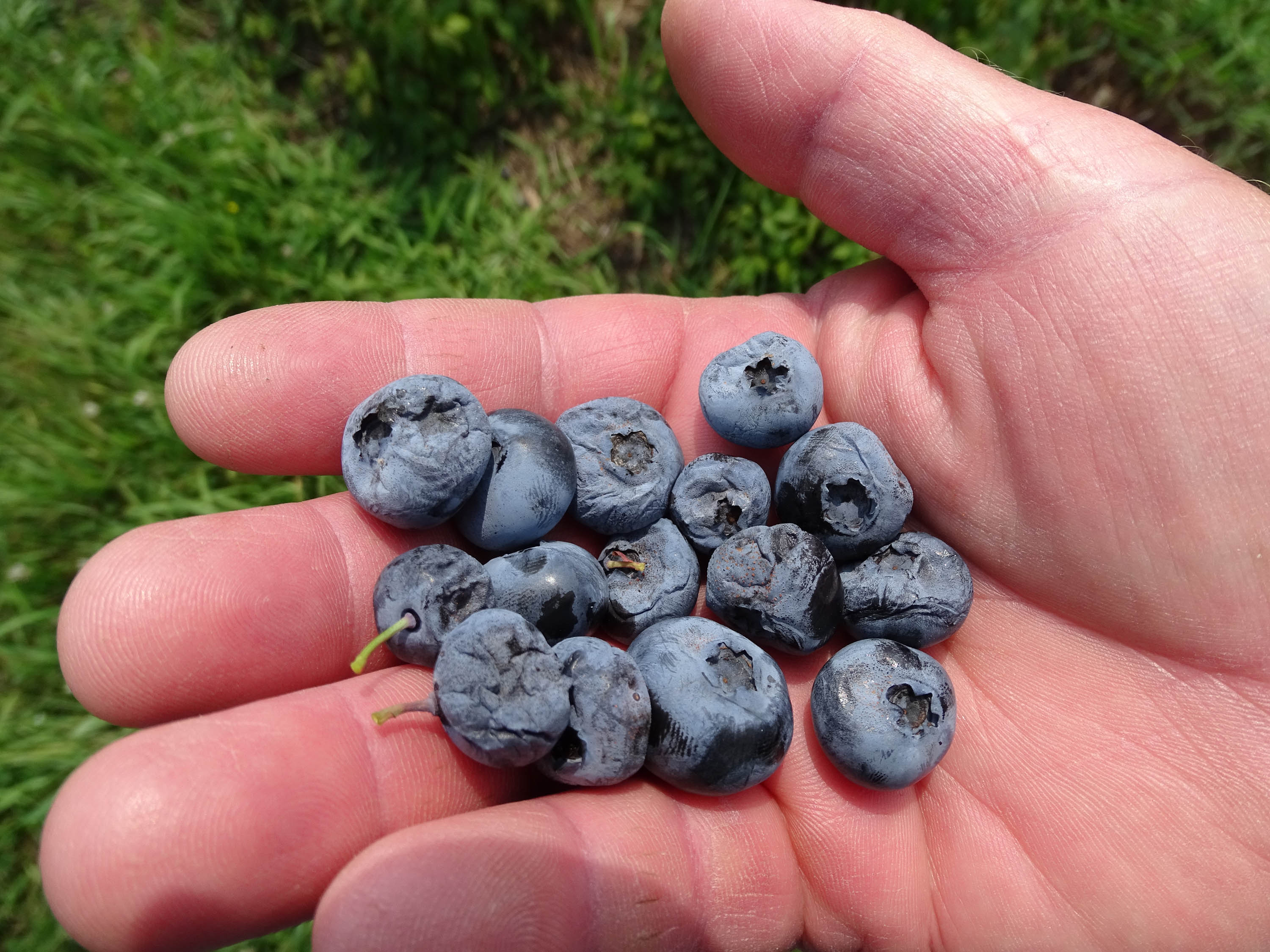
Project GREEEN supported data that encouraged moving away from the fungicide class, which subsequently improved how the disease was controlled. It also granted the chance for Miles to study how chemicals interact with the surface of blueberries at a microbial ecology level, lending more insight into ways the fruit can be managed.
“We needed some way to generate the preliminary data,” Miles said. “Without Project GREEEN, I wouldn’t have had the funding to collect fungal isolates from growers and screen them to check their resistance.”
Michigan is a top producer of blueberries, along with a variety of other fruits, in the U.S.
Nancy Nyquist, executive director of the Michigan Blueberry Commission, said Project GREEEN has pushed the state forward in continuously leading the country’s fruit production with its ability to provide researchers and industry professionals a means to swiftly address rising issues.
“We all have the same goal in the Plant Coalition: to put safe, healthy, affordable and high-quality food — in our case, blueberries — on people’s plates,” Nyquist said. “We’re very grateful for the support and partnership we have with Project GREEEN that helps us continue to do so.”
This story was originally featured on the Project GREEEN website.

