Jump to HeaderJump to Main ContentJump to Footer
Michigan State University
MSUToday
  • For Media
  • Experts
  • Releases and Statements
  • Sign Up
  • Update Information
MSUTODAY
  • Browse Stories By

    Topics

    Explore stories by subject area

    • Arts and Culture
    • Business and Economy
    • Climate and Environment
    • Education and Learning
    • Engineering, Science and Technology
    • Government and Society
    • Health and Medicine
    • Media and Communications
    • MSU Leadership and Impact
    • Sports and Recreation
    • Student and Campus Experience
    View All Stories

    Collections

    Curated story series

    • Alumni stories
    • Turfgrass
    • Ask the Expert
    • Big Ideas
    • Climate solutions
    • Water at MSU
    • Mobility
    • Spartan Perspectives
    • Student views
    • Graduate voices
    • Faculty voices
    View All Collections

    Featured

    Editor's picks

    • 9 reasons to love being a Spartan

      Aug. 28, 2026

      9 reasons to love being a Spartan

    • NIH awards multi-university team over $4M to improve women’s health

      Sept. 15, 2026

      NIH awards multi-university team over $4M to improve women’s health

MSUTODAY
  • Browse Stories By

< Browse Stories By

Topics

Explore stories by subject area

  • Arts and Culture
  • Business and Economy
  • Climate and Environment
  • Education and Learning
  • Engineering, Science and Technology
  • Government and Society
  • Health and Medicine
  • Media and Communications
  • MSU Leadership and Impact
  • Sports and Recreation
  • Student and Campus Experience
  • View All Stories

Collections

Curated story series

  • Alumni stories
  • Turfgrass
  • Ask the Expert
  • Big Ideas
  • Climate solutions
  • Water at MSU
  • Mobility
  • Spartan Perspectives
  • Student views
  • Graduate voices
  • Faculty voices
  • View All Collections

Featured

Editor's picks

  • 9 reasons to love being a Spartan

    Aug. 28, 2026

    9 reasons to love being a Spartan

  • NIH awards multi-university team over $4M to improve women’s health

    Sept. 15, 2026

    NIH awards multi-university team over $4M to improve women’s health

  • For Media
  • Experts
  • Releases and Statements
  • Sign Up
  • Update Information

Resources

  • A to Z Index
  • Find People
  • Maps
  • Email
  • Student Information System (SIS)
  • D2L
  • Libraries
  • Tech Support
  • MSU Misconduct Hotline
  • Social Media Directory
  • Events Calendar
  • For Media
Education and Learning

March 20, 2024

SHARE

MSU offers first study on teacher effectiveness for students with and without disabilities

Research has often focused on how teachers and educators can best instruct and accommodate students with disabilities. However, are the methods used to teach students with disabilities effective and inclusive for all students? Michigan State University researchers are some of the first to answer that question.


Faculty and doctoral students from across MSU, including from the College of Social Science and the College of Education, offer some of the first findings on differentiating the effectiveness of instruction for students with and without disabilities.

Their study suggests that to help schools make decisions that are best for student outcomes, policymakers may want to consider teacher quality measures that look separately at these student groups.

Published in the journal Educational Evaluation and Policy Analysis, this research presents a major breakthrough in understanding how to best measure achievement for both students with and without disabilities.
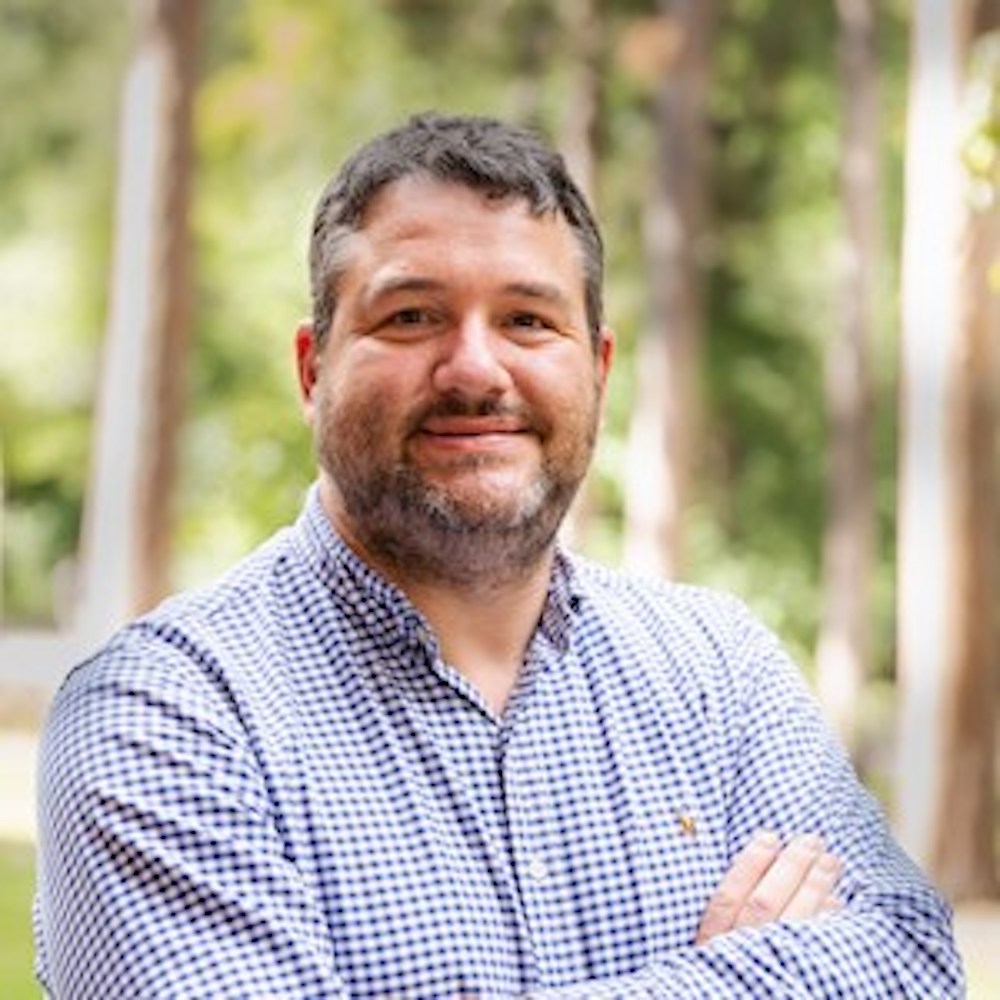
Headshot of Scott Imberman.
Scott Imberman is professor with joint appointments in MSU's Colleges of Social Science and Education. Courtesy photo.

“Most students with disabilities spend most of their school day in general education classrooms, but many teachers indicate they receive insufficient training and preparedness to educate these students,” said Scott Imberman, study author and professor in the Department of Economics in the College of Social Science and the College of Education. “We thought that through the use of statistical measures of teacher quality, we could identify which teachers are more effective teachers with these students and how much general education teachers’ ability to instruct these students varies.”

It’s important that students with disabilities have access to high-quality teachers, and not all teachers receive the necessary training and skills to support those students. They also can struggle more with certain subjects, such as math. Student success outcomes are also often determined by how the entire class performs rather than how individual students perform.

When it comes to evaluating the success of all students, numerical measures known as value-added measures, or VAM, are typically used. However, these measures often do not distinguish between evaluating students with and without disabilities.

The MSU research team created a study using data from the Los Angeles Unified School District due to the large number of enrollees and students with disabilities. They created two specific value-added measures — one for evaluating the effectiveness for teachers instructing students with disabilities and the other for students without disabilities.

They found that some of the best-performing teachers for students without disabilities have lower value-added scores for students with disabilities. Similarly, they noted that top-performing teachers for students with disabilities have lower value-added scores for students without disabilities. This means that some students who may appear to be matched with a high-quality teacher could actually be better off with other teachers.

The bigger inequity, according to Imberman, is that although “some general education teachers do have specialized skills that make them more effective for students with disabilities, our case study in Los Angeles suggested disabled students are typically not matched to these teachers.”

While the results do not identify how to better match teachers with students with disabilities, they do raise the point to schools and policymakers to explore how both groups of students and, especially those with disabilities, can have better academic gains. It is also necessary that educators, especially those who have been teaching longer, receive the appropriate training to support students with disabilities.

“We hope that our methods can be used in the future to help school officials better match students with disabilities to the teachers who are best equipped to instruct them and better assess which teachers might need additional training in educating disabled students,” Imberman said.

In addition to Imberman, the research team included Katharine Strunk, dean of the University of Pennsylvania’s Graduate School of Education; Nathan Jones, associate professor in the Special Education program at Boston University Wheelock College of Education and Human Development; W. Jesse Wood, senior analyst at Abt Associates; Neil Filosa, doctoral student in the MSU Department of Economics; and Ijun Lai, researcher with Mathematica.

MEDIA CONTACTS

Jack Harrison
Education and LearningEducation and LearningSocial SciencesGovernment and Society

Collection

more content from this collection

Thriving Schools

Latest News

MSUToday Weekly Update

The MSUToday Weekly Update email showcases how Spartans are making a difference through academic excellence, research impact and community outreach. Get inspired by these stories of innovation, collaboration and determination. Plus, enjoy photos and videos of campus and more MSU content to help keep you connected to the Spartan community.

Sign UpUpdate My Information

Connect With Us

Visit our Facebook pageVisit our page on XVisit our Instagram pageVisit our LinkedIn pageVisit our YouTube pageVisit our TikTok page

Health and Safety

  • MSU Police and Public Safety
  • Olin Health Center
  • Counseling & Psychiatric Services (CAPS)
  • University Health and Wellbeing
  • MSU Health Care
  • Civil Rights and Title IX
  • Our Commitment
  • Center for Survivors
  • Security & Fire Safety Report
  • University Policy on Relationship Violence and Sexual Misconduct
  • Notice of Non-Discrimination, Anti-Harassment and Non-Retaliation
  • Health Care Non-Discrimination Notice

Support Services

  • Disability Resources
  • Supportive Services
  • Learning Resources

Working at MSU

  • Human Resources
  • EBS Login
  • Job Postings
  • Employee Assistance Program

Reports

  • CARES Act Funding
  • Student Achievement and Outcomes

Contact us

517-355-1855

Address

Michigan State University 426 Auditorium Road East Lansing, MI 48824

Follow Us

  • Visit our Facebook page
  • Visit our page on X
  • Visit our Instagram page
  • Visit our TikTok page
  • Visit our LinkedIn page
  • Visit our YouTube page

If you're having accessibility issues, please let us know.

Know More: Campus Safety Information and ResourcesTransparency Reporting: Budget & Salary/Compensation
  • Contact Information|
  • Site Map|
  • Privacy Statement|
  • Site Accessibility|
  • Call MSU: (517) 355-1855|
  • Visit: msu.edu|
  • Notice of Nondiscrimination|

SPARTANS WILL|© Michigan State University|
