Jump to HeaderJump to Main ContentJump to Footer
Michigan State University
  • Browse Stories By

    Topics

    Explore stories by subject area

    • Arts and Culture
    • Business and Economy
    • Climate and Environment
    • Education and Learning
    • Engineering, Science and Technology
    • Government and Society
    • Health and Medicine
    • Media and Communications
    • MSU Leadership and Impact
    • Sports and Recreation
    • Student and Campus Experience
    View All Stories

    Collections

    Curated story series

    • Turfgrass
    • Ask the Expert
    • Big Ideas
    • Climate solutions
    • Water at MSU
    • Mobility
    • Spartan Perspectives
    • Student views
    • Graduate voices
    • Faculty voices
    View All Collections

    Featured

    Editor's picks

    • The Spartans behind your favorite Michigan golf courses

      July 22, 2026

      The Spartans behind your favorite Michigan golf courses

    • MSU in the 1990s: 10 Spartan milestones

      July 14, 2026

      MSU in the 1990s: 10 Spartan milestones

MSUTODAY
  • Browse Stories By

< Browse Stories By

Topics

Explore stories by subject area

  • Arts and Culture
  • Business and Economy
  • Climate and Environment
  • Education and Learning
  • Engineering, Science and Technology
  • Government and Society
  • Health and Medicine
  • Media and Communications
  • MSU Leadership and Impact
  • Sports and Recreation
  • Student and Campus Experience
  • View All Stories

Collections

Curated story series

  • Turfgrass
  • Ask the Expert
  • Big Ideas
  • Climate solutions
  • Water at MSU
  • Mobility
  • Spartan Perspectives
  • Student views
  • Graduate voices
  • Faculty voices
  • View All Collections

Featured

Editor's picks

  • The Spartans behind your favorite Michigan golf courses

    July 22, 2026

    The Spartans behind your favorite Michigan golf courses

  • MSU in the 1990s: 10 Spartan milestones

    July 14, 2026

    MSU in the 1990s: 10 Spartan milestones

  • For Media
  • Experts
  • Releases and Statements
  • Sign Up
  • Update Information

Resources

  • A to Z Index
  • Find People
  • Maps
  • Email
  • Student Information System (SIS)
  • D2L
  • Libraries
  • Tech Support
  • MSU Misconduct Hotline
  • Social Media Directory
  • Events Calendar
  • For Media
Michigan State University
MSUToday
  • For Media
  • Experts
  • Releases and Statements
  • Sign Up
  • Update Information
MSUTODAY
Student Life

Feb. 28, 2024

MSU is transforming the art museum experience

Through an innovative, interactive approach, the MSU Broad Art Museum encourages new ways to approach art in academic and research pursuits

By: Liam Boylan-Pett, Greg Kohuth, Jacob Templin-Fulton, Nick Schrader, Kelsie Lane

First, go to the Eli and Edythe Broad Art Museum at Michigan State University. You know the building — the architectural marvel at the corner of Grand River Avenue and Farm Lane constructed of steel and glass angles that create stunning lines as they meet the sky. Once you’re inside, take the elevator or the stairs to the lower level. Then, take a deep breath. Slow down.

You’ve arrived at the Center for Object Research and Engagement, or The CORE, an active, educational space open to the public that features art from the museum’s permanent collection that opened in November 2023. A central idea of the collection is for visitors to take their time and get to know the art. With more than 300 rotating works from MSU’s collection of 10,000 that span over 5,000 years of history, plus innovative sensory stations that invite visitors to touch, hear and even smell, The CORE is providing new ways for the MSU community to experience, interact with and interpret art in academic and research pursuits.

So, be prepared to take your time and immerse yourself in The CORE — a museum experience like no other.

Up-close encounters with art

The way Michelle Word describes it, most people spend far too little time with a work of art at a museum. Visitors are getting an experience more akin to a movie trailer, she says, compared to a full movie.  

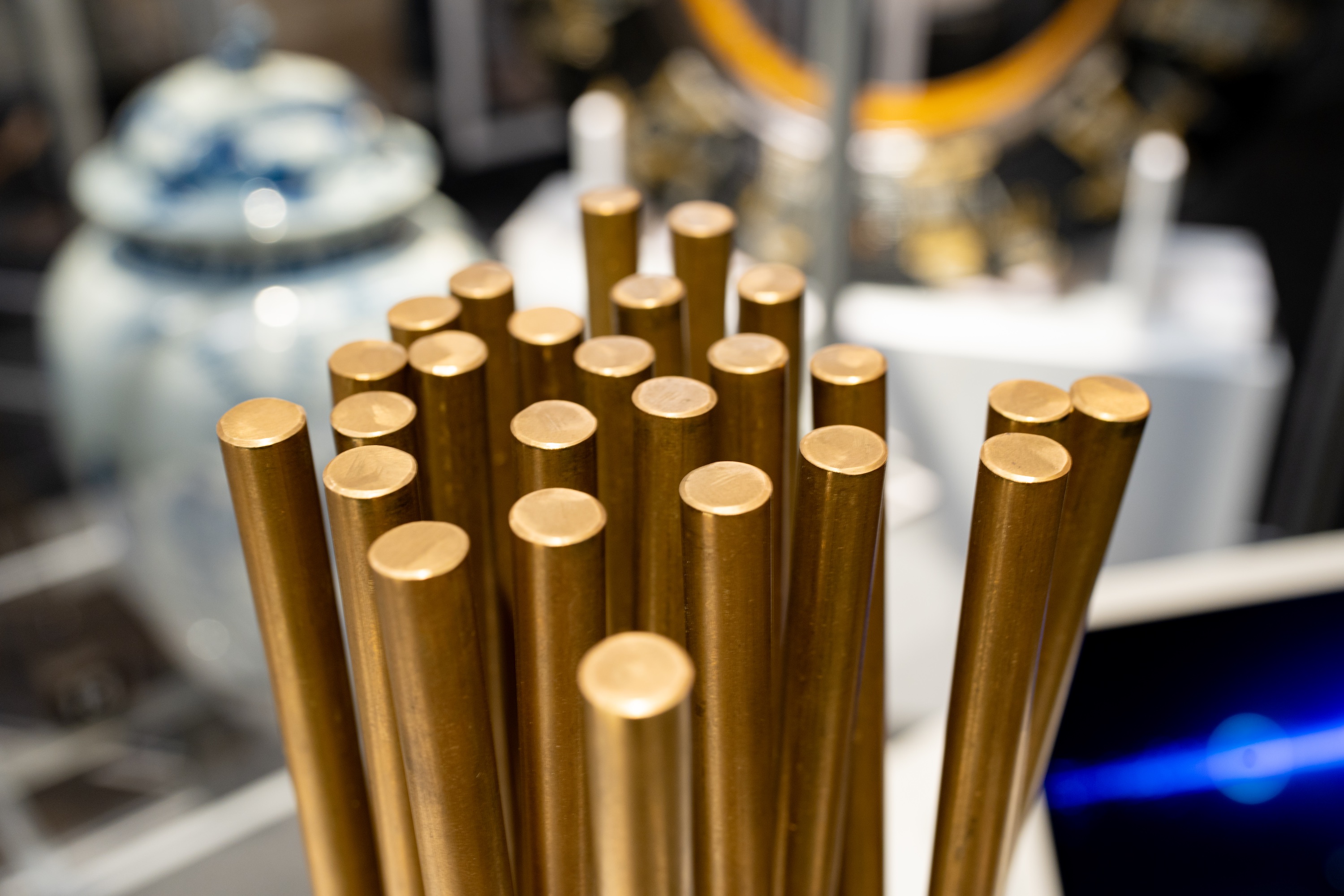
Copper rods bunched together at a sensory station in The CORE at the MSU Broad Art Museum, which allows users to
A model of the sound sculpture “Untitled (Sonambient)” by Harry Bertoia allows users to “play” the sculpture and listen to its chimes. Photograph by Nick Schrader.

Word earned her Master of Fine Arts in painting from MSU and now is the director of education at the MSU Broad Art Museum. And while she would hope that any visitor to the museum would take their time, The CORE actively encourages it.

“One of the things that is key to the educational approach of The CORE,” she says, “is hoping that if we talk more about slowing down — and the ways we can do that — we can engage artwork in a conversation to learn more about ourselves and our world.”  

The CORE focuses on object-based learning, a technique that emphasizes up-close experiences with material objects and facilitates deep critical thinking with, through and about art. To allow for object-based learning, the entrance to the collection offers stacks of cards to visitors that prompt actions, like: “Describe the details of an artwork. How might someone with a background different from yours describe this same artwork?” There are also innovative, accessible sensory stations that allow for visitors to touch, listen to and smell replicas of works of art — which were made with support from faculty and students at MSU.

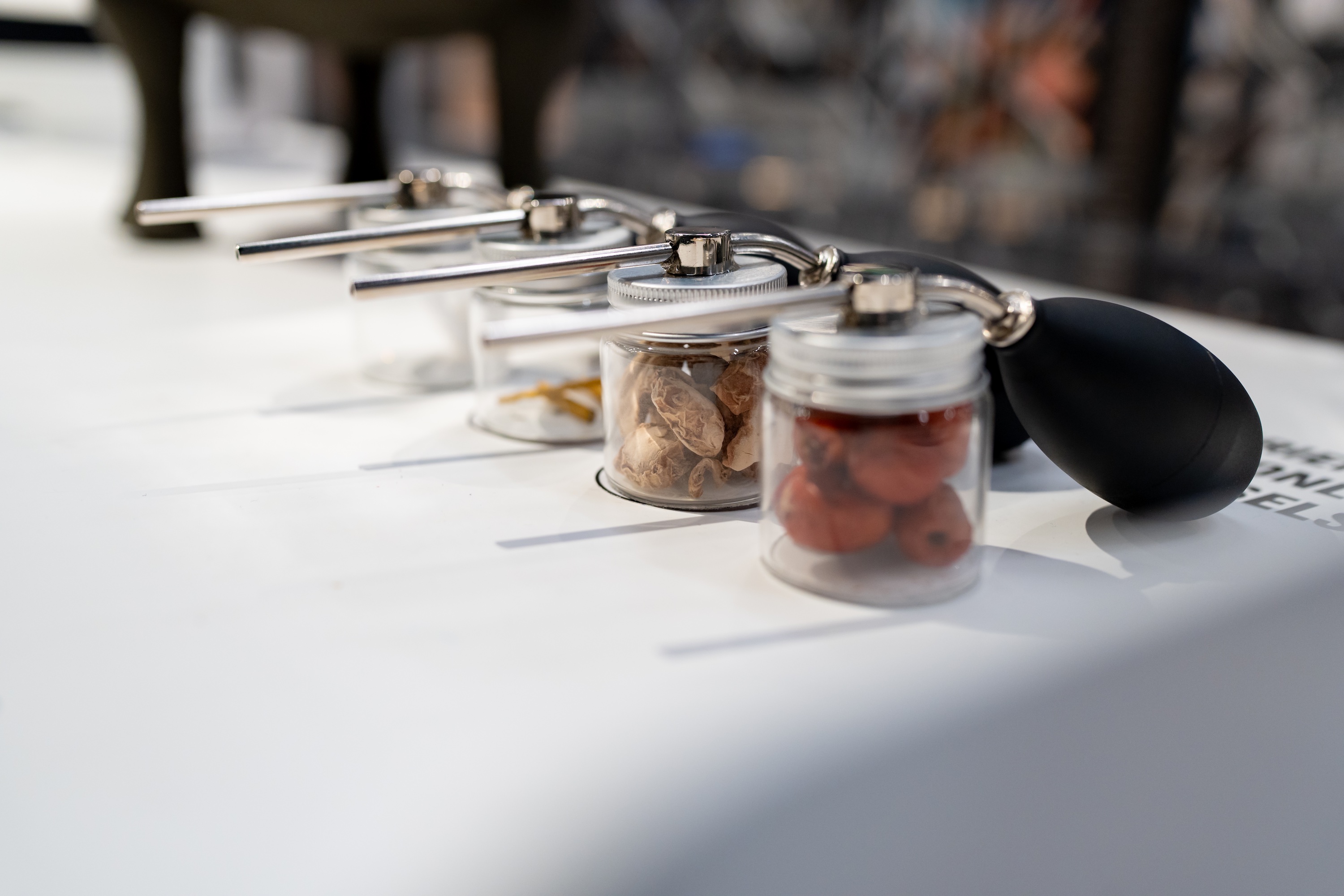
Jars with little air puffs that allow for the smelling of the scents in the jars like red dates and ginger.
Scent jars at a sensory station invite visitors to experience aromas like ginger and sandalwood incense that would have been used in religious ceremonies around 659 to 621 BCE. Photograph by Nick Schrader.

A model of the sound sculpture “Untitled (Sonambient)” by Harry Bertoia allows users to “play” the sculpture and listen to its chimes. There is also a “ding,” a three-legged vessel once used for cooking. The original, which was made sometime between 659 and 621 BCE, was used in religious and state rituals, feasts and ceremonies honoring ancestral spirits, displayed in temples and buried in tombs with important people. At the sensory station in The CORE, the vessel is displayed next to jars containing scents that would have been found inside or around an object like a ding. Smelling ginger or sandalwood incense encourages the discussion of a scent’s relationship to memory.

Listening to works or taking the time to immerse oneself in the smells of other cultures invites the practice of concentration and discussion. “Object-based learning is really built on not what to think,” Word says, “but how to think.”

“That’s a skill that is really transferable,” she continues. “Whether you’re going to have a career in the arts, whether we are studying in a STEM field, education or the list can go on and on, all of us need moments where we can practice slowing down and focusing, listening — not just talking. That model of art being a conversation, it really gives us a lot of space for that.”

The CORE is also an important part of a larger conversation about the arts happening at MSU. Arts MSU — the university’s arts strategy — is amplifying the impact and presence of the arts on campus and beyond, and integrating them deeply into teaching, research and physical spaces.

“Our collection is, quite literally, at the core of who we are as a museum,” says Steven L. Bridges, interim director and senior curator and director of curatorial affairs at the MSU Broad Art Museum. “We firmly believe that art plays a critical role in our lives, and so it was vitally important as we developed The CORE to ensure it was open, accessible and truly celebrated our collection in a space where everyone feels welcome. It’s why we intentionally developed this space in dialogue with so many campus and community partners, and why the future of The CORE will continue to be shaped by the very communities it serves.”

A view of the work 'Squiggles' which is a tan piece of art with multiple textures and bumps. In front of it is a sensory station, which shows some of the tools used to make the art, like a paint brush and a frosting bag.Visitors to The CORE are able to view and touch the types of tools used by Cynthia Carlson in her work “Squiggles” from 1974, like the unconventional piping bag normally used for cake decorating. Photograph by Nick Schrader.

The CORE as a classroom

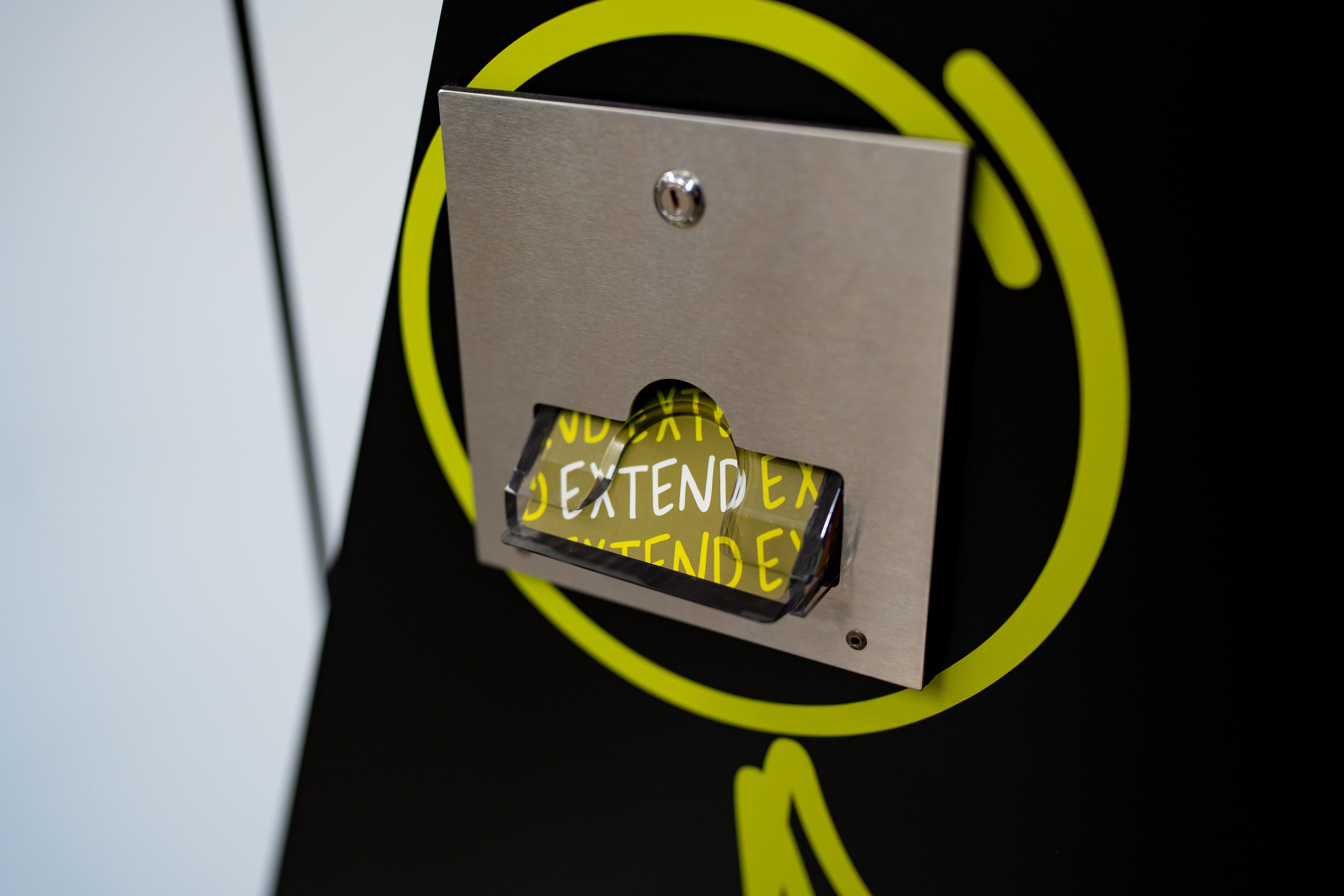
A prompt card at The CORE in the MSU Broad Art Museum, which reads
“Core cards” at the entrance of The CORE act as partners in the museum experience, providing prompts and questions related to observing, reflecting, extending and connecting to the works in a more profound way. Photograph by Nick Schrader.

At MSU, the arts support curriculum and research, and The CORE is a perfect case study in their benefits. Word says that the skills associated with object-based learning are transferable across essentially any discipline, and faculty members Leanne Kent and Jiahang Li are already utilizing The CORE’s offerings.

Kent is an assistant professor in the Department of Writing, Rhetoric and Cultures. She teaches courses in the first-year writing program, which nearly all undergraduate students pass through at MSU. A goal of the program is for students to think of writing in terms of inquiry, discovery and communication. To do this, students move through a five-project sequence that centers their own experiences.

“Some people are going to be engineers, some are going to be scientists, some are going to be art historians,” Kent says. “So, we really focus on the writing process.” One of her course’s assignments asks students to inquire into the writing and communication practices of a desired profession.  

Leanne Kent
Leanne Kent. Courtesy photo

After learning about The CORE, Kent saw it as a perfect companion to another of her course’s writing assignments: Students are asked to write about an object in use in a culture they participate in. It could be something as simple as MSU culture and writing about the Rock. Kent brought her classes to The CORE to show them how examining something deeply might help, as Kent says, “discover something new about a group that they are inside of.” Kent says one of the activities led by Kristin McCool, an educator for student engagement and access at the museum — to sketch a sculpture or object — showed students the vast number of details in any one object and how reflection on these details could prompt questions and discovery.

“The idea with this first-year writing course is to equip students with the tools and knowledge to ask the right questions. This way, students will develop self-efficacy to find the answers they’ll need as they go on to engage with a whole range of writing situations,” says Kent. 
"It took me to a whole new world." - Jiahang Li, associate professor in the Department of Teacher Education 

For Li, who hopes to bring different viewpoints to his classrooms, the experience at The CORE was eye-opening. “It took me to a whole new world,” he says.
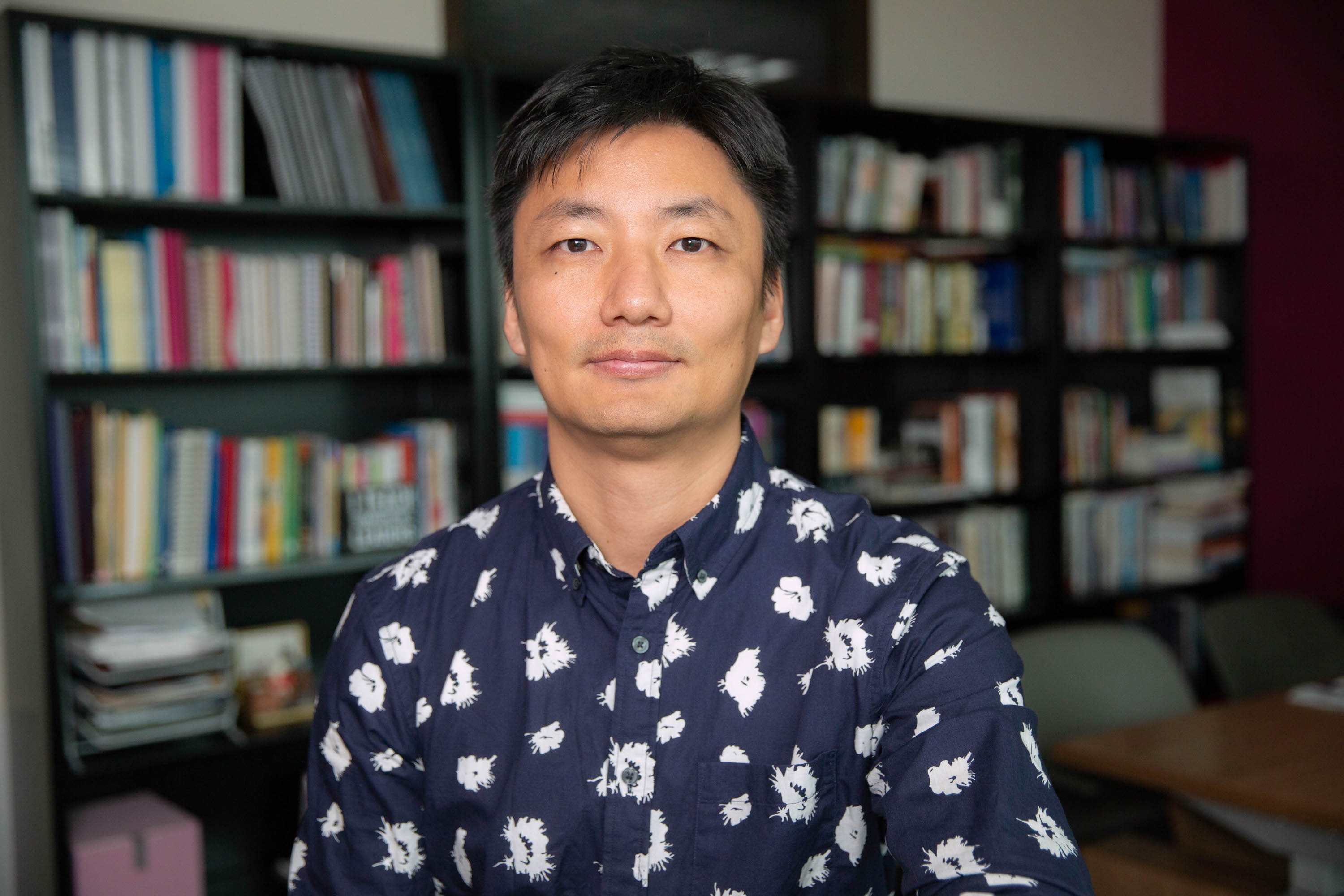
Jiahang Li, wearing a blue button-up shirt with white flowered design scattered on it
Jiahang Li. Courtesy photo

Li is an associate professor in the Department of Teacher Education, outreach coordinator for the Asian Studies Center and director of the Online Chinese Program in the College of Education. He collaborates with the education team at the MSU Broad Art Museum as part of the Global DEI Teaching Fellowship. A collaboration between the Asian Studies Center, African Studies Center, and the Center for Latin American and Caribbean Studies under the U.S. Department of Education Title VI funding, the fellowship is a program for K-12 teachers to build skills and strategies that broaden students’ understandings of global diversity, equity and inclusion. As a professor in the teacher education department, where he focuses on training world language teachers, his work with the MSU Broad Art Museum has been an asset. 

Li leads one of the sections of a course on teaching multilingual learners. Each section of that class, including Li’s, went to The CORE last fall to look at objects that the students could use in the development of a course project. To Li, art is the perfect tool to explore and discuss cultures, encouraging a better understanding of global diversity, equity and inclusion.

“Art is very personal,” Li says. “There's no right or wrong. You can understand from different perspectives, from different angles and you can bring your own experiences and background, as well. I think it’s very unique to the field of education for us to have The CORE and this space that encourages us to look at something from as many angles as possible.”

Like in Li’s research, those personal perspectives and experiences are a desired outcome at The CORE. Sometimes, those personal perspectives can touch even closer to home. 

Two visitors view artwork behind glass display cases in The CORE at MSU's Broad Art MuseumThe CORE contains over 300 works at a time, spanning over 5000 years. Visitors are encouraged to slow down, take in the art and experience a museum in a hands-on way. Photograph by Vincent Morse/MSU Broad Art Museum

Conversations and cultures

In November, Dominic Hateka was touring The CORE as part of a teacher development workshop with the Global DEI Teaching Fellowship when he noticed a pair of sculptures that looked familiar.

Hateka is a first-year doctoral student in the College of Education studying curriculum, instruction and teacher education. Growing up in Ghana, Hateka’s grandmother always carried a small sculpture with her. His grandmother gave birth to twins, a boy and a girl, but the sister died at a young age. The sculpture — Hateka describes the object as a doll — represented the deceased twin and, as is customary for many Ghanaians, the family treated it as a member of the family, giving it a name (Atsufe) and clothes and a seat at the table for family gatherings.

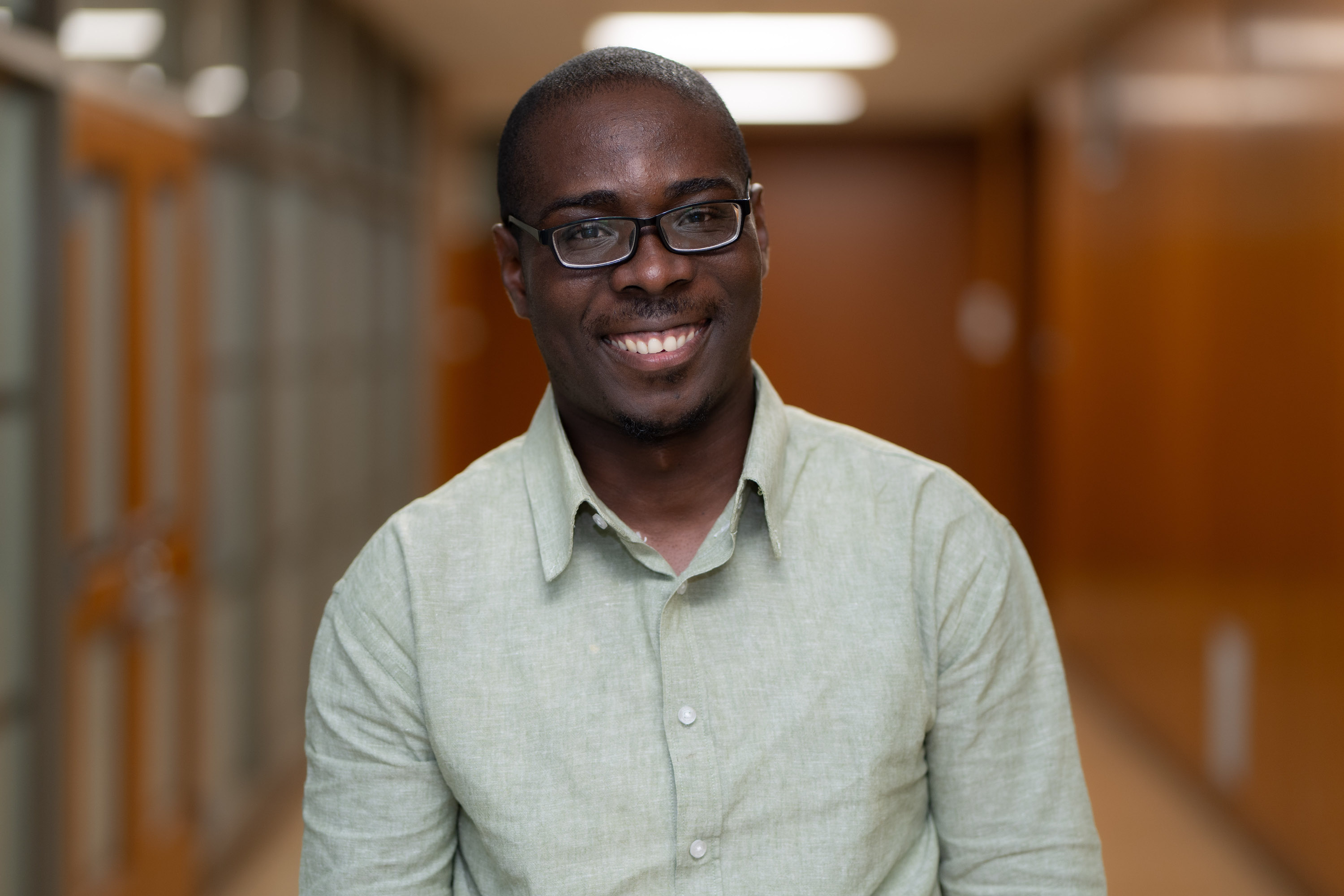
Dominic Hateka wearing a light green button up shirt, smiling with black-framed glasses
Dominic Hateka. Courtesy photo

“She has everything a human being would have growing up,” Hateka says, noting he and his siblings would play with the doll. So, when he saw a sculpture that resembled Atsufe at The CORE, it was a surprise. 

The “Ere ibeji” on display in The CORE comes from Nigeria, and like the sculpture did for Hateka’s family, it memorializes deceased twins. Hateka shared his connection to the piece with his classmates and went on with the tour, but that is not the end of the story. “The personal experience I have with it has kept me thinking,” Hateka says.

Drawing from the more than 10,000 works spanning over 5,000 years of history in MSU’s art collection, the selected pieces in The CORE bring together different cultures, time periods and geographies to spark conversation. As he’s continued his studies in East Lansing, Hateka has spoken with his mother back home in Ghana about Atsufe and asked questions in hopes of learning more about his family’s tradition. 

He’s also spoken with people at the museum about the work and shared some of his perspectives, which, according to Word, the education director, is exactly the purpose of The CORE and the museum.

“We’re hoping to provide a lot more voices other than just a museum voice,” Word says. “We had a graduate student fellow who wrote labels for us. We invited faculty and graduate students to talk about works of art from their perspective. We are making more voices and interpretations visible in the space. We need to be thinking about how there are many stories, many voices, many things that are true. By bringing in different artists and different voices, we have the ability to question why things are the way they are, and why we tell histories the way we tell them.”

As conversations around art change, so, too, will The CORE. Just as MSU has made higher education more accessible, the arts — and the academic and research opportunities available thanks to places like the MSU Broad Art Museum — will continue to offer transformational experiences to Spartans and visitors. 

Arts MSU: Learn more about MSU's arts strategy

MEDIA CONTACTS

Alex Tekip, Morgan Butts
Student LifeStudent and Campus ExperienceFine ArtsArts and CultureStudent Life

Collection

more content from this collection

Inclusive Excellence

Latest News

MSUToday Weekly Update

The MSUToday Weekly Update email showcases how Spartans are making a difference through academic excellence, research impact and community outreach. Get inspired by these stories of innovation, collaboration and determination. Plus, enjoy photos and videos of campus and more MSU content to help keep you connected to the Spartan community.

Sign UpUpdate My Information

Connect With Us

Visit our Facebook pageVisit our page on XVisit our Instagram pageVisit our LinkedIn pageVisit our YouTube pageVisit our TikTok page

Health and Safety

  • MSU Police and Public Safety
  • Olin Health Center
  • Counseling & Psychiatric Services (CAPS)
  • University Health and Wellbeing
  • MSU Health Care
  • Civil Rights and Title IX
  • Our Commitment
  • Center for Survivors
  • Security & Fire Safety Report
  • University Policy on Relationship Violence and Sexual Misconduct
  • Notice of Non-Discrimination, Anti-Harassment and Non-Retaliation
  • Health Care Non-Discrimination Notice

Support Services

  • Disability Resources
  • Supportive Services
  • Learning Resources

Working at MSU

  • Human Resources
  • EBS Login
  • Job Postings
  • Employee Assistance Program

Reports

  • CARES Act Funding
  • Student Achievement and Outcomes

Contact us

517-355-1855

Address

Michigan State University 426 Auditorium Road East Lansing, MI 48824

Follow Us

  • Visit our Facebook page
  • Visit our page on X
  • Visit our Instagram page
  • Visit our TikTok page
  • Visit our LinkedIn page
  • Visit our YouTube page

If you're having accessibility issues, please let us know.

Know More: Campus Safety Information and ResourcesTransparency Reporting: Budget & Salary/Compensation
  • Contact Information|
  • Site Map|
  • Privacy Statement|
  • Site Accessibility|
  • Call MSU: (517) 355-1855|
  • Visit: msu.edu|
  • Notice of Nondiscrimination|

SPARTANS WILL|© Michigan State University|