Jump to HeaderJump to Main ContentJump to Footer
Michigan State University
  • Browse Stories By

    Topics

    Explore stories by subject area

    • Arts and Culture
    • Business and Economy
    • Climate and Environment
    • Education and Learning
    • Engineering, Science and Technology
    • Government and Society
    • Health and Medicine
    • Media and Communications
    • MSU Leadership and Impact
    • Sports and Recreation
    • Student and Campus Experience
    View All Stories

    Collections

    Curated story series

    • Turfgrass
    • Ask the Expert
    • Big Ideas
    • Climate solutions
    • Water at MSU
    • Mobility
    • Spartan Perspectives
    • Student views
    • Graduate voices
    • Faculty voices
    View All Collections

    Featured

    Editor's picks

    • The Spartans behind your favorite Michigan golf courses

      July 22, 2026

      The Spartans behind your favorite Michigan golf courses

    • MSU in the 1990s: 10 Spartan milestones

      July 14, 2026

      MSU in the 1990s: 10 Spartan milestones

MSUTODAY
  • Browse Stories By

< Browse Stories By

Topics

Explore stories by subject area

  • Arts and Culture
  • Business and Economy
  • Climate and Environment
  • Education and Learning
  • Engineering, Science and Technology
  • Government and Society
  • Health and Medicine
  • Media and Communications
  • MSU Leadership and Impact
  • Sports and Recreation
  • Student and Campus Experience
  • View All Stories

Collections

Curated story series

  • Turfgrass
  • Ask the Expert
  • Big Ideas
  • Climate solutions
  • Water at MSU
  • Mobility
  • Spartan Perspectives
  • Student views
  • Graduate voices
  • Faculty voices
  • View All Collections

Featured

Editor's picks

  • The Spartans behind your favorite Michigan golf courses

    July 22, 2026

    The Spartans behind your favorite Michigan golf courses

  • MSU in the 1990s: 10 Spartan milestones

    July 14, 2026

    MSU in the 1990s: 10 Spartan milestones

  • For Media
  • Experts
  • Releases and Statements
  • Sign Up
  • Update Information

Resources

  • A to Z Index
  • Find People
  • Maps
  • Email
  • Student Information System (SIS)
  • D2L
  • Libraries
  • Tech Support
  • MSU Misconduct Hotline
  • Social Media Directory
  • Events Calendar
  • For Media
Michigan State University
MSUToday
  • For Media
  • Experts
  • Releases and Statements
  • Sign Up
  • Update Information
MSUTODAY
MSU Research

Feb. 16, 2024

MSU researchers create more realistic synthetic human mini hearts

Thanks to advancements in the development of patented synthetic human-like hearts first created at Michigan State, researchers can study human heart development and congenital heart disease on highly accurate models. This is facilitating the development of new therapies and pharmaceutical drugs to treat a variety of heart-related diseases just in time for the observance of American Heart Month in February.
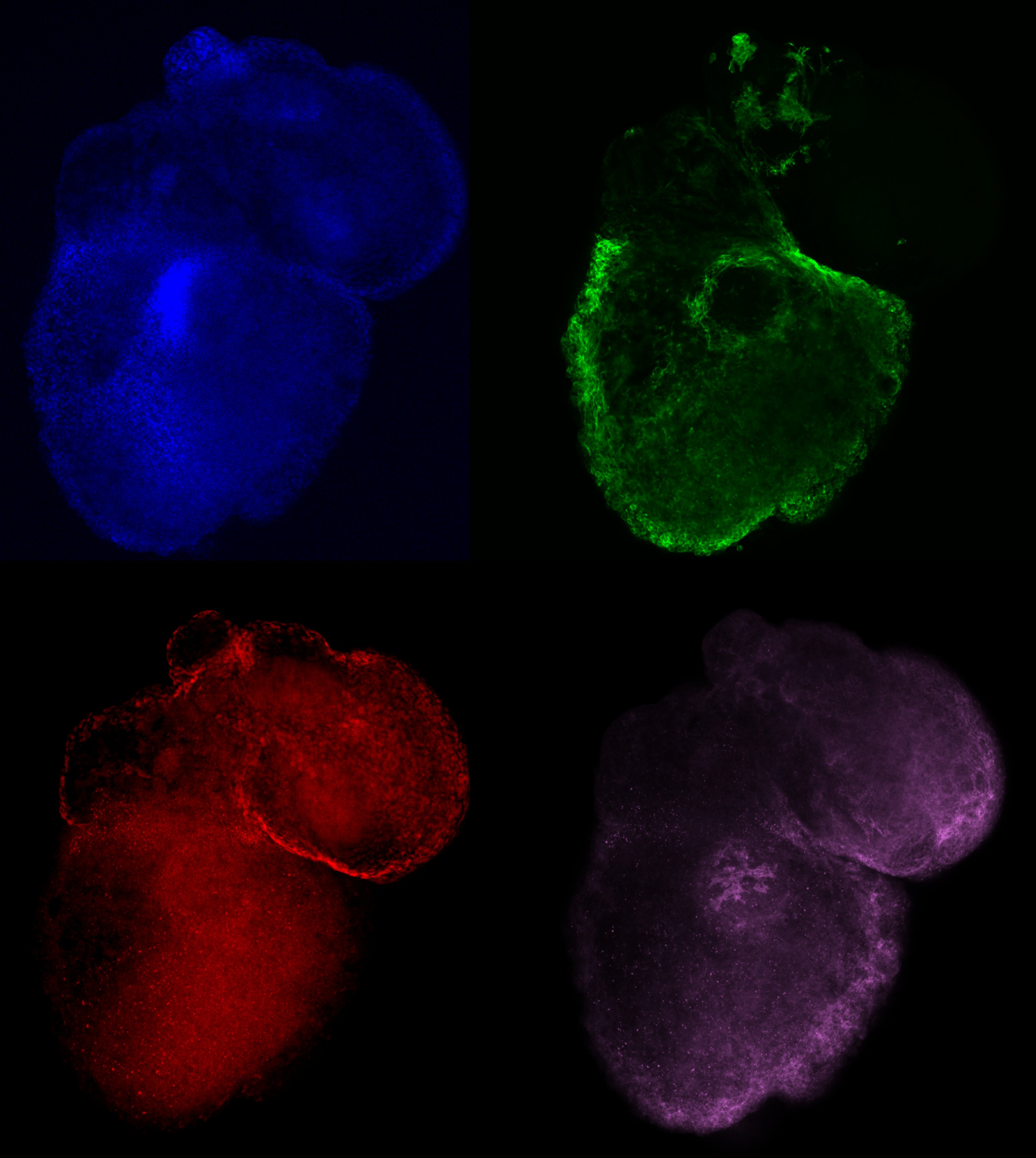
A heart organoid montage showing different parts of the heart in the same organoid – epicardium in red, myocardium in green, epithelial junctions in magenta and cell nuclei in blue.
A heart organoid montage showing different parts of the heart in the same organoid – epicardium in red, myocardium in green, epithelial junctions in magenta and cell nuclei in blue. Credit: Brett Volmert.

Similar in size and development to fetal human hearts, these mini heart organoids are becoming increasingly complex and realistic. The MSU research team that created the mini hearts first published their findings in 2020. They have quickly become a world leader in this field and their latest advancements have been published in Nature Communications and Stem Cell Reports. Another article appeared in November on the website for the National Institute of Health National Heart, Lung and Blood Institute.

Aitor Aguirre, associate professor of biomedical engineering and chief of the division of developmental and stem cell biology in MSU’s Institute for Quantitative Health Science and Engineering, explained that the introduction of realistic models is essential to the discovery of effective and clinically translatable solutions to cardiovascular disease. An estimated 21 million annual deaths are related to this condition, including disorders of the heart and blood vessels. And that number is growing.
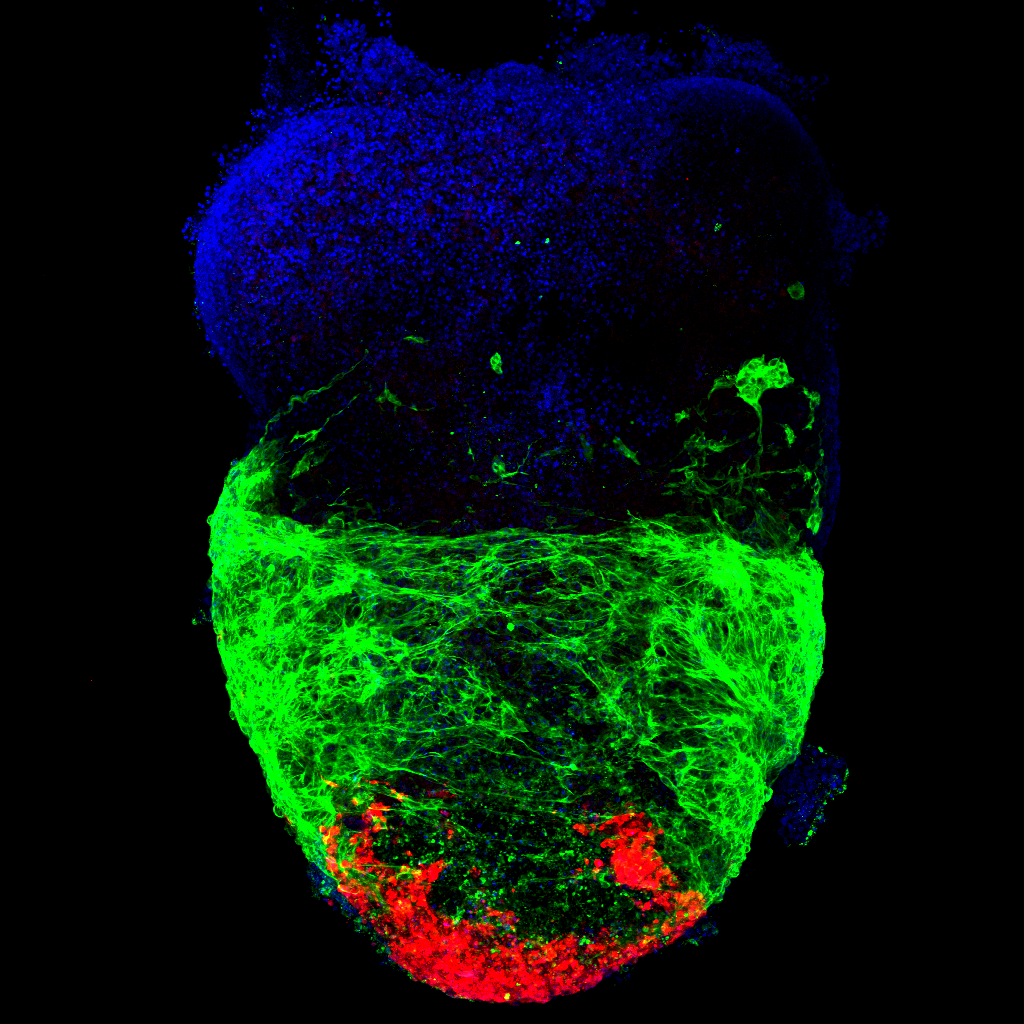
A heart organoid with a well-developed ventricle (green) and cardiac neural crest cells (mCherry) incorporating to the structure. Blue is cell nuclei.

“Although 90 percent of cardiovascular disease is thought to be preventable, it has become the leading cause of death in the developed world,” Aguirre said. “Thanks to advancements in stem cell technologies and bioengineering, we can grow and study human hearts. This will revolutionize medical approaches to treating and preventing heart diseases and congenital conditions by helping us understand the mechanisms of disease.

“In the future, we expect that fewer patients will need treatment and for those who do, the development of new drugs will take less time,” he added. “For congenital defects in particular, prevention is the best solution. This is why the mini heart organoids can really change the way we approach health care.”

As an example, Aguirre explained that pharmaceutical companies will pull drugs from the market if they are found to cause cardiotoxicity. To be able to predict toxicity in advance could save money, time and reduce the risk of drug failure.
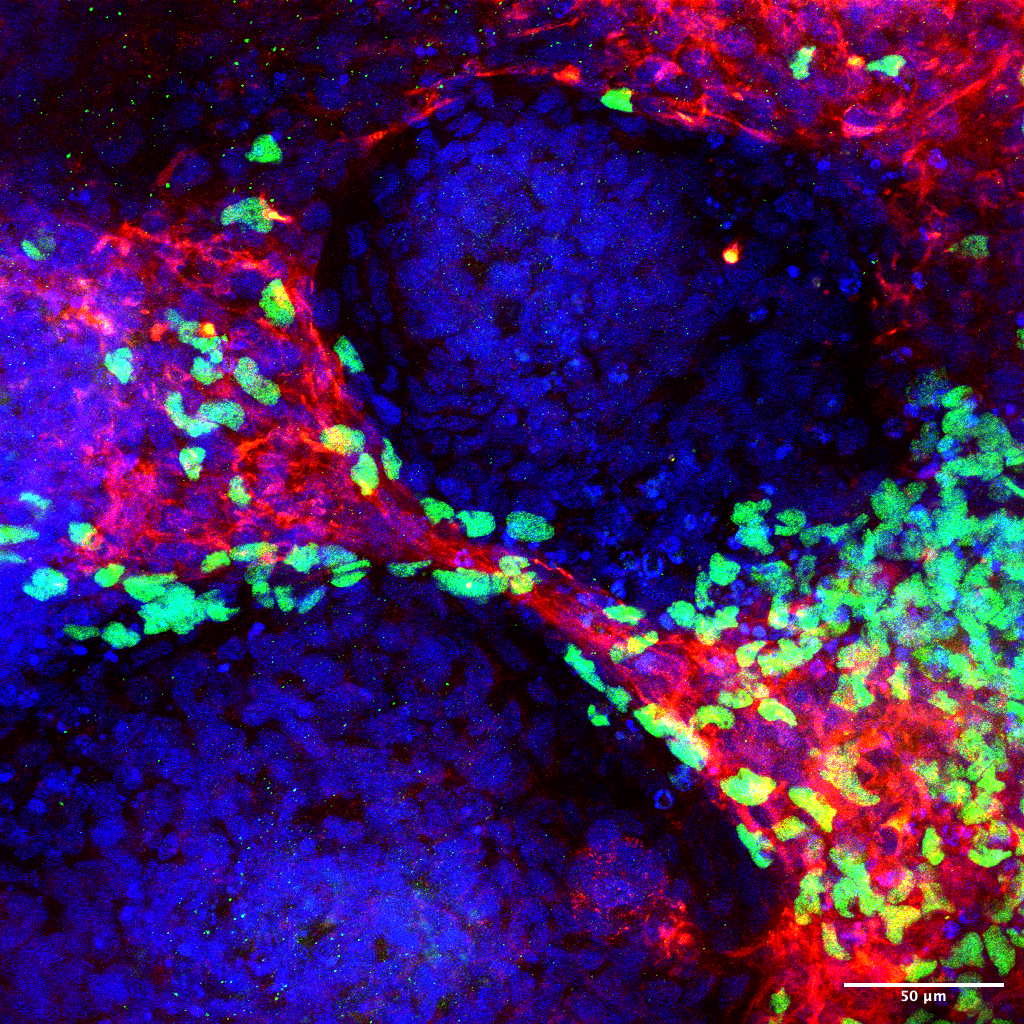
Neural crest cells in green (SOX10) migrating along red cardiomyocytes (TNNT2) in a developing heart organoid. Blue is cell nuclei.

The mini heart organoids are developed with donated pluripotent stem cells from adults. Their cellular complexity and physiological relevance enable the study of human heart development and disease in a dish to a degree previously unseen.

“We created a model using these organoids to study the effects of maternal diabetes at every stage of development in the fetal heart,” Aguirre said. “This is the definition of precision medicine. We can use science to make clinical practice more precise.”

Banner image: A heart organoid with forming ventricle in green (MYL3) and atrium in magenta (NR2F2), red (mCherry)are neural crest cells innervating the organoid. Credit: Aleksandra Kostina.


MEDIA CONTACTS

Dalin Clark
MSU ResearchMSU Leadership and ImpactNatural DisastersClimate and EnvironmentNatural Disasters

Collection

more content from this collection

Medical Breakthroughs

Latest News

MSUToday Weekly Update

The MSUToday Weekly Update email showcases how Spartans are making a difference through academic excellence, research impact and community outreach. Get inspired by these stories of innovation, collaboration and determination. Plus, enjoy photos and videos of campus and more MSU content to help keep you connected to the Spartan community.

Sign UpUpdate My Information

Connect With Us

Visit our Facebook pageVisit our page on XVisit our Instagram pageVisit our LinkedIn pageVisit our YouTube pageVisit our TikTok page

Health and Safety

  • MSU Police and Public Safety
  • Olin Health Center
  • Counseling & Psychiatric Services (CAPS)
  • University Health and Wellbeing
  • MSU Health Care
  • Civil Rights and Title IX
  • Our Commitment
  • Center for Survivors
  • Security & Fire Safety Report
  • University Policy on Relationship Violence and Sexual Misconduct
  • Notice of Non-Discrimination, Anti-Harassment and Non-Retaliation
  • Health Care Non-Discrimination Notice

Support Services

  • Disability Resources
  • Supportive Services
  • Learning Resources

Working at MSU

  • Human Resources
  • EBS Login
  • Job Postings
  • Employee Assistance Program

Reports

  • CARES Act Funding
  • Student Achievement and Outcomes

Contact us

517-355-1855

Address

Michigan State University 426 Auditorium Road East Lansing, MI 48824

Follow Us

  • Visit our Facebook page
  • Visit our page on X
  • Visit our Instagram page
  • Visit our TikTok page
  • Visit our LinkedIn page
  • Visit our YouTube page

If you're having accessibility issues, please let us know.

Know More: Campus Safety Information and ResourcesTransparency Reporting: Budget & Salary/Compensation
  • Contact Information|
  • Site Map|
  • Privacy Statement|
  • Site Accessibility|
  • Call MSU: (517) 355-1855|
  • Visit: msu.edu|
  • Notice of Nondiscrimination|

SPARTANS WILL|© Michigan State University|