Jump to HeaderJump to Main ContentJump to Footer
Michigan State University
  • Browse Stories By

    Topics

    Explore stories by subject area

    • Arts and Culture
    • Business and Economy
    • Climate and Environment
    • Education and Learning
    • Engineering, Science and Technology
    • Government and Society
    • Health and Medicine
    • Media and Communications
    • MSU Leadership and Impact
    • Sports and Recreation
    • Student and Campus Experience
    View All Stories

    Collections

    Curated story series

    • Turfgrass
    • Ask the Expert
    • Big Ideas
    • Climate solutions
    • Water at MSU
    • Mobility
    • Spartan Perspectives
    • Student views
    • Graduate voices
    • Faculty voices
    View All Collections

    Featured

    Editor's picks

    • The Spartans behind your favorite Michigan golf courses

      July 22, 2026

      The Spartans behind your favorite Michigan golf courses

    • MSU in the 1990s: 10 Spartan milestones

      July 14, 2026

      MSU in the 1990s: 10 Spartan milestones

MSUTODAY
  • Browse Stories By

< Browse Stories By

Topics

Explore stories by subject area

  • Arts and Culture
  • Business and Economy
  • Climate and Environment
  • Education and Learning
  • Engineering, Science and Technology
  • Government and Society
  • Health and Medicine
  • Media and Communications
  • MSU Leadership and Impact
  • Sports and Recreation
  • Student and Campus Experience
  • View All Stories

Collections

Curated story series

  • Turfgrass
  • Ask the Expert
  • Big Ideas
  • Climate solutions
  • Water at MSU
  • Mobility
  • Spartan Perspectives
  • Student views
  • Graduate voices
  • Faculty voices
  • View All Collections

Featured

Editor's picks

  • The Spartans behind your favorite Michigan golf courses

    July 22, 2026

    The Spartans behind your favorite Michigan golf courses

  • MSU in the 1990s: 10 Spartan milestones

    July 14, 2026

    MSU in the 1990s: 10 Spartan milestones

  • For Media
  • Experts
  • Releases and Statements
  • Sign Up
  • Update Information

Resources

  • A to Z Index
  • Find People
  • Maps
  • Email
  • Student Information System (SIS)
  • D2L
  • Libraries
  • Tech Support
  • MSU Misconduct Hotline
  • Social Media Directory
  • Events Calendar
  • For Media
Michigan State University
MSUToday
  • For Media
  • Experts
  • Releases and Statements
  • Sign Up
  • Update Information
MSUTODAY
Agricultural Sciences and Farming

Sept. 12, 2023

Scientists identify win-win situations with biodiversity and farming

Across the globe, and particularly in Brazil, lies an embarrassment of riches that also stage a showdown as mitigating climate change and protecting biodiversity square off against growing food.
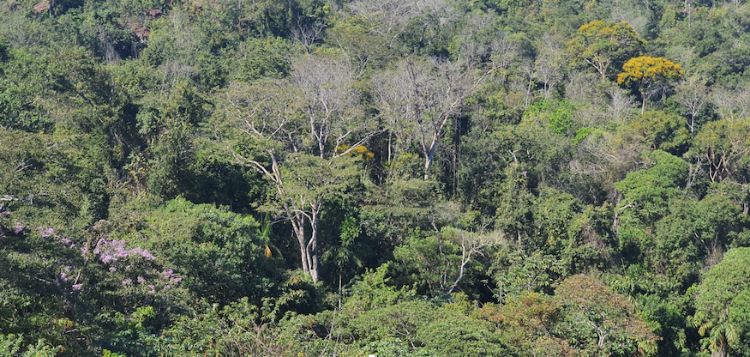
Areal photo of a dense forest in Brazil's Mato Grosso state
Areal photo of a dense forest in Brazil's Mato Grosso state. Photo by Ramon Bicudo

In Science of the Total Environment, scientists from and once affiliated with Michigan State University’s Center for Systems Integration and Sustainability, or CSIS, identify ways for landowners in rural areas to be able to capitalize on win-win situations, whether they have fruitful land or not.

Like in areas across the world, forests which are havens for biodiversity and powerful in fighting climate change have been converted to agricultural lands. In the Mato Grosso region of Brazil in the Amazon biome, the authors of “Balancing food production with climate change mitigation and biodiversity conservation in the Brazilian Amazon,” looked at the country’s legal reserves — a portion of every private rural property that landowners should allow to be covered with natural forest, according to the Brazilian Forest Code.

However, many rural properties do not have the legal reserves, deemed a “deficit,” according to lead author Ramon Bicudo. The work seeks to understand and model ways to balance climate change — and biodiversity — positive forests with agriculture lands which have replaced forests.

  • In many regions where deficit is high in areas strong in food production. In this case, if landowners replace food production lands with natural forests, the economic impact and the impact on food production will be high.
  • However, many other regions where there are legal reserve deficits but with lower food production standards, there is higher potential to stock carbon and to enhance biodiversity conservation.
  • Impact: Finding how a pathway of compromise and cooperation: “Using our results, landowners with great deficits in great production areas, instead of "losing" production lands for restoration, can compensate their deficits within other landowners' properties in other regions within the Amazon biome where food production is low,” Bicudo said. “We believe that the most benefited group can be landowners.”

Recommendation: This "green land market" where the opportunity created by enforcing landowners to have legal reserves may create incentive for landowners to search the best areas to restore, which will economically benefit regions with lower food production potential through an ecosystem restoration market.

“Research efforts like this one are important for sustainability not only in Brazil, but also across the entire telecoupled world, because a large amount of food produced in Brazil is exported to distant countries such as China and many European countries,” said Jianguo “Jack” Liu, Rachel Carson Chair in Sustainability and director of CSIS.

In addition to Bicudo and Liu, the article was written by James Millington, Andrés Viña, Yue Dou, Emilio Moran, Mateus Batistella, and David Lapola.

The work was supported by the National Science Foundation and Michigan AgBioResearch.

This story originally appeared on the College of Agriculture and Natural Resources website.

MEDIA CONTACTS

Sue Nichols
Agricultural Sciences and FarmingClimate and EnvironmentClimate and Climate SolutionsAgricultural Sciences and Farming

Latest News

MSUToday Weekly Update

The MSUToday Weekly Update email showcases how Spartans are making a difference through academic excellence, research impact and community outreach. Get inspired by these stories of innovation, collaboration and determination. Plus, enjoy photos and videos of campus and more MSU content to help keep you connected to the Spartan community.

Sign UpUpdate My Information

Connect With Us

Visit our Facebook pageVisit our page on XVisit our Instagram pageVisit our LinkedIn pageVisit our YouTube pageVisit our TikTok page

Health and Safety

  • MSU Police and Public Safety
  • Olin Health Center
  • Counseling & Psychiatric Services (CAPS)
  • University Health and Wellbeing
  • MSU Health Care
  • Civil Rights and Title IX
  • Our Commitment
  • Center for Survivors
  • Security & Fire Safety Report
  • University Policy on Relationship Violence and Sexual Misconduct
  • Notice of Non-Discrimination, Anti-Harassment and Non-Retaliation
  • Health Care Non-Discrimination Notice

Support Services

  • Disability Resources
  • Supportive Services
  • Learning Resources

Working at MSU

  • Human Resources
  • EBS Login
  • Job Postings
  • Employee Assistance Program

Reports

  • CARES Act Funding
  • Student Achievement and Outcomes

Contact us

517-355-1855

Address

Michigan State University 426 Auditorium Road East Lansing, MI 48824

Follow Us

  • Visit our Facebook page
  • Visit our page on X
  • Visit our Instagram page
  • Visit our TikTok page
  • Visit our LinkedIn page
  • Visit our YouTube page

If you're having accessibility issues, please let us know.

Know More: Campus Safety Information and ResourcesTransparency Reporting: Budget & Salary/Compensation
  • Contact Information|
  • Site Map|
  • Privacy Statement|
  • Site Accessibility|
  • Call MSU: (517) 355-1855|
  • Visit: msu.edu|
  • Notice of Nondiscrimination|

SPARTANS WILL|© Michigan State University|
