Ayman Mohamed, Assistant Professor of Arabic in the Department of Linguistics, Languages, and Cultures at Michigan State University, is being honored with a 2023 AT&T Excellence in Teaching with Technology Award for his work redesigning his Elementary Arabic courses at the onset of the COVID-19 pandemic. His technical but minimal approach to teaching, which also places a priority on diversity, equity and inclusion, was so effective that he continues to use it in his courses to this day.
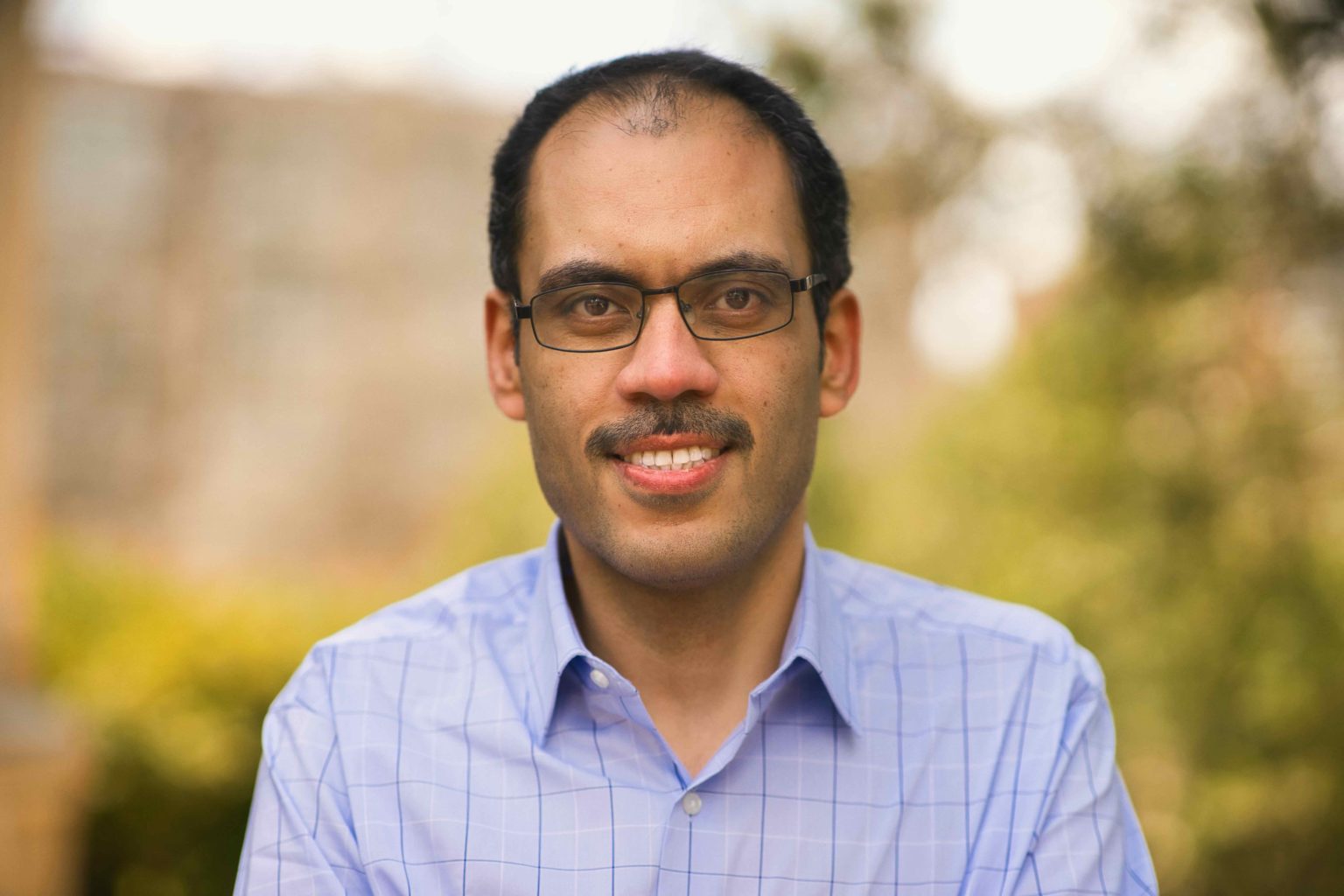
When the COVID-19 pandemic forced all MSU courses to be taught remotely in 2020, Mohamed recognized the importance of designing his Elementary Arabic I and Elementary Arabic II courses to be functional in any format — synchronous, asynchronous, and in-person — and worked to integrate technology into his classes in order to enhance accessibility to knowledge both in-person and remotely.
“The redesign of these courses was not meant to be temporary or limited in scope,” Mohamed said. “It was meant to be adaptable, sustainable and inclusive, and to advance the teaching and learning of less commonly taught languages, and to advocate for inclusive pedagogy under the slogan of reach all and teach all.”
In choosing which technology to use, Mohamed aimed to enhance engagement, feedback and students’ self-study experience while having it be adaptable, sustainable and freely accessible to students, even after the conclusion of the classes.
Using the D2L online learning platform, Mohamed integrated this with the Microsoft Teams messaging app. He created a class chat in Teams and employed the OneNote extension, which is where students turn in assignments, quizzes and exams. The extension syncs automatically, supporting multiple file types like photos, audio, and handwritten projects while also offering access to past work and a space for live feedback.
“Now students have all their homework and assignments in one place and one spot,” Mohamed said. “Course sustainability, inclusiveness, and adaptability were the goals. You can adapt what I have in different modalities, either synchronous, asynchronous or in-person.”
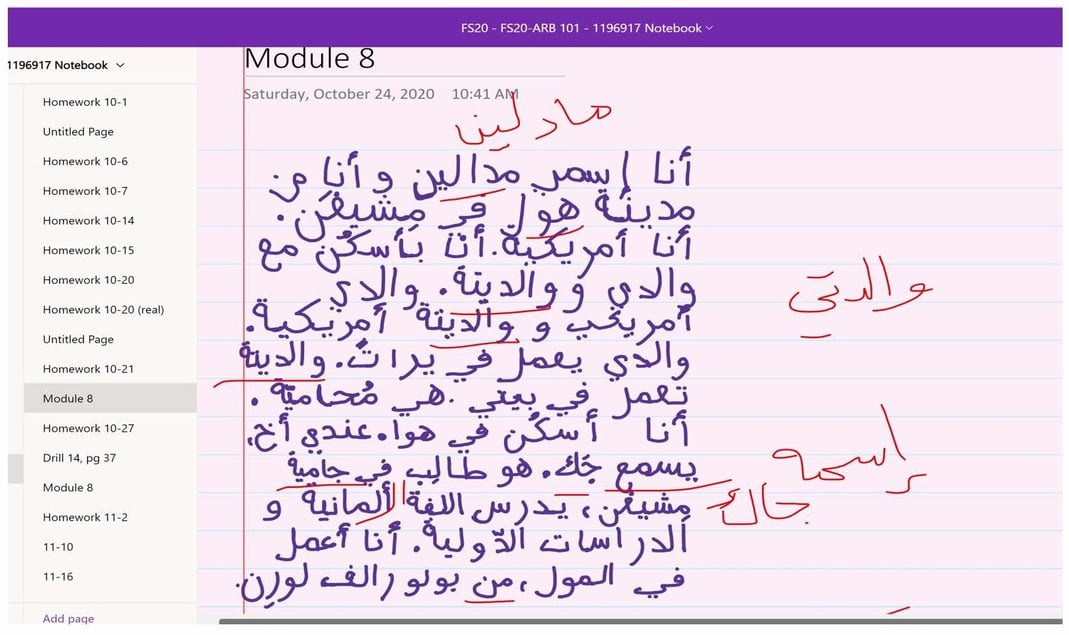
The use of OneNote has created a designated place for out-of-class collaboration and review in a way that is more easily accessible than the university standard D2L, where student assignments are often hidden or may get lost between separate tabs and varying website layouts.
“Students should not be distracted by a lot of fancy technology. For a lot of platforms, you have to sign in, create an account, and submit something over here, and submit another thing over there,” Mohamed said. “Things get lost between the files.”
Mohamed also uses MediaSpace to record class Zoom sessions for students to access later if needed and to give students access to the grammar videos that he creates.
As his classes moved back to in-person, Mohamed embraced a hybrid “flipped classroom” approach because he saw how it benefited students and gave them more flexibility. With this hybrid approach, students prepare ahead of time. The class times then are used to discuss the information and to interact with classmates. When coupled with technology, this has led to greater student engagement and more opportunities to use the Arabic language in class.
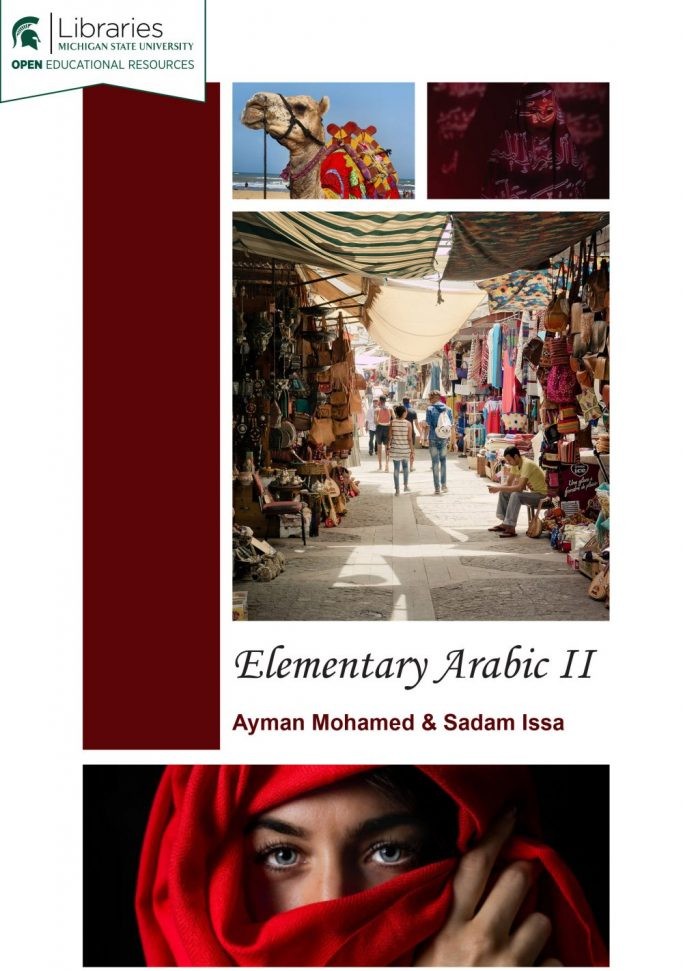
Mohamed also designed Open Resource Textbooks for his Elementary Arabic I and Elementary Arabic II courses to fit with the minimalist hybrid structure and adaptable, accessible philosophy of these classes. He created the textbooks using the Open Educational Resources platform PressBooks through the OER Program at MSU Libraries. The textbooks are enriched with interactive tools like videos and in-text questions with instant feedback.
“I built the Open Source Textbooks with adaptive technology in mind to achieve accessibility,” Mohamed said. “This is the major objective, accessibility for students with different abilities or learning disabilities to achieve inclusive pedagogy in Arabic teaching and in less commonly taught languages.”
Using an Open Source Textbook has many benefits for students including that it is freely available via the library and the platform allows course materials to be changed instantly, giving students more say in their curriculum. For the creation of these textbooks, Mohamed received an OER Library Award in 2020 and the OER Leadership Award in 2021.
Mohamed’s vision in redesigning his classes was not only to respond to the pedagogical emergency but to also create a model for other faculty to expand upon in other classes for less commonly taught languages.
“It’s less about getting the award and is more about me trying to suggest a model for people who teach less commonly taught languages, to give them a model and show that we should invest the resources we have into teaching,” he said.
Through the use of technology, Mohamed has enhanced student experience that not only serves diverse learners but also considers factors of accessibility and inclusiveness. 
“I want to showcase how we should care about our students and prioritize including them in our curriculum while achieving inclusive diversity, accessibility, and sustainability,” Mohamed said. “Equity, diversity and inclusion in the classroom are critical for academic success. With the ever-changing world around us, it is our mission to ensure that we provide up-to-date learning experiences to our students to equip them with vision and empower them to function as creative global citizens.”
The AT&T Excellence in Teaching with Technology Awards are funded by AT&T and recognize outstanding contributions to the use and development of information technology for teaching and learning in credit-bearing courses at Michigan State University. Recipients are recognized as campus leaders in contributing to student success through technology integration and enhancement in their courses.
All award recipients receive a $2,000 stipend that they can use to purchase technology to enhance their teaching practice or for their own professional development.
Mohamed plans to use the money to expand upon his Open Source Textbooks by creating educational videos that reflect the diversity of the Arabic language and its dialects around the world, including immigrant communities of Arabic origin that have created their own identities.
“I cherish so much the personal connection with students as a teacher,” he said. “In my perspective, the teacher is not just a source of giving information or teaching knowledge, it’s our goal to inspire a new generation to search for knowledge and to inspire them to be successful global citizens.”
This article was originally featured on the College of Arts and Letters website.

