Jump to HeaderJump to Main ContentJump to Footer
Michigan State University
MSUTODAY
  • Browse Stories By

    Topics

    Explore stories by subject area

    • Arts and Culture
    • Business and Economy
    • Climate and Environment
    • Education and Learning
    • Engineering, Science and Technology
    • Government and Society
    • Health and Medicine
    • Media and Communications
    • MSU Leadership and Impact
    • Sports and Recreation
    • Student and Campus Experience
    View All Stories

    Collections

    Curated story series

    • Turfgrass
    • Ask the Expert
    • Big Ideas
    • Climate solutions
    • Water at MSU
    • Mobility
    • Spartan Perspectives
    • Student views
    • Graduate voices
    • Faculty voices
    View All Collections

    Featured

    Editor's picks

    • 9 reasons to love being a Spartan

      Aug. 28, 2026

      9 reasons to love being a Spartan

    • NIH awards multi-university team over $4M to improve women’s health

      Sept. 15, 2026

      NIH awards multi-university team over $4M to improve women’s health

MSUTODAY
  • Browse Stories By

< Browse Stories By

Topics

Explore stories by subject area

  • Arts and Culture
  • Business and Economy
  • Climate and Environment
  • Education and Learning
  • Engineering, Science and Technology
  • Government and Society
  • Health and Medicine
  • Media and Communications
  • MSU Leadership and Impact
  • Sports and Recreation
  • Student and Campus Experience
  • View All Stories

Collections

Curated story series

  • Turfgrass
  • Ask the Expert
  • Big Ideas
  • Climate solutions
  • Water at MSU
  • Mobility
  • Spartan Perspectives
  • Student views
  • Graduate voices
  • Faculty voices
  • View All Collections

Featured

Editor's picks

  • 9 reasons to love being a Spartan

    Aug. 28, 2026

    9 reasons to love being a Spartan

  • NIH awards multi-university team over $4M to improve women’s health

    Sept. 15, 2026

    NIH awards multi-university team over $4M to improve women’s health

  • For Media
  • Experts
  • Releases and Statements
  • Sign Up
  • Update Information

Resources

  • A to Z Index
  • Find People
  • Maps
  • Email
  • Student Information System (SIS)
  • D2L
  • Libraries
  • Tech Support
  • MSU Misconduct Hotline
  • Social Media Directory
  • Events Calendar
  • For Media
Michigan State University
MSUToday
  • For Media
  • Experts
  • Releases and Statements
  • Sign Up
  • Update Information
Natural Sciences

Jan. 23, 2023

MSU researchers uncover new potential for ancient mint plants

MSU researchers have traced the evolution of mint genomes for potential future applications that range from medicines to pesticides to antimicrobials.

By: Emilie Lorditch

The mint family of herbs, which includes sage, rosemary, basil, and even woody plants like teak, offers an invigorating jolt to our senses of smell and taste. Michigan State University researchers have found that these plants have diversified their specialized natural characteristics through the evolution of their chemistry.
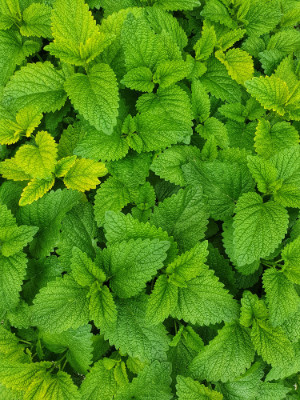
A cluster of minty fresh green leaves.
A patch of mint leaves. Credit: Tim Krisztian/Unsplash

“People easily recognize members of the mint family for their specialized metabolites,” said Björn Hamberger, an associate professor and James K. Billman Jr., M.D., Endowed Professor in the College of Natural Science. “Metabolites are an efficient way for plants to defend themselves because they can’t run away.”

Since 2016, Hamberger has been studying specialized metabolites in plants called terpenoids, which are essential in protecting plants from predators and pathogens and are also common ingredients in green and sustainable agrochemicals, antioxidants, cosmetics and fragrances. 
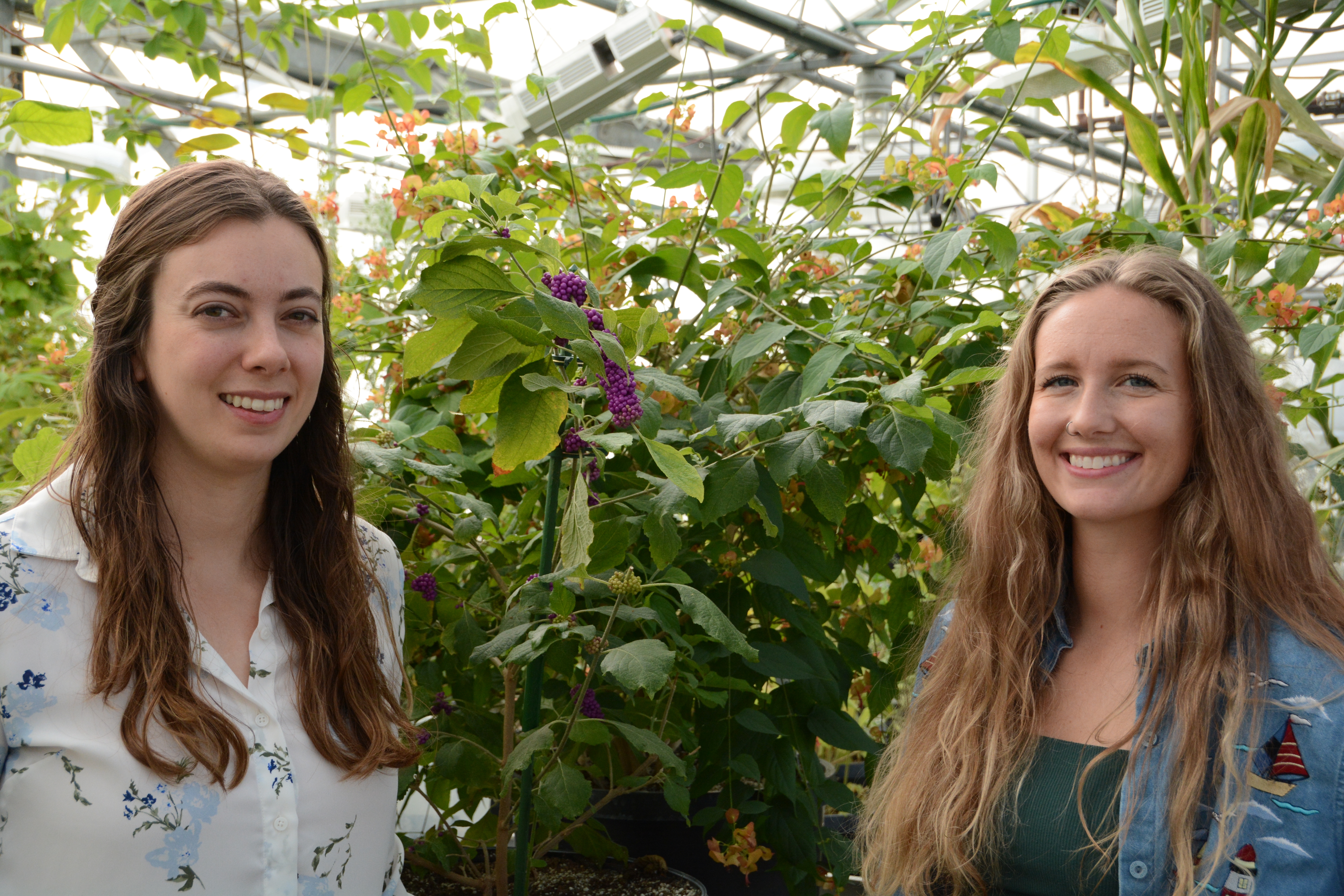
Emily Lanier and Abigail Bryson
L-R: Emily Lanier and Abigail Bryson Credit: Björn Hamberger

Hamberger worked with Robin Buell, a former MSU genomics researcher now at the University of Georgia, who sequenced several mint plant genomes. This collaboration with Buell’s team led Hamberger’s graduate students, Abigail Bryson and Emily Lanier, to discover how several genomes of the mint family have evolved and how these chemistries have emerged over the past 60 to 70 million years. 

“Over millions of years, plants have adapted and evolved for their particular niches where they thrive, and that means that these chemistries are diverse and have clearly adjusted to their environment,” Hamberger said. “So, we try to identify and discover pathways to these specialized metabolites that plants make.”
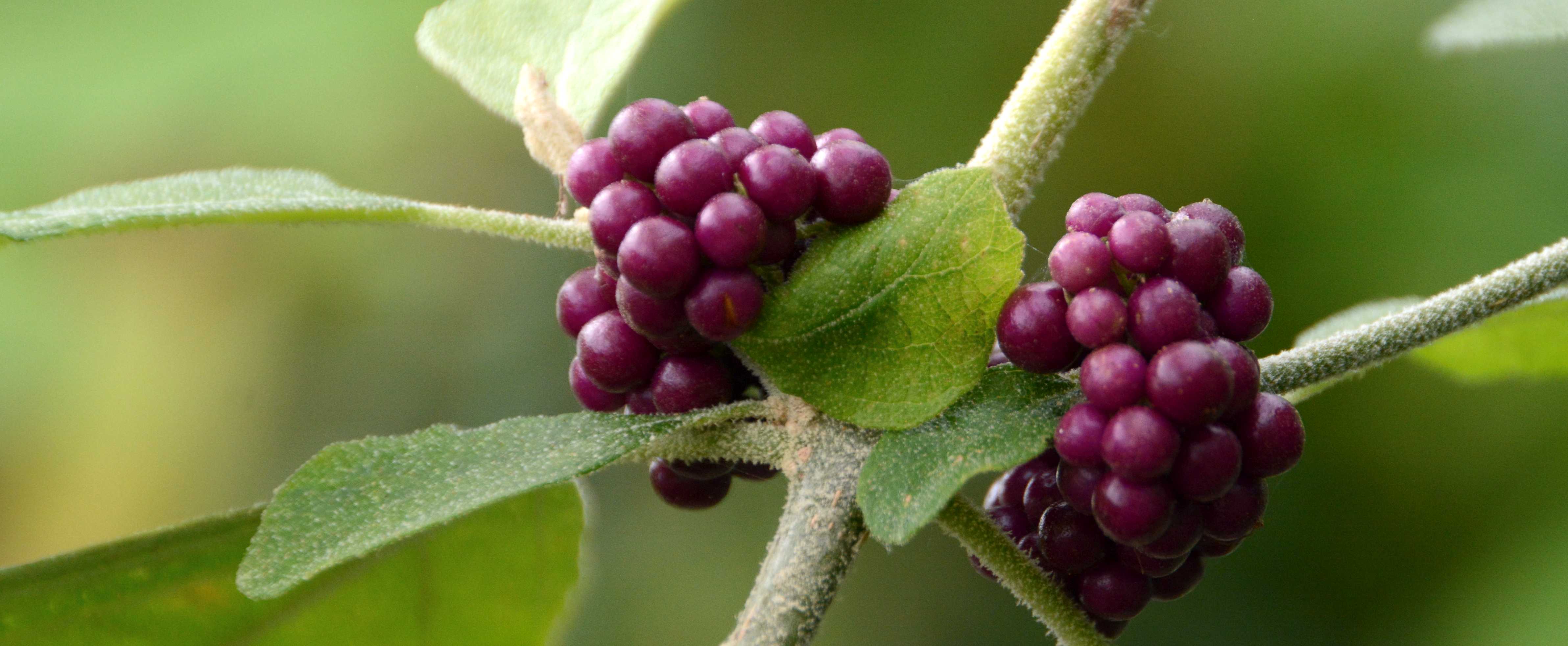
Clusters of purple beautyberry plants
A cluster of beautyberries. Credit: Björn Hamberger

Taking an interdisciplinary approach, Bryson identified the genomic organization of terpenoid biosynthesis, and Lanier analyzed the chemical pathways. Together, Lanier and Bryson discovered something highly unusual in the beautyberry genome from the mint family. It has a large biosynthetic gene cluster. A BGC is a group of genes located close together in the genome that are involved in the same metabolic pathways. These genes are like the individual pearls on a necklace — separate and yet connected. Additionally, Bryson and Lanier found variants of this BGC in six other species in the mint family.

“We are learning that the physical location of genes within the genome is important,” Bryson said. “It can drive evolution of specialized metabolic pathways in the plant, leading to a vast diversity of interesting natural plant compounds.” 

BGCs are well known in the bacterial world but their role in plants is not fully understood. The BGC cluster of the beautyberry plant contains genes that encode two distinct terpenoid pathways. The team found these terpenoids accumulate in various parts of the plant, such as the leaves and roots, and may play distinct roles in adaptation. 

“It’s the same base molecule, but each species is making its own version and modifying it in different ways to fit their survival needs,” Lanier said. 

Hamberger describes it like a recipe that everyone has a copy of and changes to suit their requirements and preferences.

Previous research has led to unique medical uses for mint plants. For example, Indian Coleus can be used as a natural treatment for glaucoma and Texas sage is a natural antimicrobial that is effective against tuberculosis. The new molecular adaptations Hamberger and his team have found open the door for future applications of natural plant products from the mint family.

“Our team has been excited about the opportunities within the mint family,” said Hamberger. “Those mint enzymes, as in the American beautyberry plant, give us the ability to make plant-natural products in the lab, including — hopefully in the future — natural good-smelling mosquito repellants.”

The research was published in the journal Nature Communications.

 
Natural SciencesEngineering, Science and TechnologyNatural SciencesBiodiversity and WildlifeClimate and Environment

Latest News

MSUToday Weekly Update

The MSUToday Weekly Update email showcases how Spartans are making a difference through academic excellence, research impact and community outreach. Get inspired by these stories of innovation, collaboration and determination. Plus, enjoy photos and videos of campus and more MSU content to help keep you connected to the Spartan community.

Sign UpUpdate My Information

Connect With Us

Visit our Facebook pageVisit our page on XVisit our Instagram pageVisit our LinkedIn pageVisit our YouTube pageVisit our TikTok page

Health and Safety

  • MSU Police and Public Safety
  • Olin Health Center
  • Counseling & Psychiatric Services (CAPS)
  • University Health and Wellbeing
  • MSU Health Care
  • Civil Rights and Title IX
  • Our Commitment
  • Center for Survivors
  • Security & Fire Safety Report
  • University Policy on Relationship Violence and Sexual Misconduct
  • Notice of Non-Discrimination, Anti-Harassment and Non-Retaliation
  • Health Care Non-Discrimination Notice

Support Services

  • Disability Resources
  • Supportive Services
  • Learning Resources

Working at MSU

  • Human Resources
  • EBS Login
  • Job Postings
  • Employee Assistance Program

Reports

  • CARES Act Funding
  • Student Achievement and Outcomes

Contact us

517-355-1855

Address

Michigan State University 426 Auditorium Road East Lansing, MI 48824

Follow Us

  • Visit our Facebook page
  • Visit our page on X
  • Visit our Instagram page
  • Visit our TikTok page
  • Visit our LinkedIn page
  • Visit our YouTube page

If you're having accessibility issues, please let us know.

Know More: Campus Safety Information and ResourcesTransparency Reporting: Budget & Salary/Compensation
  • Contact Information|
  • Site Map|
  • Privacy Statement|
  • Site Accessibility|
  • Call MSU: (517) 355-1855|
  • Visit: msu.edu|
  • Notice of Nondiscrimination|

SPARTANS WILL|© Michigan State University|
