Jump to HeaderJump to Main ContentJump to Footer
Michigan State University
MSUTODAY
  • Browse Stories By

    Topics

    Explore stories by subject area

    • Arts and Culture
    • Business and Economy
    • Climate and Environment
    • Education and Learning
    • Engineering, Science and Technology
    • Government and Society
    • Health and Medicine
    • Media and Communications
    • MSU Leadership and Impact
    • Sports and Recreation
    • Student and Campus Experience
    View All Stories

    Collections

    Curated story series

    • Turfgrass
    • Ask the Expert
    • Big Ideas
    • Climate solutions
    • Water at MSU
    • Mobility
    • Spartan Perspectives
    • Student views
    • Graduate voices
    • Faculty voices
    View All Collections

    Featured

    Editor's picks

    • The Spartans behind your favorite Michigan golf courses

      July 22, 2026

      The Spartans behind your favorite Michigan golf courses

    • MSU in the 1990s: 10 Spartan milestones

      July 14, 2026

      MSU in the 1990s: 10 Spartan milestones

MSUTODAY
  • Browse Stories By

< Browse Stories By

Topics

Explore stories by subject area

  • Arts and Culture
  • Business and Economy
  • Climate and Environment
  • Education and Learning
  • Engineering, Science and Technology
  • Government and Society
  • Health and Medicine
  • Media and Communications
  • MSU Leadership and Impact
  • Sports and Recreation
  • Student and Campus Experience
  • View All Stories

Collections

Curated story series

  • Turfgrass
  • Ask the Expert
  • Big Ideas
  • Climate solutions
  • Water at MSU
  • Mobility
  • Spartan Perspectives
  • Student views
  • Graduate voices
  • Faculty voices
  • View All Collections

Featured

Editor's picks

  • The Spartans behind your favorite Michigan golf courses

    July 22, 2026

    The Spartans behind your favorite Michigan golf courses

  • MSU in the 1990s: 10 Spartan milestones

    July 14, 2026

    MSU in the 1990s: 10 Spartan milestones

  • For Media
  • Experts
  • Releases and Statements
  • Sign Up
  • Update Information

Michigan State University

Resources

  • A to Z Index
  • Find People
  • Maps
  • Email
  • Student Information System (SIS)
  • D2L
  • Libraries
  • Tech Support
  • MSU Misconduct Hotline
  • Social Media Directory
  • Events Calendar
  • For Media
Michigan State University
MSUToday
  • For Media
  • Experts
  • Releases and Statements
  • Sign Up
  • Update Information
Natural Resources and Conservation

Feb. 6, 2023

MSU's Long-Term Ecological Research program awarded $7.6 million NSF grant

The W.K. Kellogg Biological Station Long-Term Ecological Research program at Michigan State University recently received a renewal of its foundational grant from the National Science Foundation, reaffirming its future and status as one of the country’s premier research sites.
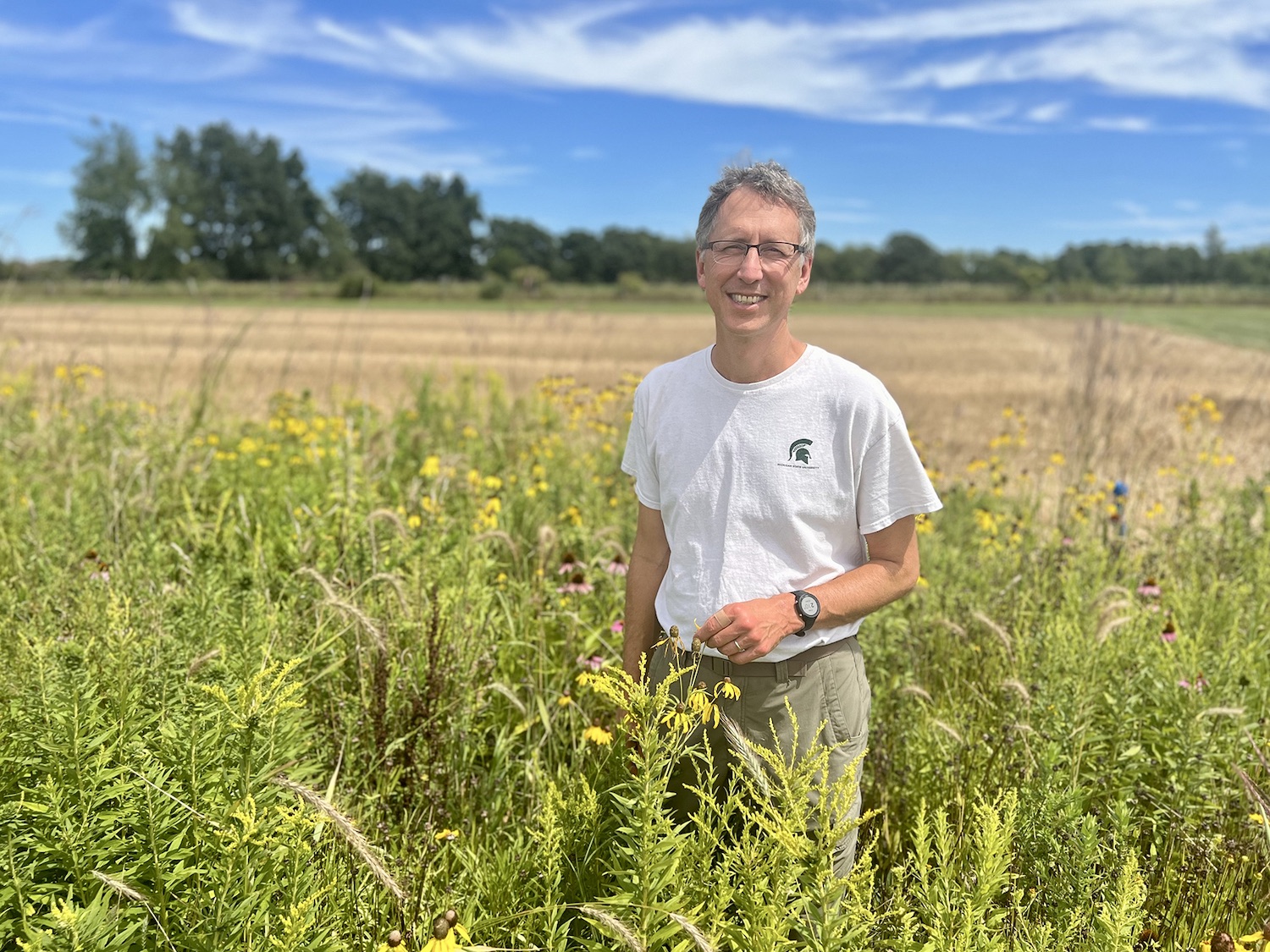
Nick Haddad standing in a prairie strip that is part of the KBS LTER.
Nick Haddad standing in a prairie strip that is part of the W.K. Kellogg Biological Station Long-Term Ecological Research program. Photo by Elizabeth Schultheis

Established in 1989, the KBS LTER is one of 28 NSF LTER sites nationally and is the only one dedicated to understanding the ecology of agricultural systems. With a focus on row crops, the 34-year-old program studies how agriculture can be environmentally friendly without harming yields.

A renewal proposal can be submitted to the NSF for consideration every six years, making this the KBS LTER’s seventh successful funding cycle request. This cycle's funding of $7.65 million began Dec. 1, 2022 and will run through November 2028, extending the project’s research to 40 years.

MSU animal ecologist Nick Haddad and microbial ecologist Sarah Evans led the grant proposal, “Ecological and Social Mechanisms of Resilience in Agroecosystems.” In it, they detail the program’s new focus on climate change and land use change.
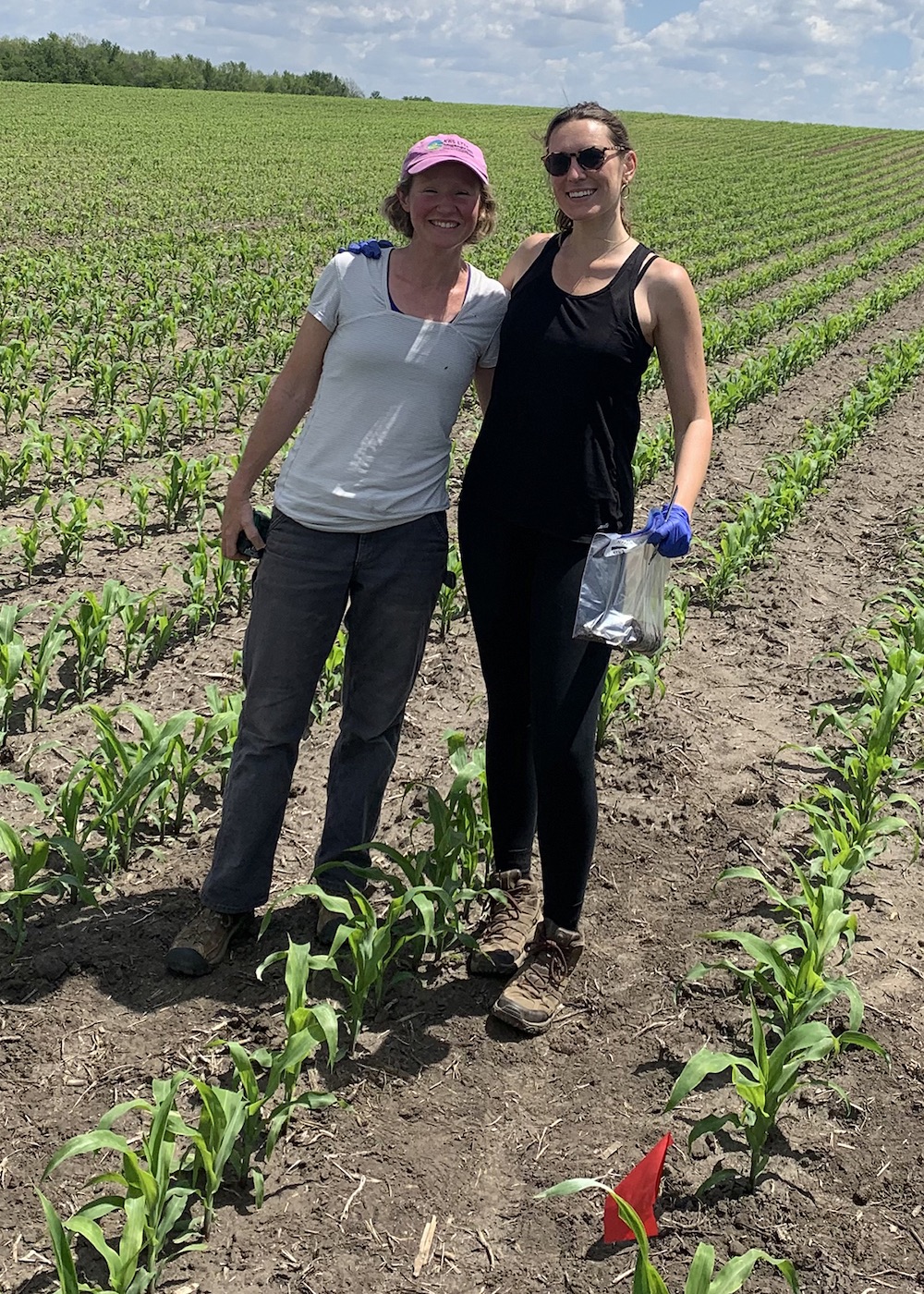
Sarah Evans (left) and LTER graduate student Corinn Rutkoski collect soils in an agricultural field to examine what microorganisms degrade pesticides.
Sarah Evans (left) and LTER graduate student Corinn Rutkoski collect soils in an agricultural field to examine what microorganisms degrade pesticides. Photo by Cole Dutter

“We have inherited this incredible set of experiments and data from the past three-plus decades and now, with this grant in hand, we are looking at a bright future for the program,” said Haddad, a professor in the Department of Integrative Biology in the MSU College of Natural Science, and a KBS faculty member. “This grant provides the opportunity to answer new questions about how ecological systems are responding to global environmental changes and how we will work to understand the resilience of our ecosystems.”

Because climate change projections reveal an increase in short, intense droughts, varied precipitation and higher temperatures during the Midwest growing season, the scientists will help farmers and policymakers understand how crops can withstand these changes.

With the renewed funding, KBS LTER will continue to test if harnessing biodiversity can also improve agriculture. Researchers are introducing strips of prairie habitat throughout corn and soy croplands. Establishing biodiversity on small sized prairie lands may take many years, but once microbes, plants, insect predators and pollinators are established, scientists can determine if their presence has a positive effect on soil health and crop yields.

“Securing this foundational NSF grant is key to our site’s continued success. By synthesizing the work from the last six years and finding salient themes, we formulated new hypotheses to test with new studies,” said Evans, an IBIO associate professor and KBS faculty member. “We are pushing science forward on all fronts in a variety of fields.”

The program’s research has a broad impact on multiple industries and communities. “Landscapes for Biodiversity” involves incorporating conservation and biodiversity into existing farmland, like with the prairie strips. “Carbon for Croplands” is a new incentive focusing on less intense approaches to farming, such as reduced tillage, to sequester carbon in soils and reduced greenhouse gas emissions. “Ecology for All” endeavors to lift historical barriers for working in and using ecology in the agricultural sector.
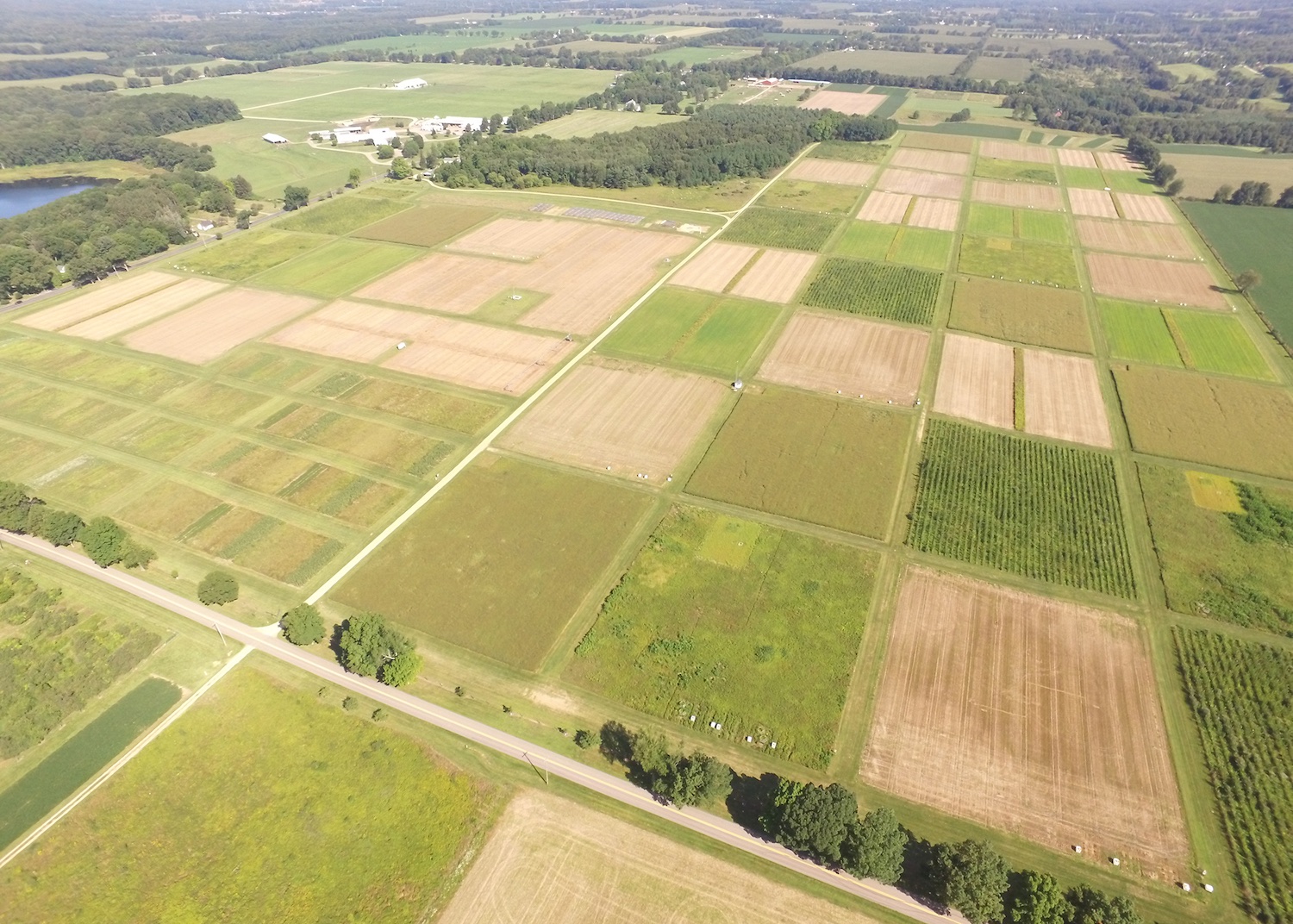
Drone image of the KBS LTER’s main cropping system experiment.
Drone image of the KBS LTER’s main cropping system experiment. Photo by Ruben Ulbrich

“We are always trying to innovate and integrate our research across multiple disciplines, acknowledging that any agricultural decisions are not just based on the ecology, but also based on values and economics,” Evans said.

Both Evans and Haddad are also faculty affiliates of MSU’s Ecology, Evolution and Behavior graduate program.

Other faculty co-PIs on the grant are Bruno Basso, Department of Earth and Environmental Sciences, MSU; Doug Landis, Department of Entomology, MSU; Jennifer Lau, Indiana Univeristy; Sandra Marquart-Pyatt, Department of Geography, Environment, and Spatial Sciences, MSU; Christine Sprunger, Sasha Kravchenko and Phil Robertson, Department of Plant, Soil, and Microbial Sciences, MSU; Phoebe Zarnetske, Department of Integrative Biology, MSU; and Liz Schulteis and Nameer Baker, LTER staff, MSU.

With 69 faculty, 58 grad students and 49 postdoctoral researchers, KBS LTER is a large, complex collaboration of disciplines at the intersection of research, life science, social science and education.

This story originally appeared on the College of Natural Science website.

MEDIA CONTACTS

Val Osowski
Natural Resources and ConservationClimate and EnvironmentNatural SciencesEngineering, Science and TechnologyBiodiversity and Wildlife

Latest News

MSUToday Weekly Update

The MSUToday Weekly Update email showcases how Spartans are making a difference through academic excellence, research impact and community outreach. Get inspired by these stories of innovation, collaboration and determination. Plus, enjoy photos and videos of campus and more MSU content to help keep you connected to the Spartan community.

Sign UpUpdate My Information

Connect With Us

Visit our Facebook pageVisit our page on XVisit our Instagram pageVisit our LinkedIn pageVisit our YouTube pageVisit our TikTok page

Health and Safety

  • MSU Police and Public Safety
  • Olin Health Center
  • Counseling & Psychiatric Services (CAPS)
  • University Health and Wellbeing
  • MSU Health Care
  • Civil Rights and Title IX
  • Our Commitment
  • Center for Survivors
  • Security & Fire Safety Report
  • University Policy on Relationship Violence and Sexual Misconduct
  • Notice of Non-Discrimination, Anti-Harassment and Non-Retaliation
  • Health Care Non-Discrimination Notice

Support Services

  • Disability Resources
  • Supportive Services
  • Learning Resources

Working at MSU

  • Human Resources
  • EBS Login
  • Job Postings
  • Employee Assistance Program

Reports

  • CARES Act Funding
  • Student Achievement and Outcomes

Contact us

517-355-1855

Address

Michigan State University 426 Auditorium Road East Lansing, MI 48824

Follow Us

  • Visit our Facebook page
  • Visit our page on X
  • Visit our Instagram page
  • Visit our TikTok page
  • Visit our LinkedIn page
  • Visit our YouTube page

If you're having accessibility issues, please let us know.

Know More: Campus Safety Information and ResourcesTransparency Reporting: Budget & Salary/Compensation
Michigan State University
  • Contact Information|
  • Site Map|
  • Privacy Statement|
  • Site Accessibility|
  • Call MSU: (517) 355-1855|
  • Visit: msu.edu|
  • Notice of Nondiscrimination|

SPARTANS WILL|© Michigan State University|
