Jump to HeaderJump to Main ContentJump to Footer
Michigan State University
MSUTODAY
  • Browse Stories By

    Topics

    Explore stories by subject area

    • Arts and Culture
    • Business and Economy
    • Climate and Environment
    • Education and Learning
    • Engineering, Science and Technology
    • Government and Society
    • Health and Medicine
    • Media and Communications
    • MSU Leadership and Impact
    • Sports and Recreation
    • Student and Campus Experience
    View All Stories

    Collections

    Curated story series

    • Turfgrass
    • Ask the Expert
    • Big Ideas
    • Climate solutions
    • Water at MSU
    • Mobility
    • Spartan Perspectives
    • Student views
    • Graduate voices
    • Faculty voices
    View All Collections

    Featured

    Editor's picks

    • The Spartans behind your favorite Michigan golf courses

      July 22, 2026

      The Spartans behind your favorite Michigan golf courses

    • MSU in the 1990s: 10 Spartan milestones

      July 14, 2026

      MSU in the 1990s: 10 Spartan milestones

MSUTODAY
  • Browse Stories By

< Browse Stories By

Topics

Explore stories by subject area

  • Arts and Culture
  • Business and Economy
  • Climate and Environment
  • Education and Learning
  • Engineering, Science and Technology
  • Government and Society
  • Health and Medicine
  • Media and Communications
  • MSU Leadership and Impact
  • Sports and Recreation
  • Student and Campus Experience
  • View All Stories

Collections

Curated story series

  • Turfgrass
  • Ask the Expert
  • Big Ideas
  • Climate solutions
  • Water at MSU
  • Mobility
  • Spartan Perspectives
  • Student views
  • Graduate voices
  • Faculty voices
  • View All Collections

Featured

Editor's picks

  • The Spartans behind your favorite Michigan golf courses

    July 22, 2026

    The Spartans behind your favorite Michigan golf courses

  • MSU in the 1990s: 10 Spartan milestones

    July 14, 2026

    MSU in the 1990s: 10 Spartan milestones

  • For Media
  • Experts
  • Releases and Statements
  • Sign Up
  • Update Information

Michigan State University

Resources

  • A to Z Index
  • Find People
  • Maps
  • Email
  • Student Information System (SIS)
  • D2L
  • Libraries
  • Tech Support
  • MSU Misconduct Hotline
  • Social Media Directory
  • Events Calendar
  • For Media
Michigan State University
MSUToday
  • For Media
  • Experts
  • Releases and Statements
  • Sign Up
  • Update Information
MSU International Impact

Jan. 13, 2023

Insights get the right fish on the right plate

By: Sue Nichols

To alleviate hunger and food insecurity, it’s not just the size of the fish catch — it’s about who ultimately is able to put the right fish on the table.

A group led by scientists at Michigan State University have devised a way to track and measure the true picture of how one of the world’s most-traded commodities moves from the water to the plate within a country. Their findings in Nature Food about sub-Saharan Africa revealed surprising gaps in the traditional supply-and-demand analysis of fish and opens opportunities to get the right fish to those who need it most.

And the innovations they deployed, they say, can be useful anywhere.
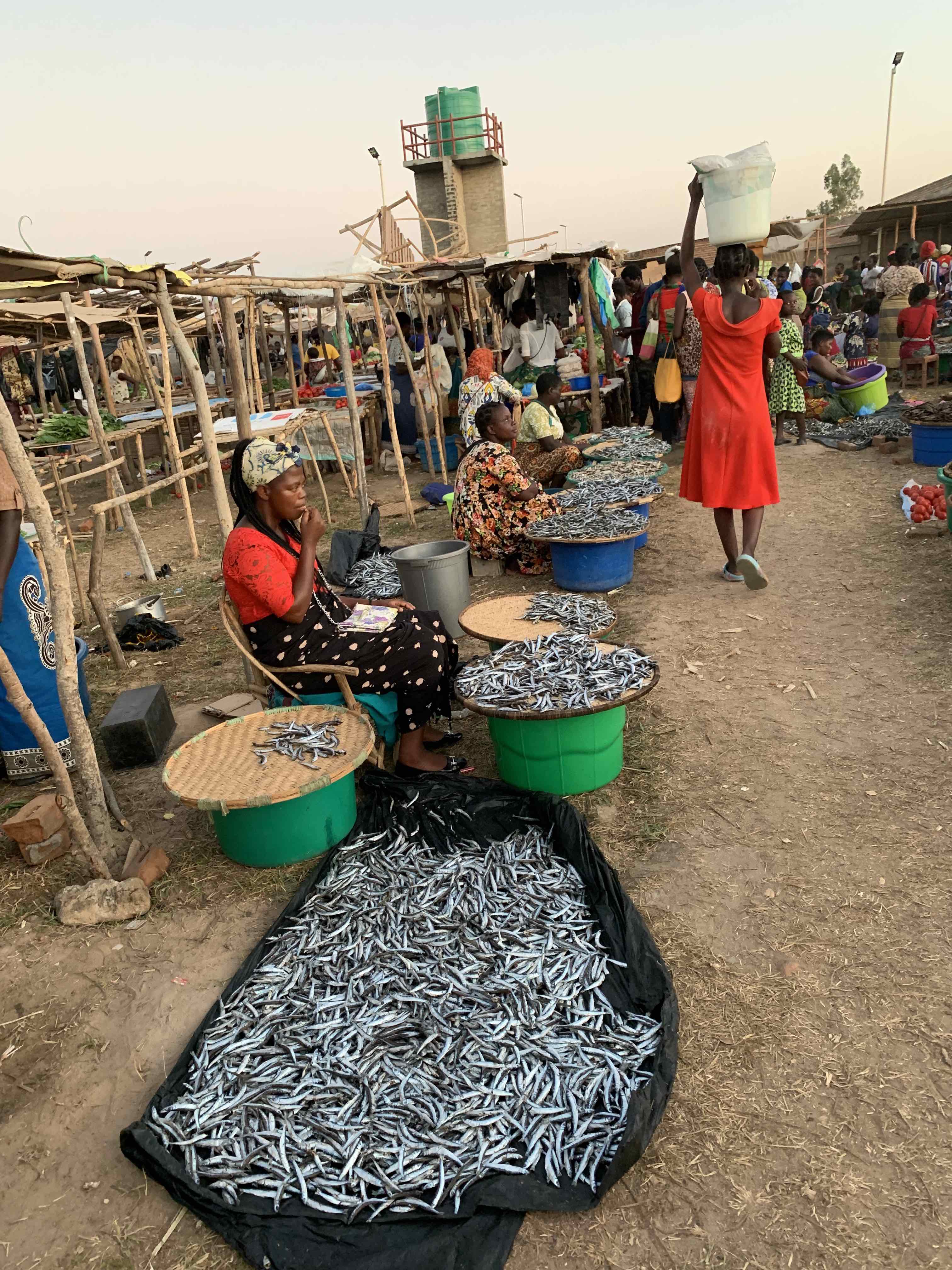
Usipa fish on display at a market in Nkhotakota, Malawi
Usipa on display at a market in Nkhotakota, Malawi. Photo credit: Saweda Liverpool-Tasie, MSU Agriculture, Food and Resource Economics

“We know that all fish aren’t created equal in terms of containing the right nutrition for certain people in certain circumstances,” said co-author Abigail Bennett, assistant professor at MSU. “Effective policy needs new data that that reveals how variation in the supply, price and form of fish in different places throughout a country shapes who can access that fish, with special attention to people who are poor and vulnerable to malnourishment.”

Existing data on food production indicate food supply, but not whether food reaches those who need it. Meanwhile, consumption data describe who ultimately ends up accessing food, but not where it came from or how it reached them. The group bridged that gap by looking at how fish moves across space through value chains after it is harvested and at household demographics.

They studied in Malawi in sub-Saharan Africa, looking at the trips two freshwater fish — small sardine-like usipa and medium-sized chambo, a variety of tilapia — took to end up at peoples’ tables, which meant understanding why fish ended up at certain markets, and whether people could afford them.

The little usipa is the bigger catch, both in volume and dollar value. It’s affordable, often sun-dried and consumed whole. Chambo is usually eaten fresh and is pricier.

The team, led by co-author Park Muhonda when he was a postdoctoral researcher at MSU, surveyed more than 900 people throughout the fish food journey. He now is at Oregon State University.
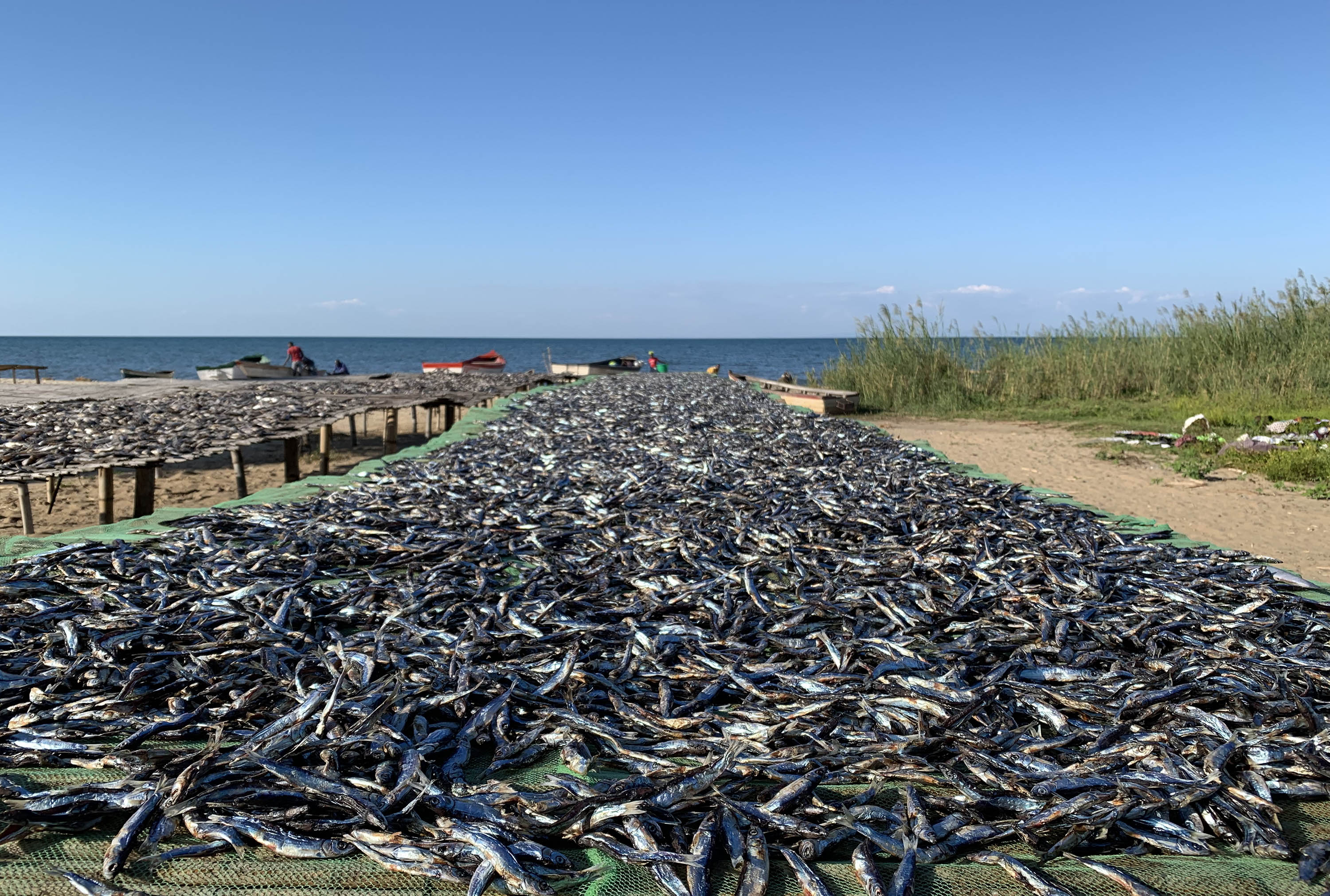
A large quantity of fish drying on a rack outdoors
Usipa on a sun-drying rack in Nkhotakota, Malawi. This traditional processing method preserves the fish for two to three months. Photo credit: Emma Rice, MSU-CSIS

The group found that usipa is distributed much more widely than chambo — available in 72 or the 79 markets surveyed across Malawi — while chambo was available in only 16 of those markets, which skewed to urban areas. Usipa also packs more nutritional punch than chambo, being higher in protein, vitamins, and minerals critical to nursing women and their children.

But the group found that policies were championing the fancier chambo.

“While most fisheries policy in Malawi has previously focused on the larger high-value tilapia species, these results indicate the need for a shift in policy focus towards the small pelagic species to better support food security and nutrition,” said co-author Edith Gondwe, an MSU PhD student in fisheries and wildlife.

The work in “Spatial analysis of aquatic food access can inform nutrition-sensitive policy,” which revealed disconnects between policy and need, can help guide policy beyond Malawi.

“Our work on spatial analysis of fish in Malawi goes beyond Malawi and fish food systems,” said master’s student Emma Rice. “Most countries, including the United States, face food and nutrition security issues in different forms and contexts. This approach of spatial analysis of food systems could be adopted in any context to understand what types of food flow to which populations and through what mechanisms.”

Bennett, Gondwe, Rice and Muhonda are members of MSU’s Center for Systems Integration and Sustainability, as is co-author Dana Infante.

The paper authored also was authored by Emmanuel Kaunda, Sam Katengeza, Saweda Liverpool-Tasie, Ben Belton, Jared Ross and John Virdin. The work was funded by the Michigan State University Alliance for African Partnership.

This story was originally featured on the Center for Systems Integration and Sustainability website.

MEDIA CONTACTS

Sue Nichols
MSU International ImpactMSU Leadership and ImpactNatural Resources and ConservationClimate and EnvironmentNutritionHealth and Medicine

Latest News

MSUToday Weekly Update

The MSUToday Weekly Update email showcases how Spartans are making a difference through academic excellence, research impact and community outreach. Get inspired by these stories of innovation, collaboration and determination. Plus, enjoy photos and videos of campus and more MSU content to help keep you connected to the Spartan community.

Sign UpUpdate My Information

Connect With Us

Visit our Facebook pageVisit our page on XVisit our Instagram pageVisit our LinkedIn pageVisit our YouTube pageVisit our TikTok page

Health and Safety

  • MSU Police and Public Safety
  • Olin Health Center
  • Counseling & Psychiatric Services (CAPS)
  • University Health and Wellbeing
  • MSU Health Care
  • Civil Rights and Title IX
  • Our Commitment
  • Center for Survivors
  • Security & Fire Safety Report
  • University Policy on Relationship Violence and Sexual Misconduct
  • Notice of Non-Discrimination, Anti-Harassment and Non-Retaliation
  • Health Care Non-Discrimination Notice

Support Services

  • Disability Resources
  • Supportive Services
  • Learning Resources

Working at MSU

  • Human Resources
  • EBS Login
  • Job Postings
  • Employee Assistance Program

Reports

  • CARES Act Funding
  • Student Achievement and Outcomes

Contact us

517-355-1855

Address

Michigan State University 426 Auditorium Road East Lansing, MI 48824

Follow Us

  • Visit our Facebook page
  • Visit our page on X
  • Visit our Instagram page
  • Visit our TikTok page
  • Visit our LinkedIn page
  • Visit our YouTube page

If you're having accessibility issues, please let us know.

Know More: Campus Safety Information and ResourcesTransparency Reporting: Budget & Salary/Compensation
Michigan State University
  • Contact Information|
  • Site Map|
  • Privacy Statement|
  • Site Accessibility|
  • Call MSU: (517) 355-1855|
  • Visit: msu.edu|
  • Notice of Nondiscrimination|

SPARTANS WILL|© Michigan State University|
