Jump to HeaderJump to Main ContentJump to Footer
Michigan State University
  • Browse Stories By

    Topics

    Explore stories by subject area

    • Arts and Culture
    • Business and Economy
    • Climate and Environment
    • Education and Learning
    • Engineering, Science and Technology
    • Government and Society
    • Health and Medicine
    • Media and Communications
    • MSU Leadership and Impact
    • Sports and Recreation
    • Student and Campus Experience
    View All Stories

    Collections

    Curated story series

    • Turfgrass
    • Ask the Expert
    • Big Ideas
    • Climate solutions
    • Water at MSU
    • Mobility
    • Spartan Perspectives
    • Student views
    • Graduate voices
    • Faculty voices
    View All Collections

    Featured

    Editor's picks

    • The Spartans behind your favorite Michigan golf courses

      July 22, 2026

      The Spartans behind your favorite Michigan golf courses

    • MSU in the 1990s: 10 Spartan milestones

      July 14, 2026

      MSU in the 1990s: 10 Spartan milestones

MSUTODAY
  • Browse Stories By

< Browse Stories By

Topics

Explore stories by subject area

  • Arts and Culture
  • Business and Economy
  • Climate and Environment
  • Education and Learning
  • Engineering, Science and Technology
  • Government and Society
  • Health and Medicine
  • Media and Communications
  • MSU Leadership and Impact
  • Sports and Recreation
  • Student and Campus Experience
  • View All Stories

Collections

Curated story series

  • Turfgrass
  • Ask the Expert
  • Big Ideas
  • Climate solutions
  • Water at MSU
  • Mobility
  • Spartan Perspectives
  • Student views
  • Graduate voices
  • Faculty voices
  • View All Collections

Featured

Editor's picks

  • The Spartans behind your favorite Michigan golf courses

    July 22, 2026

    The Spartans behind your favorite Michigan golf courses

  • MSU in the 1990s: 10 Spartan milestones

    July 14, 2026

    MSU in the 1990s: 10 Spartan milestones

  • For Media
  • Experts
  • Releases and Statements
  • Sign Up
  • Update Information

Resources

  • A to Z Index
  • Find People
  • Maps
  • Email
  • Student Information System (SIS)
  • D2L
  • Libraries
  • Tech Support
  • MSU Misconduct Hotline
  • Social Media Directory
  • Events Calendar
  • For Media
Michigan State University
MSUToday
  • For Media
  • Experts
  • Releases and Statements
  • Sign Up
  • Update Information
MSUTODAY
Climate and Climate Solutions

Dec. 4, 2023

Ask the expert: Helping people in the Arctic Circle with energy insecurity

By: Lia Bergin

In the United States, more than 30 million households are energy insecure or can’t meet basic household energy needs, according to a 2023 U.S. Energy Information Administration report. The EIA report identifies households in cold-climate regions as particularly susceptible to energy burdens, as they account for over 30% of all homes facing energy insecurity.
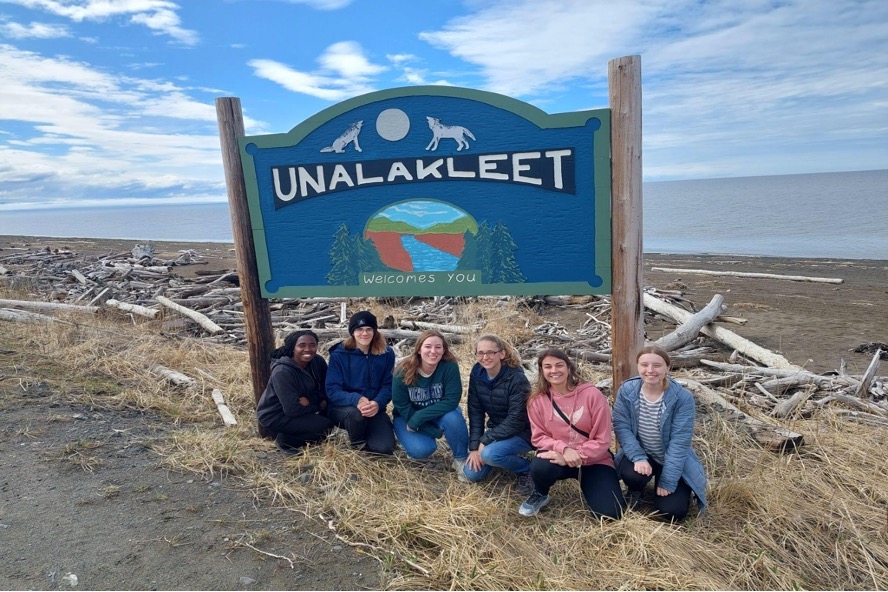
From left- Amanda Quarshie (ISU), Zach Gioppo (MSU), Christiana Kiesling (MSU), Dr. Kristen Cetin (MSU), Patricia Guillante (MSU), Janie Cooper (MSU) pose in front of a sign for the town of Unalakleet in rural Alaska
Kristen Cetin (third from right) with a group that traveled to Unalakleet, Alaska. Courtesy photo

Kristen and Bora Cetin, associate professors in the College of Engineering at Michigan State University have begun a $2.8 million collaborative grant through the National Science Foundation focused on working with local communities to establish culturally appropriate ways to assist energy-burdened homes in Alaska.

What inspired your research in energy insecurity?

One of the reasons we are focusing on rural Alaska for this project is the extreme energy burden in homes in this area. Fuel, propane and electricity are much more expensive in rural Alaska because of the difficulty in transporting these resources to remote communities. Electricity prices are three to five times higher than the U.S. average. Heating fuel is 1.8 times higher than the U.S. average. Native Alaskan populations and the communities they live in are disproportionately burdened with energy costs. Because of this unusually high burden, reductions in energy usage and improvements in energy efficiency can result in substantial savings for rural Alaskan homeowners.

What kinds of tests are used to assess a home’s energy needs?

We have been collaborating with communities to complete energy assessments, mold and allergen testing. We are also installing long-term sensors to monitor indoor air quality and identifying cultural values and opinions regarding energy efficiency and retrofit usage, which are collected through homeowner interviews.

We also have begun climate modeling to predict region-specific weather scenarios. As we compile results, we will provide stakeholders and homeowners with recommendations to reduce energy burden and develop energy efficiency curriculum that will be distributed in the community. We are working toward identifying and quantifying what the housing challenges are in each of these communities, and then using that data to develop solutions that are technically sound and culturally appropriate.

What information are you hoping to learn?

The priority is to gather enough data so we can understand the primary energy efficiency and indoor air quality improvement needs for housing in these communities. We also need to gather enough information to accurately model homes, improve their electric grid reliability and reduce each community’s emissions. We are interested in knowing what retrofits are currently in homes and identify reasons why they currently may not be in use. We aim to take this information and develop, test and implement solutions that are culturally appropriate, acceptable and successful in improving the performance and indoor air quality of homes.

How does incorporating traditional knowledge and practices of the Alaskan region benefit the project?

People are more willing to consider recommended improvements if they know such changes are specific to their needs and culture. Ideally, we want the homeowners and community members we work with to use our findings to reduce their energy burden and improve their quality of life. Generally, the coproduction of knowledge enables those we work with to be more receptive to developed recommendations, especially if it is clear that our top priority is to respect the unique culture and customs of each community.

What has your experience working in Alaska been like?

Traveling to work with these communities has been a great experience. It’s rare in engineering to be able to work so closely with people in the community and to develop solutions directly based on our findings.

The preparation for each trip can be expensive and logistically difficult since the communities we’ve visited are only accessible by boat or small plane. We travel with a lot of equipment. It also can be challenging to conduct assessments in the community since we schedule as many as we can each day. Conducting the assessments and traveling from home to home with our equipment requires a lot of physical work, which can be especially difficult on rainy days traveling without a car. We spend time at night uploading and processing data, checking sensors and testing mold samples.

We are currently planning our next work visit for 2024.

MEDIA CONTACTS

Emilie Lorditch
Climate and Climate SolutionsClimate and EnvironmentMSU International ImpactMSU Leadership and ImpactClimate and Environment

Collection

more content from this collection

Ask the Expert

Latest News

MSUToday Weekly Update

The MSUToday Weekly Update email showcases how Spartans are making a difference through academic excellence, research impact and community outreach. Get inspired by these stories of innovation, collaboration and determination. Plus, enjoy photos and videos of campus and more MSU content to help keep you connected to the Spartan community.

Sign UpUpdate My Information

Connect With Us

Visit our Facebook pageVisit our page on XVisit our Instagram pageVisit our LinkedIn pageVisit our YouTube pageVisit our TikTok page

Health and Safety

  • MSU Police and Public Safety
  • Olin Health Center
  • Counseling & Psychiatric Services (CAPS)
  • University Health and Wellbeing
  • MSU Health Care
  • Civil Rights and Title IX
  • Our Commitment
  • Center for Survivors
  • Security & Fire Safety Report
  • University Policy on Relationship Violence and Sexual Misconduct
  • Notice of Non-Discrimination, Anti-Harassment and Non-Retaliation
  • Health Care Non-Discrimination Notice

Support Services

  • Disability Resources
  • Supportive Services
  • Learning Resources

Working at MSU

  • Human Resources
  • EBS Login
  • Job Postings
  • Employee Assistance Program

Reports

  • CARES Act Funding
  • Student Achievement and Outcomes

Contact us

517-355-1855

Address

Michigan State University 426 Auditorium Road East Lansing, MI 48824

Follow Us

  • Visit our Facebook page
  • Visit our page on X
  • Visit our Instagram page
  • Visit our TikTok page
  • Visit our LinkedIn page
  • Visit our YouTube page

If you're having accessibility issues, please let us know.

Know More: Campus Safety Information and ResourcesTransparency Reporting: Budget & Salary/Compensation
  • Contact Information|
  • Site Map|
  • Privacy Statement|
  • Site Accessibility|
  • Call MSU: (517) 355-1855|
  • Visit: msu.edu|
  • Notice of Nondiscrimination|

SPARTANS WILL|© Michigan State University|
