Jump to HeaderJump to Main ContentJump to Footer
Michigan State University
  • Browse Stories By

    Topics

    Explore stories by subject area

    • Arts and Culture
    • Business and Economy
    • Climate and Environment
    • Education and Learning
    • Engineering, Science and Technology
    • Government and Society
    • Health and Medicine
    • Media and Communications
    • MSU Leadership and Impact
    • Sports and Recreation
    • Student and Campus Experience
    View All Stories

    Collections

    Curated story series

    • Turfgrass
    • Ask the Expert
    • Big Ideas
    • Climate solutions
    • Water at MSU
    • Mobility
    • Spartan Perspectives
    • Student views
    • Graduate voices
    • Faculty voices
    View All Collections

    Featured

    Editor's picks

    • The Spartans behind your favorite Michigan golf courses

      July 22, 2026

      The Spartans behind your favorite Michigan golf courses

    • MSU in the 1990s: 10 Spartan milestones

      July 14, 2026

      MSU in the 1990s: 10 Spartan milestones

MSUTODAY
  • Browse Stories By

< Browse Stories By

Topics

Explore stories by subject area

  • Arts and Culture
  • Business and Economy
  • Climate and Environment
  • Education and Learning
  • Engineering, Science and Technology
  • Government and Society
  • Health and Medicine
  • Media and Communications
  • MSU Leadership and Impact
  • Sports and Recreation
  • Student and Campus Experience
  • View All Stories

Collections

Curated story series

  • Turfgrass
  • Ask the Expert
  • Big Ideas
  • Climate solutions
  • Water at MSU
  • Mobility
  • Spartan Perspectives
  • Student views
  • Graduate voices
  • Faculty voices
  • View All Collections

Featured

Editor's picks

  • The Spartans behind your favorite Michigan golf courses

    July 22, 2026

    The Spartans behind your favorite Michigan golf courses

  • MSU in the 1990s: 10 Spartan milestones

    July 14, 2026

    MSU in the 1990s: 10 Spartan milestones

  • For Media
  • Experts
  • Releases and Statements
  • Sign Up
  • Update Information

Resources

  • A to Z Index
  • Find People
  • Maps
  • Email
  • Student Information System (SIS)
  • D2L
  • Libraries
  • Tech Support
  • MSU Misconduct Hotline
  • Social Media Directory
  • Events Calendar
  • For Media
Michigan State University
MSUToday
  • For Media
  • Experts
  • Releases and Statements
  • Sign Up
  • Update Information
MSUTODAY
Biodiversity and Wildlife

Dec. 13, 2023

Artificial light is luring birds to cities and sometimes to their deaths

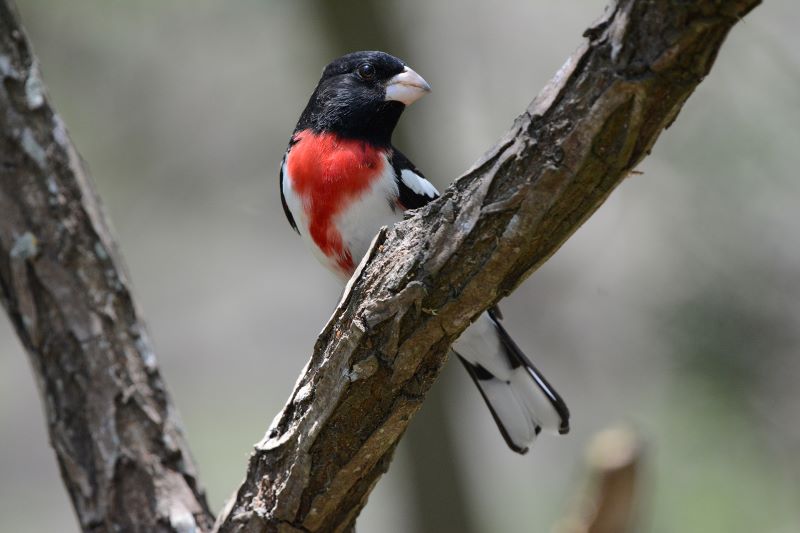
Rose-breasted grosbeak
Rose-breasted grosbeak. Photo by Kyle Horton.

Nearly 1,000 birds were killed Oct. 4-5 when they collided with an illuminated glass building in Chicago. Though mass fatalities of this magnitude are rare, light pollution poses a serious – and growing – threat to migrating birds.

In the largest study of its kind, published in Nature Communications, scientists used weather radar data to map bird stopover density in the United States and found that artificial light is a top indicator of where birds will land. City lights lure birds into what can be an ecological trap, said lead author Kyle Horton, an assistant professor in Colorado State University’s Department of Fish, Wildlife and Conservation Biology.

Buildings that lead to collisions, less habitat, scarcer food and more people and cats can make cities less-than-ideal rest stops for migrating birds. Urban parks can be decent stopover sites, but birds that rest there might need to compete over limited resources.

Migration is a risky and exhausting time in a bird's life. Birds migrate hundreds to thousands of miles – sometimes burning half their body mass along the way. Finding a good place to rest and refuel is critical for migrating birds to survive and thrive once they reach their destination.

"These stopover locations are the fueling stations,” Horton said. “If you're on a cross-country trip and there's no fueling stations, then you're stranded. If they don't have a good spot to rebuild energy supplies, migration can't happen."

The study provides the first continent-wide maps of migration stopover hotspots in the contiguous United States, and knowing these broadscale layover patterns can help in the development of conservation plans.

“Cities pose multiple risks to migrating birds,” said co-author and Michigan State University Professor of Geography Geoff Henebry. “They also offer resources for the tired birds to rest and refuel. Our study is notable in that it combines big data – and a lot of processing – from the weather surveillance radar network with big data from multiple spaceborne sensors to address key questions regarding the influence of urban areas on bird migration.”

The study pairs more than 10 million radar observations with landscape and other place-based information to try to explain why birds choose to rest where they do. Out of 49 predictors, light pollution was the No. 2 predictor of stopover density.

The top predictor was elevation, which provides context for where birds are flying but doesn’t explain why they are flying there. The patterns created by migrating birds that are picked up by radar tend to follow coastlines or a particular elevation. Light pollution is the top predictor of human influence on bird migration.

To read more, go to geo.msu.edu.

MEDIA CONTACTS

Diane Huhn
Biodiversity and WildlifeClimate and EnvironmentSocial SciencesGovernment and Society

Latest News

MSUToday Weekly Update

The MSUToday Weekly Update email showcases how Spartans are making a difference through academic excellence, research impact and community outreach. Get inspired by these stories of innovation, collaboration and determination. Plus, enjoy photos and videos of campus and more MSU content to help keep you connected to the Spartan community.

Sign UpUpdate My Information

Connect With Us

Visit our Facebook pageVisit our page on XVisit our Instagram pageVisit our LinkedIn pageVisit our YouTube pageVisit our TikTok page

Health and Safety

  • MSU Police and Public Safety
  • Olin Health Center
  • Counseling & Psychiatric Services (CAPS)
  • University Health and Wellbeing
  • MSU Health Care
  • Civil Rights and Title IX
  • Our Commitment
  • Center for Survivors
  • Security & Fire Safety Report
  • University Policy on Relationship Violence and Sexual Misconduct
  • Notice of Non-Discrimination, Anti-Harassment and Non-Retaliation
  • Health Care Non-Discrimination Notice

Support Services

  • Disability Resources
  • Supportive Services
  • Learning Resources

Working at MSU

  • Human Resources
  • EBS Login
  • Job Postings
  • Employee Assistance Program

Reports

  • CARES Act Funding
  • Student Achievement and Outcomes

Contact us

517-355-1855

Address

Michigan State University 426 Auditorium Road East Lansing, MI 48824

Follow Us

  • Visit our Facebook page
  • Visit our page on X
  • Visit our Instagram page
  • Visit our TikTok page
  • Visit our LinkedIn page
  • Visit our YouTube page

If you're having accessibility issues, please let us know.

Know More: Campus Safety Information and ResourcesTransparency Reporting: Budget & Salary/Compensation
  • Contact Information|
  • Site Map|
  • Privacy Statement|
  • Site Accessibility|
  • Call MSU: (517) 355-1855|
  • Visit: msu.edu|
  • Notice of Nondiscrimination|

SPARTANS WILL|© Michigan State University|
