Jump to HeaderJump to Main ContentJump to Footer
Michigan State University
  • Browse Stories By

    Topics

    Explore stories by subject area

    • Arts and Culture
    • Business and Economy
    • Climate and Environment
    • Education and Learning
    • Engineering, Science and Technology
    • Government and Society
    • Health and Medicine
    • Media and Communications
    • MSU Leadership and Impact
    • Sports and Recreation
    • Student and Campus Experience
    View All Stories

    Collections

    Curated story series

    • Turfgrass
    • Ask the Expert
    • Big Ideas
    • Climate solutions
    • Water at MSU
    • Mobility
    • Spartan Perspectives
    • Student views
    • Graduate voices
    • Faculty voices
    View All Collections

    Featured

    Editor's picks

    • The Spartans behind your favorite Michigan golf courses

      July 22, 2026

      The Spartans behind your favorite Michigan golf courses

    • MSU in the 1990s: 10 Spartan milestones

      July 14, 2026

      MSU in the 1990s: 10 Spartan milestones

MSUTODAY
  • Browse Stories By

< Browse Stories By

Topics

Explore stories by subject area

  • Arts and Culture
  • Business and Economy
  • Climate and Environment
  • Education and Learning
  • Engineering, Science and Technology
  • Government and Society
  • Health and Medicine
  • Media and Communications
  • MSU Leadership and Impact
  • Sports and Recreation
  • Student and Campus Experience
  • View All Stories

Collections

Curated story series

  • Turfgrass
  • Ask the Expert
  • Big Ideas
  • Climate solutions
  • Water at MSU
  • Mobility
  • Spartan Perspectives
  • Student views
  • Graduate voices
  • Faculty voices
  • View All Collections

Featured

Editor's picks

  • The Spartans behind your favorite Michigan golf courses

    July 22, 2026

    The Spartans behind your favorite Michigan golf courses

  • MSU in the 1990s: 10 Spartan milestones

    July 14, 2026

    MSU in the 1990s: 10 Spartan milestones

  • For Media
  • Experts
  • Releases and Statements
  • Sign Up
  • Update Information

Resources

  • A to Z Index
  • Find People
  • Maps
  • Email
  • Student Information System (SIS)
  • D2L
  • Libraries
  • Tech Support
  • MSU Misconduct Hotline
  • Social Media Directory
  • Events Calendar
  • For Media
Michigan State University
MSUToday
  • For Media
  • Experts
  • Releases and Statements
  • Sign Up
  • Update Information
MSUTODAY
Biodiversity and Wildlife

Nov. 6, 2023

MSU plant biologists shed light on 144-year-old seedy mystery


Reading time: 4 minutes

In April 2021, four Michigan State University plant scientists met at an undisclosed area on campus to dig up a bottle containing seeds buried more than 144 years ago by MSU botanist William J. Beal.

Fast forward to 2023, more than two years after the seeds were excavated from their secret location, molecular genetic testing has confirmed a hybrid plant was accidentally included among the seeds in the bottle — a discovery that would have surprised and amazed Beal since DNA was unknown at the time.
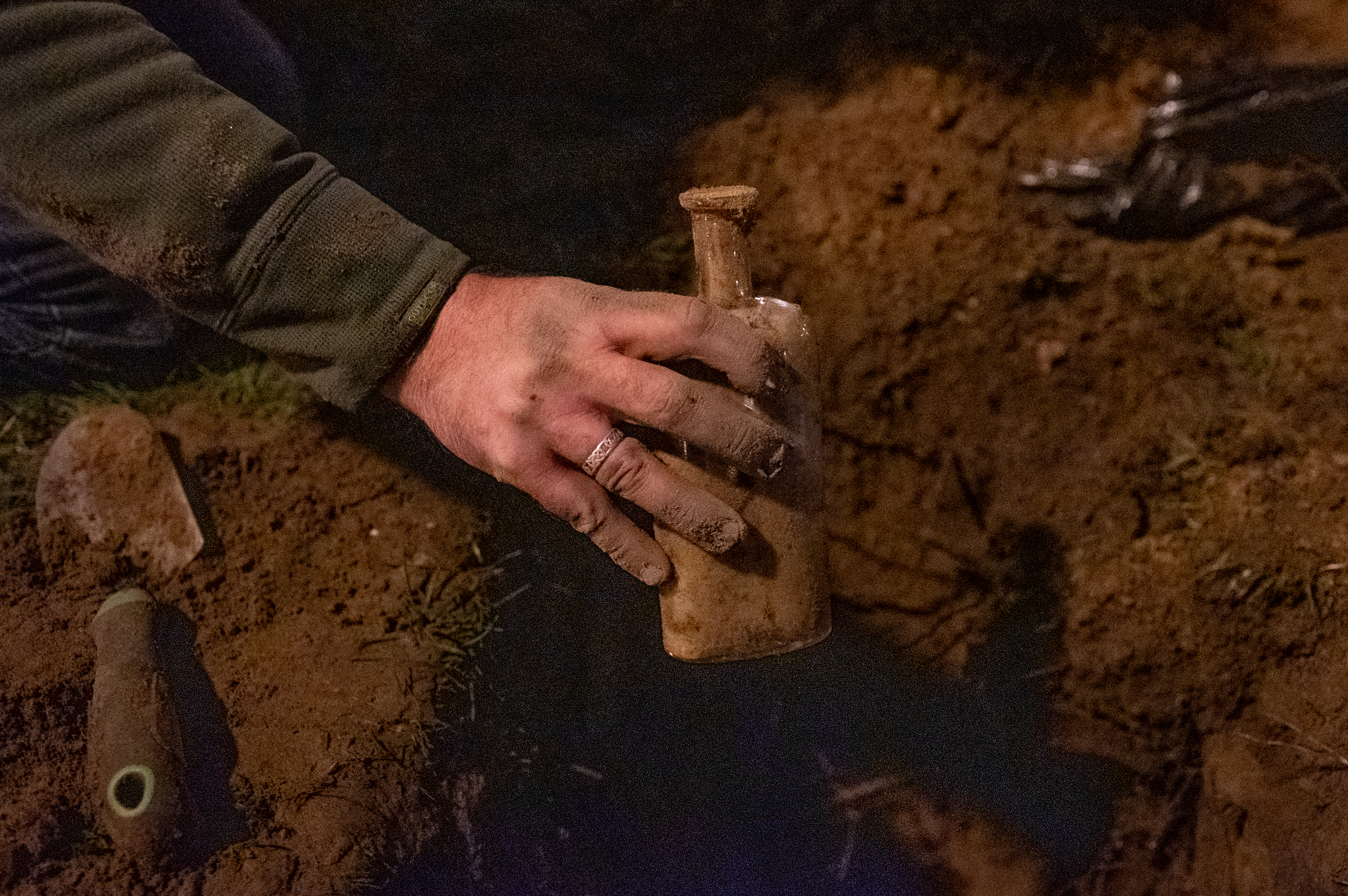
An excavated bottle of seeds is removed from the place it’s rested for the last 144 years.
An excavated bottle of seeds is removed from the place it’s rested for the last 144 years. Credit: Derrick L. Turner.

Going back to 1879

During his time on campus, Beal wanted to help farmers increase crop production by eliminating weeds from their farms, so he was determined to find out how long the seeds of these undesirable plants could remain viable in soil. (Read original story)

He filled 20 glass pint bottles with sand and 50 seeds from 23 weed species. Beal buried the bottles with their mouths slanting downward so water wouldn’t collect, replicating as best he could the natural seed and soil conditions. And so began the Beal Seed Experiment.

Beal originally excavated every five years to test the seeds, which grew each time they were excavated. However, in 1920, it was decided to change the interval to 10 years to prolong the study. Then, in 1980, the interval was extended to 20 years. With four bottles still buried, the experiment will continue until 2100.
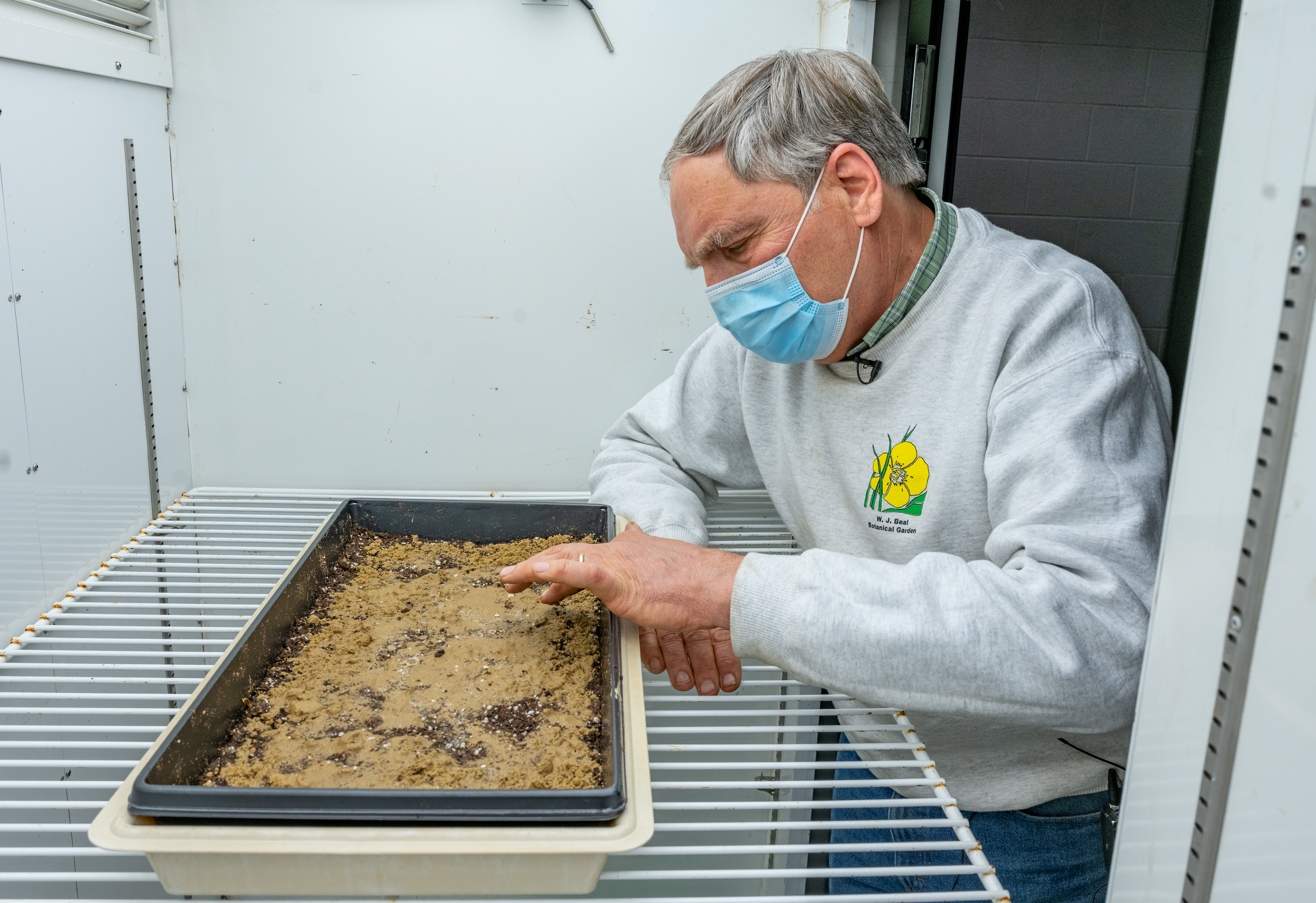
Frank Telewski, professor emeritus, plant biologist and Beal team leader in the growth lab with the newly planted seeds.
Frank Telewski, professor emeritus, plant biologist and Beal team leader in the growth lab with newly planted seeds. Credit Derrick L. Turner.

In 2021, the current team of Beal researchers excavated the 14th bottle of seeds buried on campus to see if they could finally answer the question: How long can seeds remain viable to grow?

“The biggest surprise to me is that the seeds germinated again,” said Frank Telewski, professor emeritus, plant biologist and Beal team leader. “It’s amazing that something so old can still grow.”

DNA results ‘ex-seed’ expectations

Since April 2021, the Beal experiment team members, including Telewski; Lars Brudvig, professor of plant biology; Grace Fleming, assistant professor of plant biology; and David Lowry, associate professor of plant biology, have been sequencing genomic DNA to confirm the plant species’ identities for the first time in the history of the experiment. The Beal team’s work has been published in the American Journal of Botany.

The team always thought a hybrid was somehow mixed in with the original seeds but never had the tools to confirm it, until now.

“The molecular genetics work confirmed the phenotypes we saw, which is that the plants were Verbascum blattaria, or moth mullein, and one hybrid of Verbascum blattaria and Verbascum thapsus, or common mullein,” Fleming said. “Beal stated that he included only Verbascum thapsus seeds, so some mix-up must have happened while the bottles were being prepared.
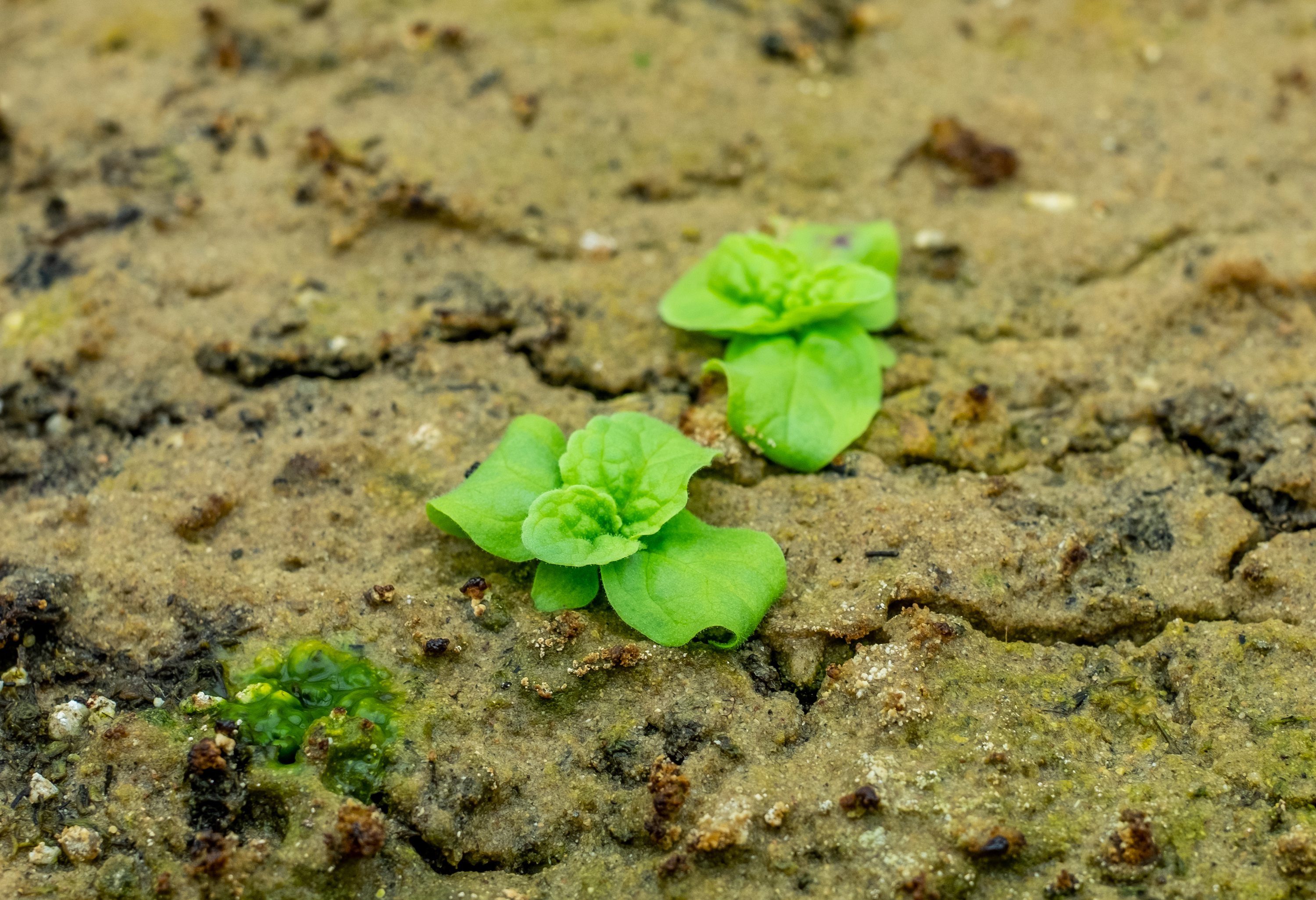
Verbascum blattaria seedlings, a weed commonly called moth mullein, germinated from Beal Seed experiment. Credit Derrick Turner.
Verbascum blattaria seedlings, a weed commonly called moth mullein, germinated from Beal Seed experiment. Credit Derrick Turner.

While most species in the Beal experiment lost all seed viability in the first 60 years, the persistence of Verbascum seeds provides invaluable information about seed viability in natural soil conditions, Brudvig said.

“In the 140-plus years since the experiment’s start, the question of seed bank longevity has gained new relevance, including for rare species conservation and ecosystem restoration; for example, prairie plantings on former farmland,” Brudvig said. “Our findings help to inform which plant species, like Verbascum, might be problematic weeds for a restoration project like this, and which other species may not, depending on how long a field was farmed before being restored.”

Beal’s question remains

Beal hoped to help farmers eliminate weeds by determining how long seeds would remain viable. After 144 years, that question remains unanswered.

“The Beal experiment will ultimately end when we run out of bottles,” Lowry said. “If seeds germinate again from our next dig, we may need to consider extending the time between bottle extractions to every 30 years. It’s still a little early to put it on my calendar, but I am looking forward to seeing if we can wake up any more seeds in 2040.”


 

Biodiversity and WildlifeClimate and EnvironmentNatural SciencesEngineering, Science and TechnologyNatural Sciences

Latest News

MSUToday Weekly Update

The MSUToday Weekly Update email showcases how Spartans are making a difference through academic excellence, research impact and community outreach. Get inspired by these stories of innovation, collaboration and determination. Plus, enjoy photos and videos of campus and more MSU content to help keep you connected to the Spartan community.

Sign UpUpdate My Information

Connect With Us

Visit our Facebook pageVisit our page on XVisit our Instagram pageVisit our LinkedIn pageVisit our YouTube pageVisit our TikTok page

Health and Safety

  • MSU Police and Public Safety
  • Olin Health Center
  • Counseling & Psychiatric Services (CAPS)
  • University Health and Wellbeing
  • MSU Health Care
  • Civil Rights and Title IX
  • Our Commitment
  • Center for Survivors
  • Security & Fire Safety Report
  • University Policy on Relationship Violence and Sexual Misconduct
  • Notice of Non-Discrimination, Anti-Harassment and Non-Retaliation
  • Health Care Non-Discrimination Notice

Support Services

  • Disability Resources
  • Supportive Services
  • Learning Resources

Working at MSU

  • Human Resources
  • EBS Login
  • Job Postings
  • Employee Assistance Program

Reports

  • CARES Act Funding
  • Student Achievement and Outcomes

Contact us

517-355-1855

Address

Michigan State University 426 Auditorium Road East Lansing, MI 48824

Follow Us

  • Visit our Facebook page
  • Visit our page on X
  • Visit our Instagram page
  • Visit our TikTok page
  • Visit our LinkedIn page
  • Visit our YouTube page

If you're having accessibility issues, please let us know.

Know More: Campus Safety Information and ResourcesTransparency Reporting: Budget & Salary/Compensation
  • Contact Information|
  • Site Map|
  • Privacy Statement|
  • Site Accessibility|
  • Call MSU: (517) 355-1855|
  • Visit: msu.edu|
  • Notice of Nondiscrimination|

SPARTANS WILL|© Michigan State University|