Jump to HeaderJump to Main ContentJump to Footer
Michigan State University
MSUTODAY
  • Browse Stories By

    Topics

    Explore stories by subject area

    • Arts and Culture
    • Business and Economy
    • Climate and Environment
    • Education and Learning
    • Engineering, Science and Technology
    • Government and Society
    • Health and Medicine
    • Media and Communications
    • MSU Leadership and Impact
    • Sports and Recreation
    • Student and Campus Experience
    View All Stories

    Collections

    Curated story series

    • Turfgrass
    • Ask the Expert
    • Big Ideas
    • Climate solutions
    • Water at MSU
    • Mobility
    • Spartan Perspectives
    • Student views
    • Graduate voices
    • Faculty voices
    View All Collections

    Featured

    Editor's picks

    • 9 reasons to love being a Spartan

      Aug. 28, 2026

      9 reasons to love being a Spartan

    • NIH awards multi-university team over $4M to improve women’s health

      Sept. 15, 2026

      NIH awards multi-university team over $4M to improve women’s health

MSUTODAY
  • Browse Stories By

< Browse Stories By

Topics

Explore stories by subject area

  • Arts and Culture
  • Business and Economy
  • Climate and Environment
  • Education and Learning
  • Engineering, Science and Technology
  • Government and Society
  • Health and Medicine
  • Media and Communications
  • MSU Leadership and Impact
  • Sports and Recreation
  • Student and Campus Experience
  • View All Stories

Collections

Curated story series

  • Turfgrass
  • Ask the Expert
  • Big Ideas
  • Climate solutions
  • Water at MSU
  • Mobility
  • Spartan Perspectives
  • Student views
  • Graduate voices
  • Faculty voices
  • View All Collections

Featured

Editor's picks

  • 9 reasons to love being a Spartan

    Aug. 28, 2026

    9 reasons to love being a Spartan

  • NIH awards multi-university team over $4M to improve women’s health

    Sept. 15, 2026

    NIH awards multi-university team over $4M to improve women’s health

  • For Media
  • Experts
  • Releases and Statements
  • Sign Up
  • Update Information

Resources

  • A to Z Index
  • Find People
  • Maps
  • Email
  • Student Information System (SIS)
  • D2L
  • Libraries
  • Tech Support
  • MSU Misconduct Hotline
  • Social Media Directory
  • Events Calendar
  • For Media
Michigan State University
MSUToday
  • For Media
  • Experts
  • Releases and Statements
  • Sign Up
  • Update Information
MSU Research

Oct. 26, 2023

Meet MSU's 'Robin Hood' approach for tracking biodiversity

New methodology can provide valuable insights to better protect data-deficient species

By: Matt Davenport

Elise Zipkin and her team at Michigan State University have developed a sort of “Robin Hood” approach to better understand and protect the world’s biodiversity.

 

MSU Associate Professor Elise Zipkin

They’re using information from well-quantified animals to reveal insights about less common, harder-to-observe species. That is, they’re taking insights from the data-rich and giving to the data-poor.


Now, they’re sharing their methods with the wider research and conservation community in the Journal of Animal Ecology. Additionally, the computer code behind that methodology is freely available on the group’s GitHub page.


“We’re losing biodiversity so rapidly that we’re no longer in a position to ask what’s going on with every species individually,” said Zipkin, who is an associate professor in the Department of Integrative Biology at MSU.


She is also the director of MSU’s Ecology, Evolution and Behavior program, or EEB.


“At the same time, we have unprecedented amounts of data and computing power,” Zipkin said. “We have to think more strategically about how to take advantage of those data to answer the tough questions.”


A community approach


Currently, about one in seven species are classified as data deficient by the International Union for Conservation of Nature. That means these species lack the data needed to inform their conservation status, which, in turn, helps determine conservation strategies.


“There are so many species where we don’t have the data to tell us exactly what’s going on,” Zipkin said. “We need more rapid and efficient assessments of those species if we want to figure out how to protect and conserve them.”
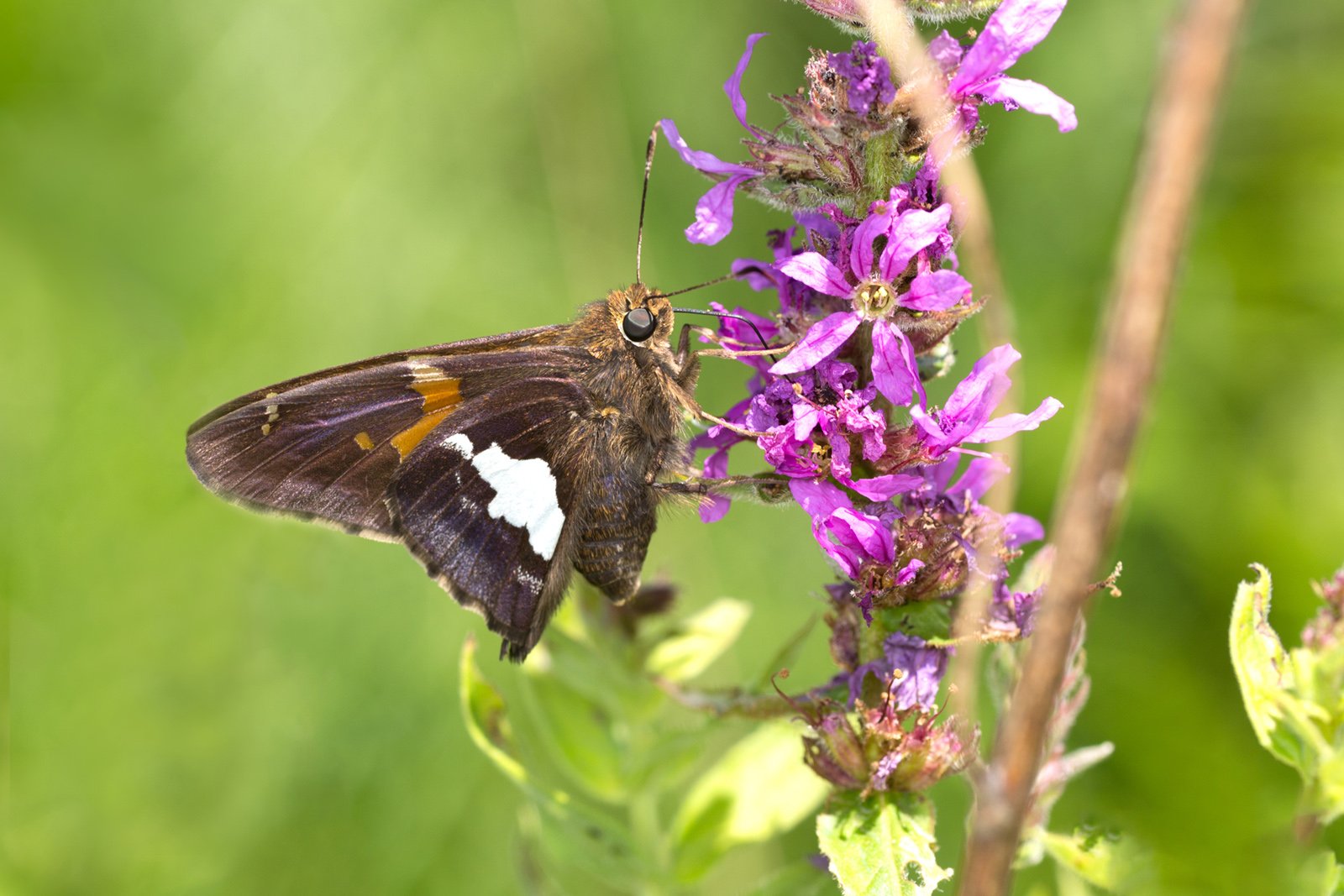
A brown silver-spotted skipper butterfly with orange and white markings drinks nectar from a purple flower.
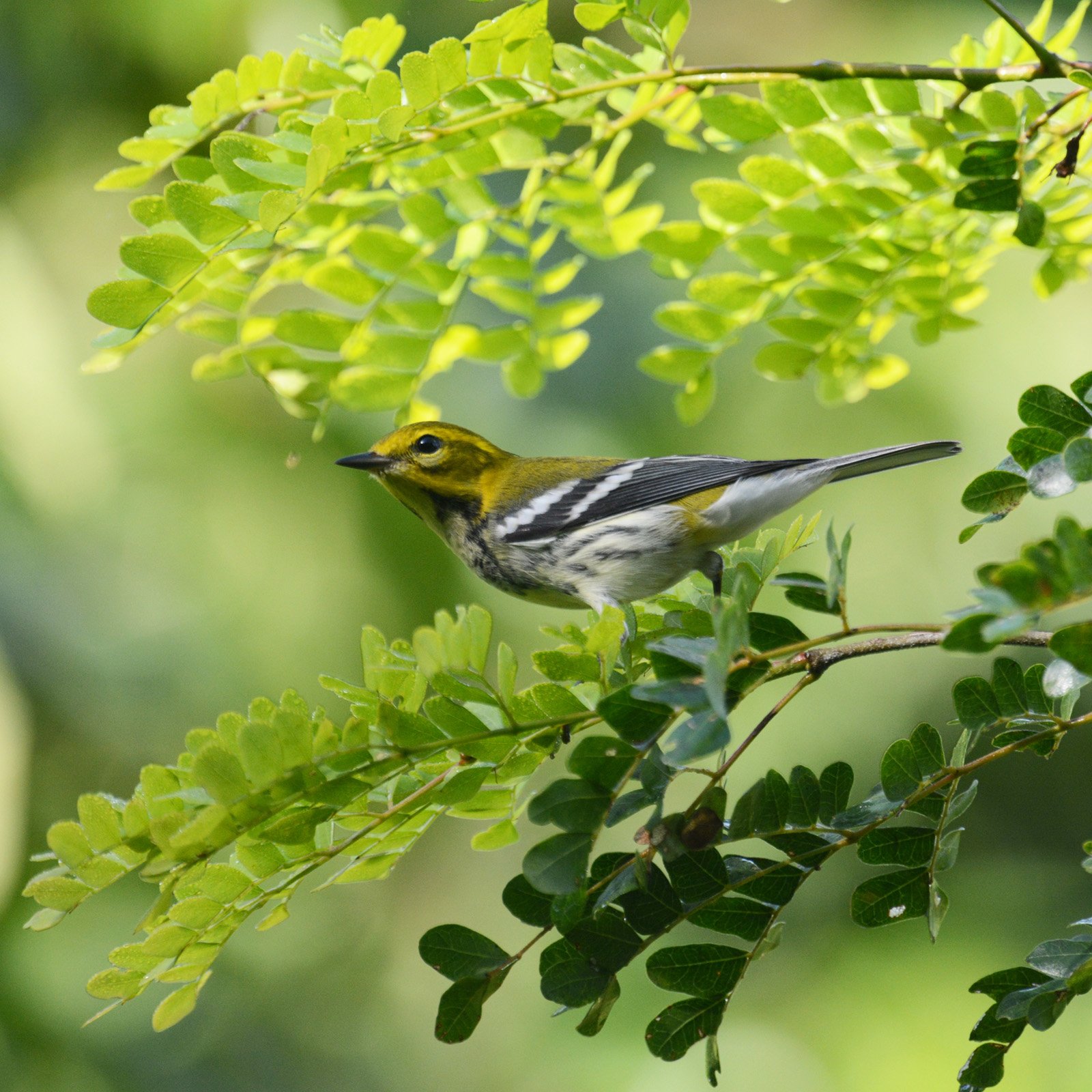
A black-throated green warbler ? a yellowish green bird with black and white bands ? is perched on a branch with small green leaves.
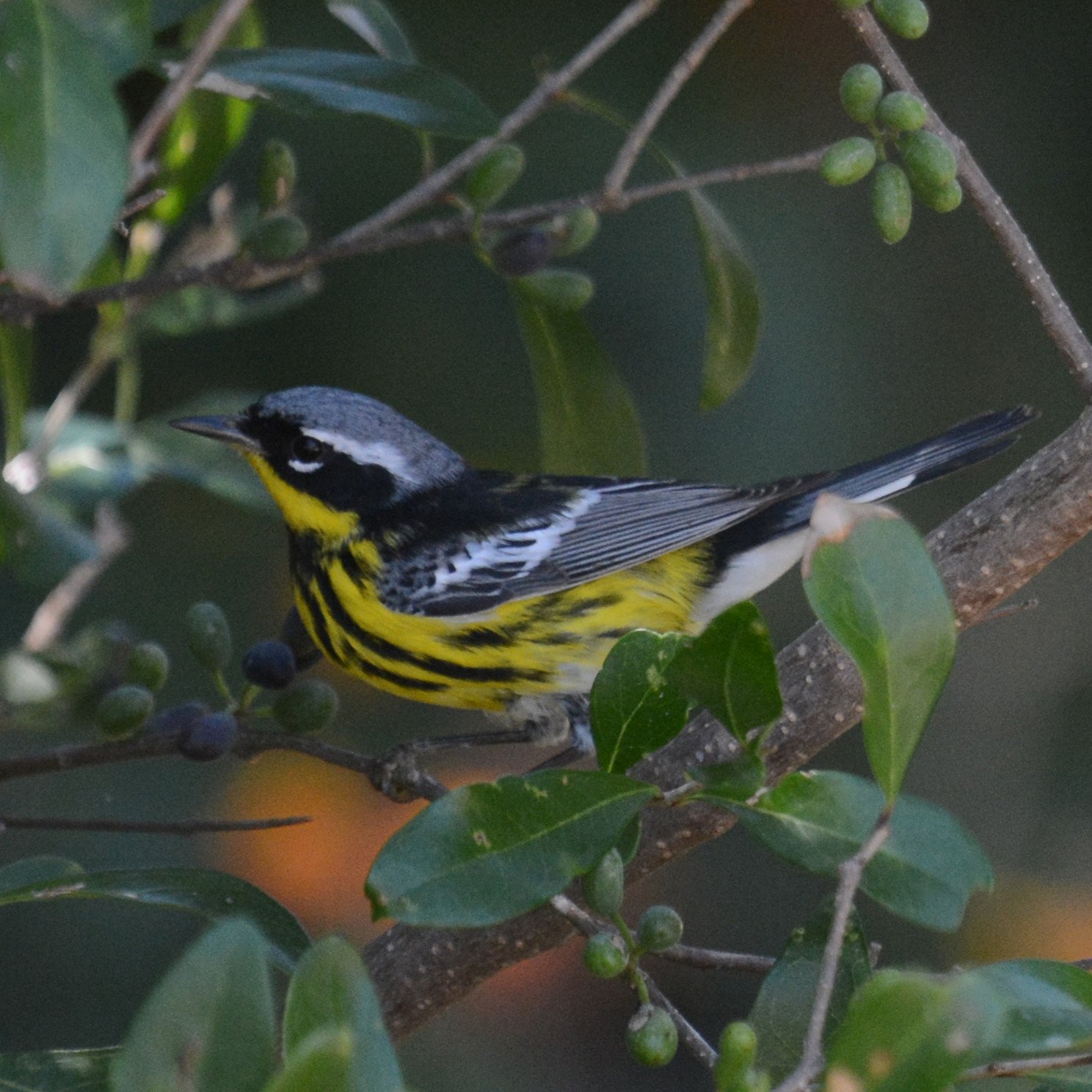
A magnolia warbler ? a black, gray and white bird with a yellow breast and throat ? is perched on a branch with small green leaves and berries.
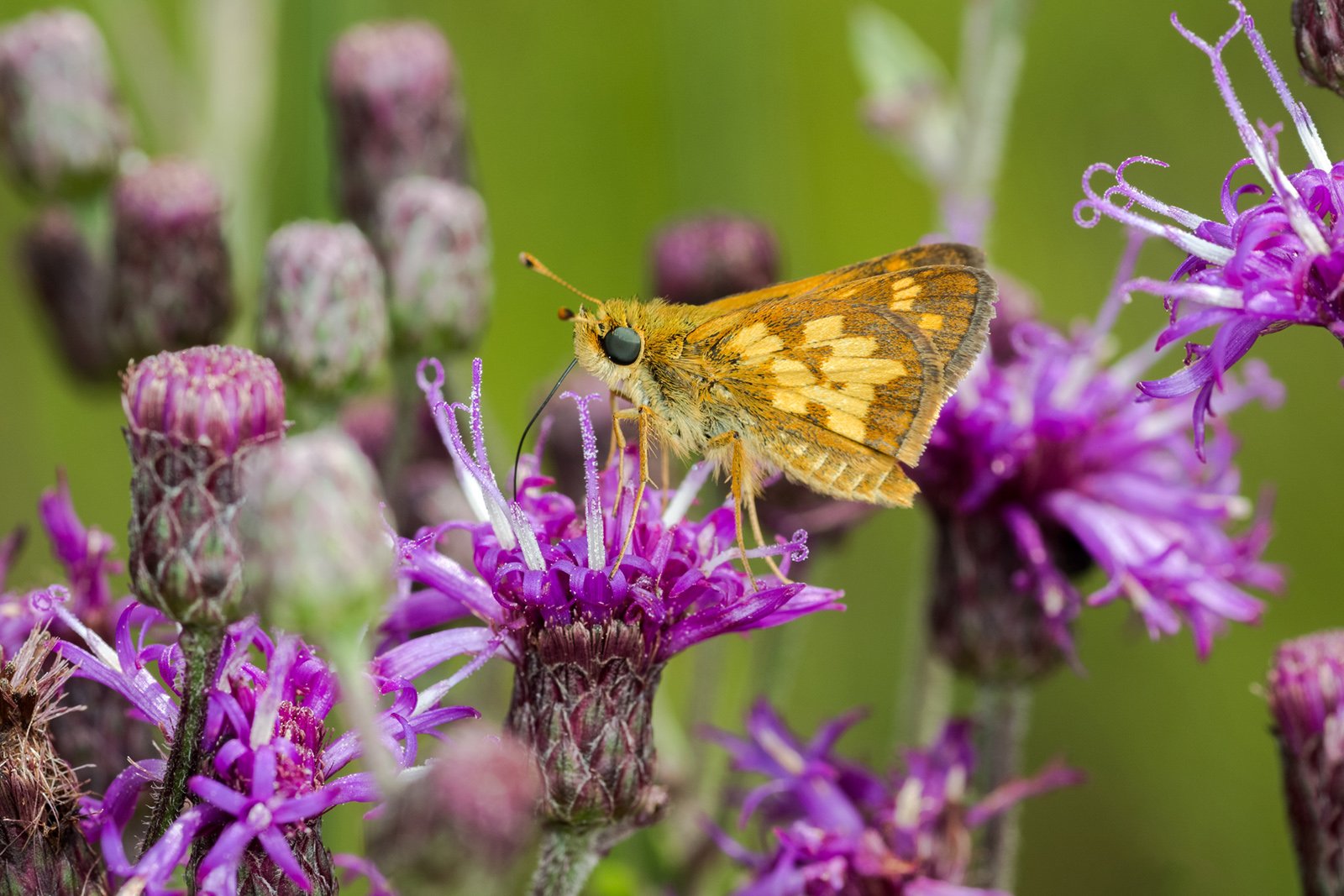
A yellow and orange Peck?s skipper butterfly drinks nectar from a purple flower.
A brown silver-spotted skipper butterfly with orange and white markings drinks nectar from a purple flower.
A black-throated green warbler ? a yellowish green bird with black and white bands ? is perched on a branch with small green leaves.
The silver-spotted skipper, or Epargyreus clarus, was one of 10 species that helped researchers from Michigan State University provide a more comprehensive picture of population trends in Midwestern butterfly communities over time. Using a new modeling framework, the team was able to leverage different datasets from Michigan, Iowa, Ohio and Illinois, along with information from the North American Butterfly Association. Credit: David Pavlik

The black-throated green warbler, or Setophaga virens, was one of 27 forest bird species that helped Michigan State University researchers showcase their new modeling framework to better understand biodiversity. Many forest birds are hard to observe, but the new framework enables researchers to use data-rich species like the S. virens to gain insights on data-deficient members of their communities. Credit: Jeremy Cohen

The magnolia warbler, or Setophaga magnolia, has more than a million observations documented on eBird, a popular app and database launched by the Cornell Ornithology Lab and the National Audubon Society that’s available to everyone. With a new modeling framework from Michigan State University, data-rich species like the S. magnolia can help provide a more comprehensive picture of biodiversity in their communities. Credit: Jeremy Cohen
One of the strengths of a new biodiversity modeling framework developed by Michigan State University researchers is its ability to combine data from various sources. The researchers demonstrated this strength using a case study involving 10 Midwestern butterfly species, including the Peck’s skipper, or Polites peckius. Credit: David Pavlik
The silver-spotted skipper, or Epargyreus clarus, was one of 10 species that helped researchers from Michigan State University provide a more comprehensive picture of population trends in Midwestern butterfly communities over time. Using a new modeling framework, the team was able to leverage different datasets from Michigan, Iowa, Ohio and Illinois, along with information from the North American Butterfly Association. Credit: David Pavlik

The black-throated green warbler, or Setophaga virens, was one of 27 forest bird species that helped Michigan State University researchers showcase their new modeling framework to better understand biodiversity. Many forest birds are hard to observe, but the new framework enables researchers to use data-rich species like the S. virens to gain insights on data-deficient members of their communities. Credit: Jeremy Cohen

01 / 04

To that end, Zipkin and her Quantitative Ecology Lab have introduced a framework based on what are known as “integrated community models.” In their paper, the researchers show how they design and implement these models to utilize data from the best-characterized species in a community to assess other members of the group.


“We’re borrowing strength from the species that have the most information or are most common,” Zipkin said. “This allows us to get species-level estimates for all members of a community, and also a comprehensive understanding of what’s going on with the community as a whole.”


The new publication is the culmination of a multi-year project supported by the National Science Foundation. In addition to Zipkin, the team included postdoctoral research associate Jeff Doser; graduate students Wendy Leuenberger, Samuel Ayebare and Kayla Davis; and Courtney Davis, who worked on this project as a postdoctoral fellow in Zipkin’s group before becoming a research associate at the Cornell Lab of Ornithology.


Zipkin described the new report as a how-to guide for anyone who wants to use the team’s methods to draw insights from a variety of different data sources describing multiple species.


In that guide, the team provided three case studies: forest birds in the northeastern United States, butterflies in the Midwest and a simulation scenario for 10 hypothetical species.


The results show how integrated community models can be used to estimate species’ trends and demographic rates over space and time, even for rarer species.


In publishing this report and the associated computer code, Zipkin said the team’s immediate goal is to get these methods into the hands of more researchers. The next step will be working with partners in government and nongovernmental organizations who can use information from the models as they develop conservation strategies.


“We believe this will be a really useful way to enable more effective and efficient conservation planning,” Zipkin said. “We can move from a species-by-species approach to working more holistically.”

MEDIA CONTACTS

Emilie Lorditch, Elise Zipkin
MSU ResearchMSU Leadership and ImpactBiodiversity and WildlifeClimate and EnvironmentBiodiversity and Wildlife

Latest News

MSUToday Weekly Update

The MSUToday Weekly Update email showcases how Spartans are making a difference through academic excellence, research impact and community outreach. Get inspired by these stories of innovation, collaboration and determination. Plus, enjoy photos and videos of campus and more MSU content to help keep you connected to the Spartan community.

Sign UpUpdate My Information

Connect With Us

Visit our Facebook pageVisit our page on XVisit our Instagram pageVisit our LinkedIn pageVisit our YouTube pageVisit our TikTok page

Health and Safety

  • MSU Police and Public Safety
  • Olin Health Center
  • Counseling & Psychiatric Services (CAPS)
  • University Health and Wellbeing
  • MSU Health Care
  • Civil Rights and Title IX
  • Our Commitment
  • Center for Survivors
  • Security & Fire Safety Report
  • University Policy on Relationship Violence and Sexual Misconduct
  • Notice of Non-Discrimination, Anti-Harassment and Non-Retaliation
  • Health Care Non-Discrimination Notice

Support Services

  • Disability Resources
  • Supportive Services
  • Learning Resources

Working at MSU

  • Human Resources
  • EBS Login
  • Job Postings
  • Employee Assistance Program

Reports

  • CARES Act Funding
  • Student Achievement and Outcomes

Contact us

517-355-1855

Address

Michigan State University 426 Auditorium Road East Lansing, MI 48824

Follow Us

  • Visit our Facebook page
  • Visit our page on X
  • Visit our Instagram page
  • Visit our TikTok page
  • Visit our LinkedIn page
  • Visit our YouTube page

If you're having accessibility issues, please let us know.

Know More: Campus Safety Information and ResourcesTransparency Reporting: Budget & Salary/Compensation
  • Contact Information|
  • Site Map|
  • Privacy Statement|
  • Site Accessibility|
  • Call MSU: (517) 355-1855|
  • Visit: msu.edu|
  • Notice of Nondiscrimination|

SPARTANS WILL|© Michigan State University|