Jump to HeaderJump to Main ContentJump to Footer
Michigan State University
  • Browse Stories By

    Topics

    Explore stories by subject area

    • Arts and Culture
    • Business and Economy
    • Climate and Environment
    • Education and Learning
    • Engineering, Science and Technology
    • Government and Society
    • Health and Medicine
    • Media and Communications
    • MSU Leadership and Impact
    • Sports and Recreation
    • Student and Campus Experience
    View All Stories

    Collections

    Curated story series

    • Turfgrass
    • Ask the Expert
    • Big Ideas
    • Climate solutions
    • Water at MSU
    • Mobility
    • Spartan Perspectives
    • Student views
    • Graduate voices
    • Faculty voices
    View All Collections

    Featured

    Editor's picks

    • The Spartans behind your favorite Michigan golf courses

      July 22, 2026

      The Spartans behind your favorite Michigan golf courses

    • MSU in the 1990s: 10 Spartan milestones

      July 14, 2026

      MSU in the 1990s: 10 Spartan milestones

MSUTODAY
  • Browse Stories By

< Browse Stories By

Topics

Explore stories by subject area

  • Arts and Culture
  • Business and Economy
  • Climate and Environment
  • Education and Learning
  • Engineering, Science and Technology
  • Government and Society
  • Health and Medicine
  • Media and Communications
  • MSU Leadership and Impact
  • Sports and Recreation
  • Student and Campus Experience
  • View All Stories

Collections

Curated story series

  • Turfgrass
  • Ask the Expert
  • Big Ideas
  • Climate solutions
  • Water at MSU
  • Mobility
  • Spartan Perspectives
  • Student views
  • Graduate voices
  • Faculty voices
  • View All Collections

Featured

Editor's picks

  • The Spartans behind your favorite Michigan golf courses

    July 22, 2026

    The Spartans behind your favorite Michigan golf courses

  • MSU in the 1990s: 10 Spartan milestones

    July 14, 2026

    MSU in the 1990s: 10 Spartan milestones

  • For Media
  • Experts
  • Releases and Statements
  • Sign Up
  • Update Information

Resources

  • A to Z Index
  • Find People
  • Maps
  • Email
  • Student Information System (SIS)
  • D2L
  • Libraries
  • Tech Support
  • MSU Misconduct Hotline
  • Social Media Directory
  • Events Calendar
  • For Media
Michigan State University
MSUToday
  • For Media
  • Experts
  • Releases and Statements
  • Sign Up
  • Update Information
MSUTODAY
Biodiversity and Wildlife

Oct. 5, 2023

Plants could make air pollution worse on a warming planet

Trees including oak and poplar will emit more isoprene — a compound that worsens air pollution — as global temperatures rise, according to new MSU research

By: Matt Davenport

It’s a simple question that sounds a little like a modest proposal.


“Should we cut down all the oak trees?” asked Tom Sharkey, a University Distinguished Professor in the Plant Resilience Institute at Michigan State University.
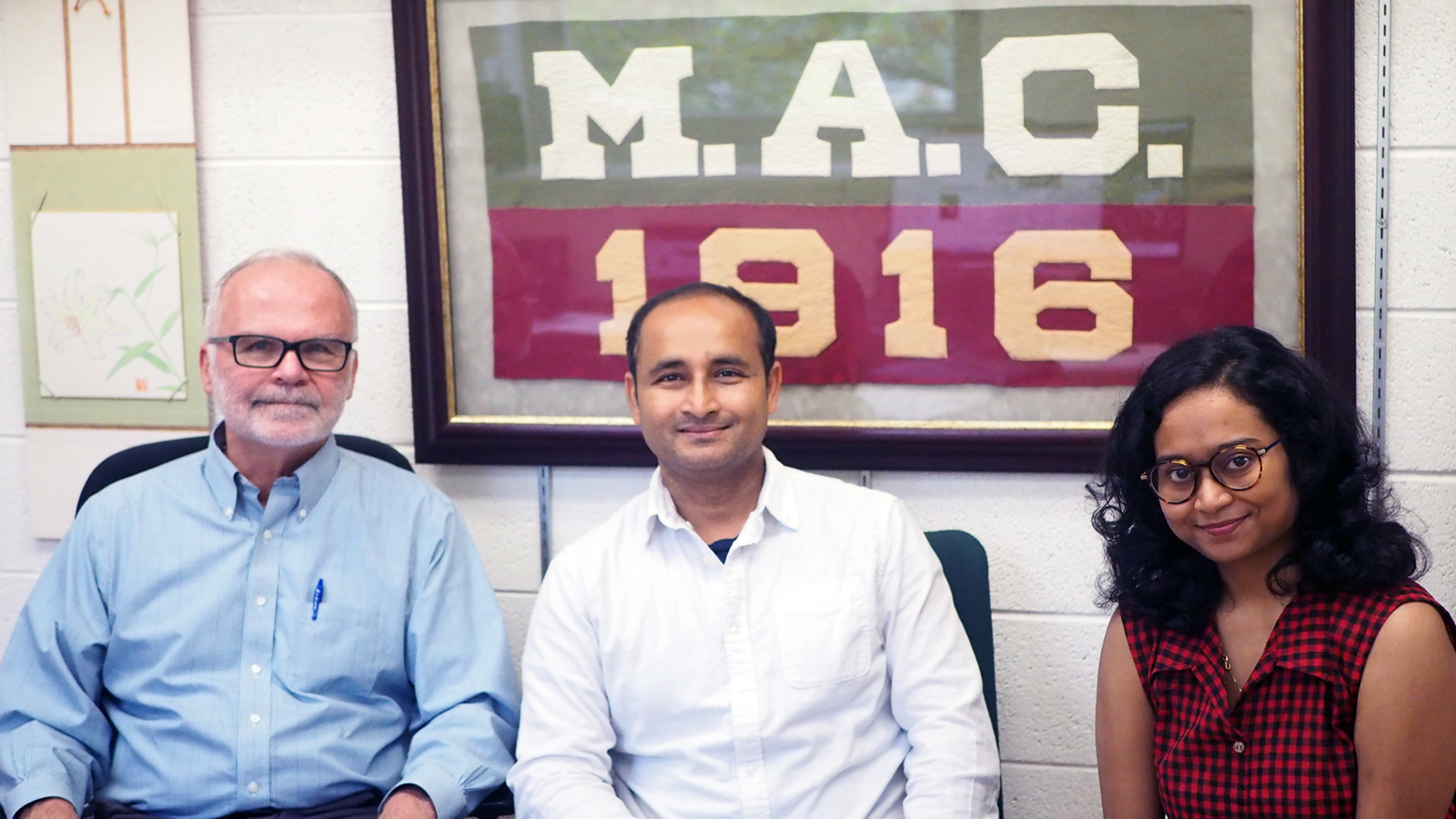
 

University Distinguished Professor Thomas Sharkey, Assistant Professor Mohammad Mostofa and postdoctoral research associate Abira Sahu (left to right) sit in Sharkey’s office.
University Distinguished Professor Tom Sharkey, Assistant Professor Mohammad Mostofa and postdoctoral research associate Abira Sahu (left to right) were authors of a new report from Michigan State University on isoprene emissions from plants. Credit: Matt Davenport/MSU

Sharkey also works at the MSU-Department of Energy Plant Research Laboratory and in the Department of Biochemistry and Molecular Biology.


To be clear, Sharkey wasn’t sincerely suggesting that we should cut down all the oaks. Still, his question was an earnest one, prompted by his team’s latest research, which was published in the scientific journal Proceedings of the National Academy of Sciences.


The team discovered that, on a warming planet, plants like oaks and poplars will emit more of a compound that exacerbates poor air quality, contributing to problematic particulate matter and low-atmosphere ozone.


The rub is that the same compound, called isoprene, can also improve the quality of clean air while making plants more resistant to stressors including insects and high temperatures.


“Do we want plants to make more isoprene so they’re more resilient, or do we want them making less so it’s not making air pollution worse? What’s the right balance?” Sharkey asked. “Those are really the fundamental questions driving this work. The more we understand, the more effectively we can answer them.”


Spotlight on Isoprene


Sharkey has been studying isoprene and how plants produce it since the 1970s, when he was a doctoral student at Michigan State.


Isoprene from plants is the second-highest emitted hydrocarbon on Earth, only behind methane emissions from human activity. Yet most people have never heard of it, Sharkey said.


“It’s been behind the scenes for a long time, but it’s incredibly important,” Sharkey said.
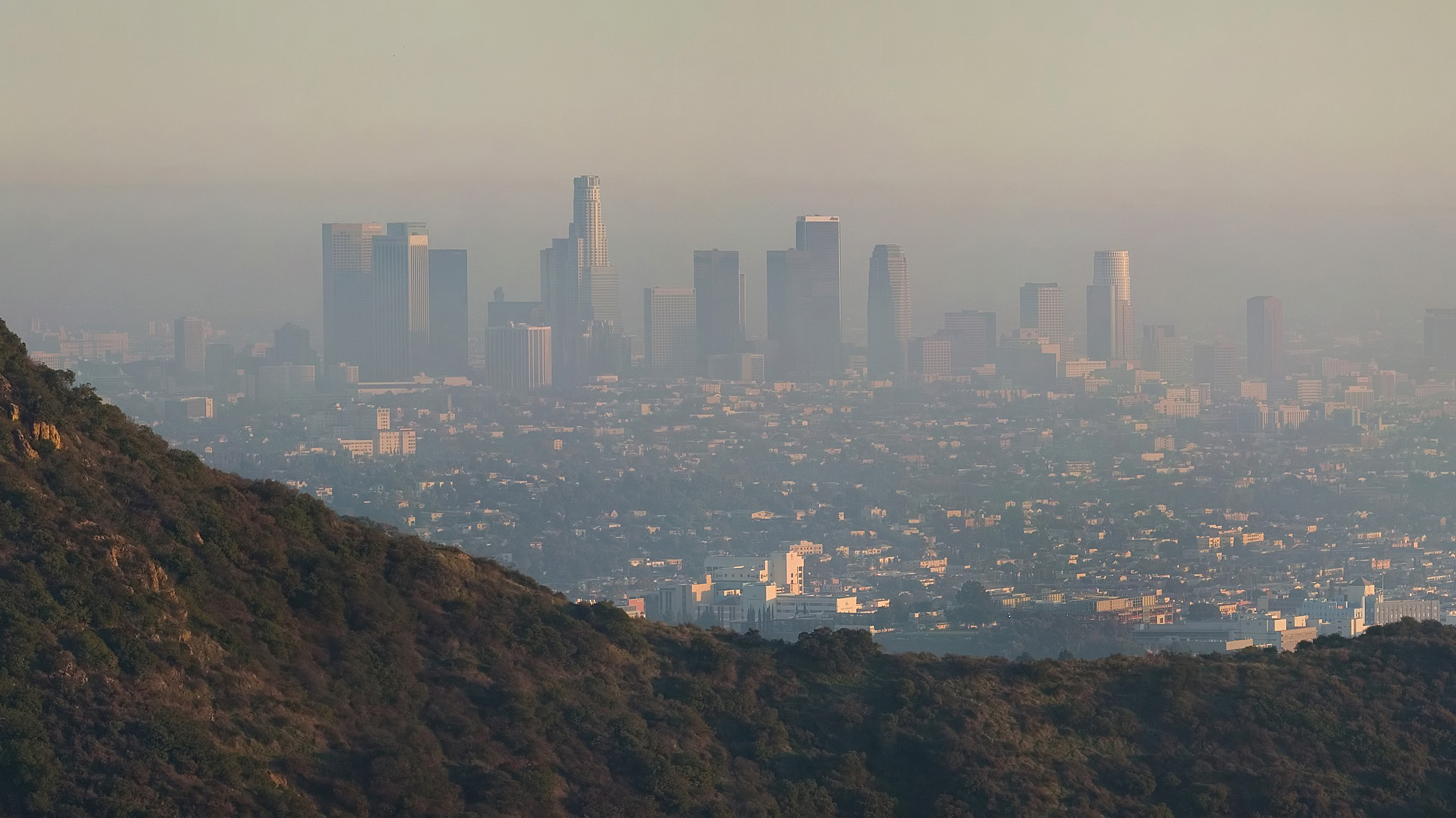
 

Los Angeles’s skyscrapers appear hazy in the distance due to brownish orange smog. A slope of Mount Hollywood is seen in the foreground.
Although isoprene from trees can make air pollution worse, it isn’t what creates smog like this in the first place, Thomas Sharkey of Michigan State University likes to point out. Credit: David Iliff (License: CC BY-SA 3.0)

It gained a little notoriety in the 1980s, when then-president Ronald Reagan falsely claimed trees were producing more air pollution than automobiles. Yet there was a kernel of truth in that assertion.


Isoprene interacts with nitrogen oxide compounds found in air pollution produced by coal-fired power plants and internal combustion engines in vehicles. These reactions create ozone, aerosols and other byproducts that are unhealthy for both humans and plants.


“There’s this interesting phenomenon where you have air moving across a city landscape, picking up nitrogen oxides, then moving over a forest to give you this toxic brew,” Sharkey said. “The air quality downwind of a city is often worse than the air quality in the city itself.”


Now, with support from the National Science Foundation, Sharkey and his team are working to better understand the biomolecular processes plants use to make isoprene. The researchers are particularly interested in how those processes are affected by the environment, especially in the face of climate change.


Prior to the team’s new publication, researchers understood that certain plants produce isoprene as they carry out photosynthesis. They also knew the changes that the planet is facing were having competing effects on isoprene production.
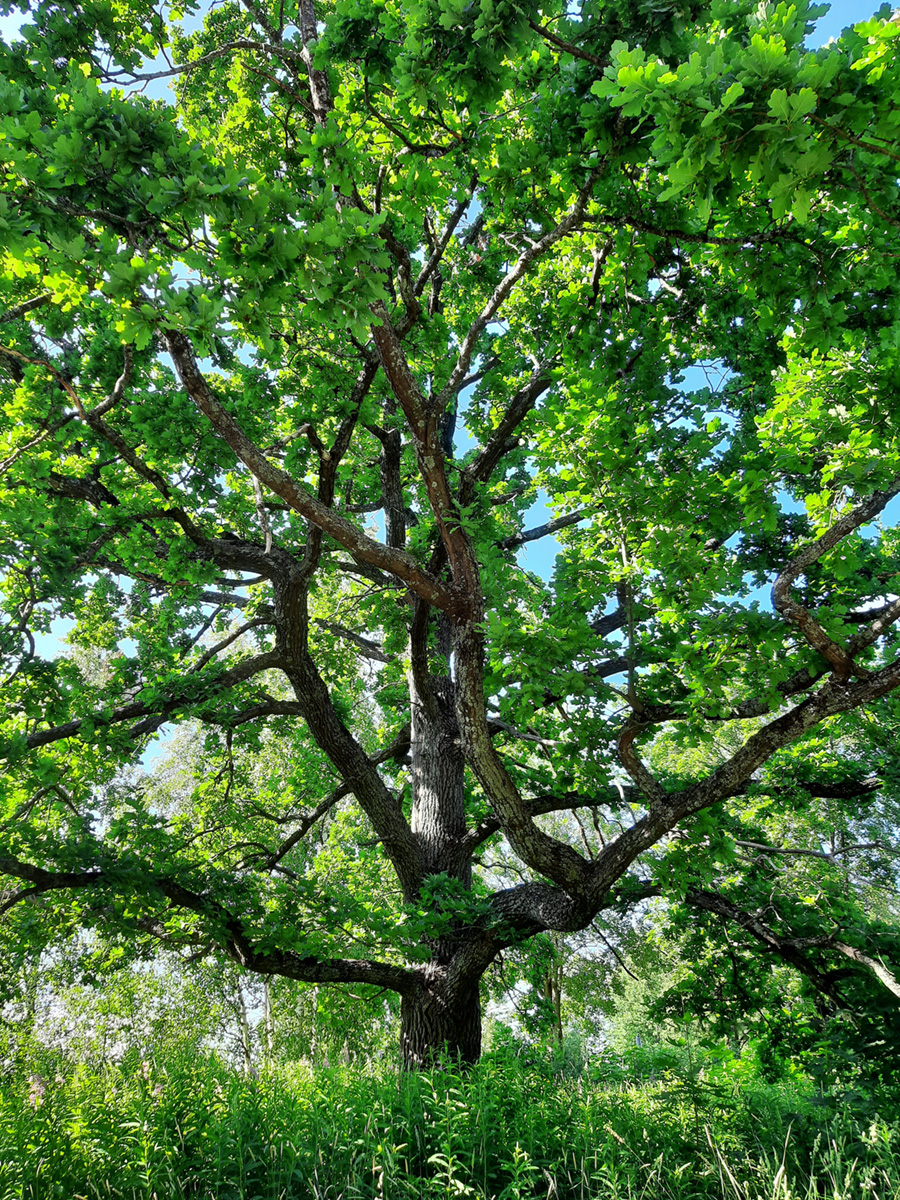
 

Green bunches of oak leaves grow from mossy brown branches against a blue sky.
Trees like oak and poplar will emit more isoprene as the world warms, according to new research from Michigan State University. Credit: Raimo Lantelankallio/Unsplash

That is, increasing carbon dioxide in the atmosphere drives the rate down, while increasing temperatures accelerate the rate. One of the questions behind the MSU team’s new publication was essentially which one of these effects will win out.


“We were looking for a regulation point in the isoprene’s biosynthesis pathway under high carbon dioxide,” said Abira Sahu, the lead author of the new report and a postdoctoral research associate in Sharkey’s research group.


“Scientists have been trying to find this for a long time,” Sahu said. “And, finally, we have the answer.”


“For the biologists out there, the crux of the paper is that we identified the specific reaction slowed by carbon dioxide, CO2,” Sharkey said.


“With that, we can say the temperature effect trumps the CO2 effect,” he said. “By the time you’re at 95 degrees Fahrenheit — 35 degrees Celsius — there’s basically no CO2 suppression. Isoprene is pouring out like crazy.”


In their experiments, which used poplar plants, the team also found that when a leaf experienced warming of 10 degrees Celsius, its isoprene emission increased more than tenfold, Sahu said.


“Working with Tom, you realize plants really do emit a lot of isoprene,” said Mohammad Mostofa, an assistant professor who works in Sharkey’s lab and was another author of the new report.


The discovery will help researchers better anticipate how much isoprene plants will emit in the future and better prepare for the impacts of that. But the researchers also hope it can help inform the choices people and communities make in the meantime.


“We could be doing a better job,” Mostofa said.


At a place like MSU, which is home to more than
20,000 trees, that could mean planting fewer oaks in the future to limit isoprene emissions.


As for what we do about the trees already emitting isoprene, Sharkey does have an idea that doesn’t involve cutting them down.


“My suggestion is that we should do a better job controlling nitrogen oxide pollution,” Sharkey said.


Sarathi Weraduwage, a former postdoctoral researcher in Sharkey’s lab who is now an assistant professor at Bishop’s University in Quebec, also contributed to the research.


MEDIA CONTACTS

Emilie Lorditch
Biodiversity and WildlifeClimate and EnvironmentPollutionNatural SciencesEngineering, Science and Technology

Latest News

MSUToday Weekly Update

The MSUToday Weekly Update email showcases how Spartans are making a difference through academic excellence, research impact and community outreach. Get inspired by these stories of innovation, collaboration and determination. Plus, enjoy photos and videos of campus and more MSU content to help keep you connected to the Spartan community.

Sign UpUpdate My Information

Connect With Us

Visit our Facebook pageVisit our page on XVisit our Instagram pageVisit our LinkedIn pageVisit our YouTube pageVisit our TikTok page

Health and Safety

  • MSU Police and Public Safety
  • Olin Health Center
  • Counseling & Psychiatric Services (CAPS)
  • University Health and Wellbeing
  • MSU Health Care
  • Civil Rights and Title IX
  • Our Commitment
  • Center for Survivors
  • Security & Fire Safety Report
  • University Policy on Relationship Violence and Sexual Misconduct
  • Notice of Non-Discrimination, Anti-Harassment and Non-Retaliation
  • Health Care Non-Discrimination Notice

Support Services

  • Disability Resources
  • Supportive Services
  • Learning Resources

Working at MSU

  • Human Resources
  • EBS Login
  • Job Postings
  • Employee Assistance Program

Reports

  • CARES Act Funding
  • Student Achievement and Outcomes

Contact us

517-355-1855

Address

Michigan State University 426 Auditorium Road East Lansing, MI 48824

Follow Us

  • Visit our Facebook page
  • Visit our page on X
  • Visit our Instagram page
  • Visit our TikTok page
  • Visit our LinkedIn page
  • Visit our YouTube page

If you're having accessibility issues, please let us know.

Know More: Campus Safety Information and ResourcesTransparency Reporting: Budget & Salary/Compensation
  • Contact Information|
  • Site Map|
  • Privacy Statement|
  • Site Accessibility|
  • Call MSU: (517) 355-1855|
  • Visit: msu.edu|
  • Notice of Nondiscrimination|

SPARTANS WILL|© Michigan State University|