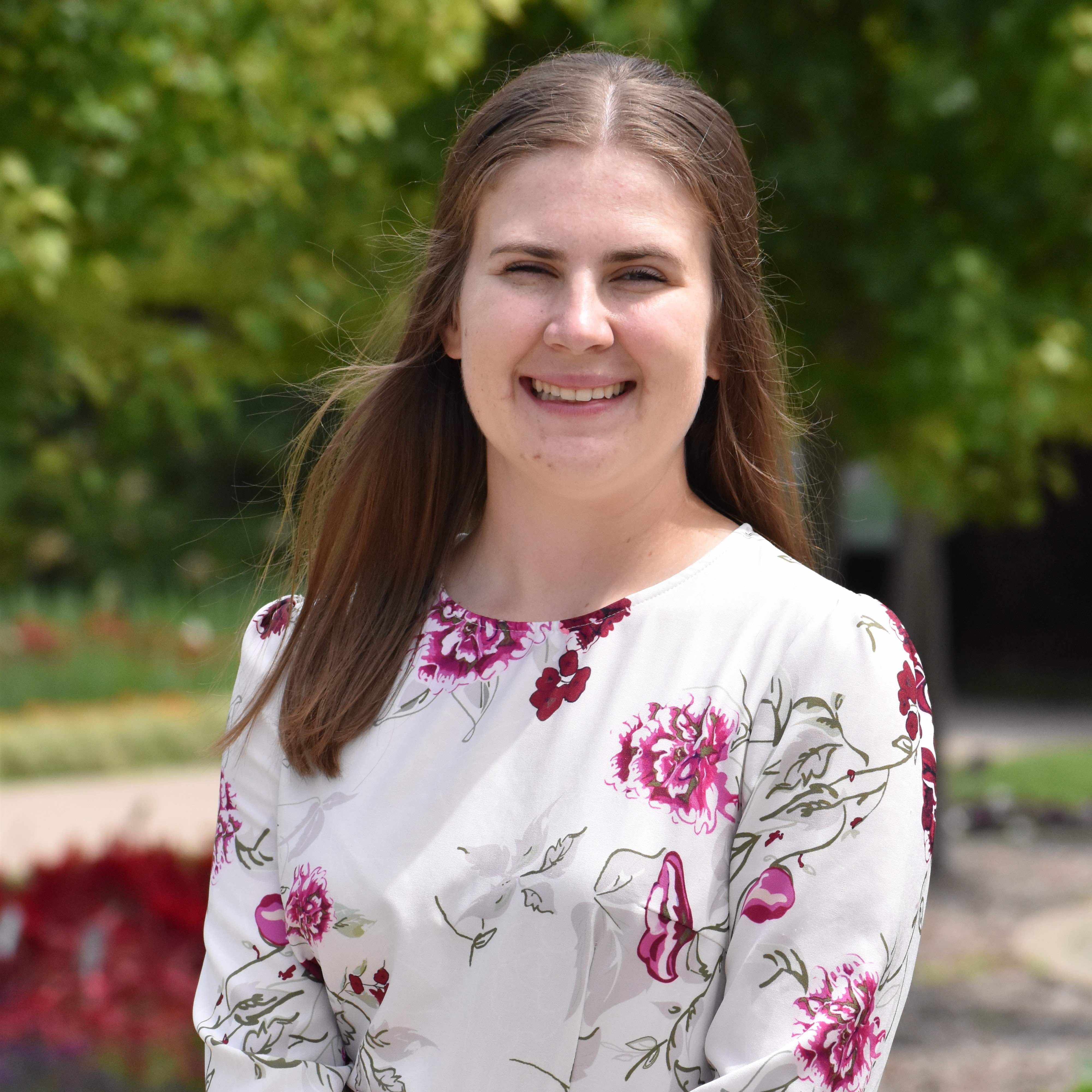
MacKenzie Jacobs is a fourth-year Ph.D. candidate in the Department of Biochemistry and Molecular Biology and the Molecular Plant Sciences graduate program, working in Patrick Edger’s lab. She is a fellow of the Integrated training Model in Plant And Compu-Tational Sciences program and the Plant Biotechnology for Health and Sustainability Graduate Training Program.
This summer, I had the opportunity to attend Polyploid Summer School at the University of Fribourg. I left July 8 and arrived back home July 21. The symposium consisted of research talks given by me, other graduate students, postdoctoral researchers and respected leaders in the field of polyploid research. We listened to each other’s work, asked questions and socialized. Participants came from a wide range of backgrounds, from early graduate students just starting graduate school interested in plants that happen to be polyploid, to postdocs on the cusp of transitioning into a more permanent position.
Among the talks that I attended, the one that resonated the most with me was given by Professor Malika Ainouche of the University of Rennes. Ainouche gave an overview of the history of polyploidy research – organisms having more than two complete sets of chromosomes – with mentions of early, notable works. She then described the work she has done throughout her career, particularly the hybridization, polyploidization and biological invasion of Spartina, a member of the grass family.
In addition to attending talks by other researchers, I gave a presentation on my research, “Environmental effects on the genomics and epigenomics of subgenome dominance.” In summary, my work will be the first to determine whether subgenome dominance (biased gene expression, altered DNA methylation patterns and modified chromatin accessibility) can be alternated between subgenomes of hybrid organisms in response to environmental growing conditions. Though presenting in front of a room of respected leaders in the field of polyploidy was certainly nerve-wracking, the discussion following the presentation helped me to think more deeply about several aspects of my work and related work of others in the field. Sharing my work also helped me to gain confidence in my presentation skills and gave me a sense of belonging in the polyploid community.
Following the symposium, we attended several workshop-style sessions that consisted of lectures and activities that allowed us to try both computational and hands-on methods relevant to the research of polyploid organisms. We worked with our fellow participants as well as leaders of the field with expertise in the given subject area.
Perhaps the most exciting part of the program was a field excursion to Cray Dessus in the Swiss Alps to harvest samples of Anthoxanthum alpinum to assess their ploidy level, which is how many complete sets of chromosomes the organism have in the nucleus of each somatic cell. We did this via flow cytometry, a technique that measures genome size. To do this, we hiked to the peak of the mountain in the rain and mist via an incredibly steep path. It took us three hours to get to the top, and we had to hike through several areas that were so steep and wet that it required us to pull ourselves up the hill by the wet grass along the path. The peak of the mountain sat in the middle of a sheep field guarded by large dogs that protect the sheep from wolves and anything else they perceive as a threat. Once we reached the peak, we had sandwiches for lunch and then measured a transect, a straight line, down from the peak. We then surveyed the grass every 20 meters for 360 meters. Four samples were harvested at each point, and the latitude/longitude coordinates were recorded.
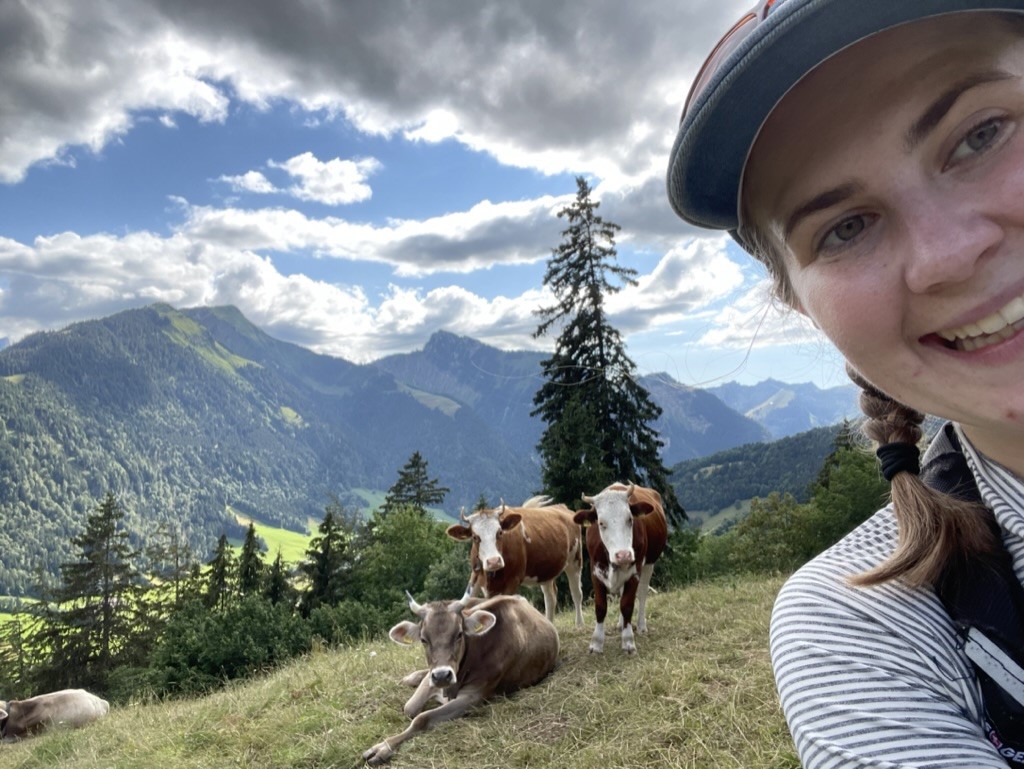
As I had never been to another continent, this was the opportunity of a lifetime. It was incredible to learn about topics relevant to my research from notable leaders in the field. In the evenings, I got to know the other participants who came from all around the world. There were around 25 participants, and only two of us came from the United States. The rest of the group were from a wide variety of cultural backgrounds. It was honestly a learning experience in itself to be surrounded by such a diverse group. We often talked about our upbringings and norms within our cultures.
Working within such a diverse group certainly had its benefits and challenges. Notably, conversations about cultural norms happened during nearly every intermission and meal. From traditional dishes served at each mealtime to the words used to mimic animal sounds in each language/dialect, there was always something to be talked about and learned from each other. In some instances, though, conversation could be difficult when there wasn’t an English word that perfectly translated. Further, some aspects of different cultures are so obvious in everyday life for people in that culture that it could be shocking when people from other backgrounds were unaware of them. One example of this happened when I was talking to a participant from India. I was shocked to learn that people are judged based on the family they are born into; she, on the other hand, was shocked that I was unaware.
My advisor, Patrick Edger, is the one who made me aware of this opportunity. One day while passing by his office, I stopped to quickly update him on an experiment I was working on. He nonchalantly brought up Polyploid Summer School and began telling me about some of the activities they had planned for participants. He asked if it was something I would be interested in attending. I, of course, thought it sounded incredible and asked him to forward me the information. As I was about to walk away, he casually said, “Oh yeah, by the way, it’s in Switzerland,” which added a new layer of excitement as I had never traveled to another continent before.
Following this conversation, I eagerly completed my application materials. As a U.S. applicant, I was also eligible for a scholarship provided through ThinkSwiss and the Embassy of Switzerland in the U.S. While attending the Polyploidy Across the Tree of Life Conference, I received an email stating that I had been selected to attend and that I had received one of the three ThinkSwiss scholarships. In receiving this news while surrounded by other researchers interested in polyploidy, I was able to meet the primary organizer, Christian Parisod from the University of Fribourg, and the other U.S. participant, Hannah Assour from the University of Pittsburgh.
This was the experience of a lifetime and is something I will never forget. From walking among beautiful architecture that is likely as old as the U.S., to exploring a cave system hand dug by two hermits between 1680-1708 (Magdalena Hermitage), to meeting the folks I am likely to collaborate with and read the work of in the near future, I couldn’t have asked for a more impactful adventure.
This story originally appeared on the College of Natural Science website.

