
Jump to HeaderJump to Main ContentJump to Footer
Michigan State University
MSUTODAY
  • Browse Stories By

    Topics

    Explore stories by subject area

    • Arts and Culture
    • Business and Economy
    • Climate and Environment
    • Education and Learning
    • Engineering, Science and Technology
    • Government and Society
    • Health and Medicine
    • Media and Communications
    • MSU Leadership and Impact
    • Sports and Recreation
    • Student and Campus Experience
    View All Stories

    Collections

    Curated story series

    • Turfgrass
    • Ask the Expert
    • Big Ideas
    • Climate solutions
    • Water at MSU
    • Mobility
    • Spartan Perspectives
    • Student views
    • Graduate voices
    • Faculty voices
    View All Collections

    Featured

    Editor's picks

    • 9 reasons to love being a Spartan

      Aug. 28, 2026

      9 reasons to love being a Spartan

    • NIH awards multi-university team over $4M to improve women’s health

      Sept. 15, 2026

      NIH awards multi-university team over $4M to improve women’s health

MSUTODAY
  • Browse Stories By

< Browse Stories By

Topics

Explore stories by subject area

  • Arts and Culture
  • Business and Economy
  • Climate and Environment
  • Education and Learning
  • Engineering, Science and Technology
  • Government and Society
  • Health and Medicine
  • Media and Communications
  • MSU Leadership and Impact
  • Sports and Recreation
  • Student and Campus Experience
  • View All Stories

Collections

Curated story series

  • Turfgrass
  • Ask the Expert
  • Big Ideas
  • Climate solutions
  • Water at MSU
  • Mobility
  • Spartan Perspectives
  • Student views
  • Graduate voices
  • Faculty voices
  • View All Collections

Featured

Editor's picks

  • 9 reasons to love being a Spartan

    Aug. 28, 2026

    9 reasons to love being a Spartan

  • NIH awards multi-university team over $4M to improve women’s health

    Sept. 15, 2026

    NIH awards multi-university team over $4M to improve women’s health

  • For Media
  • Experts
  • Releases and Statements
  • Sign Up
  • Update Information

Resources

  • A to Z Index
  • Find People
  • Maps
  • Email
  • Student Information System (SIS)
  • D2L
  • Libraries
  • Tech Support
  • MSU Misconduct Hotline
  • Social Media Directory
  • Events Calendar
  • For Media
Michigan State University
MSUToday
  • For Media
  • Experts
  • Releases and Statements
  • Sign Up
  • Update Information
Agricultural Sciences and Farming

Sept. 20, 2023

MSU research: saving money, milk and improving human health

By: Emily Lenhard, Kim Ward
Pamela Ruegg with researchers in Brazil
Pamela Ruegg is the David J. Ellis Professor of Antimicrobial Resistance and Large Animal Clinical Sciences in Michigan State University’s College of Veterinary Medicine. Ruegg is pictured with Jose Pantoja, a professor at a veterinary school in Brazil, and Lara Juliana Bastos, who is a current doctoral student of Ruegg’s and completed her master’s degree with Pantoja. They are on a farm in Brazil. Courtesy of Ruegg.

New research from the College of Veterinary Medicine at Michigan State University finds that dairy producers overtreat cows diagnosed with non-severe cases of clinical mastitis, which increases farm costs and loss of milk.


Pamela Ruegg, the David J. Ellis Chair in Antimicrobial Resistance and professor in the Department of Large Animal Clinical Sciences, estimates the direct costs of treatment could be reduced by $65.20 per case if the minimum labeled durations are used, which she said provides the same health outcomes as current practices. The cost of mastitis to the U.S. dairy industry is approximately $110 per cow per year — and that dollar amount increases annually.

In dairy cows, mastitis is the inflammation of mammary glands in the udder, usually caused by a bacterial infection that leads to decreased quantity and quality of milk. Milk produced by cows while they’re being treated with antibiotics must be discarded, as well as the milk produced after treatment during the withholding period — usually three to four days after the last treatment has been given.
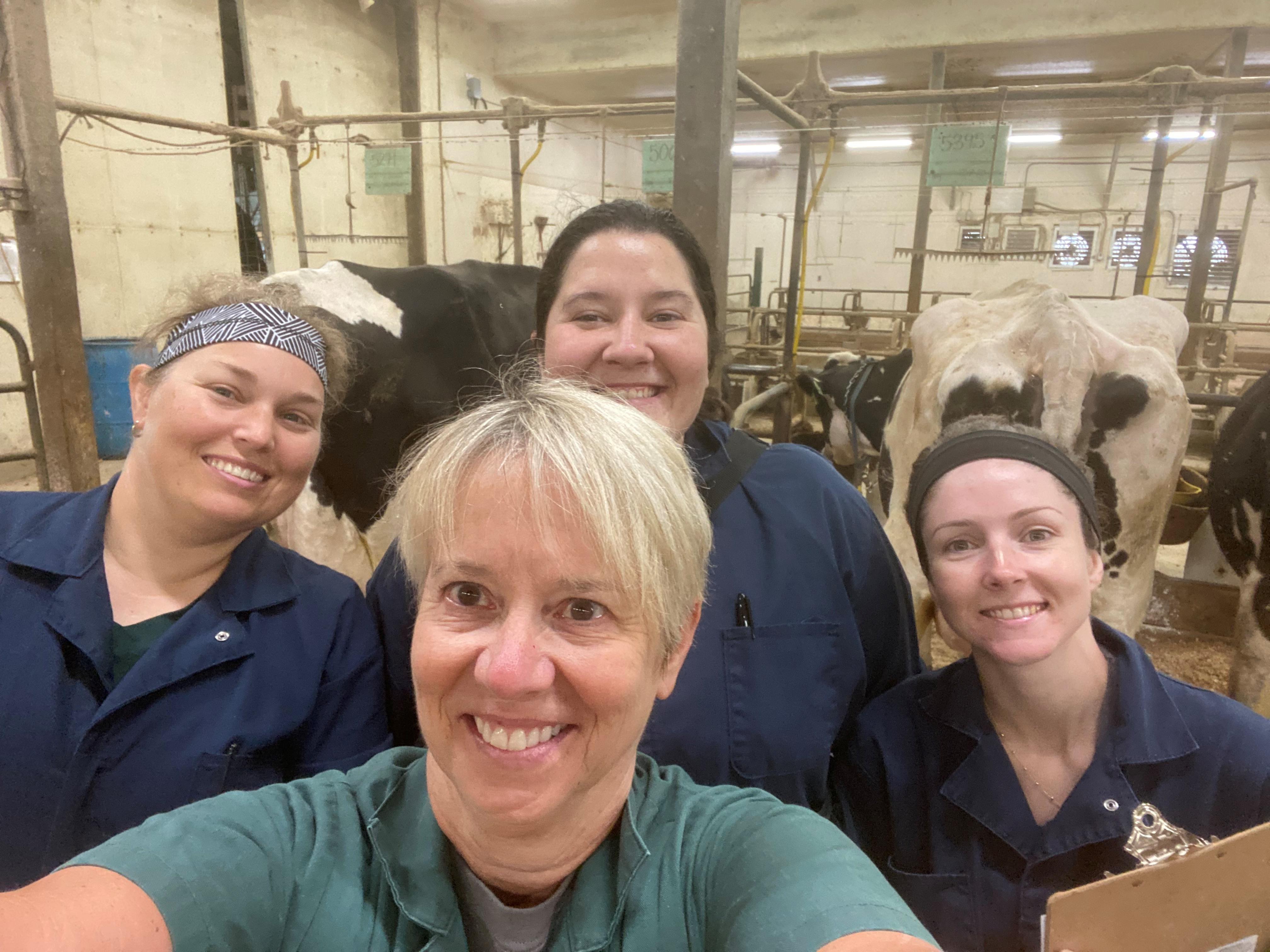
Pamela Ruegg with students collecting samples at MSU Dairy.
Ruegg with Cara Robison, a technician, and two now graduated doctorate students, Quinn Kolar and Juliana Leite de Campos, collecting samples at the MSU Dairy. Courtesy of Ruegg.

Published in the Journal of Dairy Science, Ruegg analyzed non-severe cases of clinical mastitis for approximately 50,000 cows on 37 commercial dairy farms in Wisconsin. She found that milk discarded due to antibiotic treatment represents at least 53% and up to 80% of total direct costs for each day of treatment.

The bottom line: Ruegg found that for routine treatments, following the minimum labelled duration for mastitis treatment drugs is critical to farm cost savings and productivity, as well as maintaining animal and human health.  

“Our work indicates that we need to take a hard look at duration of treatment, and unless you can justify improved clinical outcomes, we should treat using the minimum duration listed on product labels, and for shorter durations,” Ruegg said.

“With that, there’s both a financial savings for the producer, and there’s a human health benefit because we’re putting less antimicrobials into our ecosystems. There are benefits for society, and guess what? You’ll have the same outcomes.”

The opportunity to save on the costs of treatment and regain revenue from less discarded milk is hard to ignore for producers who are already facing steep fiscal challenges. Dairy producers in the U.S. are battling against federal milk pricing regulations and pandemic aftermath, losing on average more than $6 per hundredweight (milk sales unit) on farms of more than 50 cows.

Pamela Ruegg at a Michigan dairy farm with students.
Ruegg at a dairy farm in Michigan with Leticia de Souza Ferreira, who will complete her master’s degree in November, and Juliana Leite de Campos, who completed her doctorate degree last year. Courtesy of Ruegg.

And mastitis isn’t going anywhere, Ruegg said.

“The proportion of cows with clinical mastitis isn’t going down. At best, it’s stable, and at worst, it’s increasing, probably because of environmental pathogens that tend to cause larger inflammatory responses.”

Mastitis is an expensive disease. Ruegg said because cows now produce almost twice as much milk since she started practicing in 1984, the same treatment protocol today costs approximately 40% more.

“We have five products labeled to treat clinical mastitis in the U.S. The FDA-approved labeled duration of treatment with those drugs ranges from one day to up to eight days. People generally treat for five days because the milk remains visually abnormal on average for five days. Dairy farmers feel like they should treat until it looks like it’s cured. But a lot of our previous work has shown that the abnormal milk appearance is from inflammation, and it’s not predictive of any outcomes like the presence of bacteria or infection recurrence. Again, there’s no benefit.


Agricultural Sciences and FarmingClimate and EnvironmentVeterinary SciencesHealth and MedicineVeterinary Sciences

Latest News

MSUToday Weekly Update

The MSUToday Weekly Update email showcases how Spartans are making a difference through academic excellence, research impact and community outreach. Get inspired by these stories of innovation, collaboration and determination. Plus, enjoy photos and videos of campus and more MSU content to help keep you connected to the Spartan community.

Sign UpUpdate My Information

Connect With Us

Visit our Facebook pageVisit our page on XVisit our Instagram pageVisit our LinkedIn pageVisit our YouTube pageVisit our TikTok page

Health and Safety

  • MSU Police and Public Safety
  • Olin Health Center
  • Counseling & Psychiatric Services (CAPS)
  • University Health and Wellbeing
  • MSU Health Care
  • Civil Rights and Title IX
  • Our Commitment
  • Center for Survivors
  • Security & Fire Safety Report
  • University Policy on Relationship Violence and Sexual Misconduct
  • Notice of Non-Discrimination, Anti-Harassment and Non-Retaliation
  • Health Care Non-Discrimination Notice

Support Services

  • Disability Resources
  • Supportive Services
  • Learning Resources

Working at MSU

  • Human Resources
  • EBS Login
  • Job Postings
  • Employee Assistance Program

Reports

  • CARES Act Funding
  • Student Achievement and Outcomes

Contact us

517-355-1855

Address

Michigan State University 426 Auditorium Road East Lansing, MI 48824

Follow Us

  • Visit our Facebook page
  • Visit our page on X
  • Visit our Instagram page
  • Visit our TikTok page
  • Visit our LinkedIn page
  • Visit our YouTube page

If you're having accessibility issues, please let us know.

Know More: Campus Safety Information and ResourcesTransparency Reporting: Budget & Salary/Compensation
  • Contact Information|
  • Site Map|
  • Privacy Statement|
  • Site Accessibility|
  • Call MSU: (517) 355-1855|
  • Visit: msu.edu|
  • Notice of Nondiscrimination|

SPARTANS WILL|© Michigan State University|