The U.S. Department of Energy Office of Science, or DOE-SC, has awarded $115 million for the High Rigidity Spectrometer, or HRS, project at the Facility for Rare Isotope Beams, or FRIB, at Michigan State University.
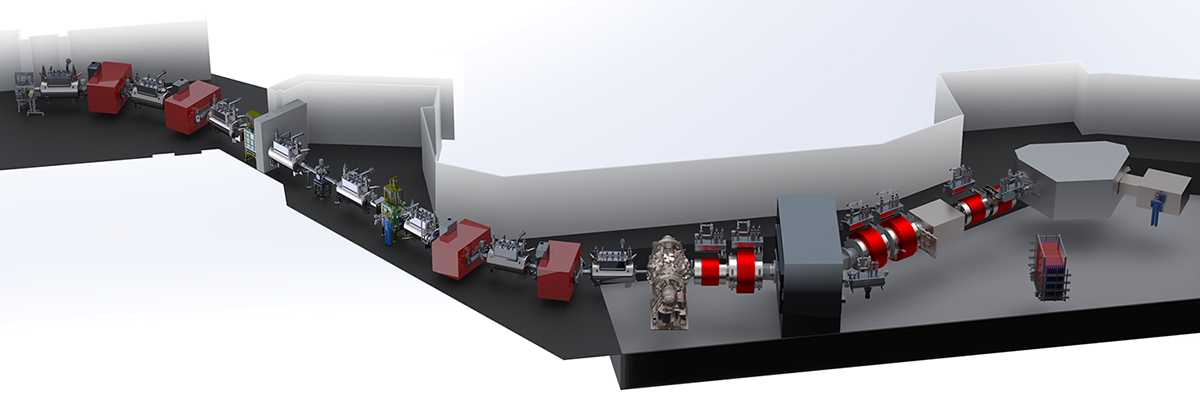
The HRS instrument will enable scientists to characterize the properties of isotopes that are created in rare-isotope reactions produced at about 50% of the speed of light. With the ability to measure properties such as the mass, charge and velocity of rare isotopes produced in those conditions, HRS will be a centerpiece experimental instrument of FRIB’s fast-beam program that will substantially increase FRIB’s scientific reach and productivity.
Supporting a user community of over 500 scientists planning to use HRS, the new cooperative agreement provides $115,306,881 over seven years to establish and operate HRS. The 2015 Nuclear Science Advisory Committee Long Range Plan identified HRS as a key instrument for FRIB.
The HRS cooperative agreement is in addition to the recently awarded FRIB cooperative agreement supporting FRIB operations. The DOE-SC awarded $529 million over five years to operate FRIB as a DOE-SC user facility to enable unprecedented discovery opportunities envisioned by a user community of 1,800 scientists, supporting the mission of the DOE-SC Office of Nuclear Physics. HRS serves about one-fourth of those users.
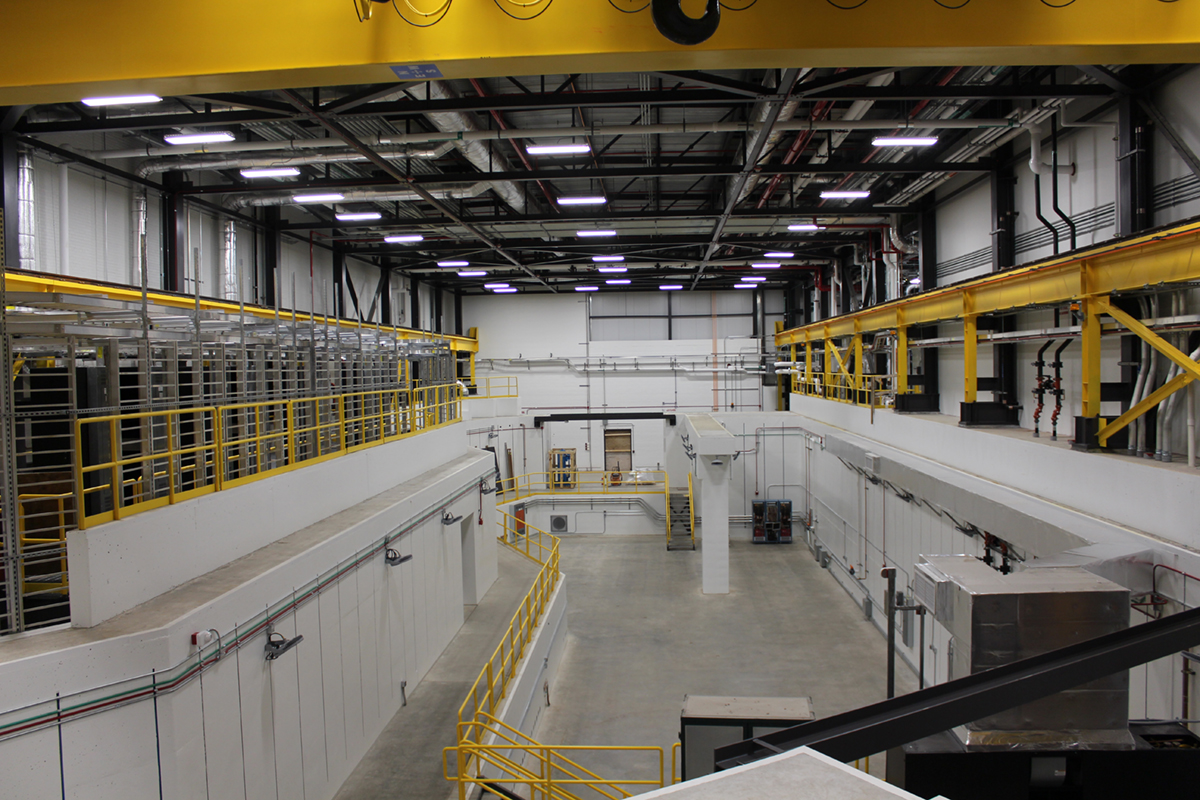
With near 100% efficiency, HRS will transmit isotopes that are travelling at velocities for which the rare-isotope production rate is optimal. In addition, at the higher velocities, the foils in the rare-isotope production target — in which reactions between isotopes take place — can be much thicker, greatly increasing the chances that a desired isotope reaction will occur. The combined effects of a higher rare-isotope beam intensity and the use of thicker target foils will greatly increase the sensitivity of the scientific program at FRIB.
HRS will thus extend FRIB’s scientific reach to neutron-rich isotopes by up to a factor of more than 100. This will be beneficial, particularly for experiments with the most neutron-rich isotopes that have the highest potential for discovery. The increase will enable experiments not otherwise possible anywhere in the world, such as detailed studies of calcium-60. Calcium-60 has 12 more neutrons than the heaviest stable isotope of calcium found in nature. It is of particular interest to understand the forces that bind neutrons and protons into nuclei.
HRS is designed to eventually accommodate FRIB’s scientific program after the envisioned FRIB400 energy upgrade that will double FRIB’s beam energy to 400 MeV/nucleon and expand the scientific impact by increasing the yield of many rare isotopes tenfold.
Because of the wide variety of experiments that can be performed with HRS, a large, multi-institutional team of scientists collaborates to develop the scientific case and conceptual design for HRS. The FRIB Users Organization HRS working group meets regularly. Members include:
- Twenty U.S. universities and colleges: Augustana College, Bucknell University, Central Michigan University, Davidson College, Florida State University, Hope College, Indiana University, Indiana Wesleyan University, Kalamazoo College, Michigan State University, Ohio University, Ohio Wesleyan University, Rutgers University, Texas A&M University, University of North Carolina/TUNL, University of Notre Dame, University of Tennessee, Washington University in St. Louis, Ursinus College and Wabash College
- Five U.S. national laboratories: Argonne National Laboratory, Lawrence Berkeley National Laboratory, Los Alamos National Laboratory, Lawrence Livermore National Laboratory and Oak Ridge National Laboratory
- Four international institutions: GSI/FAIR (Germany), Radioactive Isotope Beam Factory (RIBF) at RIKEN (Japan), TRIUMF (Canada) and University of Surrey (England)
FRIB serves a global user community
FRIB enables scientists to make discoveries about the properties of rare isotopes, nuclear astrophysics, fundamental interactions and applications for society, including in medicine, homeland security and industry, through research with fast, stopped and reaccelerated rare isotope beams.
FRIB provides researchers with a vast unexplored terrain of more than 1,000 new rare isotopes never before produced — more than double what was previously possible.
Since the start of user operation in May 2022, FRIB has delivered more than 210 rare isotope beams to experiments and supported 665 participants, including 177 students, across 50 countries and 189 institutions (including U.S. national laboratories, colleges and universities).
FRIB’s scientific user community — 1,800 scientists from 124 U.S. colleges and universities, 13 national laboratories and 52 countries — is composed of scientists, postdoctoral research associates and graduate students. The community continues to develop new instruments and concepts to optimize FRIB’s discovery potential, based on new scientific insights.
“This new award enables us to design and establish a new instrument at FRIB, which substantially increases FRIB’s scientific impact, in support of a large, multi-institutional user community of more than 500 scientists planning to use HRS in their forefront research,” said FRIB Laboratory Director Thomas Glasmacher. “We are so thankful for the continued trust the U.S. Department of Energy Office of Science, our Michigan Congressional delegation and MSU have placed in FRIB to forward the nation’s rare-isotope research capabilities.”
The HRS and FRIB cooperative agreements are in addition to 30 other funding agreements administered by FRIB faculty members supporting research at FRIB.
Michigan State University (MSU) operates the Facility for Rare Isotope Beams (FRIB) as a user facility for the U.S. Department of Energy Office of Science (DOE-SC), supporting the mission of the DOE-SC Office of Nuclear Physics. User facility operation is supported by the DOE-SC Office of Nuclear Physics as one of 28 DOE-SC user facilities.
The U.S. Department of Energy Office of Science is the single largest supporter of basic research in the physical sciences in the United States and is working to address some of today’s most pressing challenges. For more information, visit energy.gov/science.

