Jump to HeaderJump to Main ContentJump to Footer
Michigan State University
MSUTODAY
  • Browse Stories By

    Topics

    Explore stories by subject area

    • Arts and Culture
    • Business and Economy
    • Climate and Environment
    • Education and Learning
    • Engineering, Science and Technology
    • Government and Society
    • Health and Medicine
    • Media and Communications
    • MSU Leadership and Impact
    • Sports and Recreation
    • Student and Campus Experience
    View All Stories

    Collections

    Curated story series

    • Alumni stories
    • Turfgrass
    • Ask the Expert
    • Big Ideas
    • Climate solutions
    • Water at MSU
    • Mobility
    • Spartan Perspectives
    • Student views
    • Graduate voices
    • Faculty voices
    View All Collections

    Featured

    Editor's picks

    • 9 reasons to love being a Spartan

      Aug. 28, 2026

      9 reasons to love being a Spartan

    • NIH awards multi-university team over $4M to improve women’s health

      Sept. 15, 2026

      NIH awards multi-university team over $4M to improve women’s health

MSUTODAY
  • Browse Stories By

< Browse Stories By

Topics

Explore stories by subject area

  • Arts and Culture
  • Business and Economy
  • Climate and Environment
  • Education and Learning
  • Engineering, Science and Technology
  • Government and Society
  • Health and Medicine
  • Media and Communications
  • MSU Leadership and Impact
  • Sports and Recreation
  • Student and Campus Experience
  • View All Stories

Collections

Curated story series

  • Alumni stories
  • Turfgrass
  • Ask the Expert
  • Big Ideas
  • Climate solutions
  • Water at MSU
  • Mobility
  • Spartan Perspectives
  • Student views
  • Graduate voices
  • Faculty voices
  • View All Collections

Featured

Editor's picks

  • 9 reasons to love being a Spartan

    Aug. 28, 2026

    9 reasons to love being a Spartan

  • NIH awards multi-university team over $4M to improve women’s health

    Sept. 15, 2026

    NIH awards multi-university team over $4M to improve women’s health

  • For Media
  • Experts
  • Releases and Statements
  • Sign Up
  • Update Information

Resources

  • A to Z Index
  • Find People
  • Maps
  • Email
  • Student Information System (SIS)
  • D2L
  • Libraries
  • Tech Support
  • MSU Misconduct Hotline
  • Social Media Directory
  • Events Calendar
  • For Media
Michigan State University
MSUToday
  • For Media
  • Experts
  • Releases and Statements
  • Sign Up
  • Update Information
Biodiversity and Wildlife

Aug. 16, 2023

Harnessing big data reveals birds’ coexisting tactics

Birds likely hold smart insights about coexisting in popular habitats – especially as climate change looms. But tapping into that knowledge has a big hurdle: knowing where and how numerous birds live successfully in vast environments.
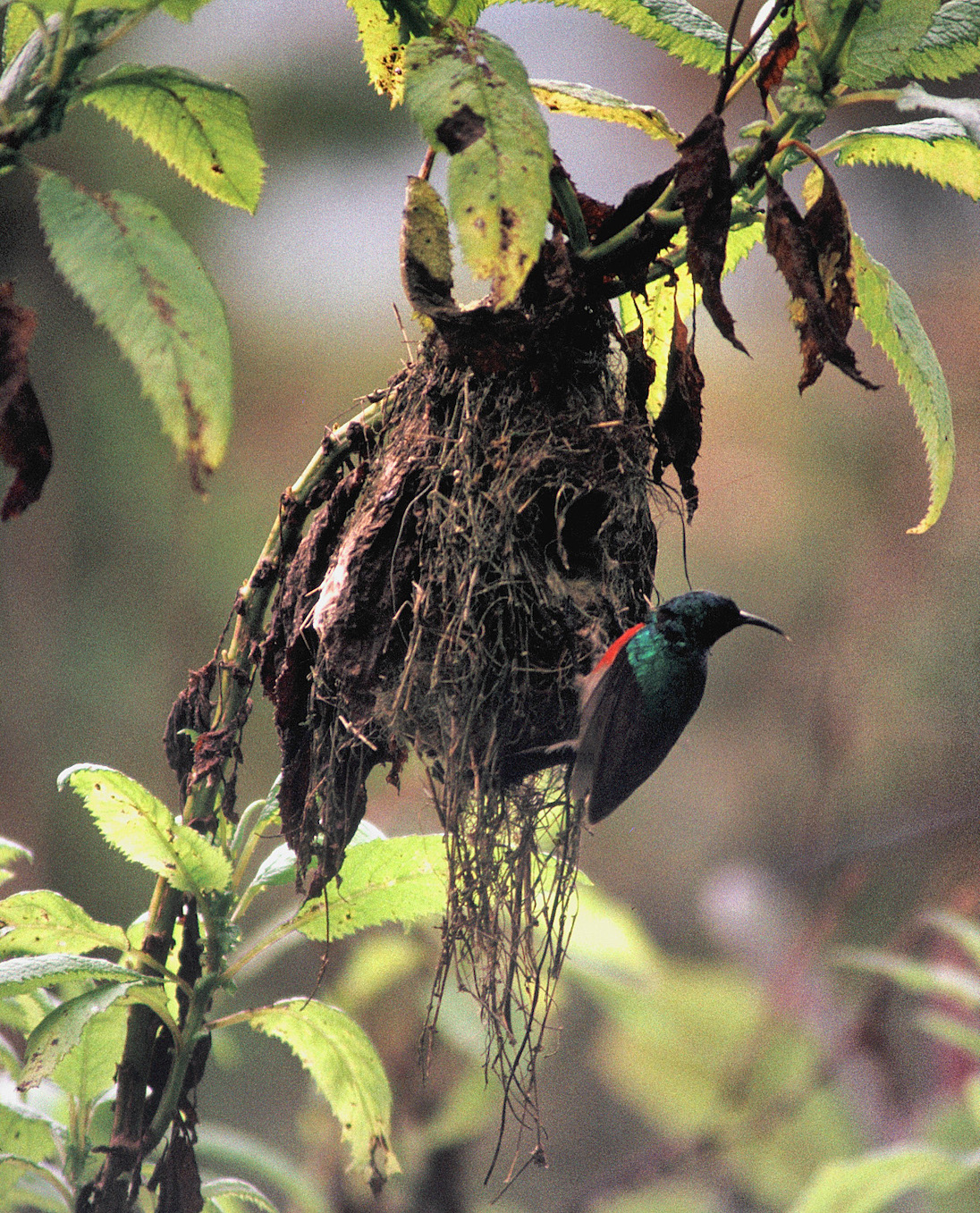
A sunbird perches next to a tree
Sunbirds are among the 129 species identified in a Michigan State University biodiversity study in eastern Africa. Photo credit A. Plumptre/KBA Secretariat

In today’s biological research journal Proceedings of the Royal Society B, scientists at Michigan State University peeled back layer upon layer of big data to tease out real-life answers that until now have been explored mostly in small-scale experiments.

Sam Ayebare, a Ph.D. candidate in the Department of Integrative Biology from Uganda, has led the work that is the first step to understanding how so many birds can coexist in the vast Albertine Rift ecoregion in east-central Africa. More birds live in this biodiversity hotspot than anywhere else on the African continent – a veritable teeming feathered metropolis.

“We want to understand how species – in this case, birds – coexist without driving each other to extinction,” Ayebare said. “To protect a species, you must first understand where they are and why.”

Past methods to understand how animals, birds or insects used space relied on experiments in laboratories or on small plots of land. Create a desirable space, then see what creature comes or stays. 

But Ayebare, as part of MSU’s Zipkin Qualitative Ecology Lab, understood more truth was hidden in the vast amounts of data collected by scientists at 519 sampling sites across a montane forest in the diverse region of the Albertine Rift. Scientists strategically selected points of land across huge elevations and environmental gradients and recorded all birds seen or heard over a fixed period of time. That led to the identification of over 6,000 individuals across 129 species.

That observational data was cross-referenced with specific information about temperature, rainfall, and databases that track species' dietary preferences, activity patterns, body sizes, and use of the forest canopy for food and shelter.

Managing enormous amounts of information from many different sources is like digging into a treasure chest and finding the gems hidden in a huge, complicated puzzle. The Quantitative Ecology Lab, led by Elise Zipkin, an associate professor of integrative biology, pioneers statistical models to unravel some of the world’s most alarming natural mysteries at the intersection of ecology, conservation biology, and the management of biodiversity. The mission: to understand and predict how and why nature is changing, the consequences of those changes and what can be done to mitigate biodiversity loss.
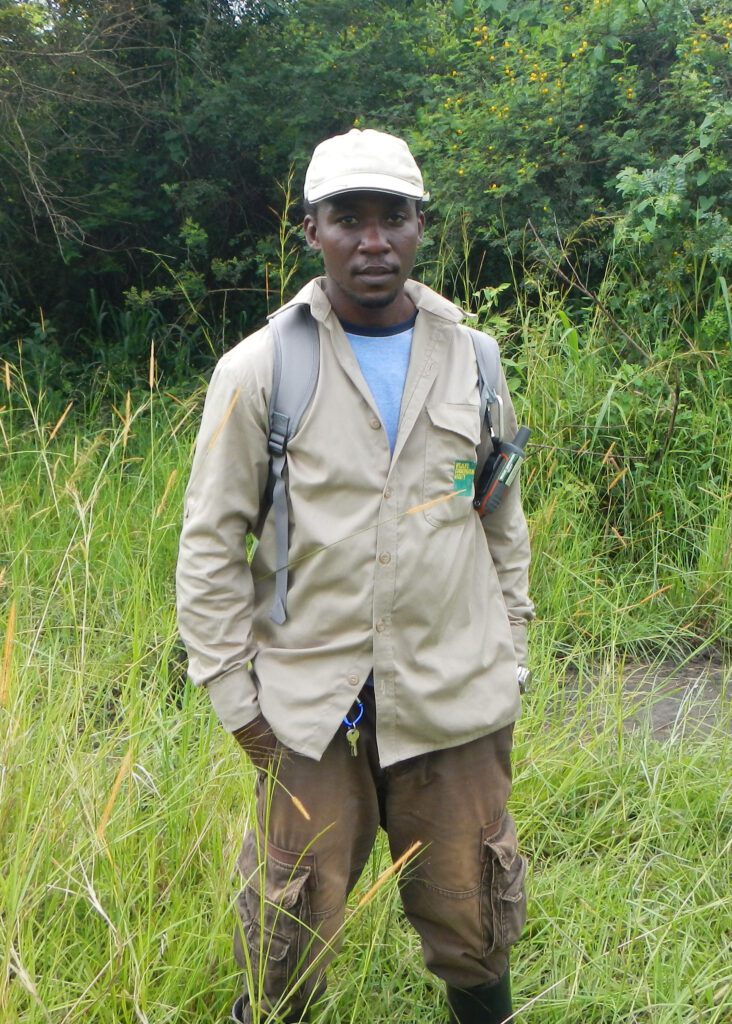
Sam Ayebare wears a hat and backpack and stands in a field with long grass and trees behind him.
Sam Ayebare

“We’re interested in the circumstances that allow biodiversity to flourish – what makes species co-existence possible?” Zipkin said. “There is a lot of pressure on biodiversity in the modern age. It helps to understand what types of conditions, at very small to very large scales, can facilitate the protection of species.”

By examining new insights into the birds’ habitat with another question and more data, Ayebare and his team teased out where different species were, and how they were managing to coexist. Amongst their findings were that birds partition their habitat use along environmental gradients – temperature, precipitation, and forest vegetation types. Within the prime habitats for various species groups, the scientists could see that birds of similar species will divvy up territory within the habitat – some using the canopy, others staking a claim to lower levels of a forest. The data revealed a sense of the different strategies the birds adopt to survive.

“Species have organized themselves over millions of years,” Ayebare said. “We want to develop ways to figure out what they will do next to survive.”

Translating big data into big insights demands tenacity, Zipkin said. “Sam’s familiarity with the area enabled him to really feel the questions of how bird species in the Albertine rift coexist across spatial scales.”

Zipkin is director of MSU’s Ecology, Evolution, and Behavior Program of which Ayebare is a member, along with co-author Jeffrey Doser. “An environmental habitat gradient and within-habitat segregation enable the co-existence of ecologically similar bird species” also was authored by Andrew J. Plumptre of BirdLife International and Cambridge University, Isaiah Owiunjiof Kabale University in Uganda and Hamlet Mugabe of Wildlife Conservation Society in Uganda.

The work was supported by the National Science Foundation, WCS Graduate Scholarship Program, the Beinecke African Conservation Scholarship, and World Wildlife Foundation’s Russell E. Train Education for Nature Program.

This story originally appeared on the College of Natural Science's Ecology, Evolution and Behavior website.


MEDIA CONTACTS

Sue Nichols
Biodiversity and WildlifeClimate and EnvironmentNatural SciencesEngineering, Science and TechnologyNatural Sciences

Latest News

MSUToday Weekly Update

The MSUToday Weekly Update email showcases how Spartans are making a difference through academic excellence, research impact and community outreach. Get inspired by these stories of innovation, collaboration and determination. Plus, enjoy photos and videos of campus and more MSU content to help keep you connected to the Spartan community.

Sign UpUpdate My Information

Connect With Us

Visit our Facebook pageVisit our page on XVisit our Instagram pageVisit our LinkedIn pageVisit our YouTube pageVisit our TikTok page

Health and Safety

  • MSU Police and Public Safety
  • Olin Health Center
  • Counseling & Psychiatric Services (CAPS)
  • University Health and Wellbeing
  • MSU Health Care
  • Civil Rights and Title IX
  • Our Commitment
  • Center for Survivors
  • Security & Fire Safety Report
  • University Policy on Relationship Violence and Sexual Misconduct
  • Notice of Non-Discrimination, Anti-Harassment and Non-Retaliation
  • Health Care Non-Discrimination Notice

Support Services

  • Disability Resources
  • Supportive Services
  • Learning Resources

Working at MSU

  • Human Resources
  • EBS Login
  • Job Postings
  • Employee Assistance Program

Reports

  • CARES Act Funding
  • Student Achievement and Outcomes

Contact us

517-355-1855

Address

Michigan State University 426 Auditorium Road East Lansing, MI 48824

Follow Us

  • Visit our Facebook page
  • Visit our page on X
  • Visit our Instagram page
  • Visit our TikTok page
  • Visit our LinkedIn page
  • Visit our YouTube page

If you're having accessibility issues, please let us know.

Know More: Campus Safety Information and ResourcesTransparency Reporting: Budget & Salary/Compensation
  • Contact Information|
  • Site Map|
  • Privacy Statement|
  • Site Accessibility|
  • Call MSU: (517) 355-1855|
  • Visit: msu.edu|
  • Notice of Nondiscrimination|

SPARTANS WILL|© Michigan State University|