Jump to HeaderJump to Main ContentJump to Footer
Michigan State University
  • Browse Stories By

    Topics

    Explore stories by subject area

    • Arts and Culture
    • Business and Economy
    • Climate and Environment
    • Education and Learning
    • Engineering, Science and Technology
    • Government and Society
    • Health and Medicine
    • Media and Communications
    • MSU Leadership and Impact
    • Sports and Recreation
    • Student and Campus Experience
    View All Stories

    Collections

    Curated story series

    • Turfgrass
    • Ask the Expert
    • Big Ideas
    • Climate solutions
    • Water at MSU
    • Mobility
    • Spartan Perspectives
    • Student views
    • Graduate voices
    • Faculty voices
    View All Collections

    Featured

    Editor's picks

    • The Spartans behind your favorite Michigan golf courses

      July 22, 2026

      The Spartans behind your favorite Michigan golf courses

    • MSU in the 1990s: 10 Spartan milestones

      July 14, 2026

      MSU in the 1990s: 10 Spartan milestones

MSUTODAY
  • Browse Stories By

< Browse Stories By

Topics

Explore stories by subject area

  • Arts and Culture
  • Business and Economy
  • Climate and Environment
  • Education and Learning
  • Engineering, Science and Technology
  • Government and Society
  • Health and Medicine
  • Media and Communications
  • MSU Leadership and Impact
  • Sports and Recreation
  • Student and Campus Experience
  • View All Stories

Collections

Curated story series

  • Turfgrass
  • Ask the Expert
  • Big Ideas
  • Climate solutions
  • Water at MSU
  • Mobility
  • Spartan Perspectives
  • Student views
  • Graduate voices
  • Faculty voices
  • View All Collections

Featured

Editor's picks

  • The Spartans behind your favorite Michigan golf courses

    July 22, 2026

    The Spartans behind your favorite Michigan golf courses

  • MSU in the 1990s: 10 Spartan milestones

    July 14, 2026

    MSU in the 1990s: 10 Spartan milestones

  • For Media
  • Experts
  • Releases and Statements
  • Sign Up
  • Update Information

Resources

  • A to Z Index
  • Find People
  • Maps
  • Email
  • Student Information System (SIS)
  • D2L
  • Libraries
  • Tech Support
  • MSU Misconduct Hotline
  • Social Media Directory
  • Events Calendar
  • For Media
Michigan State University
MSUToday
  • For Media
  • Experts
  • Releases and Statements
  • Sign Up
  • Update Information
MSUTODAY

July 27, 2023

Ask the expert: How horse research can help humans

It may be surprising to learn that humans and horses share many physiological similarities, particularly in terms of health and development. Jane Manfredi, associate professor of pathobiology and diagnostic investigation in Michigan State University’s College of Veterinary Medicine, is an expert when it comes to identifying these similarities. Manfredi answers questions on what we can learn from equine health research and how it can benefit humans.

Responses are excerpts from an article originally published in The Conversation.

Why look for connections between equine and human health?

There’s a principle in medicine called One Health, which says that animals, humans and the environment are inextricably connected — for one to be healthy, all must be healthy. 

It also means that we can learn a lot about our own health by studying the health of animals, and vice versa, including the many parallels in endocrine disorders between humans and horses.
Headshot of Jane Manfredi.
Jane Manfredi, assistant professor for pathobiology and diagnostic investigation at Michigan State University’s College of Veterinary Medicine, is a research and investigation expert for equine biology and metabolic functions. Photo courtesy of Manfredi.

How are human and horse endocrine systems similar?

The endocrine system produces hormones that support many of the body’s basic functions, including growth and development, metabolism, sleep and more. Hormones also play a role in the health of the tendons and ligaments. Some endocrine disorders change how the body produces and releases hormones and can lead to osteoporosis, arthritis, ligament injury and other orthopedic diseases.

Humans are not the only species affected by this dynamic — horses are, too. In fact, approximately 20% of horses and over 34% of people in the U.S. are affected by endocrine disorders such as metabolic syndrome. These disorders are often accompanied by obesity.

Like people, obese horses with endocrine disorders often develop low-grade inflammation. Inflammation is a normal response to injuries and sickness. But chronic, low-grade inflammation can have long-term negative effects on the body. In people, childhood obesity, which is related to maternal obesity, is associated with a type of joint disease called osteochondrosis. Foals born from obese mares are also predisposed to this same type of joint disease.

Both horses and people with endocrine disorders like Type 2 diabetes can suffer multiple types of musculoskeletal disorders. For example, horses with pituitary pars intermedia dysfunction — similar to Cushing’s disease in people — suffer from tendon and ligament degeneration.

What are some treatments that benefit both species and support the need for further research? 

Because of the similarities between people and horses, research on diagnostics and treatments for metabolic conditions could provide health benefits to both species.

For example, a class of drug called glucagon-like peptide-1 agonists, which includes brands like Trulicity (dulaglutide) and Ozempic (semaglutide), is commonly used to treat metabolic syndrome and Type 2 diabetes in people. This class of medication is also effective in treating these conditions in horses, similarly, slowing down how quickly food empties the stomach and reducing glucose release into the bloodstream.

Another class of drugs called sodium-glucose cotransporter protein-2 inhibitors, which includes such treatments as Jardiance (empagliflozin) and FARXIGA (dapagliflozin), are used to treat Type 2 diabetes in people and a similar condition in horses. These drugs alter the kidneys’ ability to absorb sugar from urine such that the body eliminates some of the glucose it would normally absorb. This greatly reduces blood insulin spikes, which can help prevent obesity, metabolic syndrome and cardiovascular disease in both horses and people.

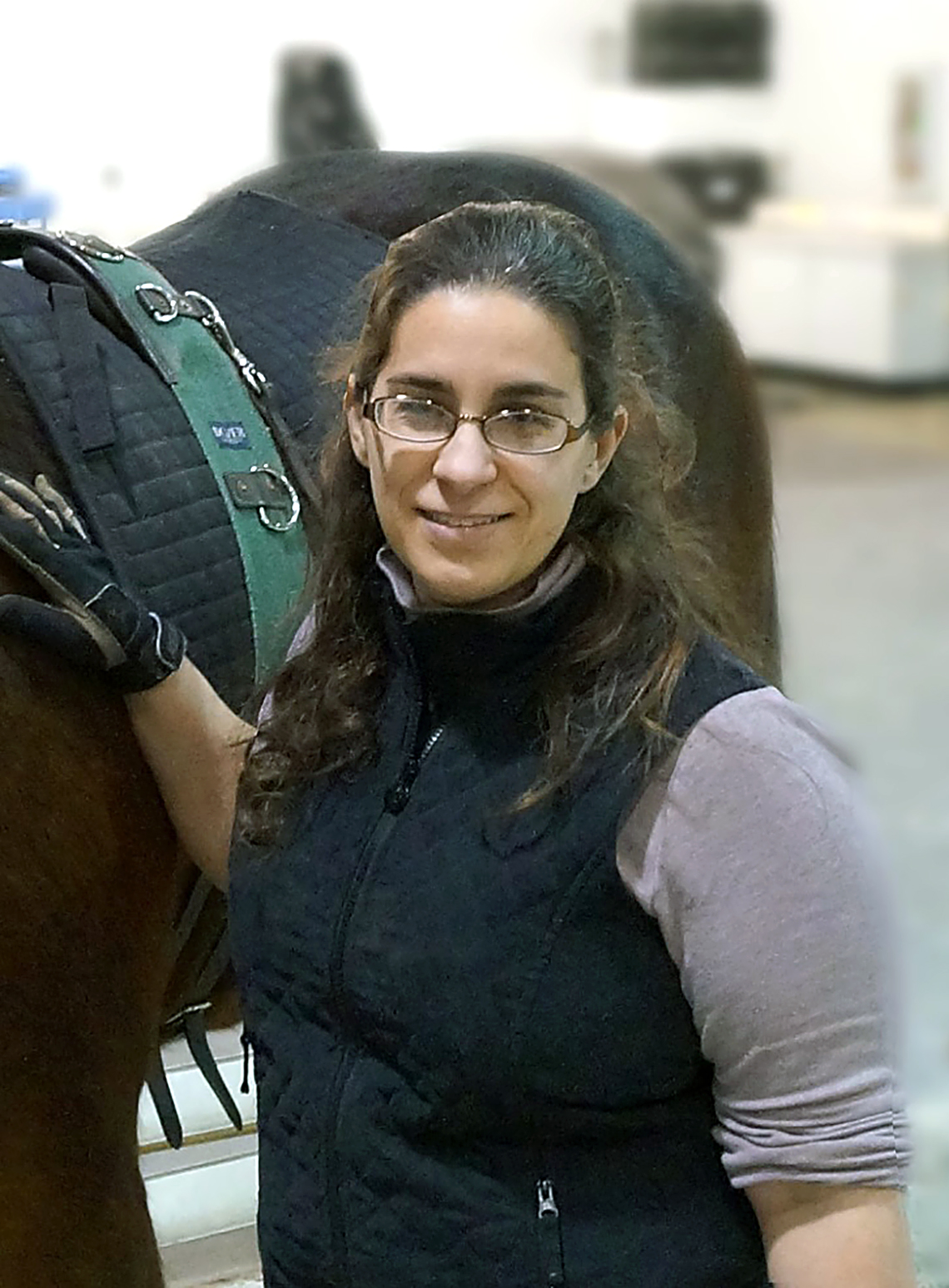
Jane Manfredi on horse.
When not researching and teaching, Manfredi can be seen enjoying horseback riding. Courtesy photo.

What is precision medicine and why is it important?

Instead of the standard one-size-fits-all protocol, precision medicine uses information from a person’s genes, environment and medical history to create a customized treatment plan. For example, precision medicine is often applied in oncology when doctors gather genetic information about the patient’s cancer tumor to inform which treatments might work best for them.

In horses, precision medicine currently focuses on DNA-based diagnostic tests to inform exercise regimens, treatment and breeding decisions. Recent work with horses also suggests that measuring the heritability of certain metabolic traits could be used to screen for metabolic syndrome in the future.

Within precision medicine, doctors aim to get a full-picture view of an individual and their metabolic health. The more researchers learn from individual patients, including horses, the better equipped doctors will be to treat every patient.


MEDIA CONTACTS

Jack Harrison

Collection

more content from this collection

Ask the Expert

Latest News

MSUToday Weekly Update

The MSUToday Weekly Update email showcases how Spartans are making a difference through academic excellence, research impact and community outreach. Get inspired by these stories of innovation, collaboration and determination. Plus, enjoy photos and videos of campus and more MSU content to help keep you connected to the Spartan community.

Sign UpUpdate My Information

Connect With Us

Visit our Facebook pageVisit our page on XVisit our Instagram pageVisit our LinkedIn pageVisit our YouTube pageVisit our TikTok page

Health and Safety

  • MSU Police and Public Safety
  • Olin Health Center
  • Counseling & Psychiatric Services (CAPS)
  • University Health and Wellbeing
  • MSU Health Care
  • Civil Rights and Title IX
  • Our Commitment
  • Center for Survivors
  • Security & Fire Safety Report
  • University Policy on Relationship Violence and Sexual Misconduct
  • Notice of Non-Discrimination, Anti-Harassment and Non-Retaliation
  • Health Care Non-Discrimination Notice

Support Services

  • Disability Resources
  • Supportive Services
  • Learning Resources

Working at MSU

  • Human Resources
  • EBS Login
  • Job Postings
  • Employee Assistance Program

Reports

  • CARES Act Funding
  • Student Achievement and Outcomes

Contact us

517-355-1855

Address

Michigan State University 426 Auditorium Road East Lansing, MI 48824

Follow Us

  • Visit our Facebook page
  • Visit our page on X
  • Visit our Instagram page
  • Visit our TikTok page
  • Visit our LinkedIn page
  • Visit our YouTube page

If you're having accessibility issues, please let us know.

Know More: Campus Safety Information and ResourcesTransparency Reporting: Budget & Salary/Compensation
  • Contact Information|
  • Site Map|
  • Privacy Statement|
  • Site Accessibility|
  • Call MSU: (517) 355-1855|
  • Visit: msu.edu|
  • Notice of Nondiscrimination|

SPARTANS WILL|© Michigan State University|