Jump to HeaderJump to Main ContentJump to Footer
Michigan State University
MSUTODAY
  • Browse Stories By

    Topics

    Explore stories by subject area

    • Arts and Culture
    • Business and Economy
    • Climate and Environment
    • Education and Learning
    • Engineering, Science and Technology
    • Government and Society
    • Health and Medicine
    • Media and Communications
    • MSU Leadership and Impact
    • Sports and Recreation
    • Student and Campus Experience
    View All Stories

    Collections

    Curated story series

    • Turfgrass
    • Ask the Expert
    • Big Ideas
    • Climate solutions
    • Water at MSU
    • Mobility
    • Spartan Perspectives
    • Student views
    • Graduate voices
    • Faculty voices
    View All Collections

    Featured

    Editor's picks

    • 9 reasons to love being a Spartan

      Aug. 28, 2026

      9 reasons to love being a Spartan

    • NIH awards multi-university team over $4M to improve women’s health

      Sept. 15, 2026

      NIH awards multi-university team over $4M to improve women’s health

MSUTODAY
  • Browse Stories By

< Browse Stories By

Topics

Explore stories by subject area

  • Arts and Culture
  • Business and Economy
  • Climate and Environment
  • Education and Learning
  • Engineering, Science and Technology
  • Government and Society
  • Health and Medicine
  • Media and Communications
  • MSU Leadership and Impact
  • Sports and Recreation
  • Student and Campus Experience
  • View All Stories

Collections

Curated story series

  • Turfgrass
  • Ask the Expert
  • Big Ideas
  • Climate solutions
  • Water at MSU
  • Mobility
  • Spartan Perspectives
  • Student views
  • Graduate voices
  • Faculty voices
  • View All Collections

Featured

Editor's picks

  • 9 reasons to love being a Spartan

    Aug. 28, 2026

    9 reasons to love being a Spartan

  • NIH awards multi-university team over $4M to improve women’s health

    Sept. 15, 2026

    NIH awards multi-university team over $4M to improve women’s health

  • For Media
  • Experts
  • Releases and Statements
  • Sign Up
  • Update Information

Resources

  • A to Z Index
  • Find People
  • Maps
  • Email
  • Student Information System (SIS)
  • D2L
  • Libraries
  • Tech Support
  • MSU Misconduct Hotline
  • Social Media Directory
  • Events Calendar
  • For Media
Michigan State University
MSUToday
  • For Media
  • Experts
  • Releases and Statements
  • Sign Up
  • Update Information
Natural Sciences

June 14, 2023

MSU researchers connect over coral

By: Emilie Lorditch

Researchers often search the world to find answers to key scientific questions, but in this case, one scientist found the answers right outside his own office window. Robert Quinn, an assistant professor in the College of Natural Science at Michigan State University, has spent years studying the biochemistry of coral bleaching, a heat-induced response to stress where the coral ejects the algae in its tissues causing it to turn white. Bleaching is damaging to reefs and is expected to increase in the future due to climate change.
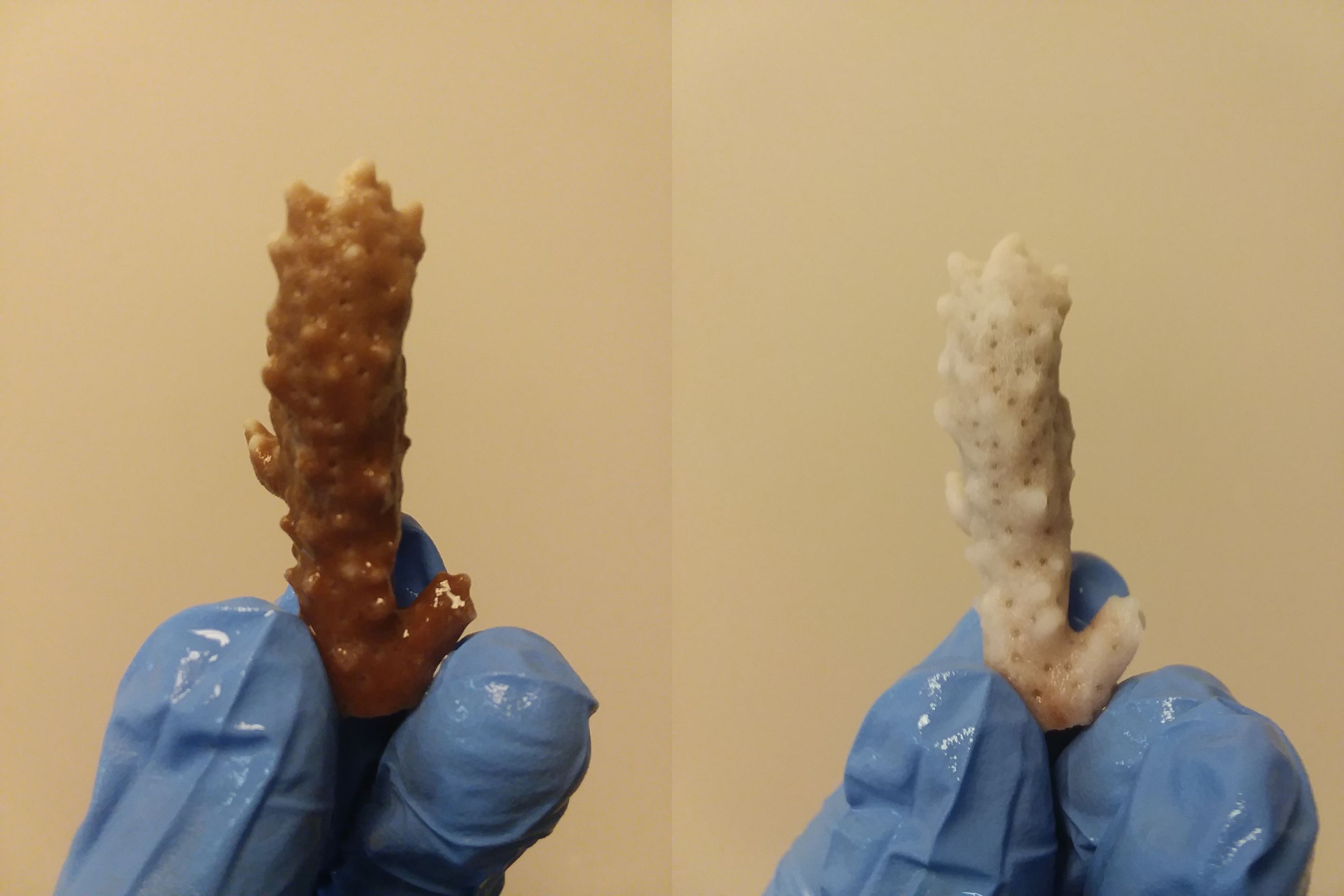
A researcher (hand with blue lab glove) holds up samples of coral resistant to bleaching on left and bleached coral on the right.
A comparison of resistant coral (left) and bleached coral (right). Credit: Ty Roach (Hawaii Institute of Marine Biology)

Throughout his research, Quinn discovered unique betaine lipids in coral that have turned out to be markers of resistance to coral bleaching. The problem was, very little was known about them.

“When I searched the scientific literature on betaine lipids, I came across several papers from almost 20 years ago and when I checked the author list, I found the name Christoph Benning, whose lab I can see from my office window,” said Quinn.

Serendipitously, Christoph Benning, an MSU Research Foundation Professor and University Distinguished Professor in the College of Natural Science, happened to have a hobby coral tank which prepared him for Quinn’s line of research just a short walk away. 

“I study plants and Rob studies bacteria,” said Benning, who is also the director of the MSU-DOE Plant Research Laboratory. “Normally, we would never have worked together.”
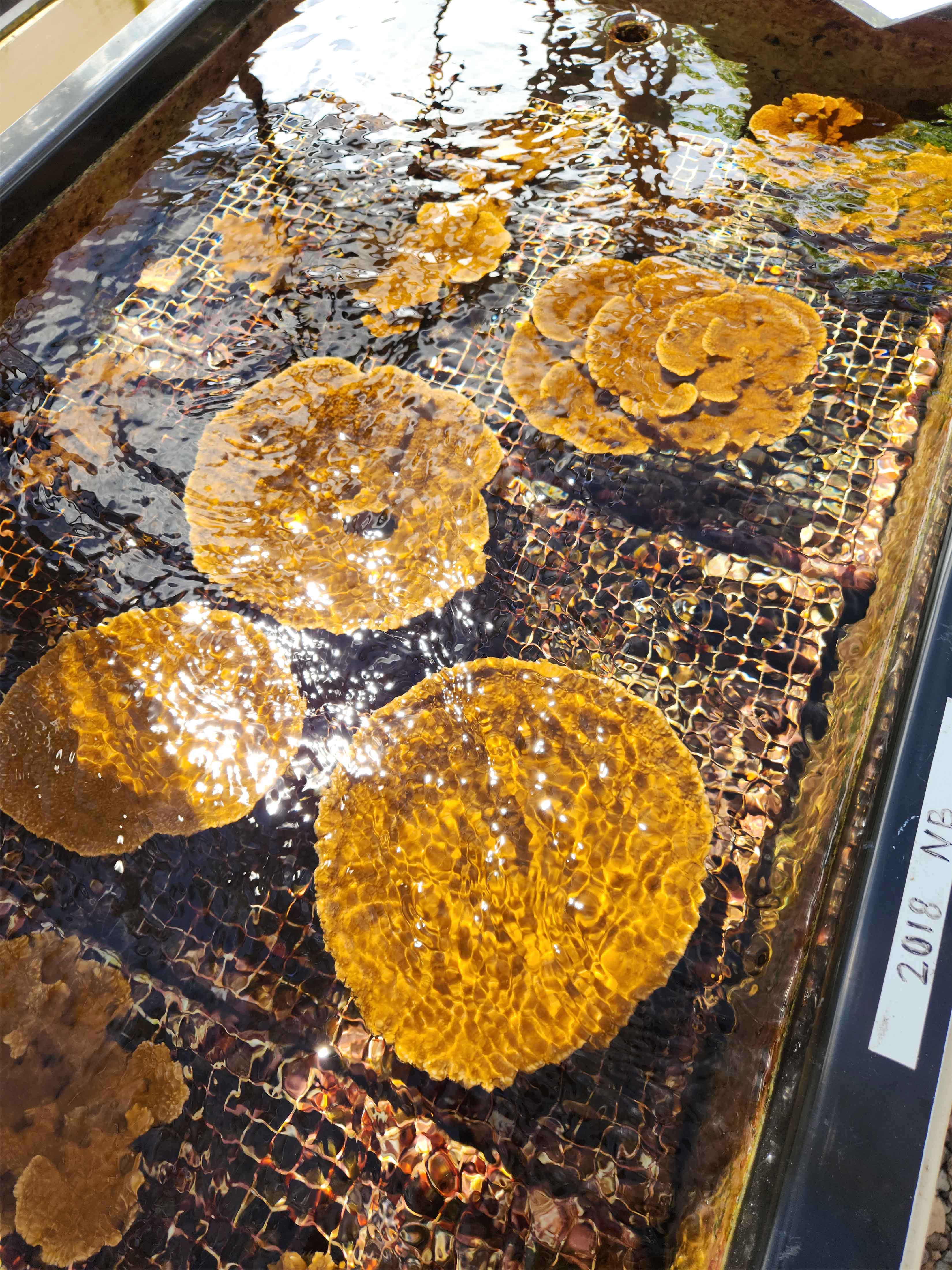
Corals being grown in a lab that will be replanted on a tropical reef in the Pacific Ocean
Corals growing in the lab. Credit: Christoph Benning

This scientific connection led to a unique collaboration between Quinn and Benning, who teamed up and received a $1.9 million grant from the National Science Foundation to study the role that betaine lipids from a mutually beneficial symbiotic relationship with algae play in coral bleaching. 

Consider the following scenario: “Two corals side-by-side on a reef where one coral bleaches and the other doesn’t,” said Benning. “We want to understand the chemistry and microbiology behind this observation to learn how to help corals become more resistant to bleaching.”

This project is very timely because coral bleaching has been linked to past El Nino events such as the strongest El Nino on record in 2015. During an El Nino event, there is an abnormal warming of ocean temperatures in the Pacific which causes stress on tropical reef coral.

“The National Oceanic and Atmospheric Administration is predicting a strong El Nino developing this year, which will probably cause coral bleaching next summer,” said Quinn.

Corals are a true symbiont. They have marine algae that live inside their cells providing them food from photosynthesis. It is the algae that produce these unique betaine lipids. The research team plans to further study these lipids under the stress of warmer ocean temperatures, such as those caused by El Nino events using corals on live reefs in Hawaii and the algal symbionts in labs at MSU. 
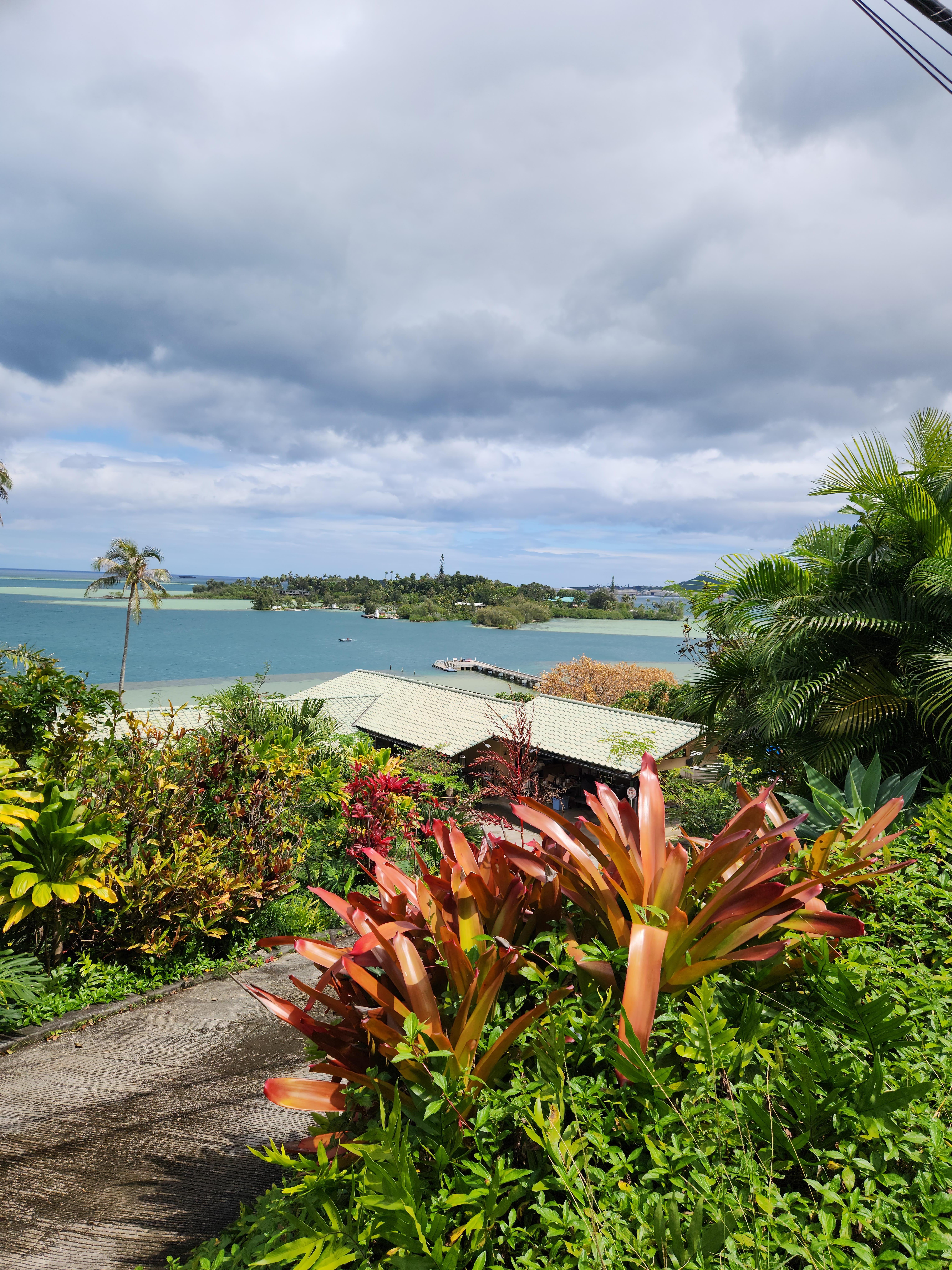
Kaneohe Bay in Hawaii
Kaneohe Bay Hawaii Credit: Christoph Benning

Quinn and Benning are working with marine biologists Ty Roach and Crawford Drury at the Hawaii Institute of Marine Biology in Kaneohe Bay who have been successful at breeding corals based on their temperature tolerance. The institute is an ideal site to study corals because it’s situated right on the reef itself.

“Only a few groups in the world have been successful at breeding corals like this,” said Quinn. “They capture the sperm and egg produced during the full moon every spring right on the reef and put them together to make embryos, rear the corals and then put them back on the reef.”

Ultimately, the researchers want to figure out how the algae synthesize these unique betaine lipids and define the mechanisms by which they help corals resist bleaching.

“Corals are inherently cool and vital to the health of the ocean ecosystem,” said Quinn. “We need to understand what is happening in order to be able to protect them from future climate change.”


 

MEDIA CONTACTS

Emilie Lorditch
Natural SciencesEngineering, Science and Technology

Latest News

MSUToday Weekly Update

The MSUToday Weekly Update email showcases how Spartans are making a difference through academic excellence, research impact and community outreach. Get inspired by these stories of innovation, collaboration and determination. Plus, enjoy photos and videos of campus and more MSU content to help keep you connected to the Spartan community.

Sign UpUpdate My Information

Connect With Us

Visit our Facebook pageVisit our page on XVisit our Instagram pageVisit our LinkedIn pageVisit our YouTube pageVisit our TikTok page

Health and Safety

  • MSU Police and Public Safety
  • Olin Health Center
  • Counseling & Psychiatric Services (CAPS)
  • University Health and Wellbeing
  • MSU Health Care
  • Civil Rights and Title IX
  • Our Commitment
  • Center for Survivors
  • Security & Fire Safety Report
  • University Policy on Relationship Violence and Sexual Misconduct
  • Notice of Non-Discrimination, Anti-Harassment and Non-Retaliation
  • Health Care Non-Discrimination Notice

Support Services

  • Disability Resources
  • Supportive Services
  • Learning Resources

Working at MSU

  • Human Resources
  • EBS Login
  • Job Postings
  • Employee Assistance Program

Reports

  • CARES Act Funding
  • Student Achievement and Outcomes

Contact us

517-355-1855

Address

Michigan State University 426 Auditorium Road East Lansing, MI 48824

Follow Us

  • Visit our Facebook page
  • Visit our page on X
  • Visit our Instagram page
  • Visit our TikTok page
  • Visit our LinkedIn page
  • Visit our YouTube page

If you're having accessibility issues, please let us know.

Know More: Campus Safety Information and ResourcesTransparency Reporting: Budget & Salary/Compensation
  • Contact Information|
  • Site Map|
  • Privacy Statement|
  • Site Accessibility|
  • Call MSU: (517) 355-1855|
  • Visit: msu.edu|
  • Notice of Nondiscrimination|

SPARTANS WILL|© Michigan State University|